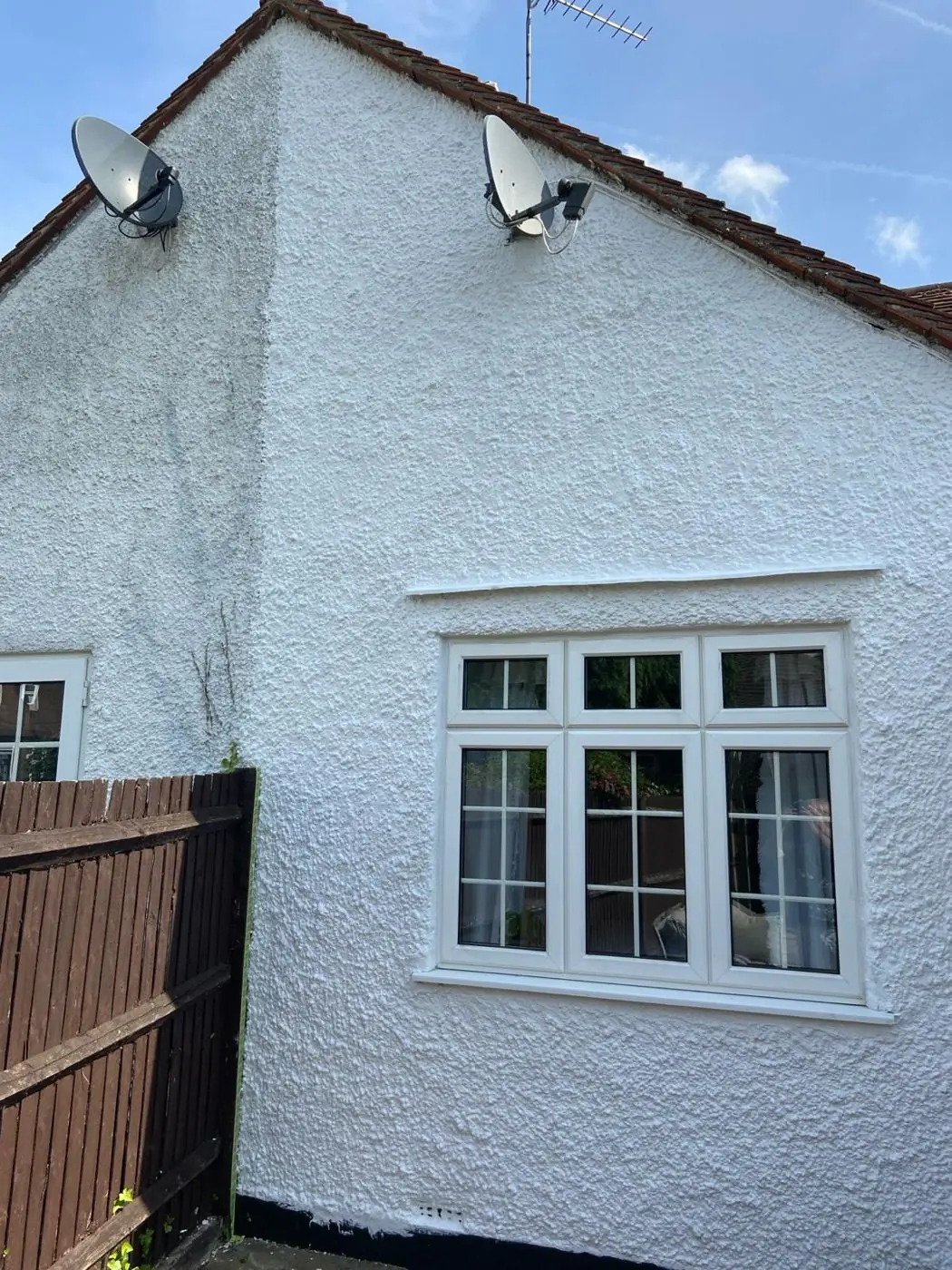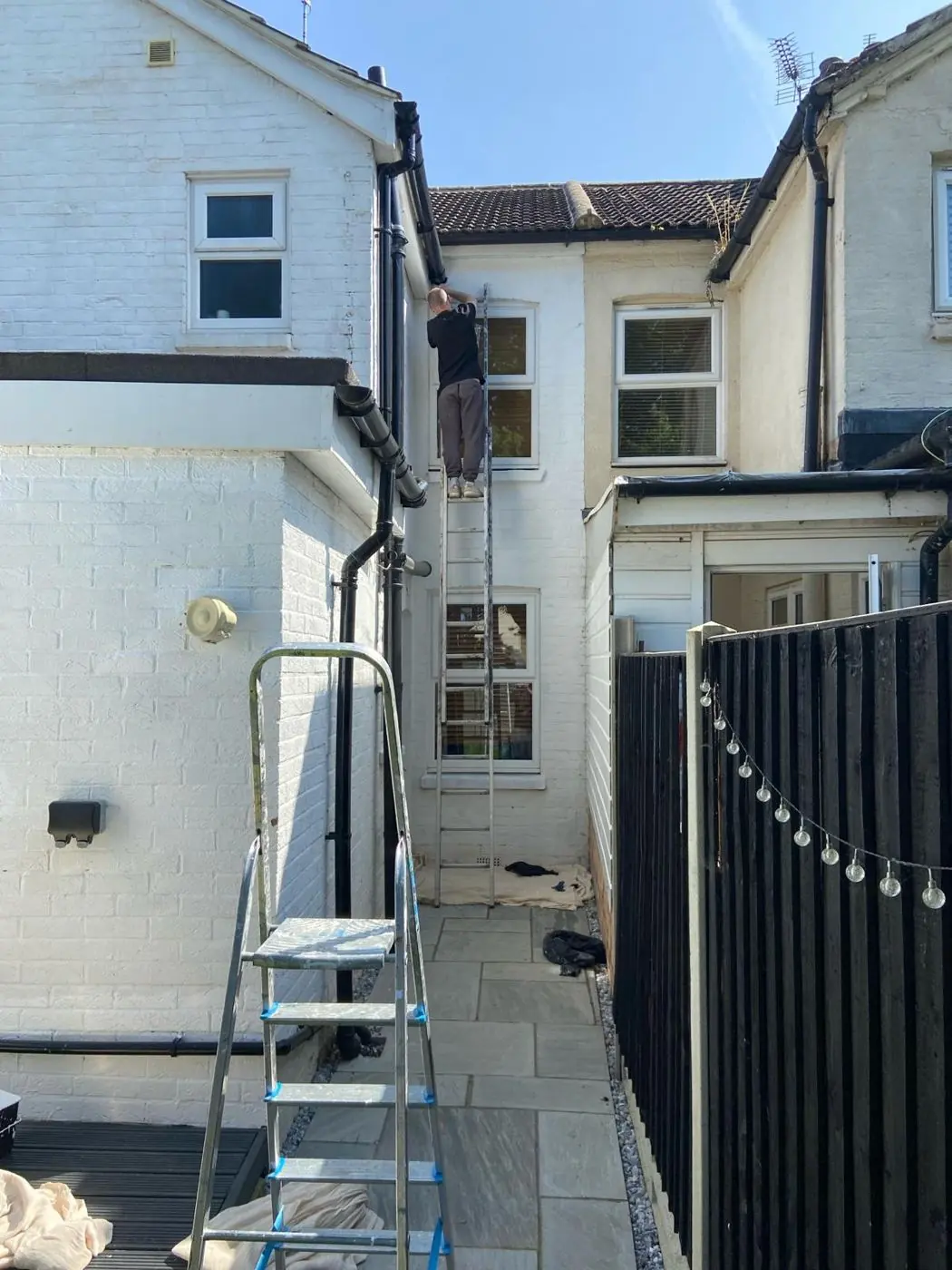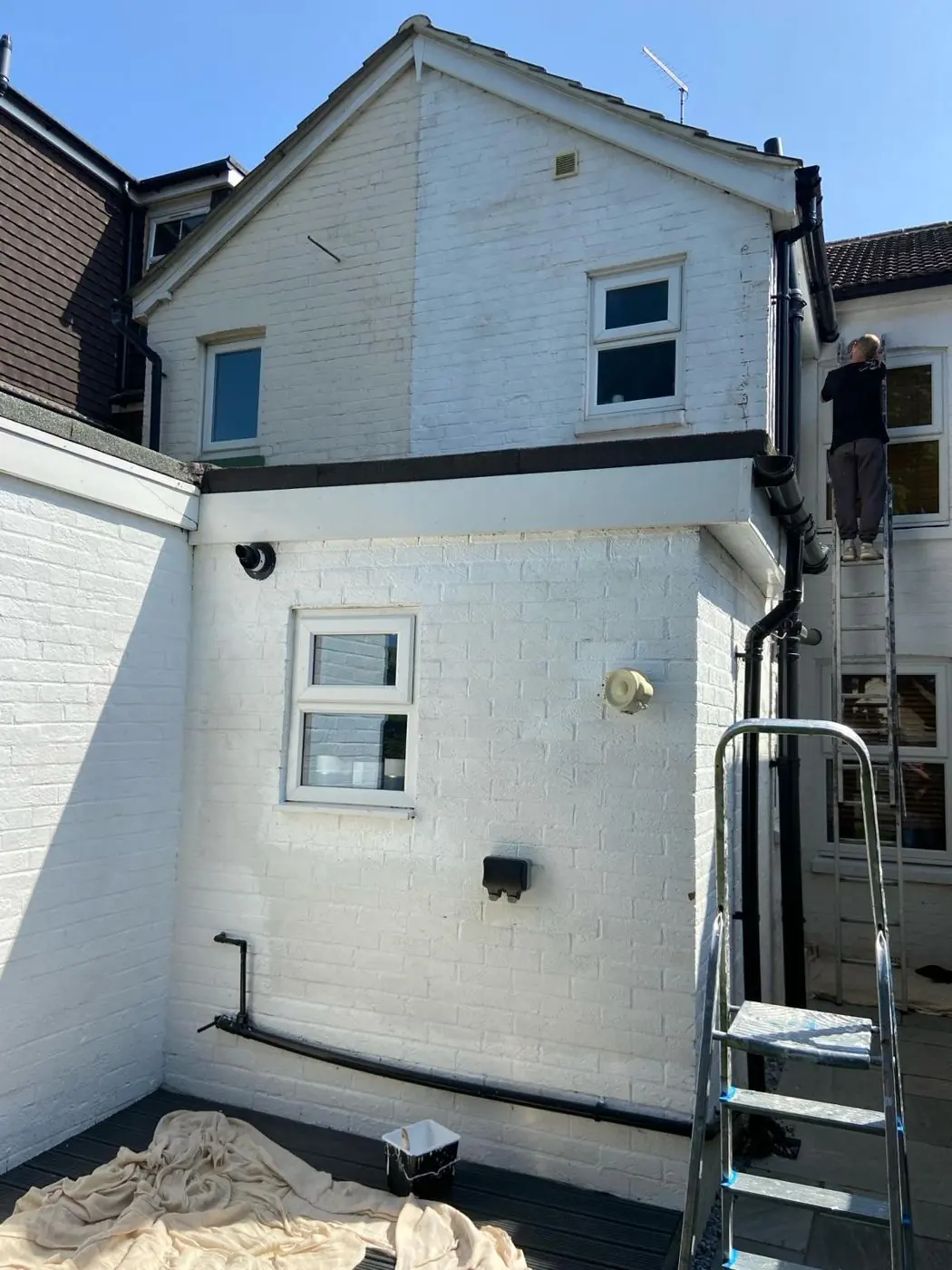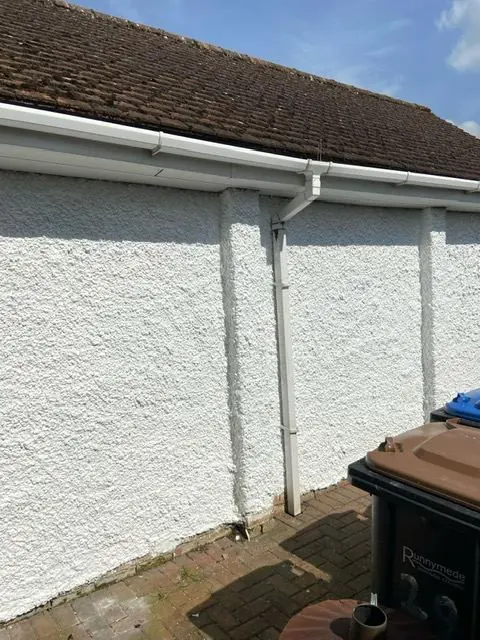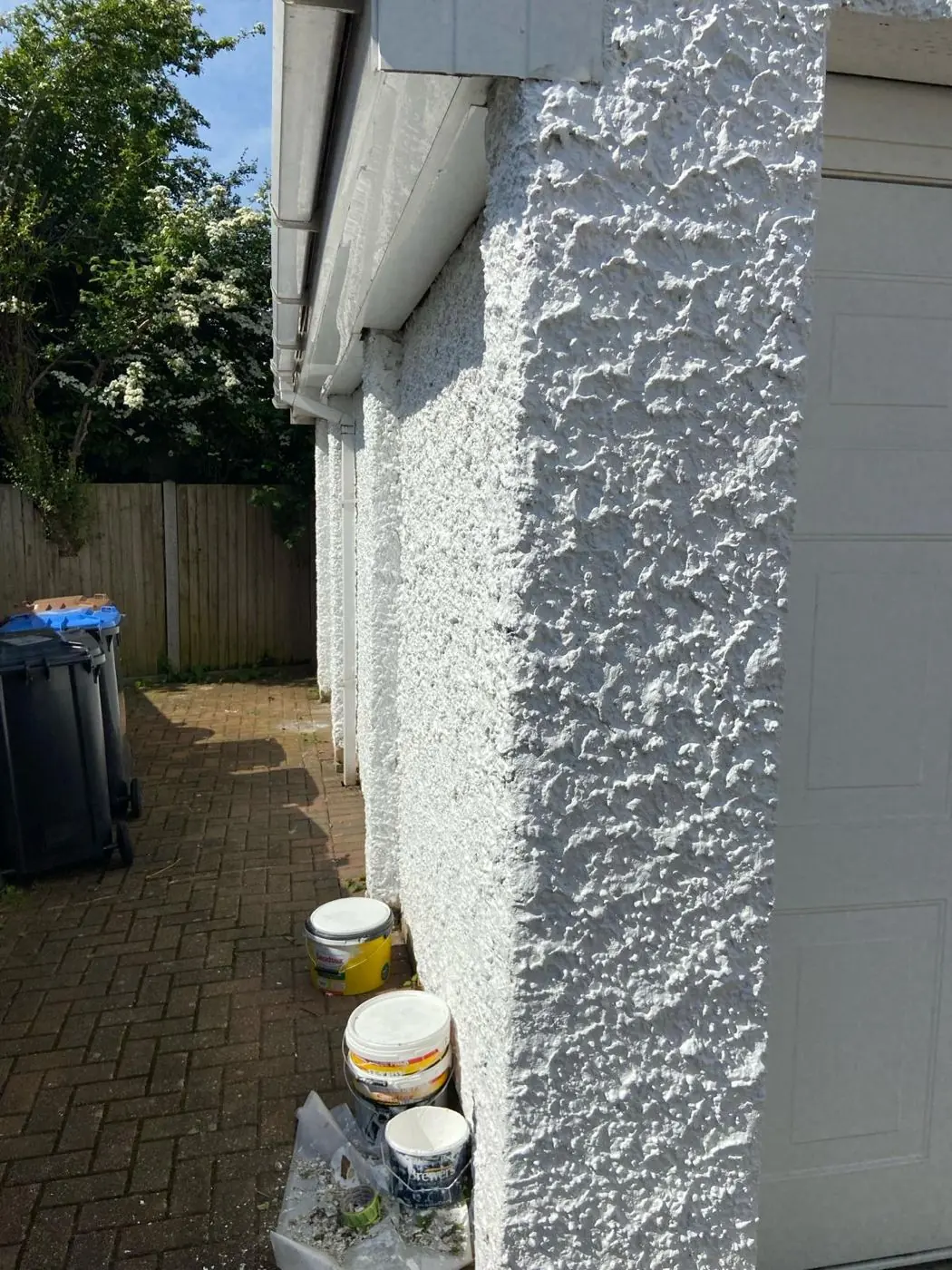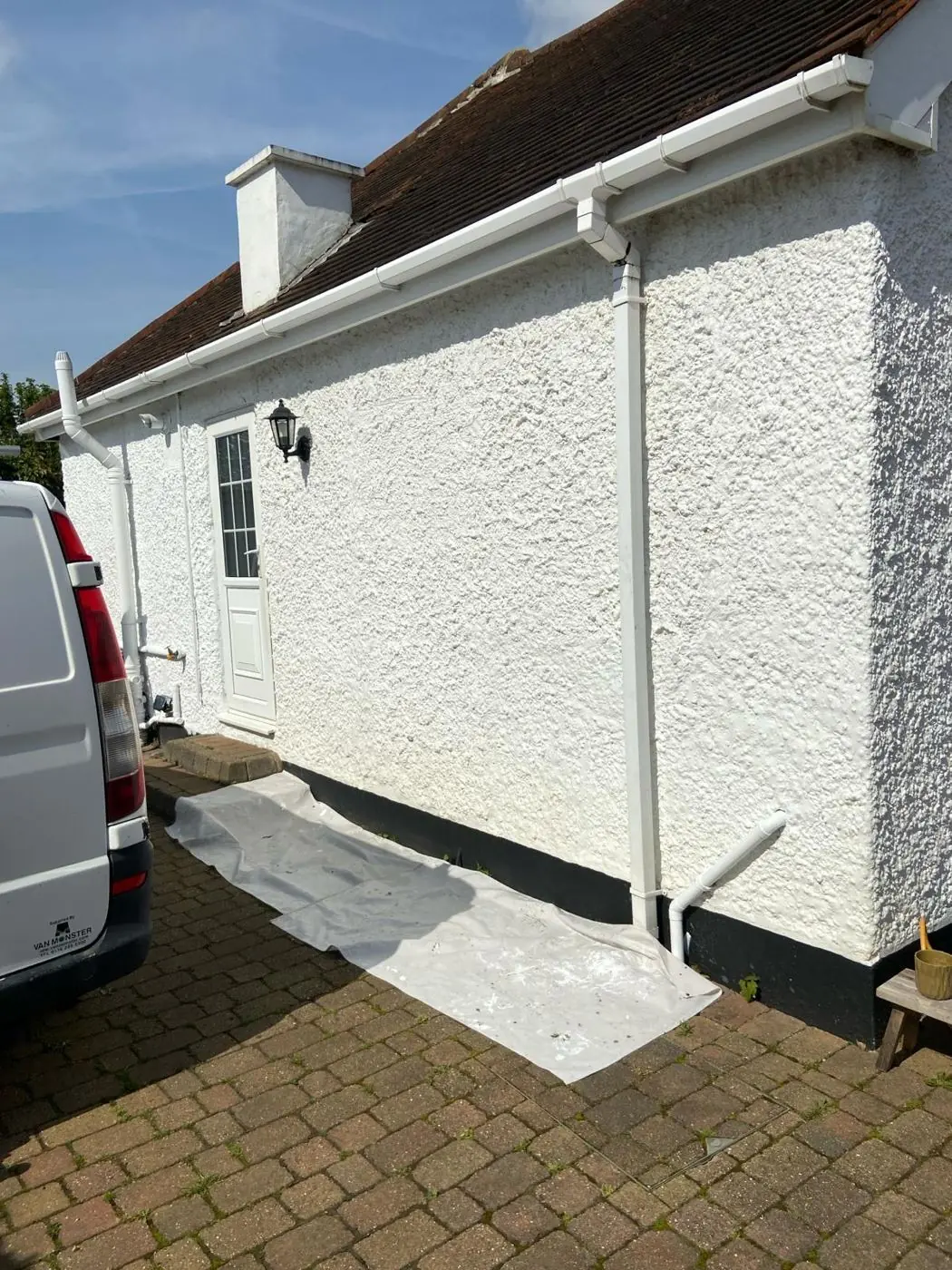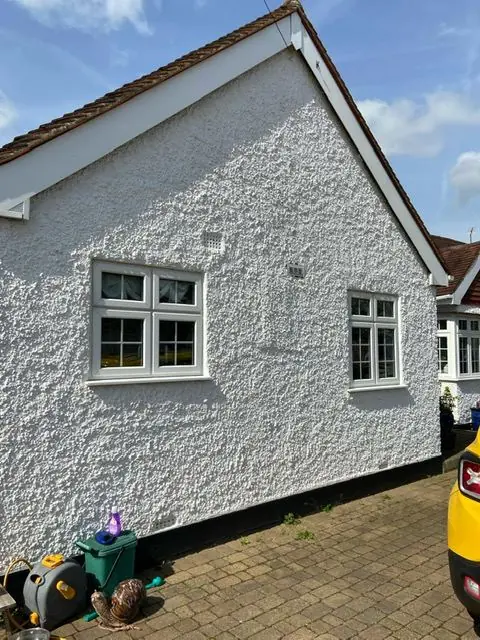
Harlestone, 4.3 miles north-west of Northampton town centre in NN7, is almost entirely bare lias stone, so Dean's render and masonry painting there suits its few rendered buildings and its brick houses, using breathable coatings matched to the age of each wall.
Why most walls here should never see masonry paint
Harlestone is a lias stone village. The 17th century thatched cottages in Upper Harlestone, the 18th century houses on the A428 and the Althorp Estate cottages of the 1800s are all built of it, as squared coursed stone with ashlar dressings on the better buildings. The 2017 conservation area appraisal is direct about it: inappropriate render and masonry paints harm the breathability of historic fabric. A modern acrylic coating on lias holds moisture inside the wall, and the stone face spalls away behind the paint.
Under the proposed Article 4 Direction, painting a dwelling that has not been painted before could also need permission. So if your Harlestone house is bare stone and someone has offered to paint it, our advice is to leave it. You will not get a masonry painting quote from us for unpainted historic stone.
The rendered exceptions
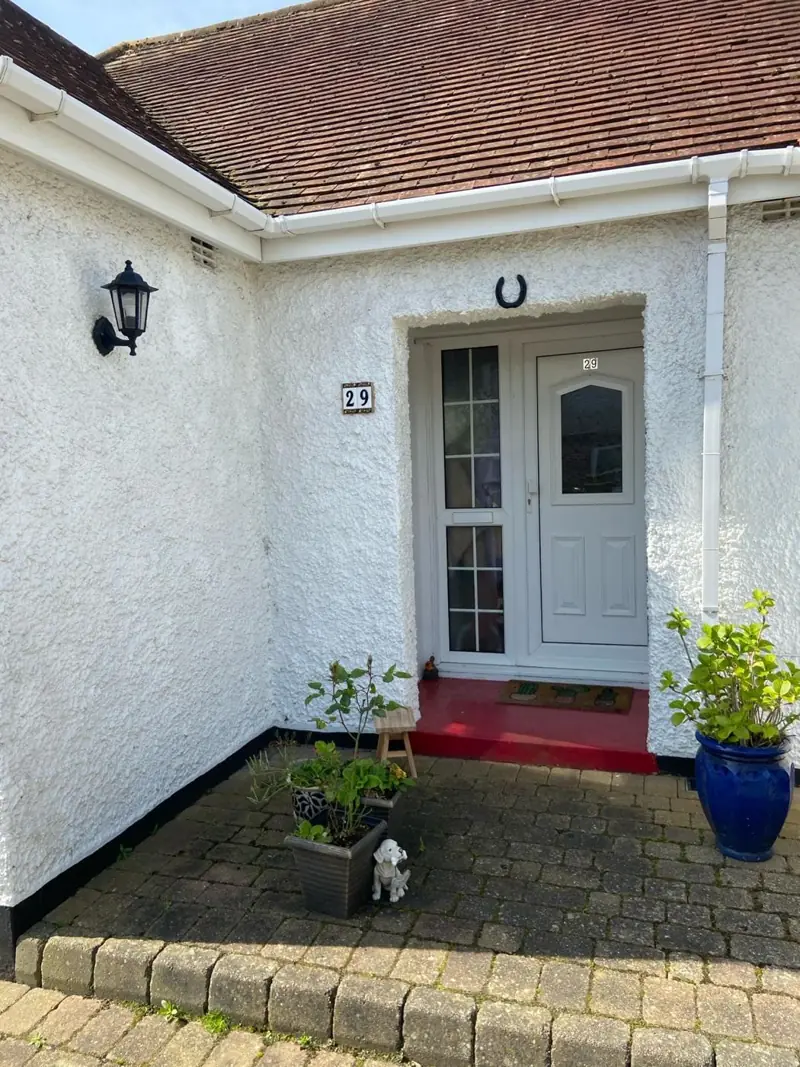
Render is rare in the village, and two buildings are the noted exceptions:
- Cotherstone Lodge, a Grade II listed early 20th century prefabricated concrete design by W H Lascelles, finished half in pebble-dash render and half in fish-scale tile cladding.
- The Village Institute in Upper Harlestone, completed in 1924 and finished in pale render.
Walls like these can take a coating, provided it is breathable and suited to the age of the render. On a listed building, the owner should also confirm with the council whether consent is needed, even for redecoration in the existing colour. Pebble-dash needs a different approach from smooth render: the paint is worked into the stones with a long-pile roller and brush, and loose stones are fixed before anything goes on. Our guide on painting render and roughcast covers that in more depth.
Harlestone brick and the later houses
Upper Harlestone had its own 19th century brickworks, and a large kiln still survives. Its brick appears in many extensions and farm buildings, and brick is also the main material of the Edwardian semis, the six 1950s former council houses, and the later infill on Harlestone Road and Glebe Lane. Most of these are fair-faced brick and better left that way. Where a brick extension or outbuilding has already been painted, though, it needs proper maintenance: loose paint off, brushing down, a stabilising coat where the surface is chalky, then a breathable masonry finish.
The brick chimney stacks on the estate cottages sit on stone bases. If a stack has been painted in the past, we treat the brick and the stone as separate surfaces and keep paint off any stone that is still bare.
Damp, shade and biological growth
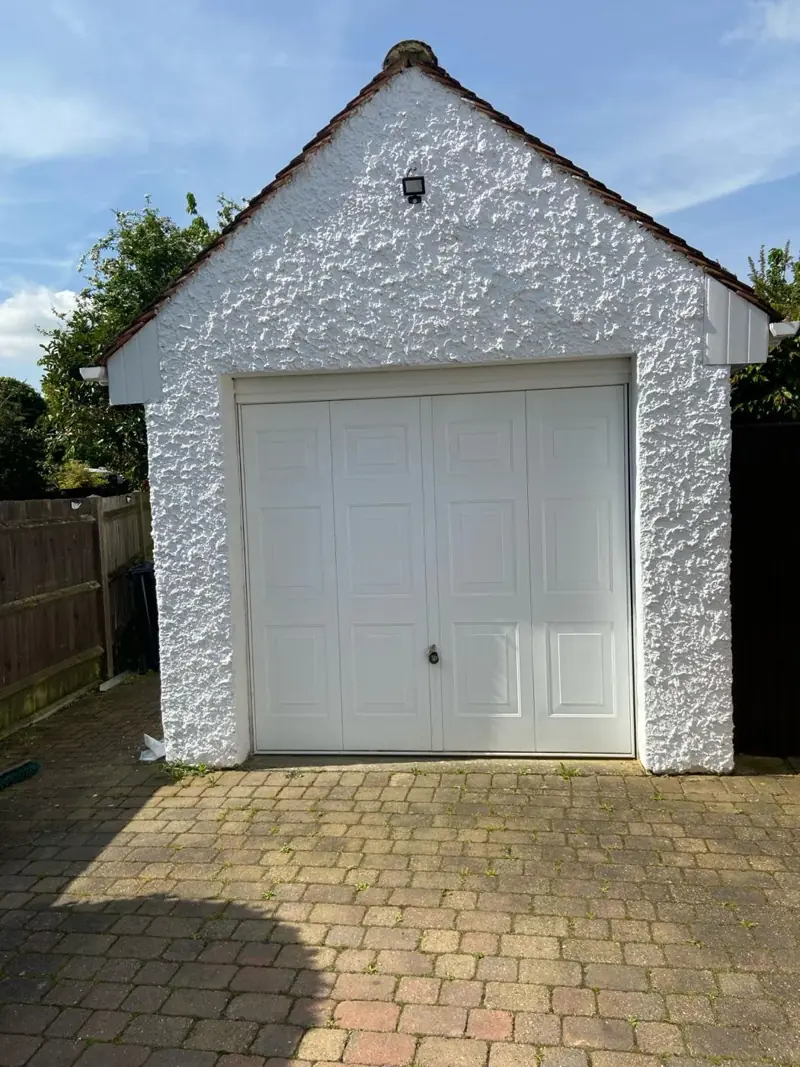
Strong tree belts, Harlestone Firs and the brook running through Upper Harlestone all keep walls damp for longer than in town. The appraisal itself flags stone and brick walls at risk from biological growth. Before painting any render or brick here we:
- treat algae and lichen with a biocide and give it time to work, especially on north faces
- check that gutters and downpipes are not soaking the wall
- wait for a dry spell long enough for the masonry to dry out, which takes longer under trees
For the full process on suitable walls, see our render and masonry painting service, and for everything else we do in the village, the Harlestone area page.
Last updated by Dean, DH Painter & Decorator.