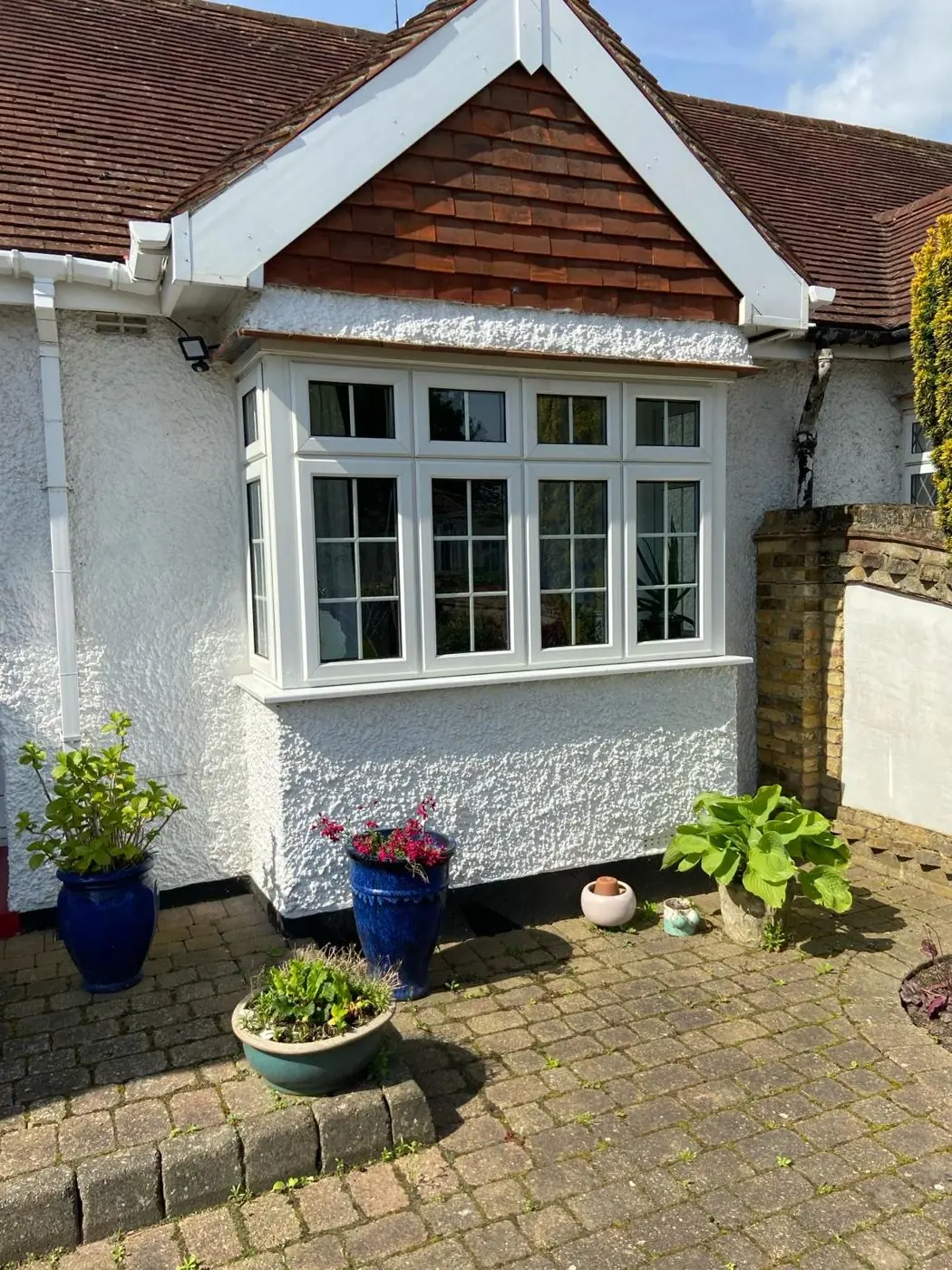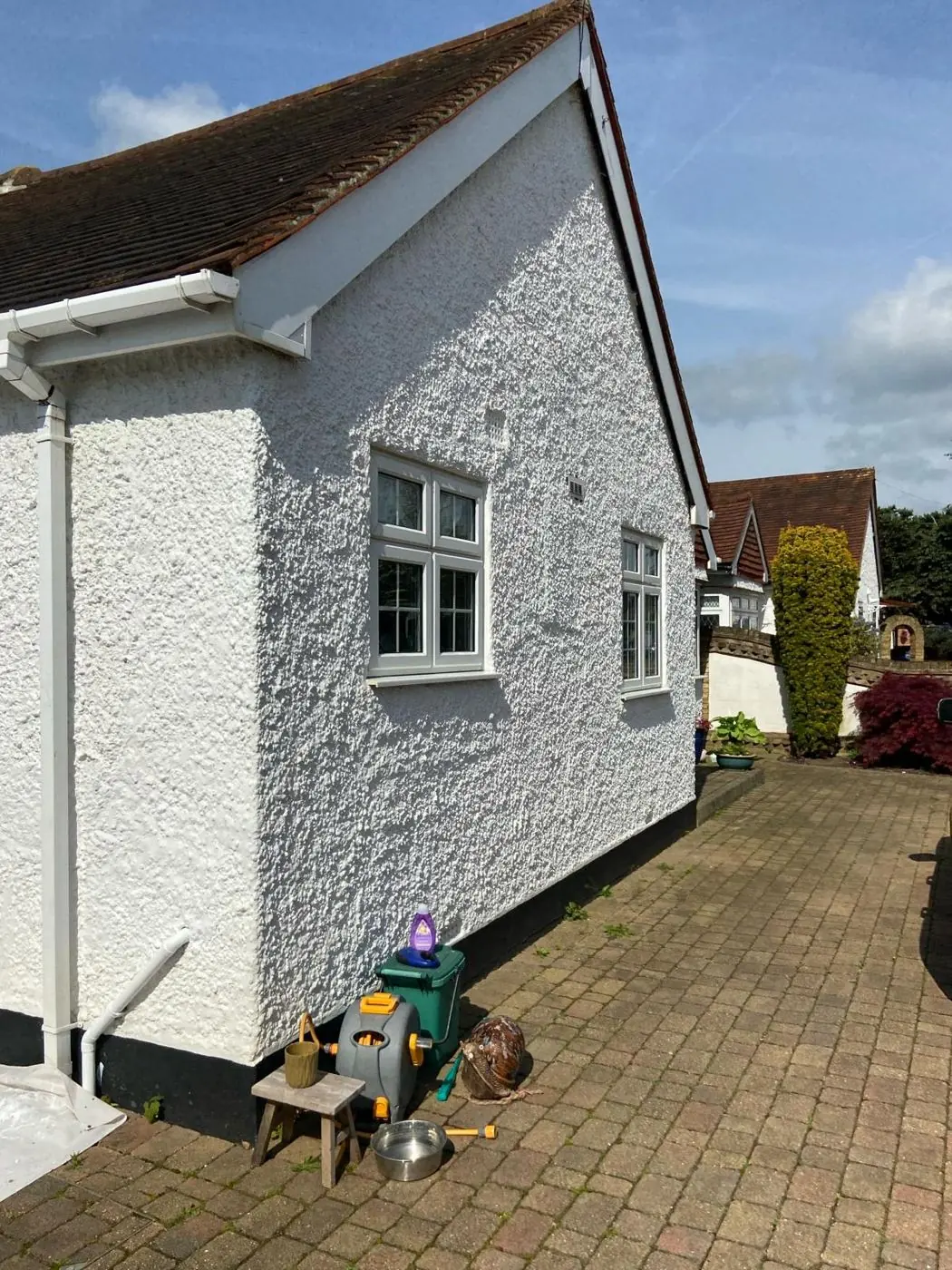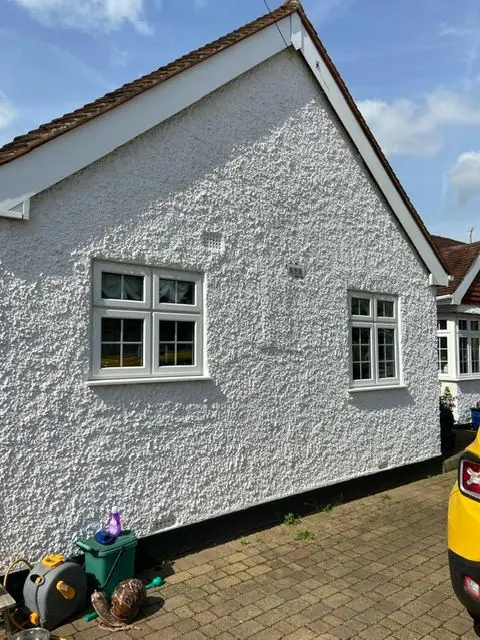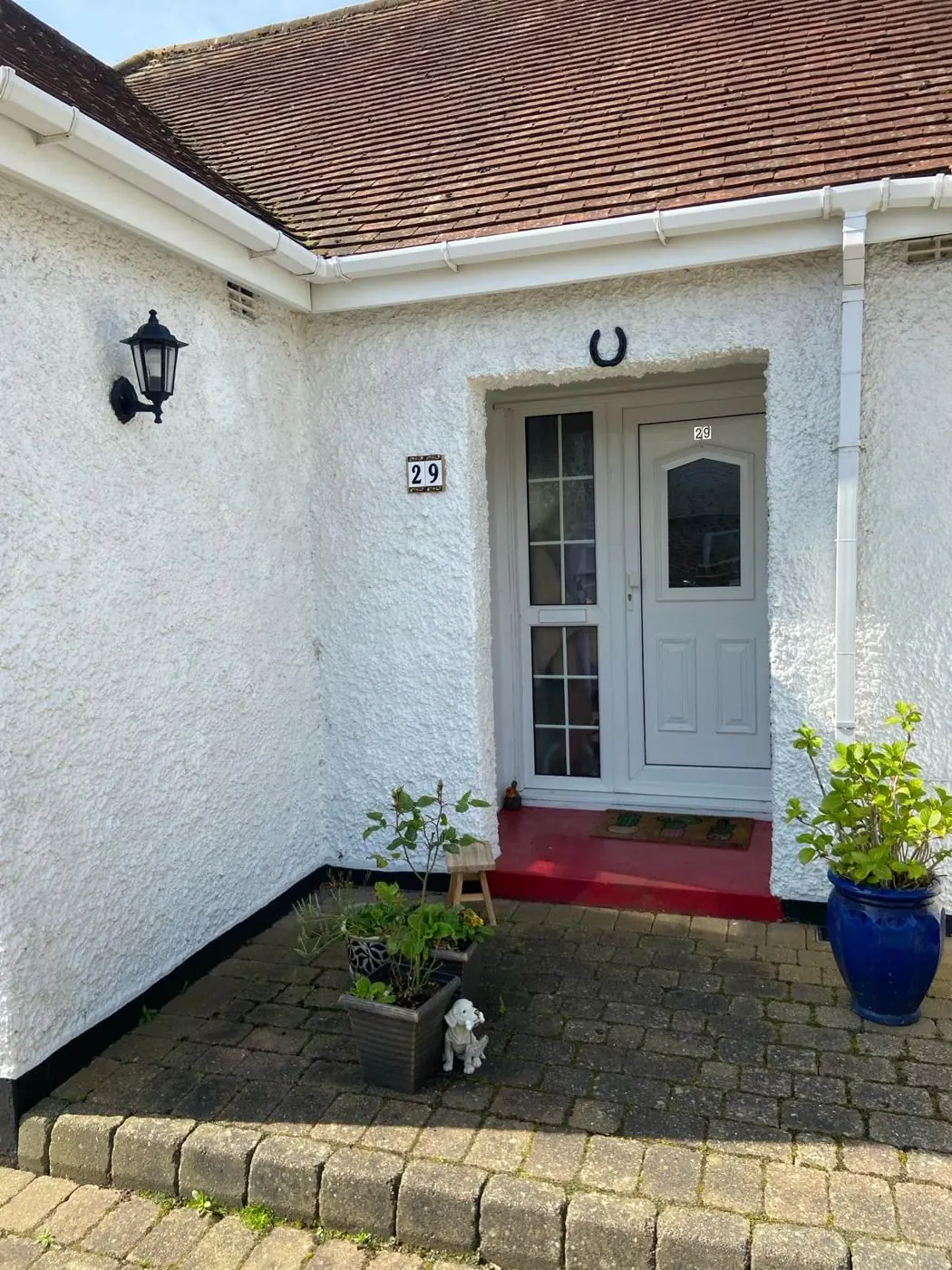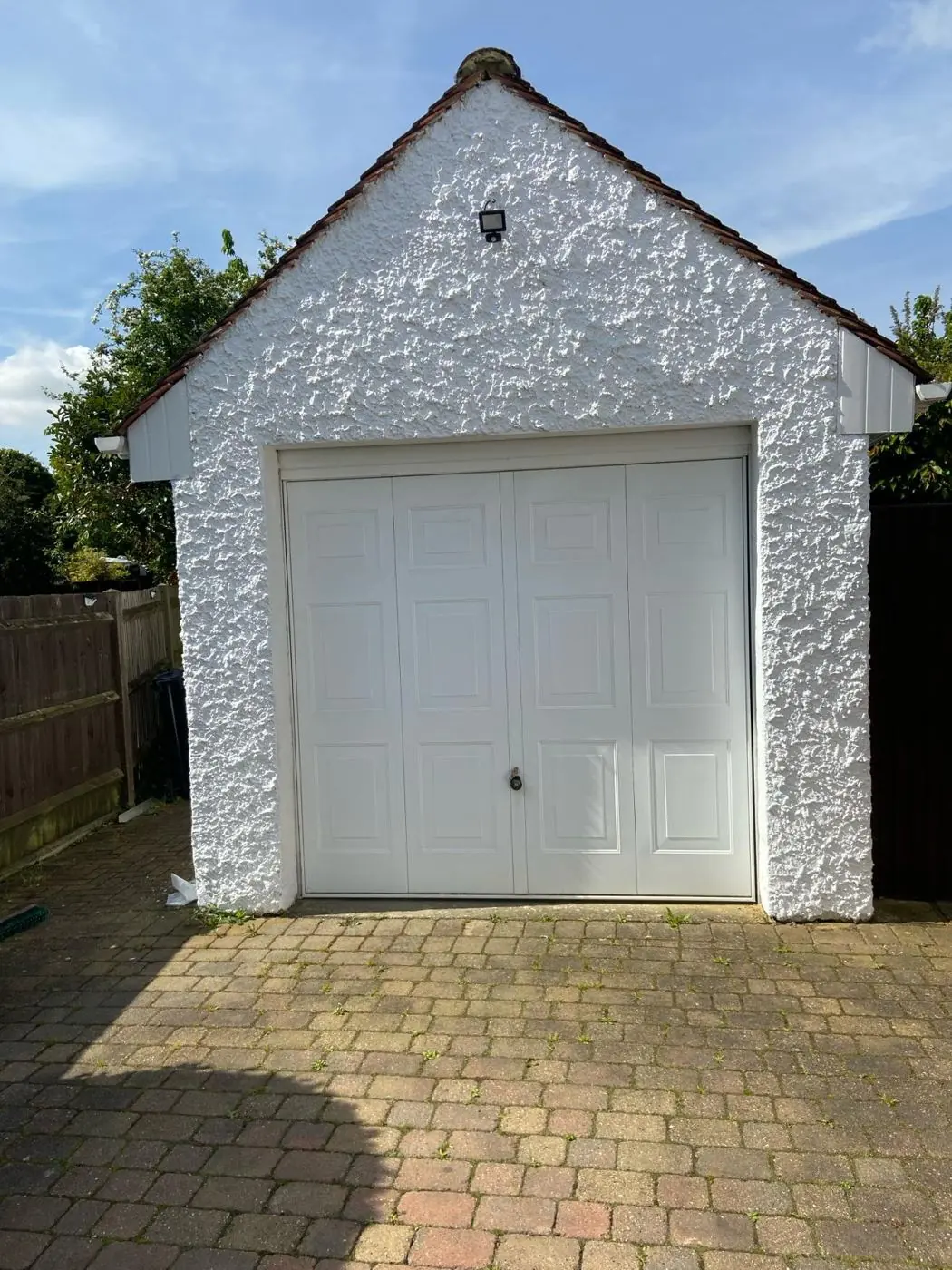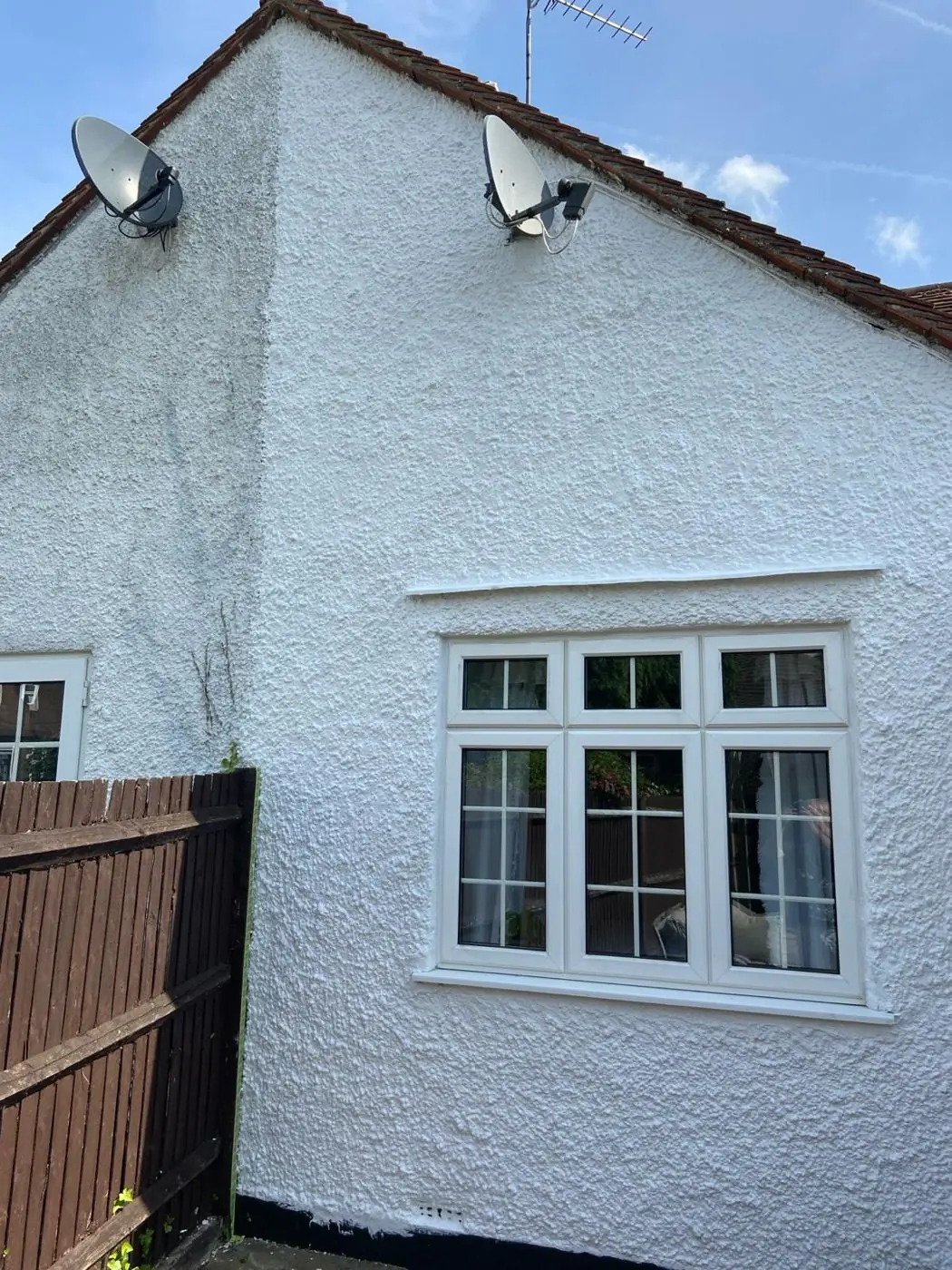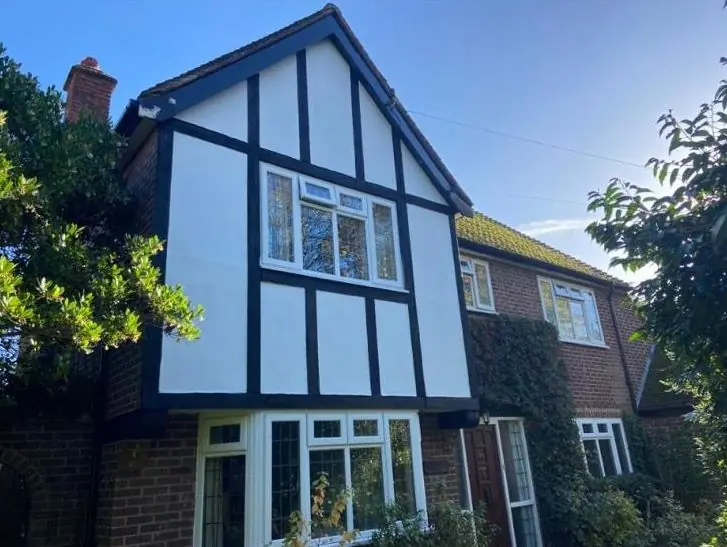
We paint render, pebbledash and stucco on homes throughout Duston, NN5, 2.1 miles west of the town centre. Dean matches the coating to the wall: flexible masonry paint for Kerrfield pebbledash, breathable crack-tolerant systems for the stucco villas on Main Road, and limewash renewed like for like on the listed cottages.
Match the coating to the wall
Duston packs a wide spread of wall finishes into a single parish. Before Dean recommends a product, he works out which of these you have:
| Wall in Duston | Where you find it | What it needs |
|---|---|---|
| Pebbledash over brick | Kerrfield Estate semis and short terraces | Algae wash, crack repair, flexible masonry paint applied with a long-pile roller and brush |
| Stucco and cream render | Duston House, The Chantry, The Old Vicarage, 70-80 Main Road | Breathable, crack-tolerant coating in a traditional pale colour |
| Whitewashed cement render | No. 5 Main Road, one of the Millway cottages | Renewal in the existing finish, agreed beforehand with the council’s conservation officer |
| Limewashed or whitewashed rubble | The Cottage, Squirrel Lane (limewashed); 7-11 Main Road (partly whitewashed) | Limewash, like for like |
| Bare ironstone | Much of the old village, St Luke’s churchyard walls | Left unpainted |
The full step-by-step for render work, from fungicidal wash to second coat, is on our render and masonry painting service page.
Kerrfield pebbledash under slate roofs
Kerrfield was laid out as a planned estate of symmetrical semis, and the Neighbourhood Plan’s design policy expects its brick, pebbledash and slate to be respected. A lot of that pebbledash is now ready for repainting. The aggregate surface hides hairline cracks and holds dirt in its hollows, so preparation takes longer than on smooth render. We kill any growth, brush the dead material out, tap the walls for hollow patches and fill cracks before priming. A flexible masonry paint goes on with a long-pile roller and is worked into the stones with a brush, so no pinholes are left for water to find.
With semis built as matching pairs, the shared party line is worth thinking about. If only one half is being painted, a neat cut-in at the join and a colour that suits the other half keep the pair looking like a pair, which is what the estate’s design relies on.
Stucco on the Main Road villas
On the stretch of Main Road between the Saxon Rise junction and Peveril Road, the larger 19th-century houses mix ironstone with stucco. Duston House of 1822 is stucco behind a balustraded parapet; The Old Vicarage has cream render sections; the town houses at 70-74 and 78-80 Main Road combine red brick with render. Old stucco moves and breathes, so a hard, impermeable coat tends to crack and trap damp behind it. We use breathable, crack-tolerant coatings and keep to traditional pale colours that suit the old village. Several of these buildings are listed or on the draft Local List, which is another reason to repaint in kind.
Ironstone is the wall we advise against painting
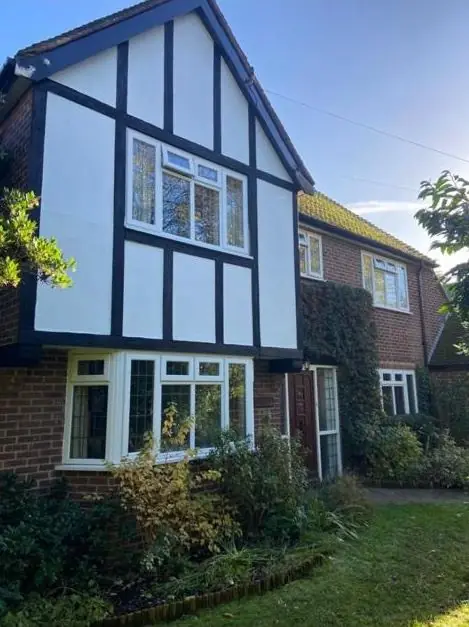
Duston grew around ironstone. Ironstone was quarried commercially south of the village from 1854-55 until 1905-08, and the church, cottages and boundary walls are built of local ironstone. That stone is soft and porous. Coat it in acrylic masonry paint and the moisture that would have evaporated out of the face is trapped behind the film, so the stone and the paint both fail. Where a cottage was never painted, we will say so and suggest leaving it bare. The same goes for the protected stone boundary walls of the historic core.
Shade is the other local factor. Protected trees, such as the copse off Melbourne Lane, keep some walls in shade, damp and green for longer. Those walls get a longer drying window before we coat them. For more on materials, read our guide to painting render and roughcast, or see the wider Duston area page.
Last updated by Dean, DH Painter & Decorator.