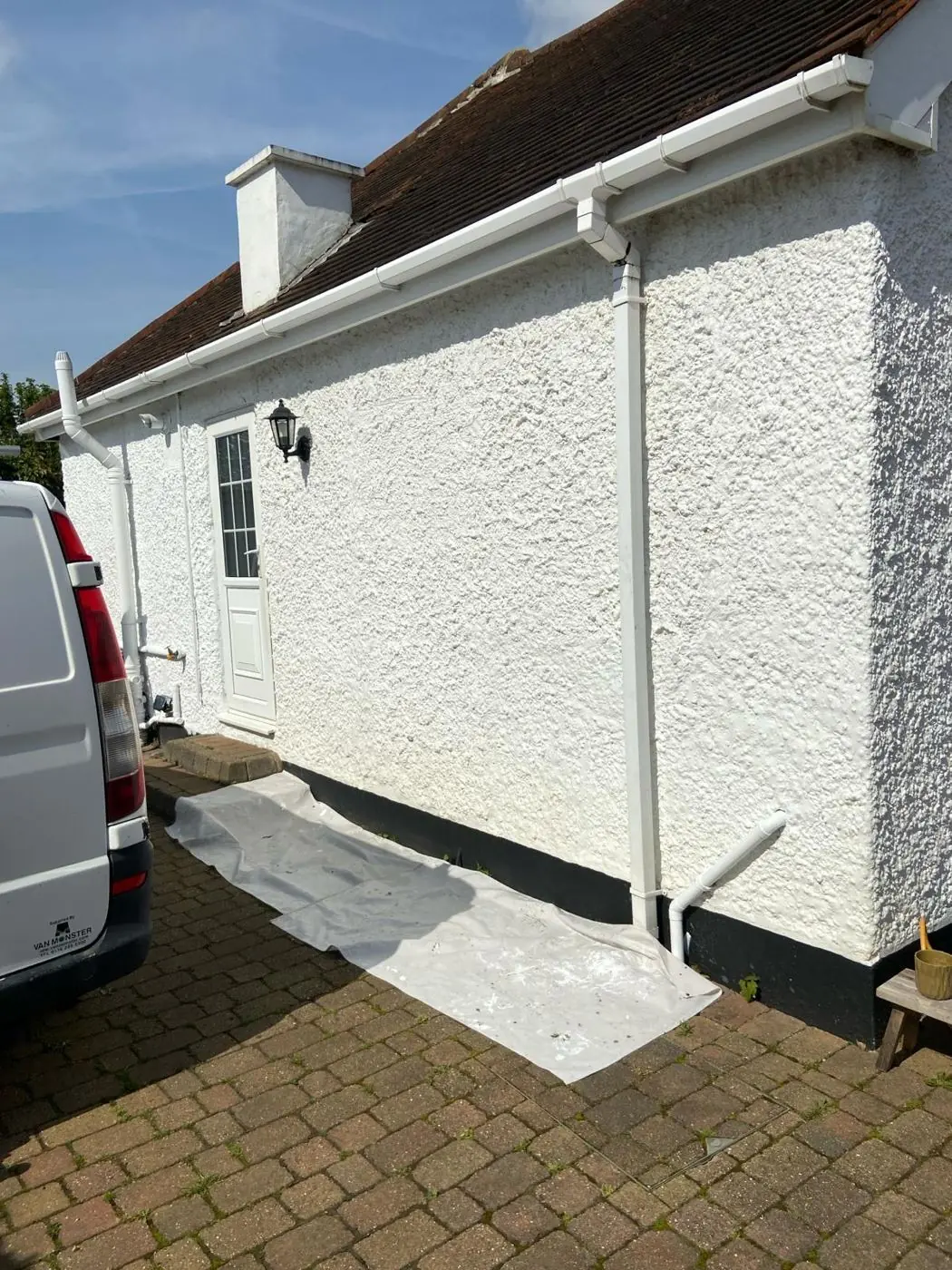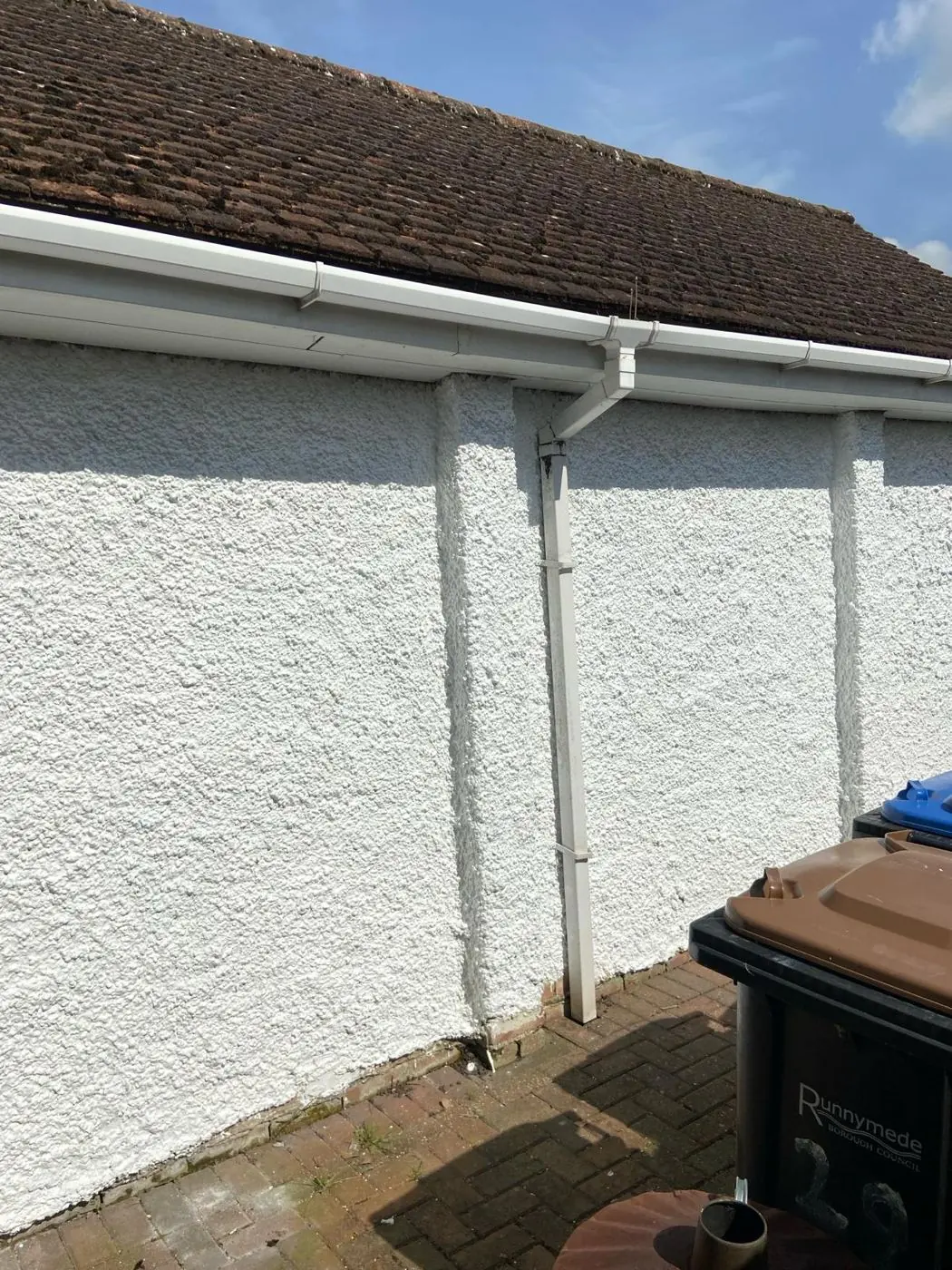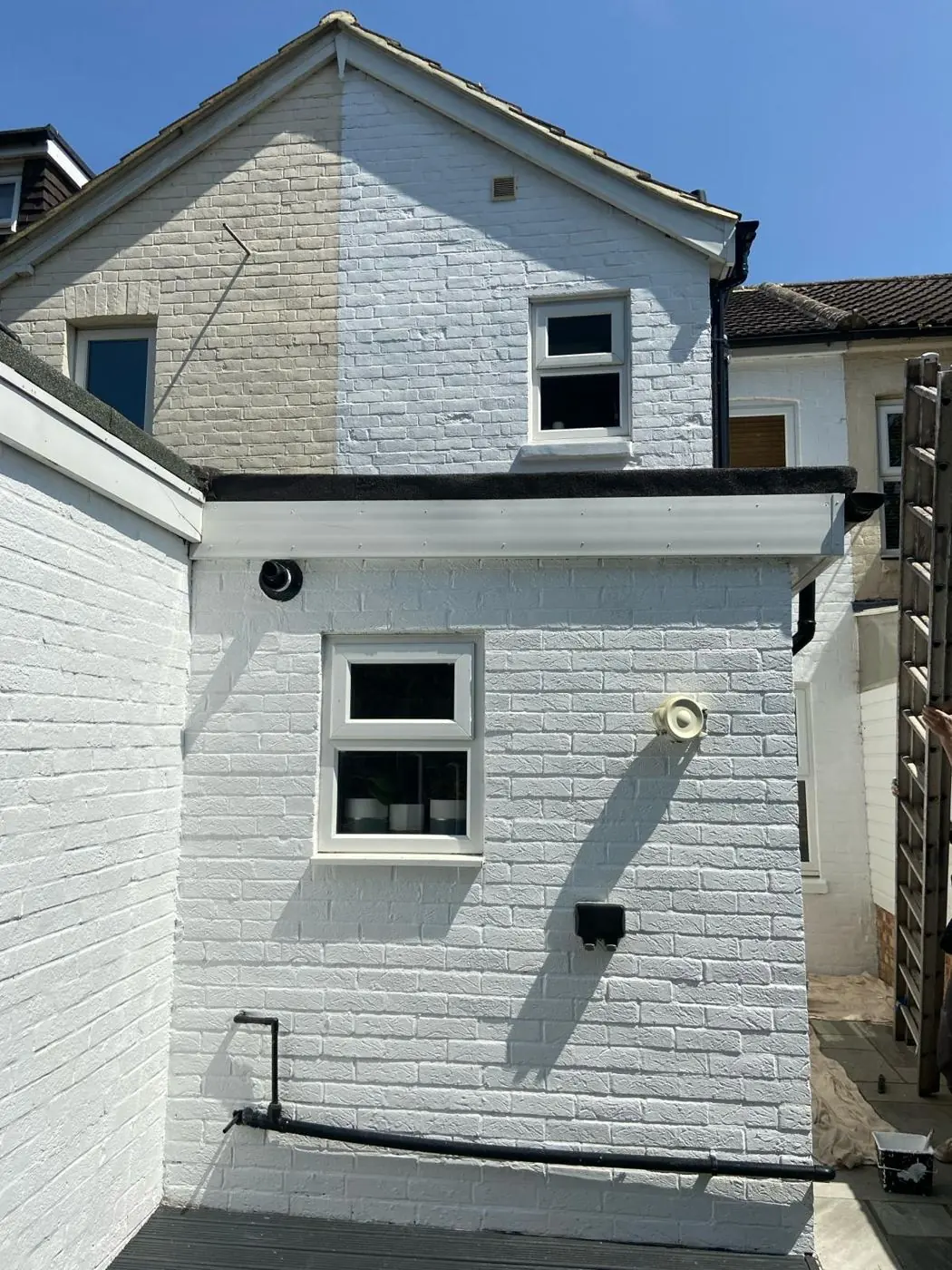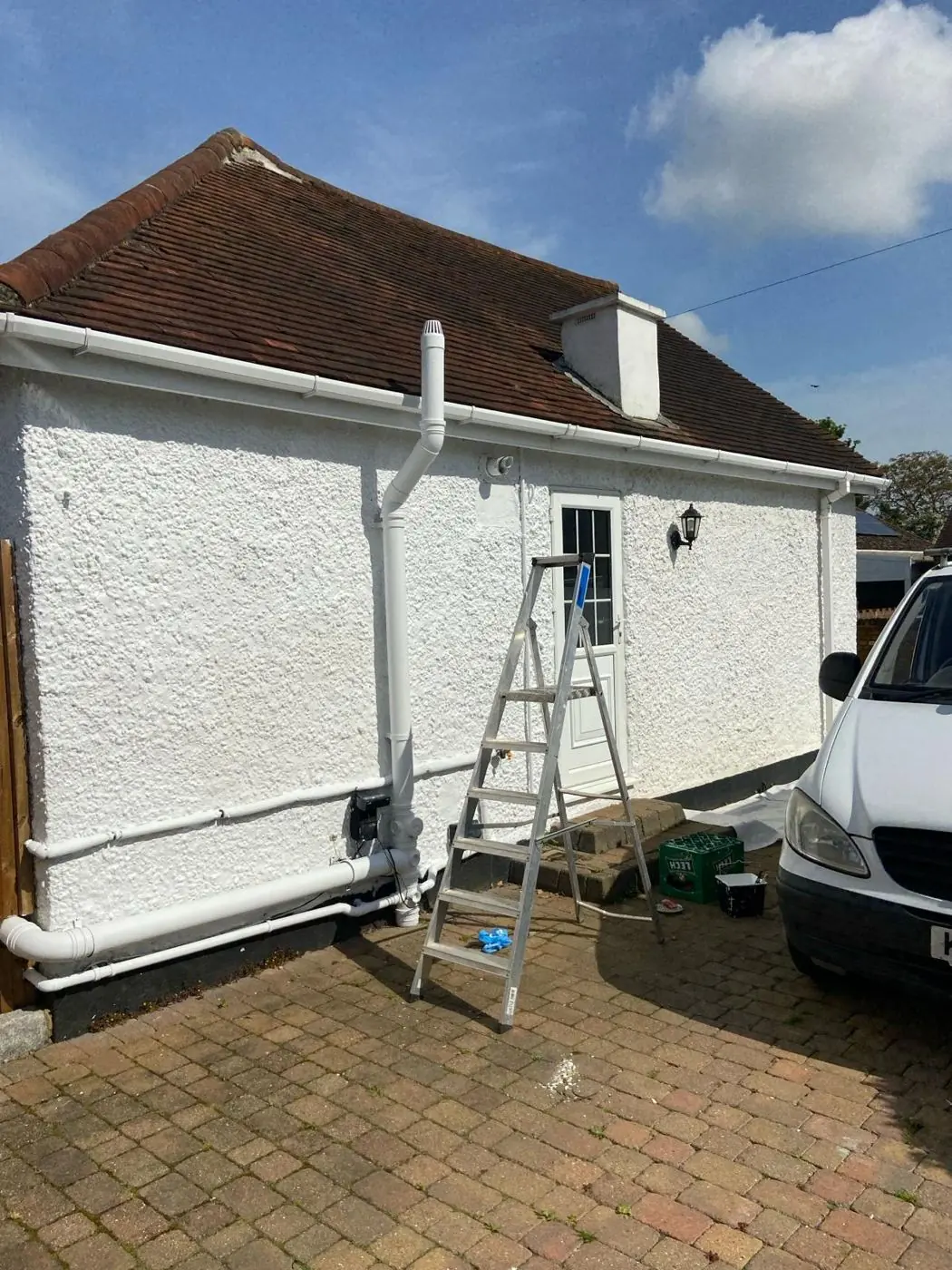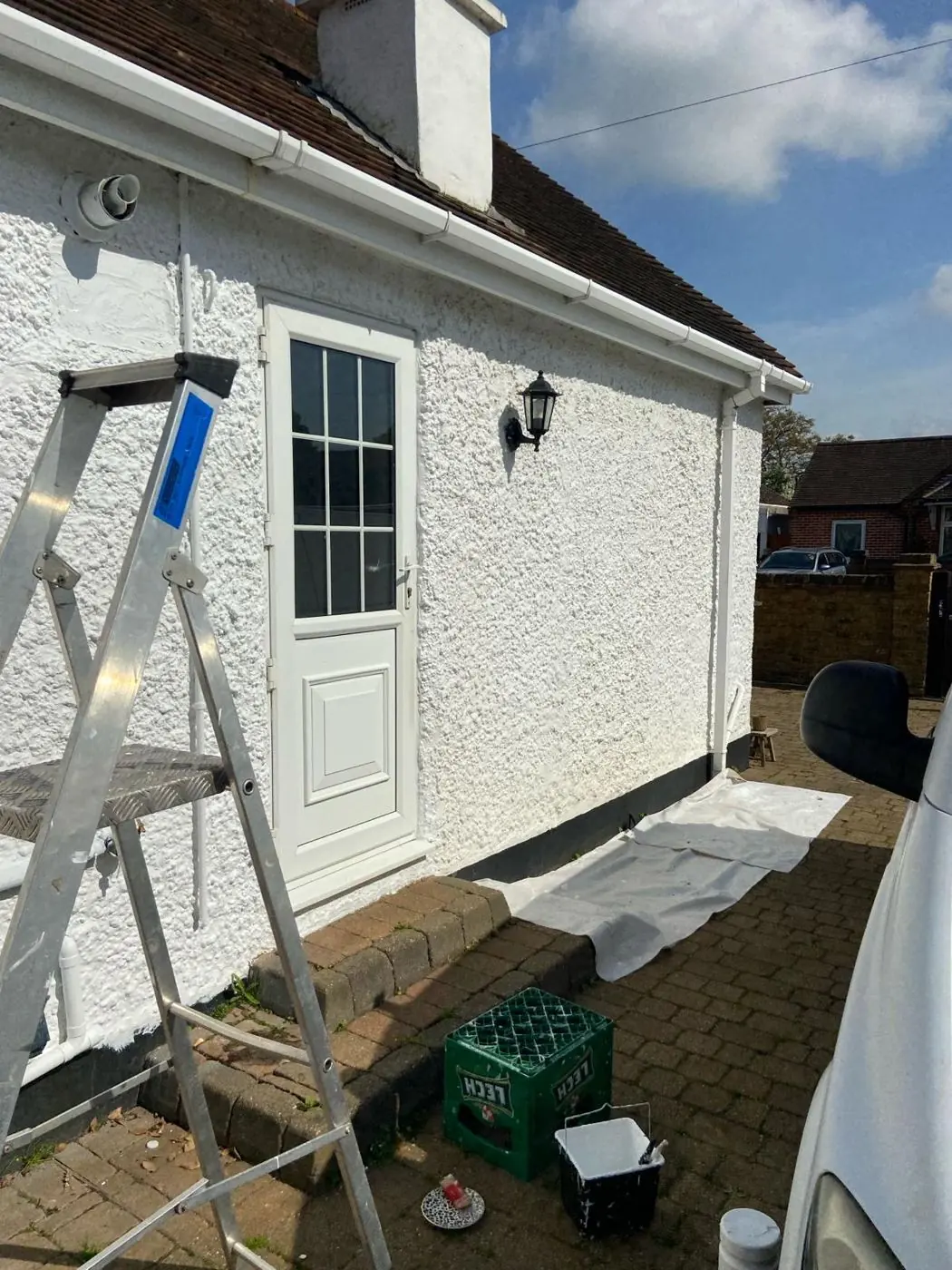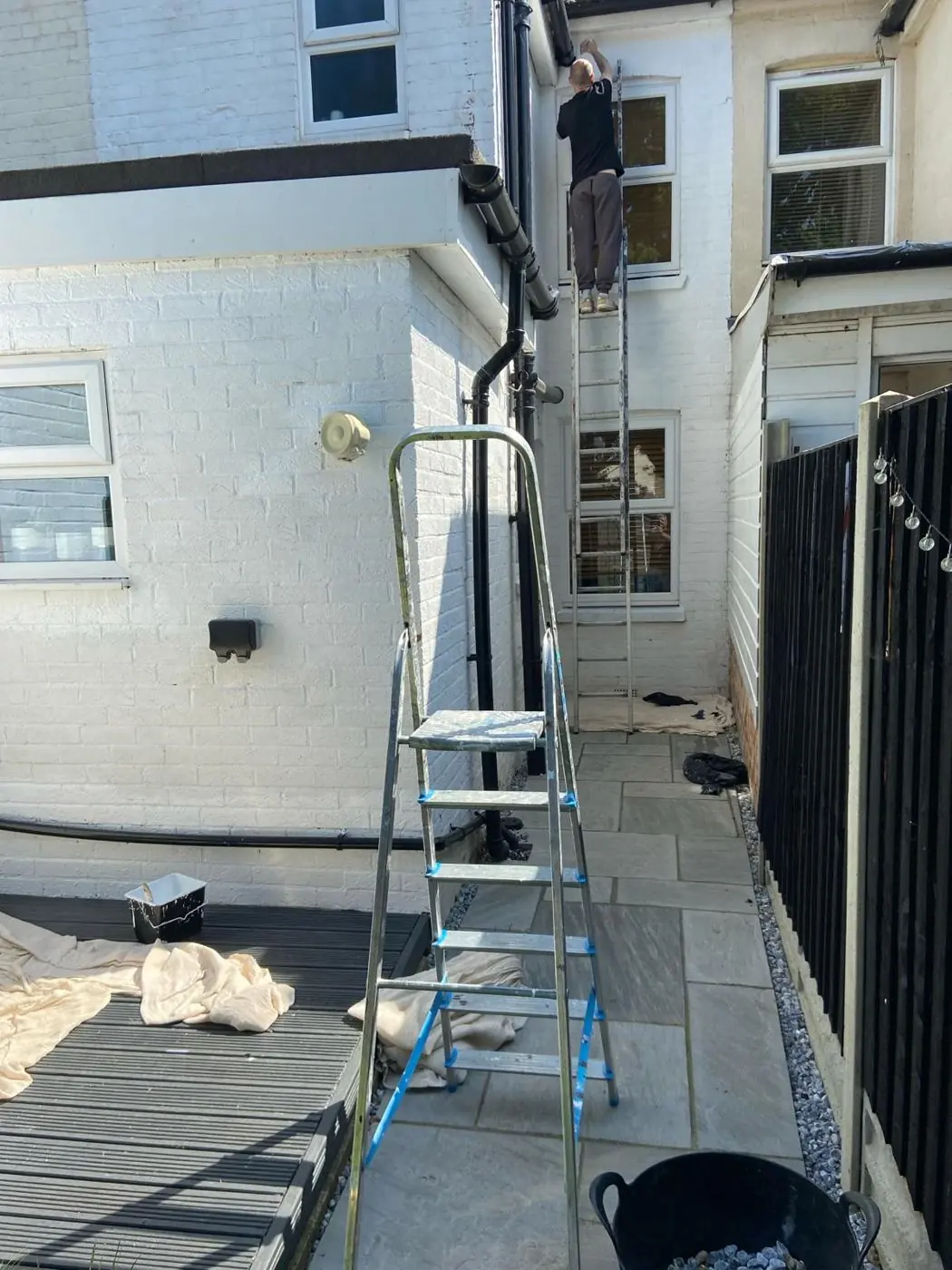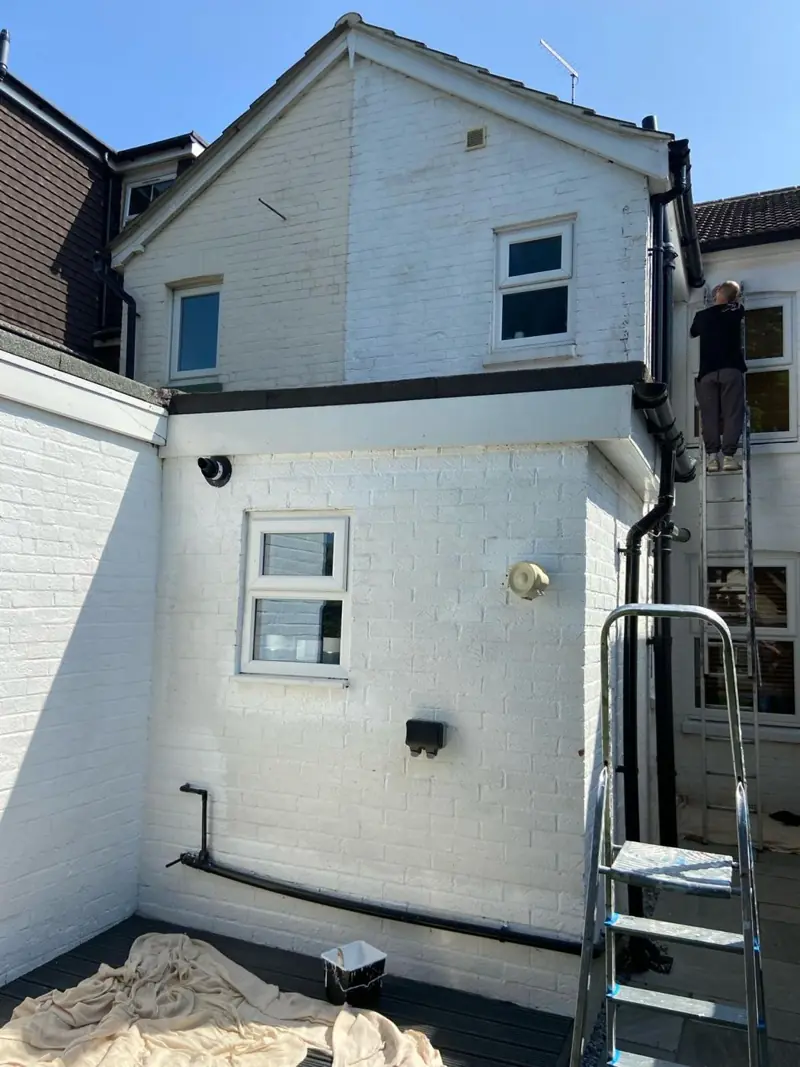
Dean paints timber fascias, soffits, gutters and downpipes on houses in Moulton, NN3, about 4.3 miles north-east of Northampton town centre. Almost all of this work is on the brick estates and newer homes around the village, because the old thatched and stone cottages in the core have little or no boarded eaves.
Where Moulton’s fascias are
Ask which houses in Moulton have fascia boards and the answer follows the age of the building. The historic core has 17th and 18th century cottages under long-straw thatch, slate, plain tile and local pantiles. Thatch has no fascia at all, and the stone cottages generally finish their eaves with a simple detail rather than a run of painted boards. So for this service, the village core is rarely the job.
The estates are a different picture. Detached and semi-detached houses from the middle and later 20th century line Oakley Drive, Albone Close, Pytchley View and Grove Farm Lane on the east side, and Stewart Close, Jeyes Close, Carey Close, Pound Lane and Lunchfield Lane to the west, with Parade Bank as another pocket. These are mostly modern brick, sometimes with a touch of stone dressing, and many still have timber fascias and soffits at the roofline. Much of the 20th and 21st century linear housing along Northampton Lane North and Boughton Road, which has partly joined Moulton to Northampton, falls into the same category, though The Manor House at No. 85 is a listed Georgian exception.
No conservation constraints on most estate rooflines
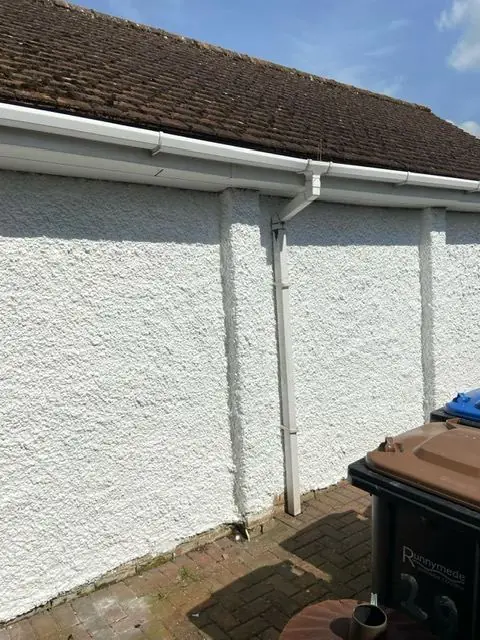
These estates sit outside the Moulton Conservation Area, so the controls that shape window and door colours in the core do not apply to a fascia on Pytchley View or Carey Close. You can keep white, or change to black, anthracite or a dark green, without asking the council. The practical question is consistency: on a semi, a fascia in a new colour will meet the neighbour’s at the party line, and some owners prefer to agree a colour next door so the roofline reads as one.
Newer infill inside or next to the core, such as Honeystones and Church Mews, is worth checking before a colour change, because it may fall inside the boundary that was redrawn in 2017.
Trees, gutters and green boards
Moulton is a leafy village. The parish had 21 Tree Preservation Orders in 2017, with large trees at the rear of plots and along The Grove, Pitsford Road, Overstone Road and Northampton Lane North. That cover matters at the eaves in three ways:
- Leaves and seed cases fill gutters, which then overflow down the face of the fascia and into the soffit joints.
- Shaded boards stay damp longer, so algae and soft spots are more common on north and rear elevations.
- Protected trees cannot simply be cut back to make room for a ladder, so access is planned around branches.
We clear and check gutters as part of the job, probe the boards for soft timber, and tell you plainly if a section needs a joiner before it is worth painting.
Reaching the eaves
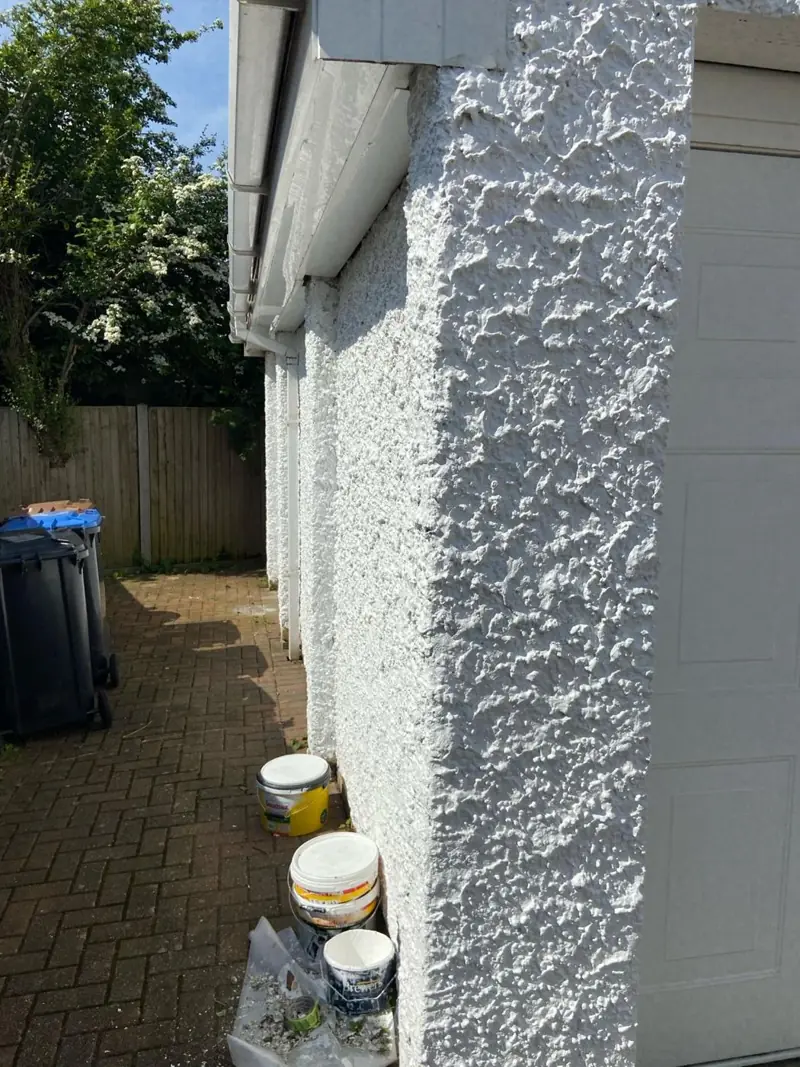
Where an estate house has an open frontage and a drive, ladder and tower access is simple. The ground in Moulton does rise and fall, with ridges at Church Hill, Stocks Hill and Manor Farm and the Pages Brook valley to the north, so on a sloping plot we level a tower rather than lean a ladder off a bank. Conservatories and flat-roofed extensions at the back are protected with boards before any scraping begins.
The step-by-step method, including primers and topcoats for timber and for previously painted uPVC, is on our main fascia and soffit painting page. If you are wondering what a roofline job tends to involve in cost terms, read our painter and decorator cost guide, and see the Moulton area page for everything else we do in the village.
Last updated by Dean, DH Painter & Decorator.