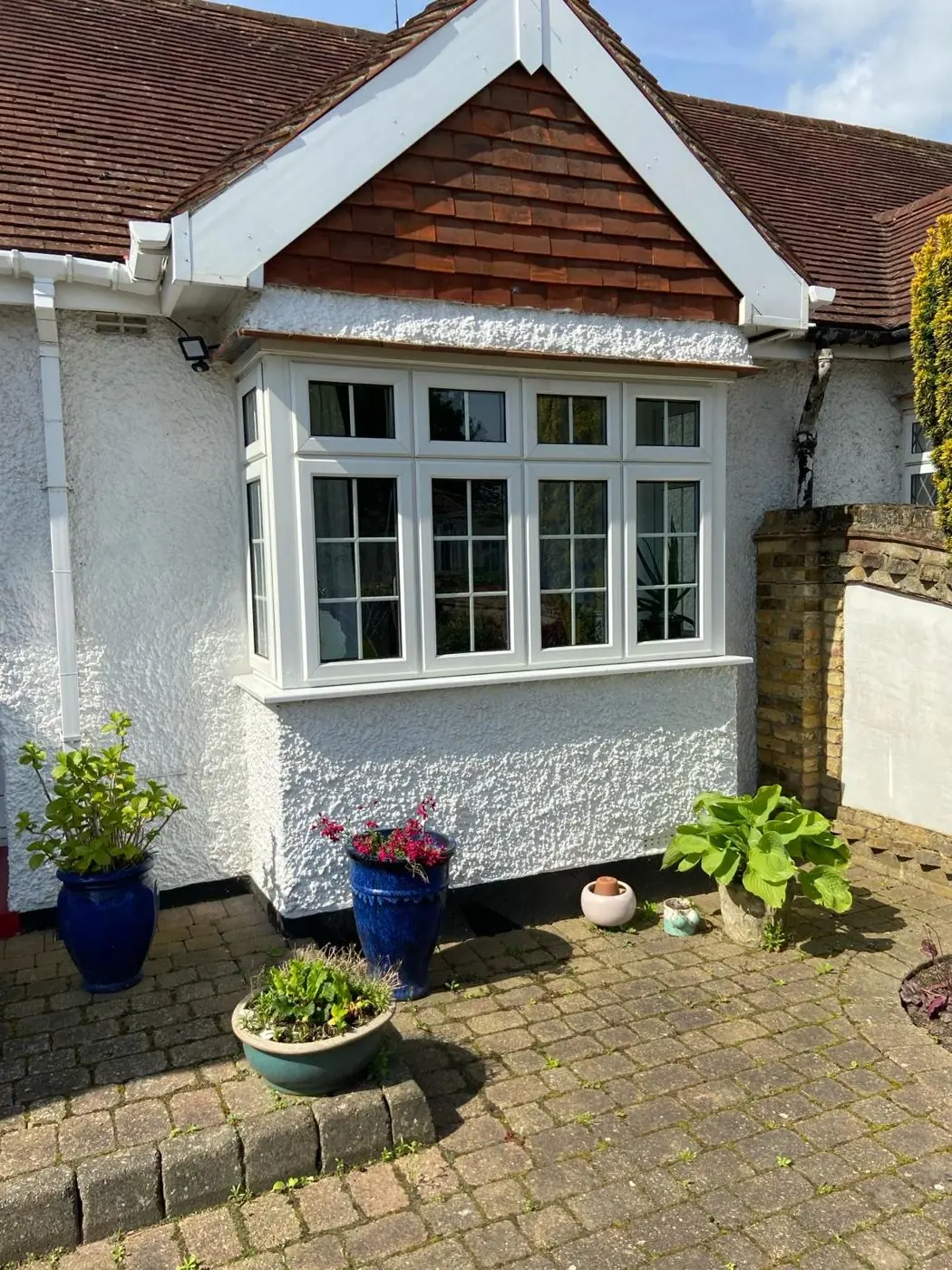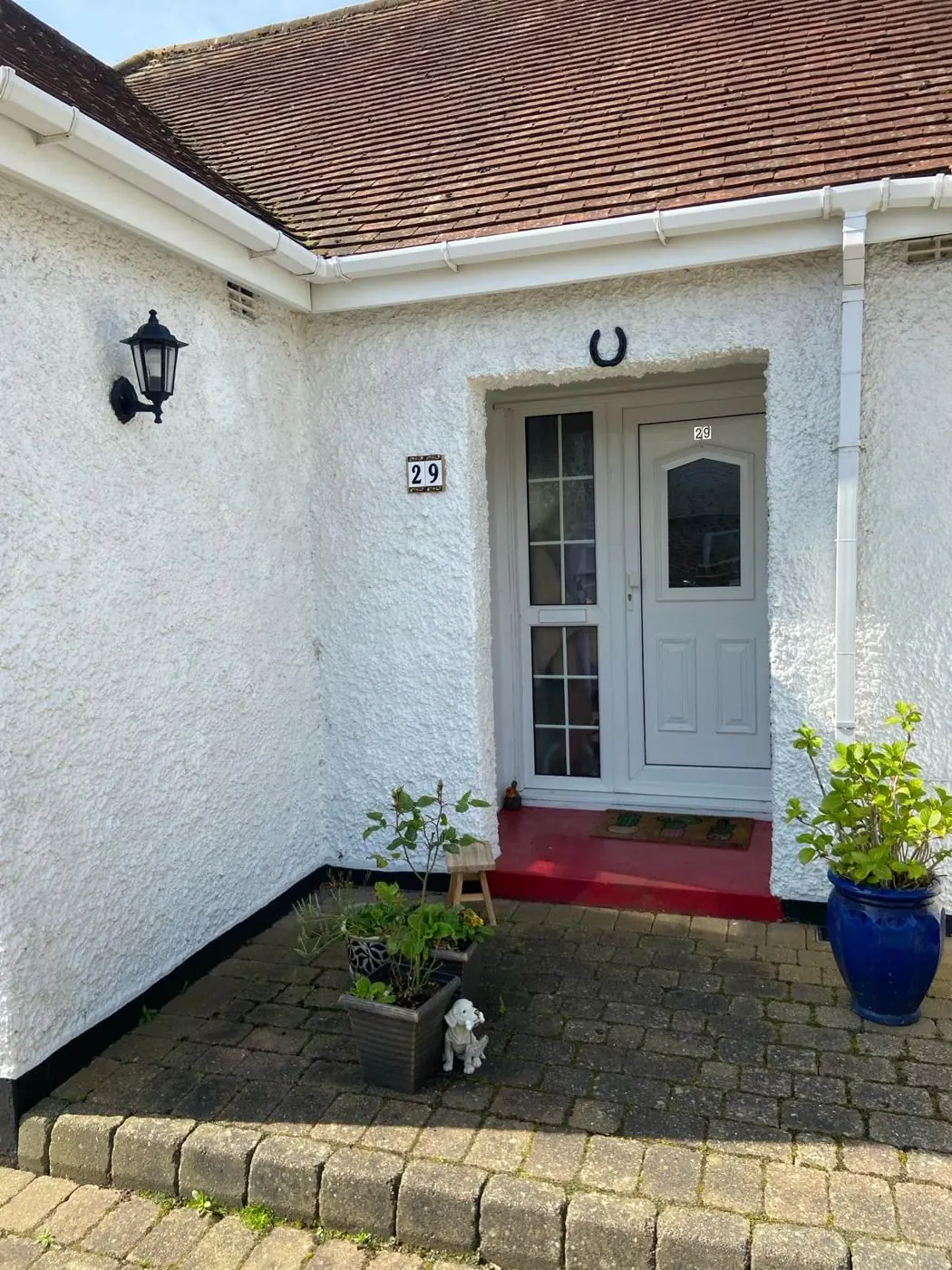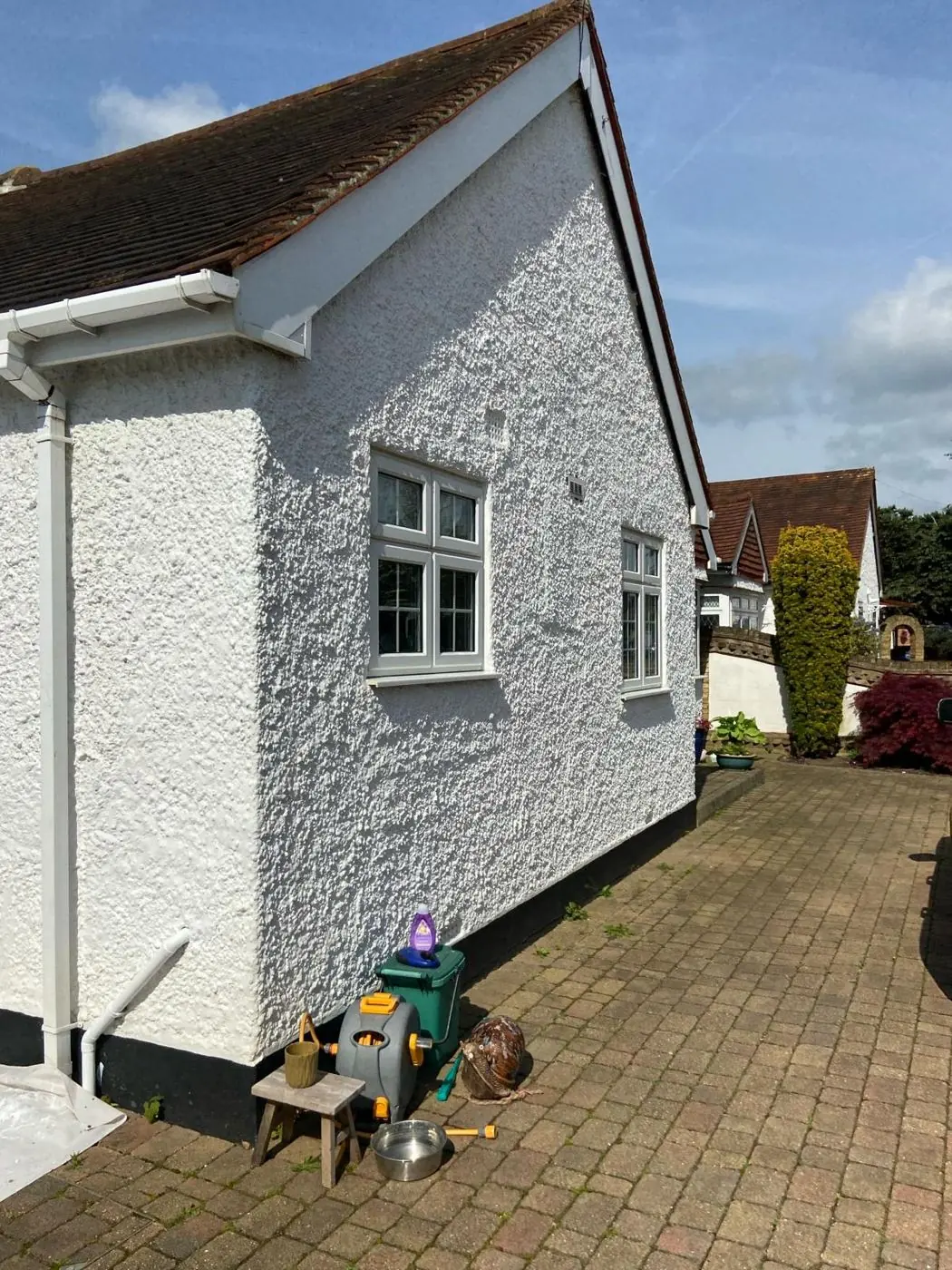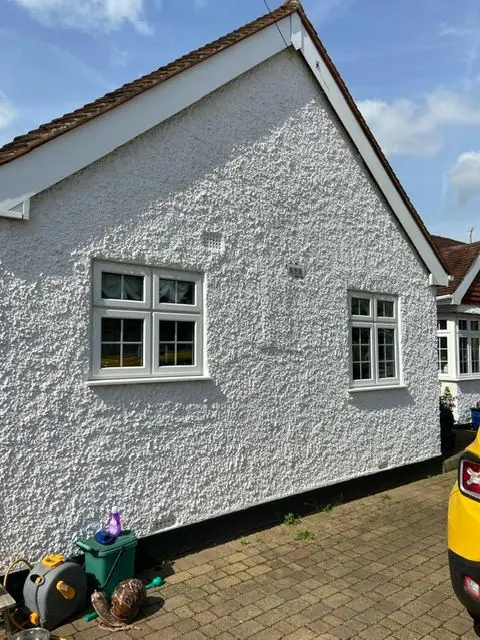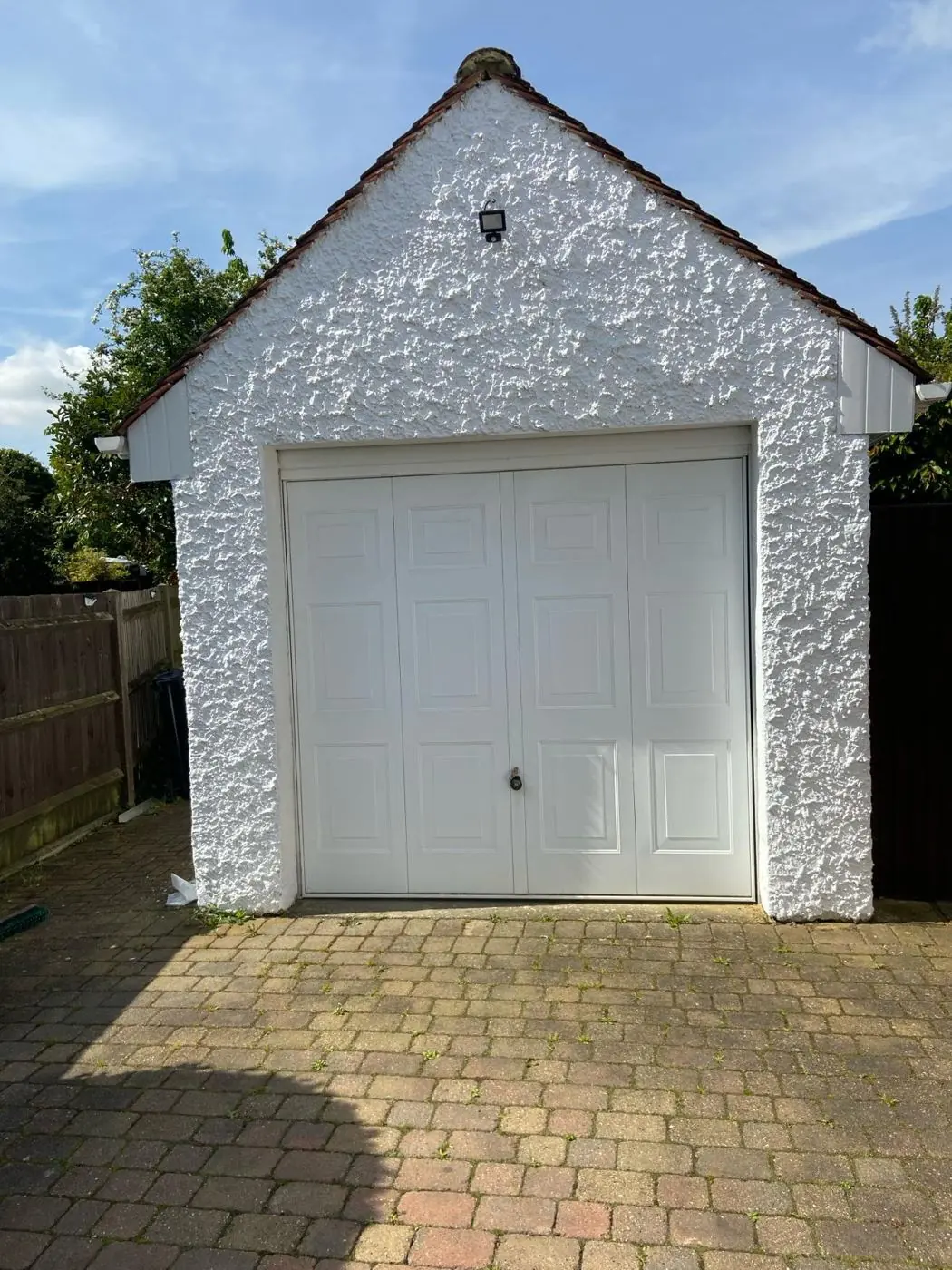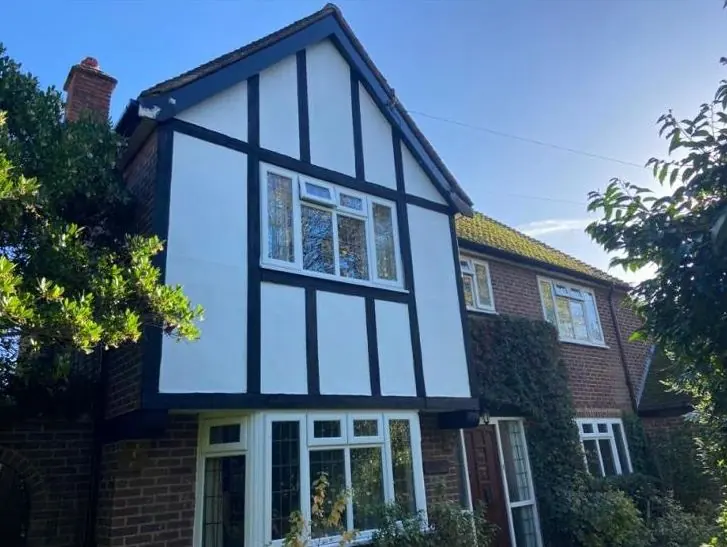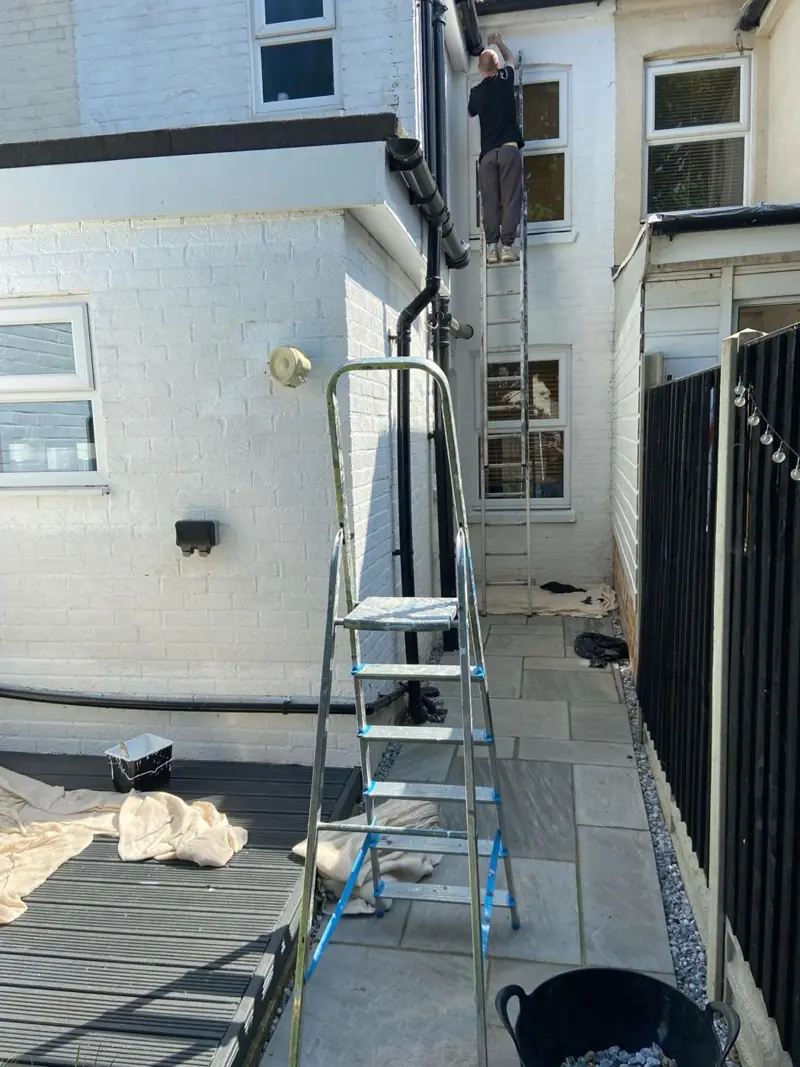
DH Painter & Decorator repaints timber fascias, soffits, bargeboards and gutters in Rectory Farm, about 4.2 miles north-east of Northampton town centre. The estate's rooflines date from 1973-1992, so most original timber is now 30 to 50 years old, and Dean checks it before quoting.
Rooflines at thirty to fifty years old
VOA council tax data puts most of Rectory Farm’s homes in two build periods: 1973-1982 for the northern streets around Olden Road and Collyweston Road, and 1983-1992 for the detached closes off Deansway. Where the original softwood fascias, soffits and bargeboards are still in place, they have now been through three to five decades of weather. At that age the pattern is predictable. Paint lets go at the board ends and the joints first, water gets into the end grain, and the bottom edge of the fascia behind the gutter goes soft.
Whether a roofline can simply be repainted depends on how far that has got. We probe every board, especially the corners of gable ends and the sections behind gutter outlets, and the quote says plainly which lengths need a repair before any paint goes on. Soffits are checked too, because on boxed eaves a stained or sagging soffit board often means the fascia above has been letting water in for some time, and vents or bird gaps in the soffit need keeping clear when it is painted.
Repaint, repair or cap with uPVC?
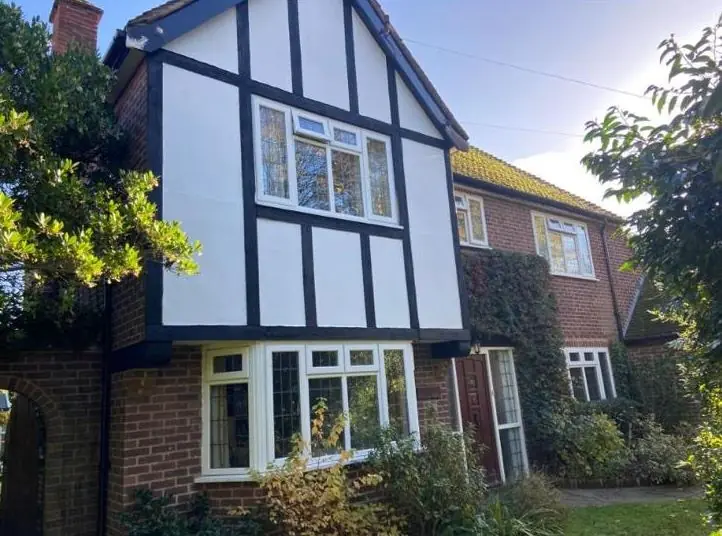
Some houses on the estate may already have had their timber capped or replaced with uPVC, so timber and plastic can sit side by side on the same Close. If your timber is sound, preparing and repainting it is a smaller job than replacement and keeps the house matching its original neighbours. If several boards are rotten along their length, replacement or capping by a roofline installer may make more sense, and we will tell you that honestly rather than paint over decay. Small areas of rot can be cut out and spliced or filled with a two-part resin, then primed and painted.
Gutters and downpipes are part of the same job. On a 1980s house they may be original plastic that has faded, and a suitable primer lets them take a fresh colour that matches the new fascia.
Heights and ladder positions across the estate
| House type | Where on the estate | What it means for the roofline |
|---|---|---|
| 1970s end and mid terraces | Ermine Road, Mortar Pit Road, Pilton Close, Leben Square | Long continuous fascia shared visually with neighbours; front ladder positions may sit on a footpath Walk |
| 1980s detached houses | Bentley Close, Healey Close, Deacons Court, Allard Close | Longer eaves runs, plus bargeboards where there are gables; drives give room to set ladders or a tower |
| 1980s semis | Morgan Close, Riley Close, Alvis Court | A roofline shared with the house next door; the line where your board meets the neighbour’s needs a clean finish |
| Detached bungalows | Fellmead Court | Low eaves that can usually be reached from short ladders or steps |
On a terrace the fascia often runs across several houses as one line, so painting one house in a new colour stands out. Shared-ownership and housing-association homes, which make up a large part of the northern area, may also need landlord consent for a colour change. White or the existing colour avoids that question.
Working under the eaves on a footpath-fronted home
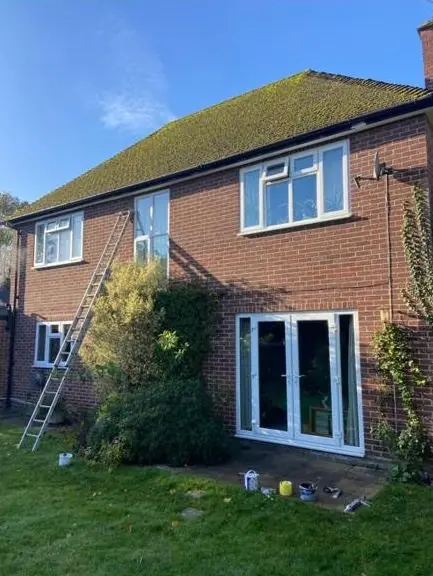
Where a house faces a pedestrian Walk rather than a road, we set ladders with the path in mind, use a stand-off so the gutter takes no weight, and keep a clear route for people passing. Scrapings fall onto sheets, not the path, and we sweep before we leave each day.
Our main fascia and soffit painting page sets out the preparation steps in full. For how pricing works, read the painter and decorator cost guide, and see the Rectory Farm area page for the estate as a whole.
Last updated by Dean, DH Painter & Decorator.