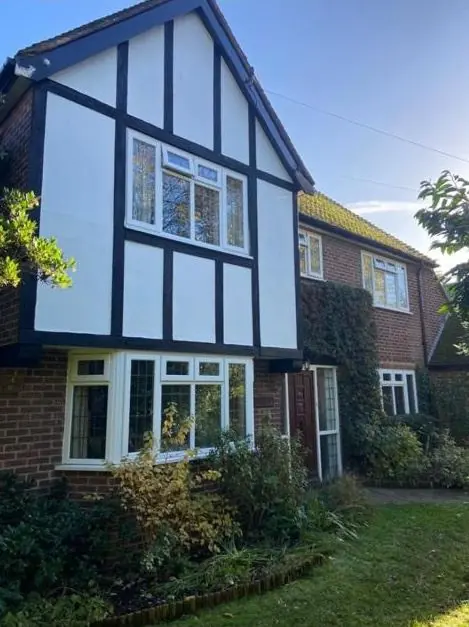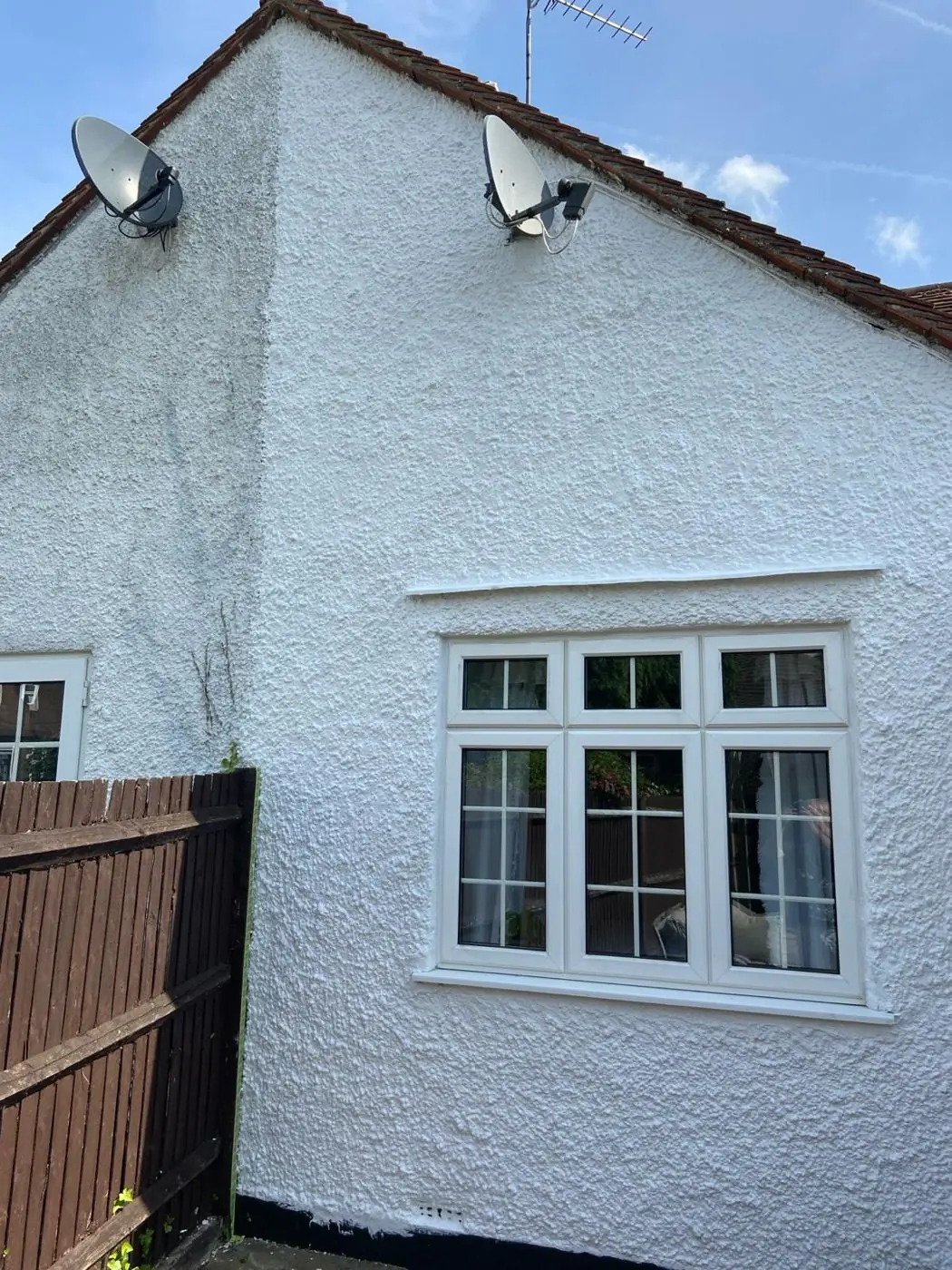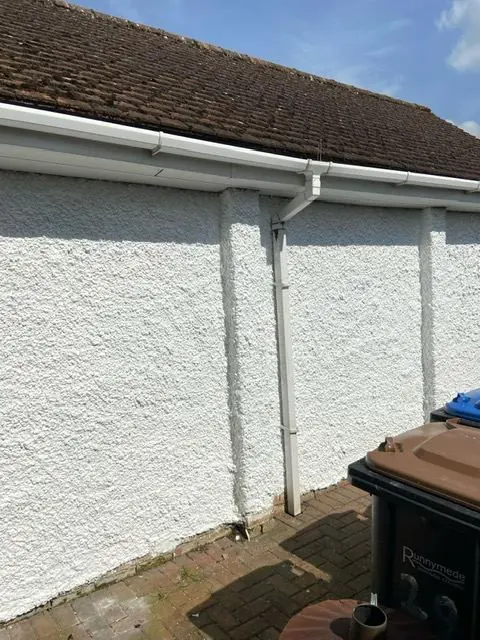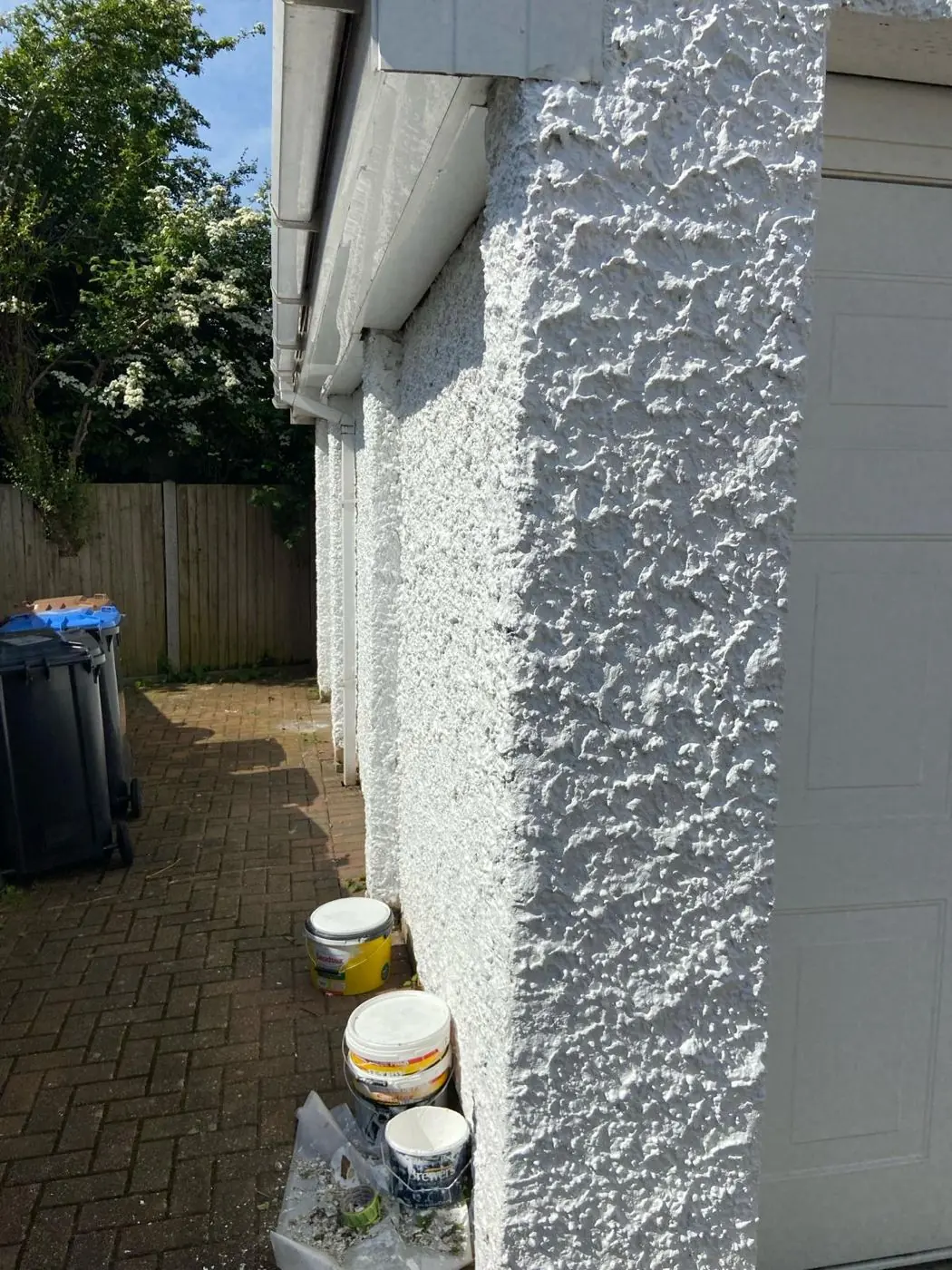
Dean paints timber fascias, bargeboards and porch canopies, and cleans plastic rooflines, on homes across Overstone Leys, a 4.6-mile run north-east of Northampton town centre. Because the houses are all recent, many rooflines here are likely uPVC, so the first step is finding out which parts are timber.
Timber or plastic? Find out before you book
Houses on a modern volume-built estate like Overstone Leys usually leave the factory with plastic fascias and soffits, and where that is the case they should not be painted as a matter of routine. They need a wash. Painting uPVC is possible with a specialist primer, but it turns a low-maintenance board into one that needs repainting for good, so Dean only suggests it if you want a colour change badly enough to accept that.
A quick way to check: tap the board. Plastic sounds hollow and flexes slightly; timber is solid. Look at the joints too. Plastic boards meet with clip-on trims, while timber has painted butt joints and, often, visible filler. On many houses the answer is mixed, with plastic fascias but timber in other places. The roofline parts on new builds most likely to be timber are:
- bargeboards on front-facing gables
- porch canopies and their brackets
- decorative trims on bay roofs
- any timber cladding detail under the eaves
Painting new timber that was only given one coat
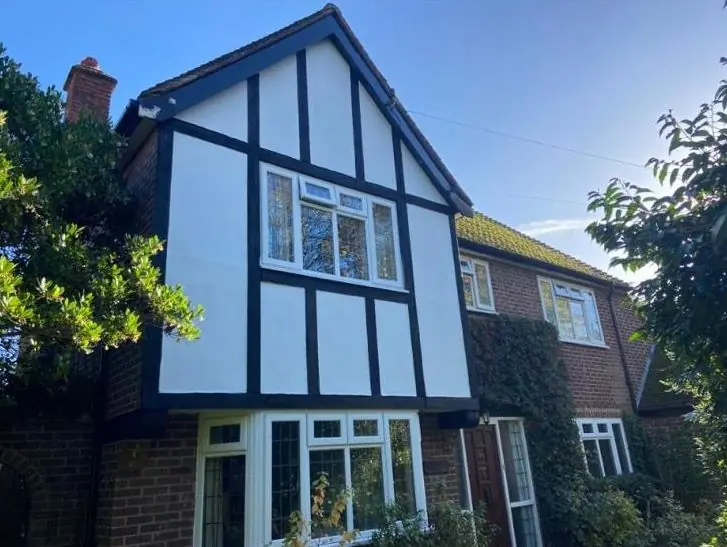
Where those parts are timber, they often arrive with a thin factory coat and unsealed cut ends. Water gets in at the end grain first, so that is where Dean starts: sand back, seal the ends and knots, spot-prime any bare wood, then an undercoat and an exterior gloss or satin topcoat. Gutters and downpipes on the same elevation can be done in the same visit if they are painted rather than plastic. The full process is on our main fascia and soffit painting page.
Cleaning a plastic roofline properly
For plastic fascias and soffits, cleaning is the service. Traffic grime from the A43 builds up on houses on the A43 side of the estate, and dust from the parcels still under construction dulls white uPVC quickly. Dean uses a non-abrasive cleaner and soft brushes. Scouring pads and solvents leave plastic permanently dull or scratched, so they stay in the van. Soffit vents are left clear, and the window heads below are wiped as we go, because grime washed off a fascia otherwise runs straight down the glass. Gutters are checked for blocked outlets while we are up there, because overflowing water stains boards and walls below.
Ladders, towers and narrow closes
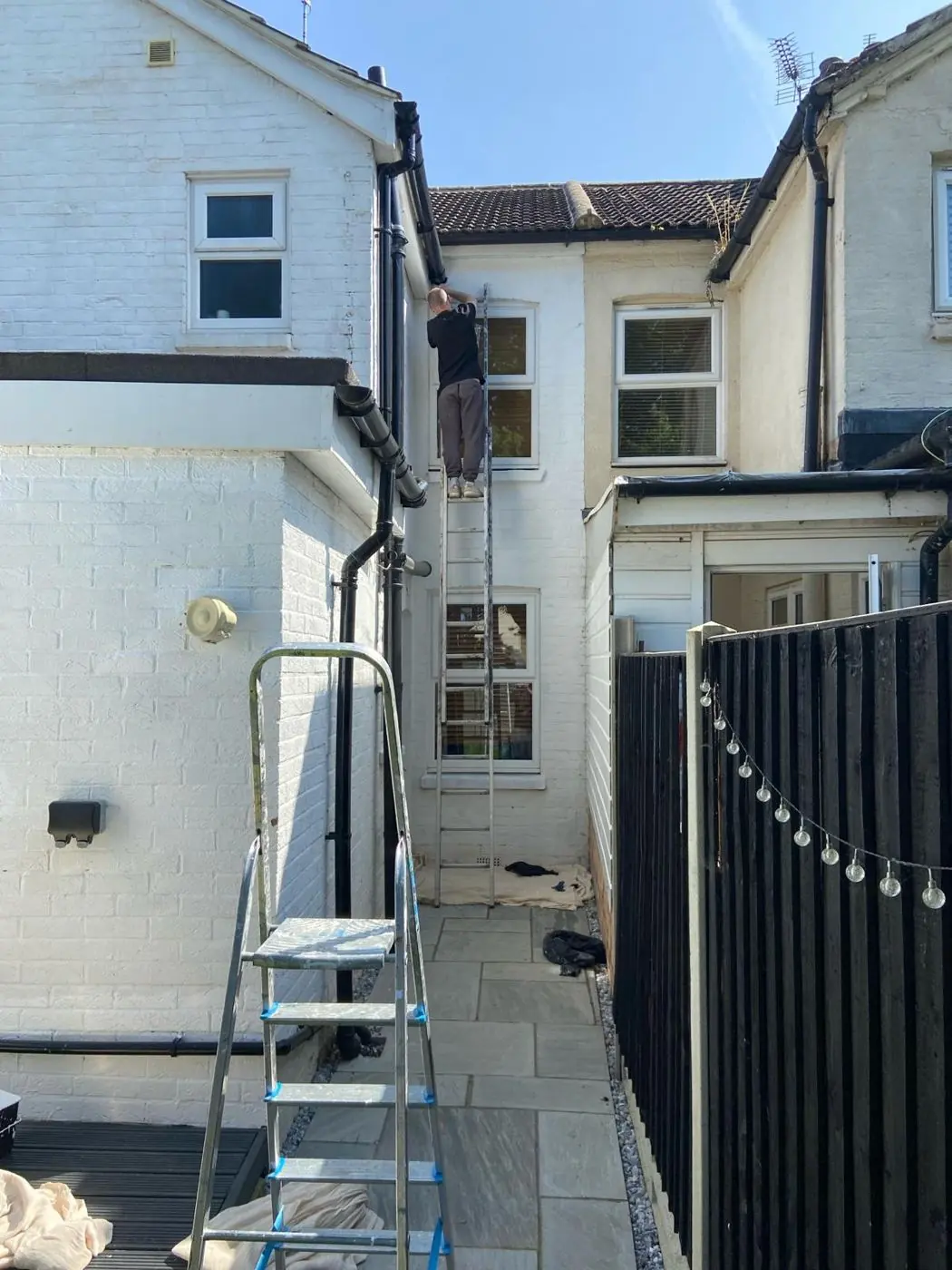
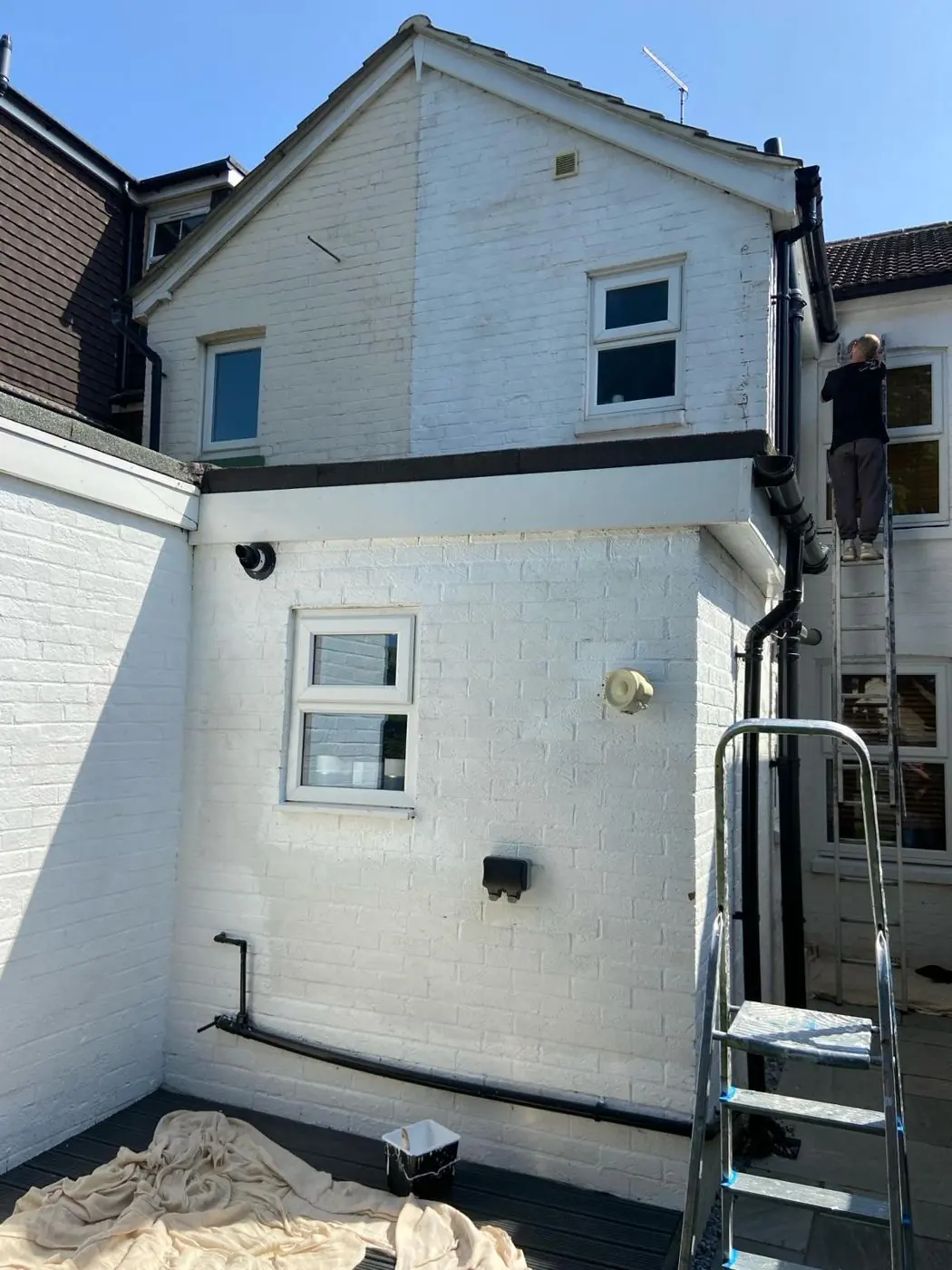
Overstone Leys is a mix of spine roads and small closes such as Indigo Close, Kestrel Close and Maize Close, some with shared drives. Roofline work needs ladders or a small tower, and the van has to be parked without blocking neighbours. Before work starts, Dean will:
- check where the van can stand without obstructing a shared drive
- let you know which days the access equipment will be up, so you can warn next door if it stands near their boundary
- avoid parking or working on construction access roads on parcels still being built
Work above conservatories, porch roofs or garden rooms gets extra care too: dust sheets and boards protect glazing and plastic roofs below from drips and dropped scrapings, and nothing heavy is leaned against gutters that were fitted only a few years ago and may not be fixed to take the load. Three-storey house types need a tower rather than ladders for safe working at the eaves, and that is factored into the visit. For other jobs on homes here, see our Overstone Leys area page, and for costs, our painter and decorator cost guide.
Last updated by Dean, DH Painter & Decorator.