
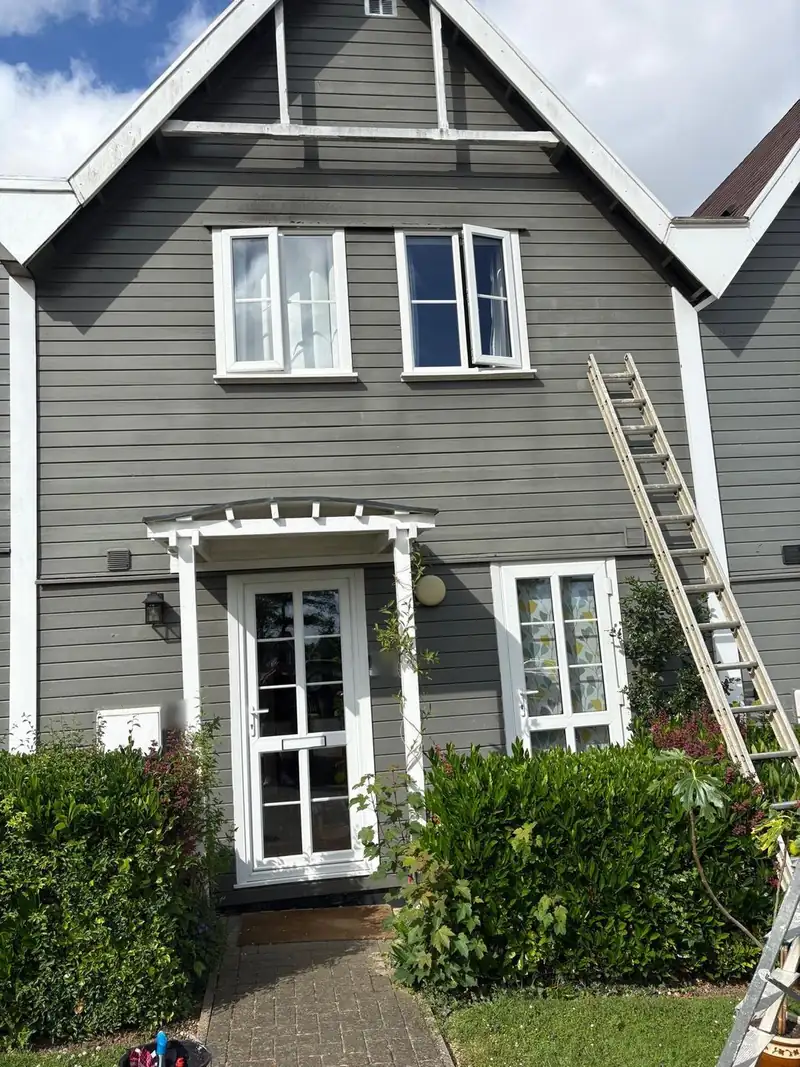
The low streets by the Dallington Brook, the exposed top of Gladstone Road and the traffic on Spencer Bridge Road each change how and when a house in Spencer can be painted outside. DH Painter & Decorator works on the estate, NN5 7, about a mile from Northampton town centre towards Dallington.
Painting near the Dallington Brook
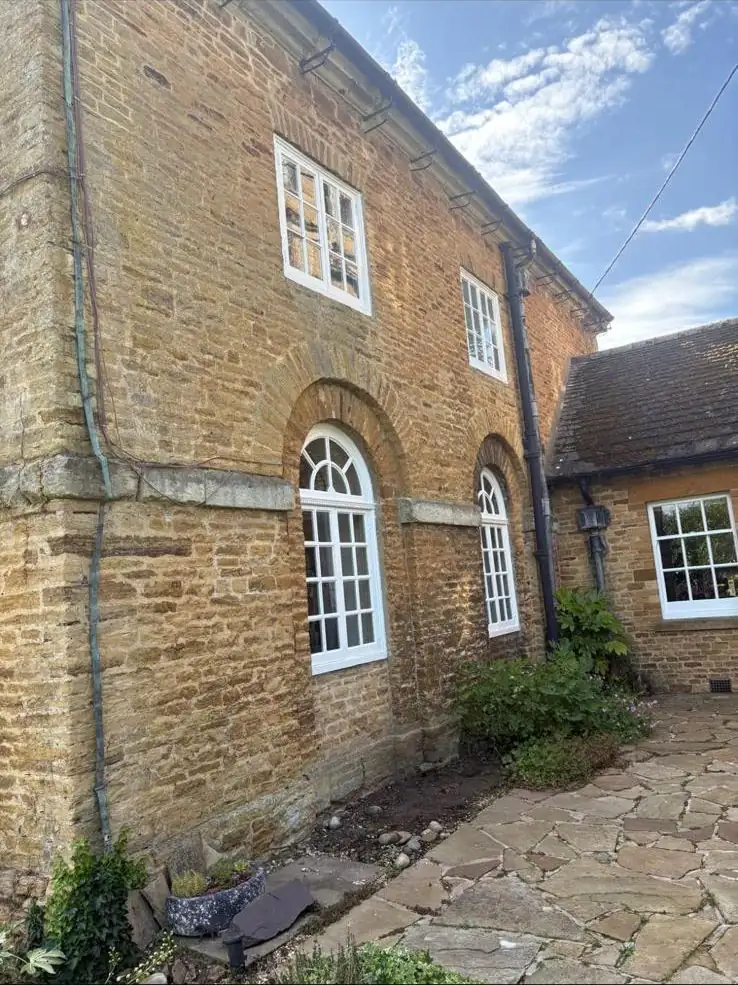
The lower, south-western part of Spencer lies in the brook’s flood plain. Planning data puts most of Lyttleton Road and Shankley Way, Swansea Crescent, and parts of Swansea Road, Tintern Avenue and Baring Road in Flood Zones 2 and 3, and parts of Newcombe Road in Flood Zone 2. The Environment Agency’s warning area for the Dallington Brook and the Brampton Branch names Swansea Road, Swansea Crescent, Shankley Way, Baring Road and Newcombe Road. Gladstone Road, Pembroke Road, Tenby Road, Cardigan Close and Spencer Haven sampled clear.
For outside paintwork, low ground matters in a few particular places. The bottom courses of brick or render, door bottoms and thresholds, sills and the foot of timber door frames can stay damp long after the rest of the wall has dried, especially on elevations that see little sun. Paint over that moisture lifts within a season. On these streets we test the low areas before coating, keep paint off surfaces that sit in standing water, and allow longer between coats. A door frame that is soft at the foot is flagged for repair before anything goes over it.
What gets painted on a double-glazed house?
Of 166 energy certificates sampled across 42 Spencer postcodes, 149 record full double glazing, so window frames are rarely part of the job. The paintwork that remains on a typical semi or terrace here is:
- front and back doors and frames that are still timber, sanded, primed where bare and finished in exterior gloss or satin;
- porches and canopies, which take rain off the roof above them;
- fascias, soffits and bargeboards that have not been replaced with uPVC;
- painted masonry, including any rendered panels or plinths;
- sheds, outbuildings and garage doors in the side and rear gardens;
- cast-iron or previously painted gutters and downpipes.
There are exceptions. Single glazing is still recorded at a flat in Countess Court and at 1 Chepstow Close, so the odd older frame survives, and where it is timber it needs rot checks, filling and priming before the top coats. Rooflines have their own page: fascias and soffits in Spencer.
| Type | Share |
|---|---|
| Detached | 4.7% |
| Semi-detached | 40.4% |
| Terraced | 35.5% |
| Flat or maisonette | 19.3% |
Source: Census 2021 (ONS), accommodation type (TS044) tables via Nomis. The figures are for the census area that best fits Spencer, so its edges are not exactly Spencer’s.
From 64 to 81 metres: the climb up Gladstone Road
Gladstone Road rises from about 64 metres at its Lyttleton Road end to 81.6 metres at the top. The upper houses catch more wind-driven rain than the sheltered streets below, and the elevations facing the prevailing south-westerly weather wear first: chalky masonry paint, cracked gloss on the bottom rail of a door, bare timber at the end of a bargeboard. Two things follow. Preparation on those houses is thorough, with every loose edge scraped back and bare timber primed the same day it is exposed. And timing matters: the work waits for a settled spell of several dry days, with temperatures comfortably above the minimum on the tin. Our guide on when to paint outside in the UK explains the window.
On one estate, that can mean different streets suit different days. After a wet night the exposed houses at the top of Gladstone Road dry quickly in the wind, while thresholds and low brickwork on Lyttleton Road and Swansea Crescent can still be damp at midday. Where a job spans the outside of a house in each area, or a landlord has several, the upper streets go first in a changeable week and the low streets wait for a longer dry run. Painting a north-facing wall late in the day, when dew settles on it, is avoided on both.
| Fact | Detail | Source |
|---|---|---|
| Flood Zones 2 and 3 | Most of Lyttleton Road and Shankley Way; Swansea Crescent; parts of Swansea Road, Tintern Avenue, Baring Road | planning.data.gov.uk |
| Flood warning area | Dallington Brook and Brampton Branch (055FWFPNNE06) | Environment Agency |
| Height | Gladstone Road: about 64 m at the bottom, 81.6 m at the top | Streetlist |
| Glazing | 149 of 166 sampled energy certificates fully double glazed | EPC register |
Frontages on Spencer Bridge Road and Harlestone Road
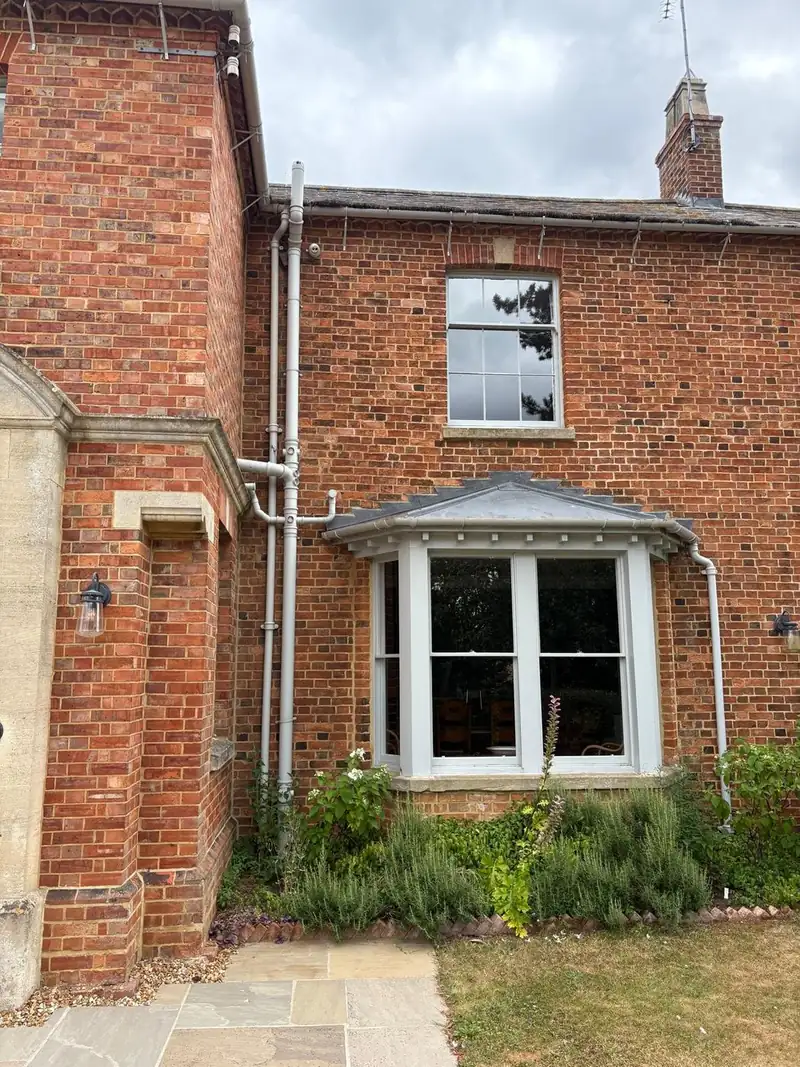
Houses on the A4500 and A428 face heavy traffic heading for Weedon Road and the M1. A film of exhaust and road dirt builds up on front walls, doors and sills, and fresh paint will not bond to it. Those elevations are washed with a degreasing cleaner and rinsed before any scraping starts. Parking is the other problem: there is little room to stop a van outside a house on a main road, so we agree where to unload and park before the start date, and keep ladders and towers inside the property boundary rather than on the pavement.
Systems and timing for outside work are set out on our main exterior painting page; everything else we do on the estate is listed on the Spencer page.
Outside painting in Spencer: questions
Something not covered here? Call Dean on 07539 779 036.
When is the right time to paint the outside of a house on Lyttleton Road?
Late spring to early autumn, after several dry days. Most of Lyttleton Road is in Flood Zones 2 and 3 by the Dallington Brook, so thresholds, sills and the lowest brick courses can stay damp after the walls above have dried. We check those areas with a moisture meter, leave them until they are dry and avoid booking the work straight after heavy rain.
Why does the paint on houses at the top of Gladstone Road wear faster?
Height and exposure. The top of Gladstone Road is 81.6 metres up, nearly 18 metres above the bottom, and the upper houses take wind-driven rain straight on. Paint on the weather side breaks down sooner, especially on door bottom rails and the ends of bargeboards. Thorough preparation, priming bare timber straight away and a settled weather window make the finish last longer.
Can you paint the front of a house on Spencer Bridge Road with all the traffic?
Yes, with some planning. The front is washed with a degreaser first, because traffic film stops paint bonding. We agree parking and unloading in advance, keep access equipment within your boundary and protect the pavement edge. Paint is applied when spray from passing vehicles is not landing on it, so very wet days are avoided on that frontage.
My windows are all uPVC. Is there still outside painting worth doing?
Usually, yes. In a sample of 166 Spencer energy certificates, 149 homes were fully double glazed, yet most still have a timber front door or frame, a porch or canopy, fascias or bargeboards, and a shed or garage door. Painted masonry and old cast-iron gutters need attention too. Dean will walk round with you and say what is worth doing now and what can wait.
How do you deal with a damp door threshold on Shankley Way?
All six points sampled along Shankley Way fall in Flood Zones 2 and 3, so thresholds and the foot of door frames there can stay wet. We probe the frame for soft timber, let the area dry, treat any end grain, prime and paint, and keep paint clear of the gap where water collects. If the timber is rotten, it is flagged for a joiner before painting.
Sources
- Flood risk zones dataset, Planning Data (MHCLG) (accessed 2026-11-16)
- Flood warning area: Areas near the Dallington Brook and Brampton Branch in Northampton, Environment Agency (accessed 2026-11-16)
- Gladstone Road, NN5 7, Streetlist (accessed 2026-11-16)
- Find an energy certificate: NN5 7 postcodes (166-certificate sample), GOV.UK (accessed 2026-11-16)
- Energy certificate: Flat 10, Countess Court, GOV.UK (accessed 2026-11-16)
- St James End, Northampton, Wikipedia (accessed 2026-11-16)
Last updated .


