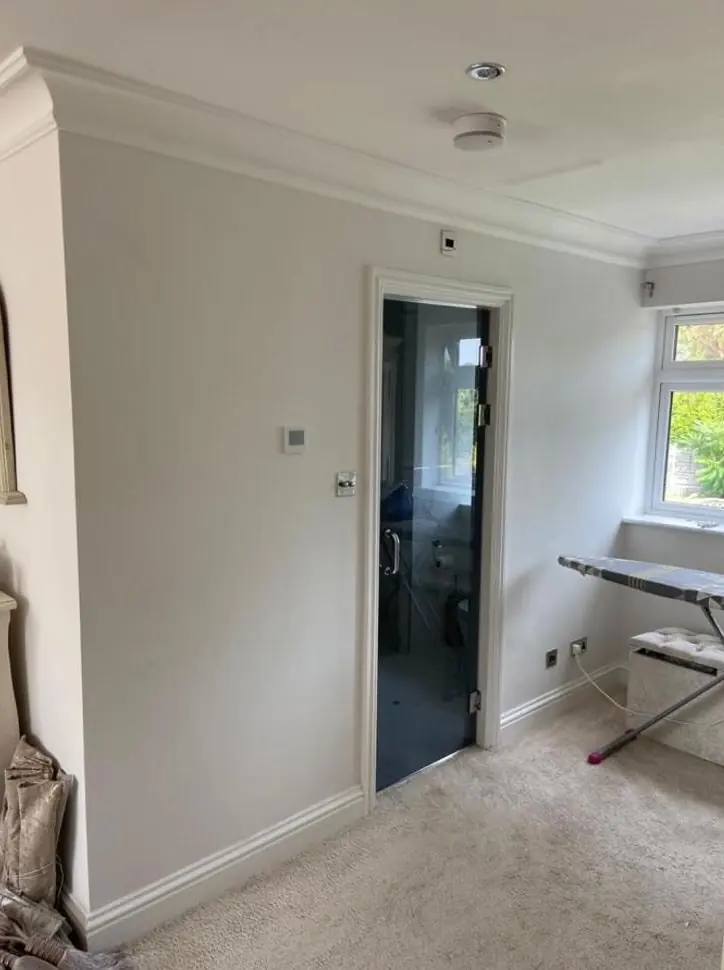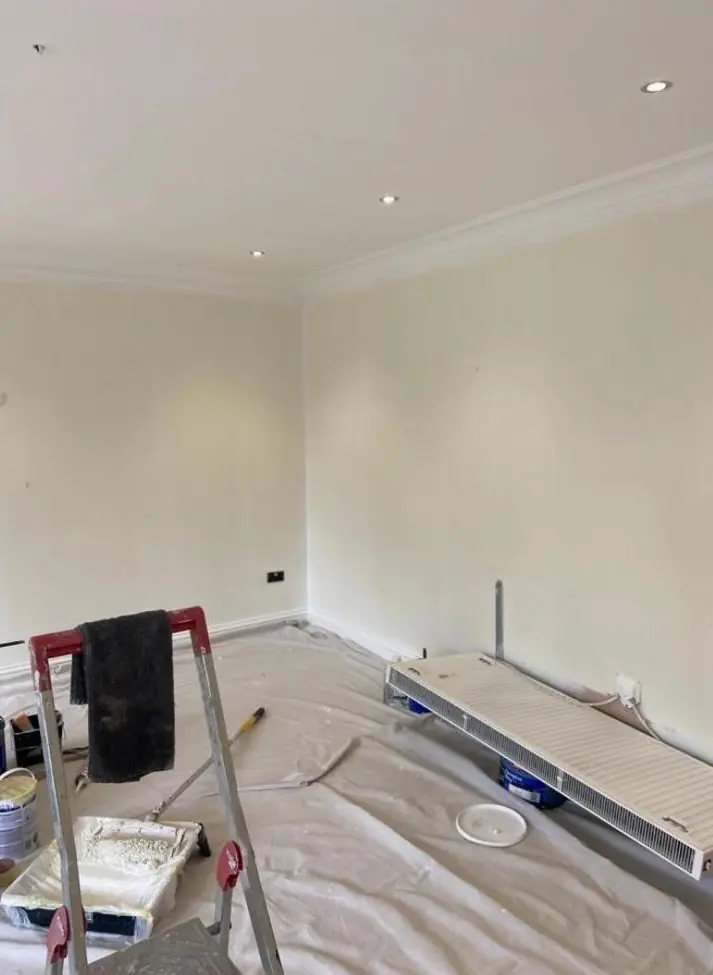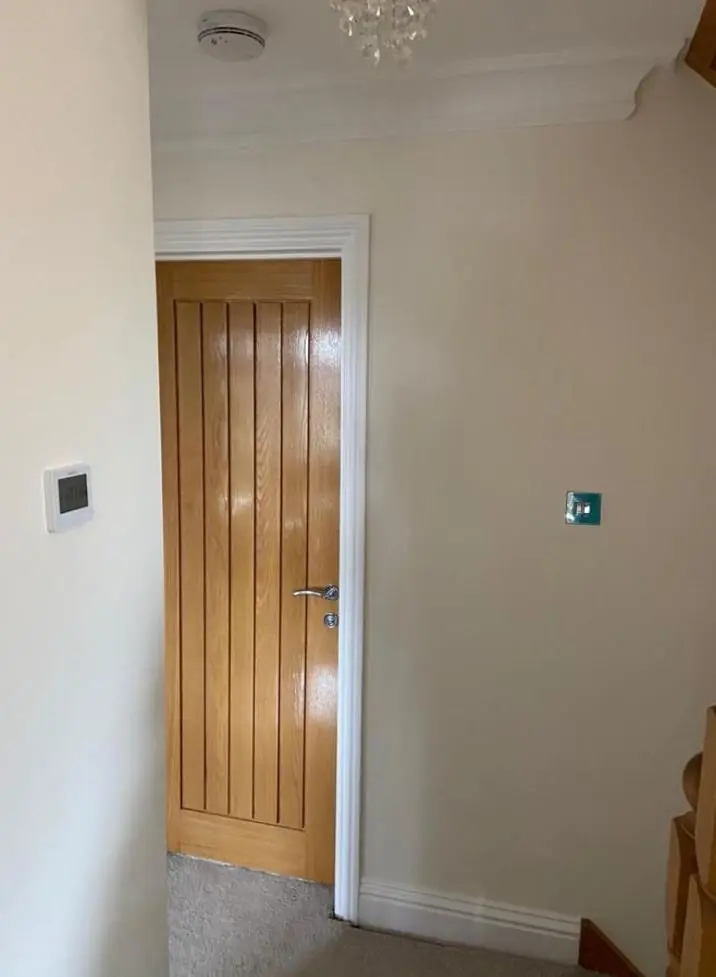
DH Painter & Decorator provides decorative paint finishes in Spencer, NN5, roughly a mile from the town centre towards Dallington. Because Spencer's homes have little ornate plasterwork, Dean focuses on modern effects: chimney-breast features, picture-rail two-tones, painted panelling and colour-drenched small rooms.
A modern estate with little period detail to pick out
Decorative painting in a Victorian house often means picking out cornices, ceiling roses and panel mouldings. Spencer is different. Its estate streets were mostly built between the late 1930s and the 1950s, with flats and bungalows around 1970, Lyttleton Road from 1986 to 2009 and Countess Road in recent years. The ornate plasterwork that heritage effects depend on is largely missing. What makes sense in a Spencer home is modern decorative work: a feature wall with a reason to exist, a two-tone split, painted panelling, or one colour carried across walls, woodwork and ceiling.
The 1890s terraces on Althorp Road and Seymour Street, just over Spencer Bridge Road in St James, are a separate conversation. Our main decorative finishes page covers the full range of effects; this page sticks to what suits Spencer’s own houses.
Working with what mid-century houses do have
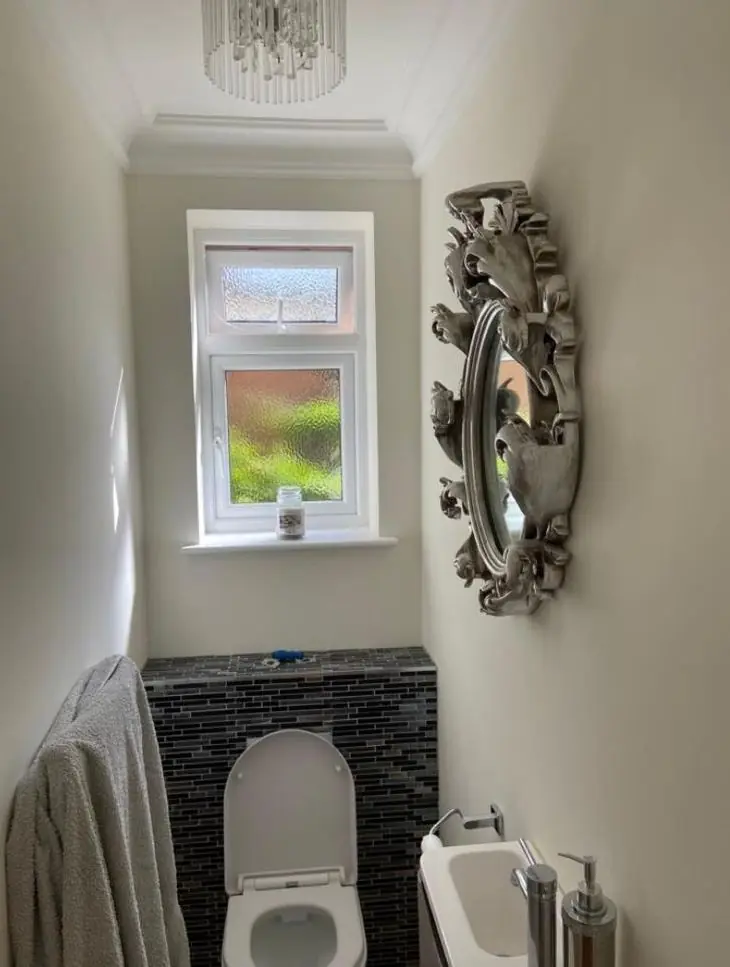
The semis and short terraces on streets such as Tenby Road, Monmouth Road and Streatfeild Road were plainly built, but they usually keep two features worth using.
- The chimney breast. It is already the focus of the front room, so a deeper colour or a hand-applied effect such as a soft colourwash belongs there rather than on a random wall. The alcoves can take the same colour to make one block, or stay light so the breast stands forward.
- The picture rail. Where one survives, it gives a ready-made line for a two-tone scheme: a stronger colour below, the ceiling colour carried down to the rail above. That brings a tall-feeling room down and gives a plain box some structure.
Where there is no rail, a painted band or half-height split does the same job. We mark the line with a laser level rather than measuring down from a ceiling that may have dropped out of true over the decades.
Panelling and colour-drenching in smaller rooms
Painted wall panelling, whether simple battens up a stair wall or shaker-style panels behind a bed, adds detail these houses were never given. The two-storey semis have straight, compact stairwells, which suit a panelled dado running up with the flight. Every pin hole, joint and mitre is filled and sanded before priming, or an eggshell finish will show each one in the light from the landing window.
In the small rooms of the 1970s maisonettes on Newport Road and Cardigan Close, or the box bedroom of a semi, colour-drenching works well: walls, skirting, door and sometimes ceiling in one colour or close tones of it. Edges blur, and a compact room looks deliberate rather than cramped. The catch is that every surface needs equal preparation, because there is no contrast line to pull the eye away from a poor patch.
Rented flats, newer walls and when to hold back
Countess Road’s recent flats are mostly privately let, and landlords there generally want finishes that are easy to put back to neutral. A single feature wall in emulsion that two coats of the base colour will cover is more realistic than a glazed effect. Newer plaster on Countess Road and Lyttleton Road may still be settling, and we would rather wait for hairline cracks to show and be filled than watch one run straight through a hand-applied finish.
Dean will say honestly if an effect would look busy in a small Spencer room. The district is about a mile north-west of town, so sample boards can be brought round and judged in your own light. Our Spencer area page covers the other services we offer there, and the written quote is free.
Last updated by Dean, DH Painter & Decorator.