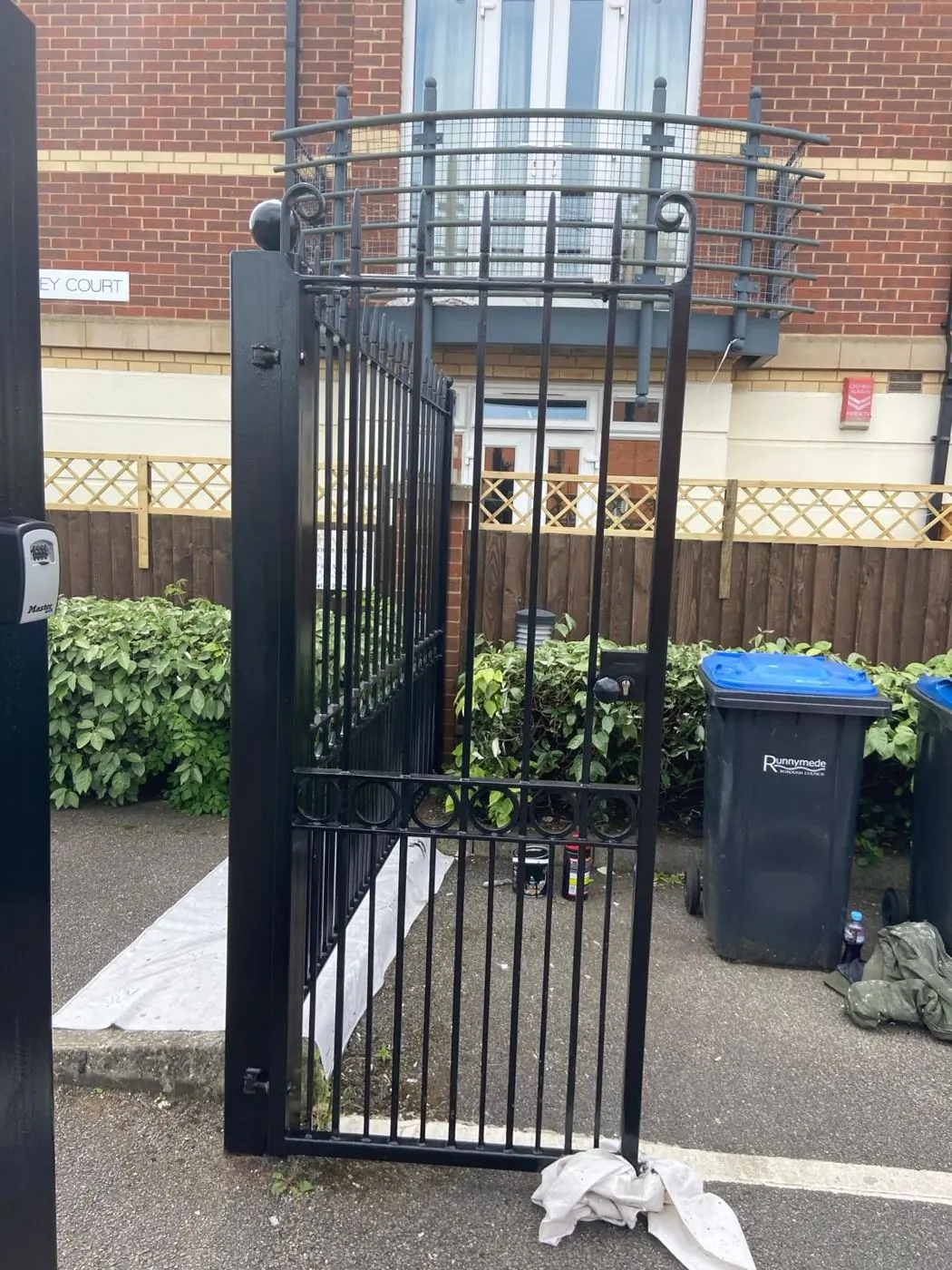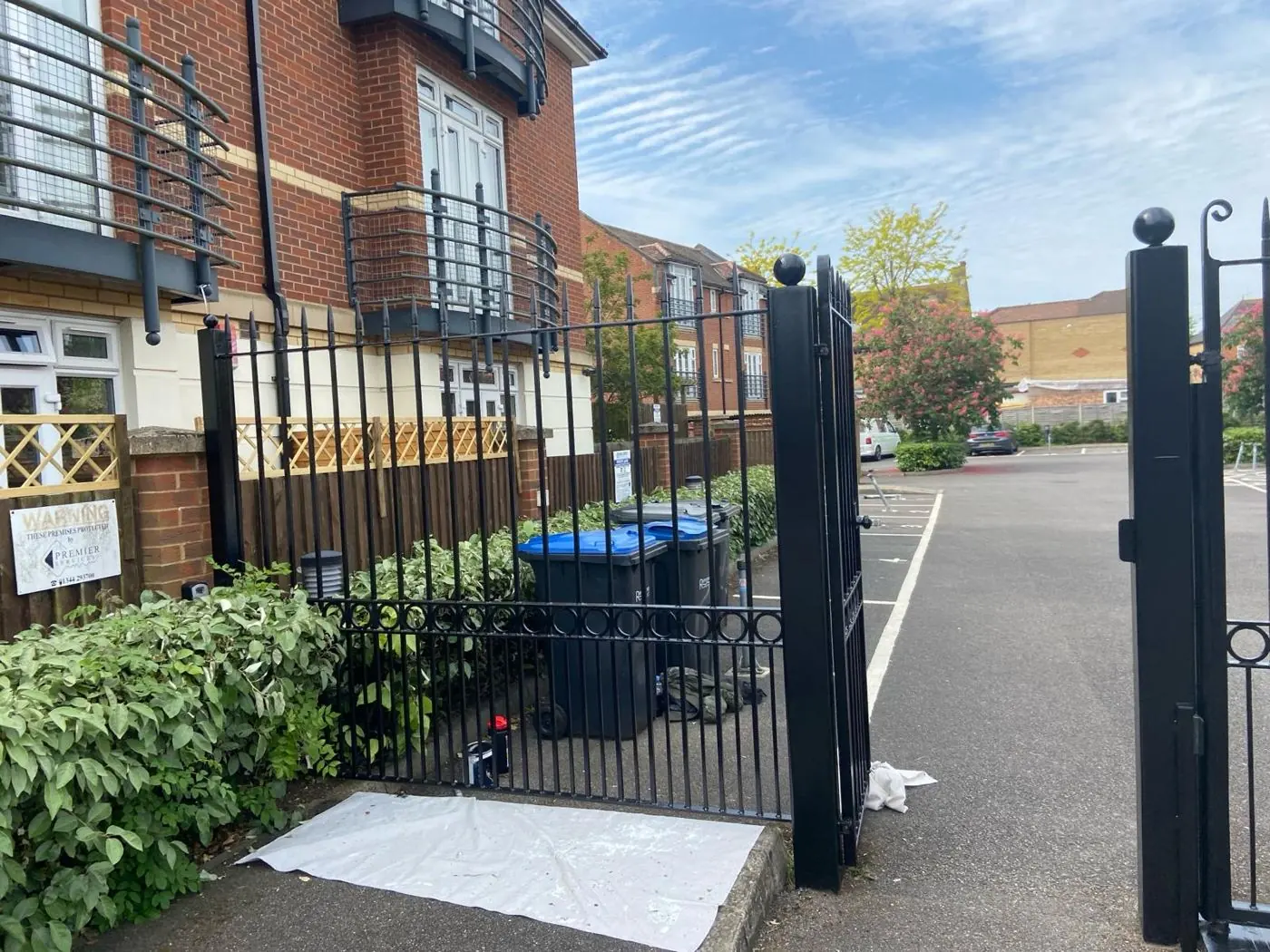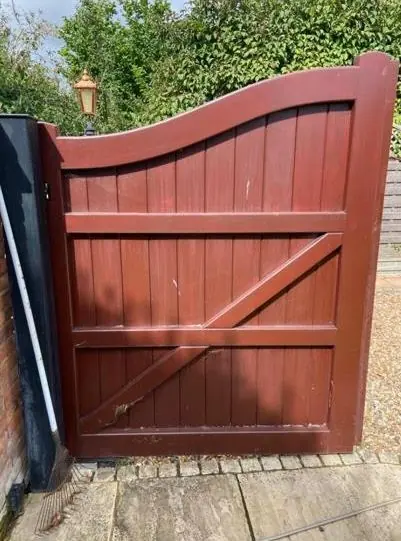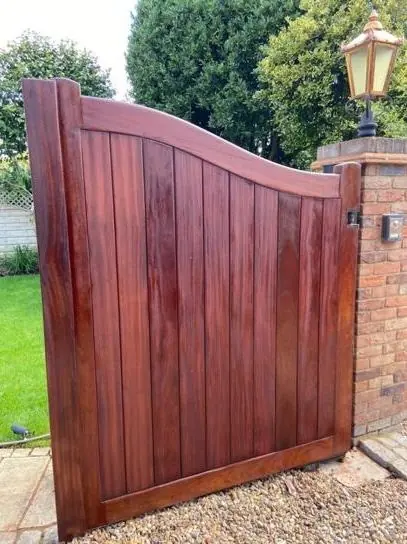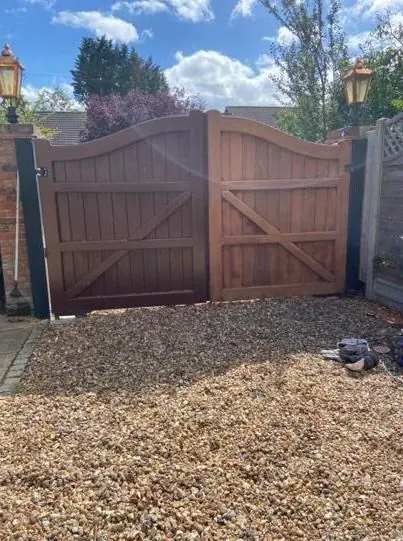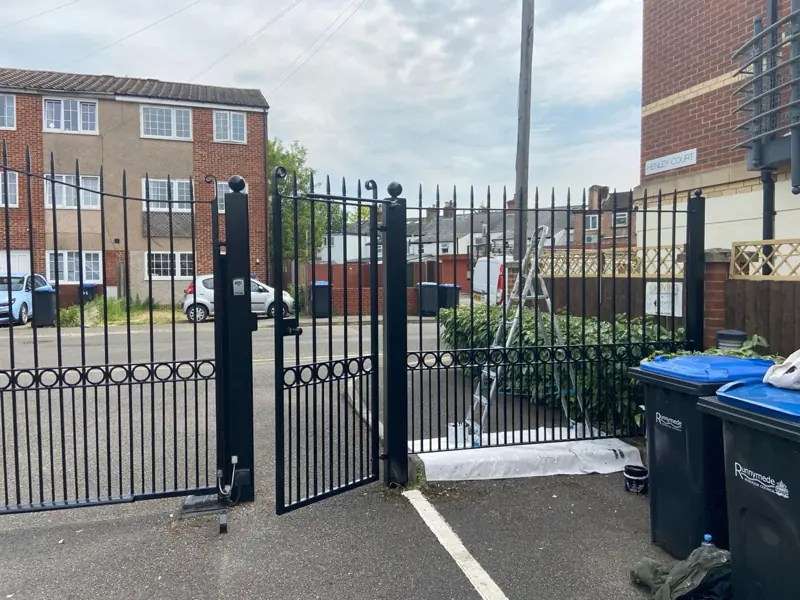
Dean stains and paints timber fences, side gates and garden timber in Spencer, the NN5 estate off Harlestone Road, a mile from Northampton town centre. Most work here is on the semis of Pembroke Road, Tenby Road and Swansea Road, where each house has side and rear gardens bounded by timber.
The side gate between every pair of semis
The 1930s-50s layout of Spencer’s estate streets gives semi-detached houses a side passage and a rear garden. On Pembroke Road, Tenby Road and Swansea Road that means a typical plot has a timber side gate, a run of fence down each side of the back garden and often a panel or two across the bottom. The gate gets opened every day for bins and bikes, so it wears unevenly: the hanging stile and bottom rail weather first, and the hinges pull at timber that has dried out and split.
Fences on plots like these are often lap panels or feather-edge boards on timber or concrete posts. Panels in a long back garden can be in very different states from one end to the other, depending on which ones sit under a tree or catch the afternoon sun, so the quote is based on walking the whole run rather than counting panels.
Stain or paint for an estate garden
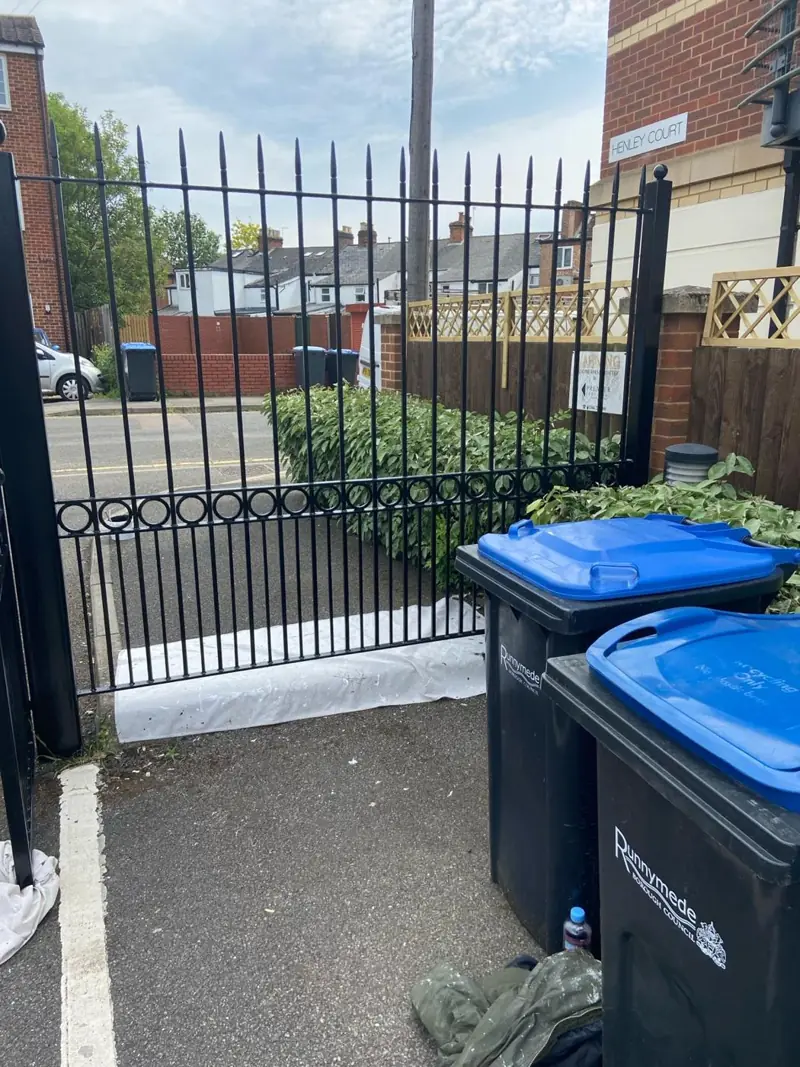
Both have their place on these plots. A penetrating stain soaks into the wood, shows the grain and fades gradually, so when it needs redoing there is no flaking to scrape. A fence paint gives a flat, solid colour and covers grey, weathered boards better, which suits panels that have been left for years. On side gates, where hands, bikes and bins knock the surface, a tougher finish on the gate itself with a matching stain on the fence often works well. The main fence and gate staining service explains the products and the preparation in more detail.
Whichever you choose, the preparation follows the same order:
- Brush down cobwebs, moss and loose fibres, and wash off any green growth.
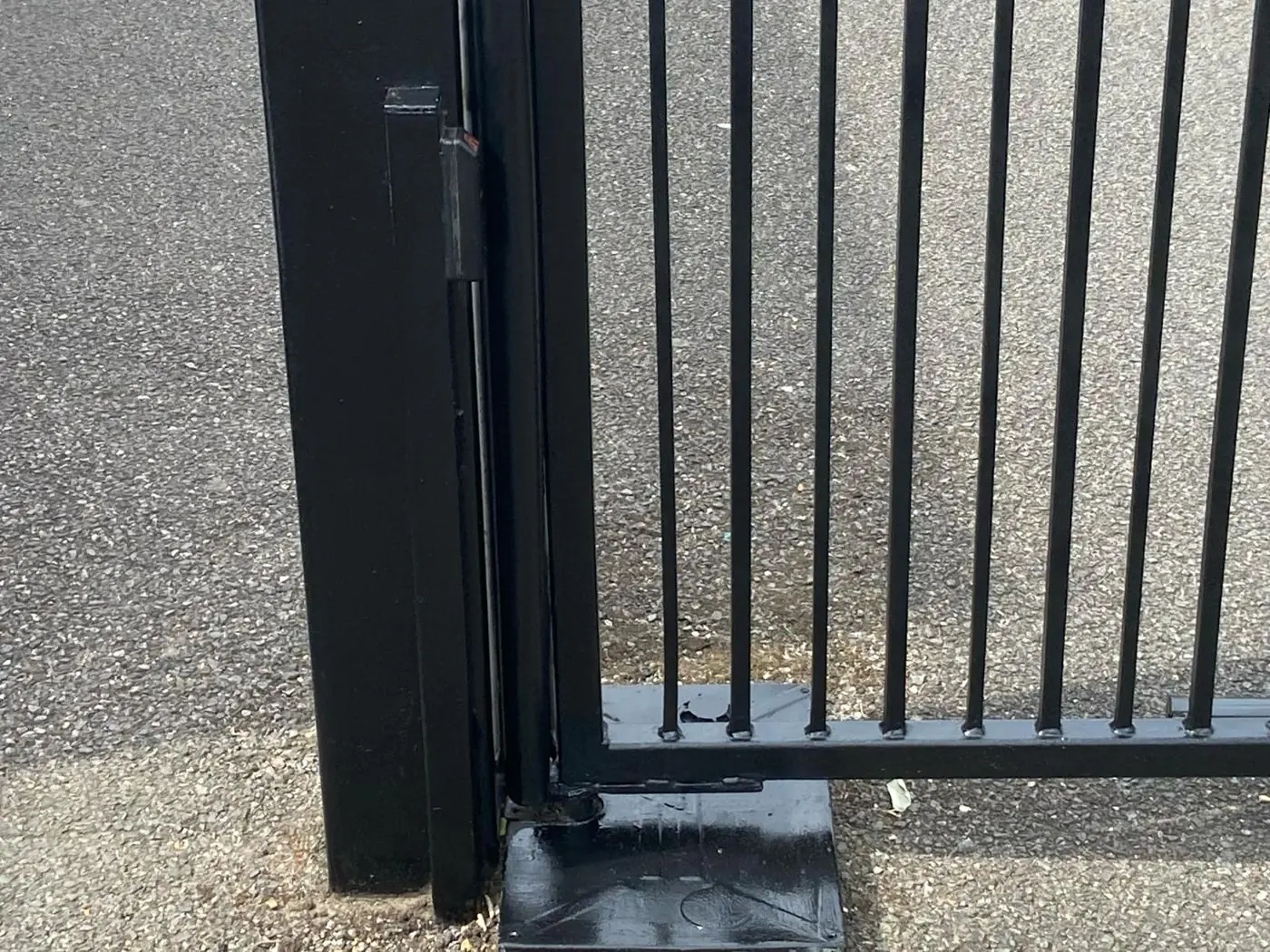
- Check the gate for loose joints, dropped hinges and rotten bottom rails before finishing.
- Cover paths, plants and anything stored against the fence.
- Work the finish into overlaps, board edges and the end grain at the top of posts.
Exposure on the upper streets
Back gardens near the head of Gladstone Road sit well above those around Lyttleton Road, a difference of roughly 16 metres. Fences up there take more wind, which loosens panels in their posts and drives rain into the overlaps. Those fences dry out faster in summer and wet through faster in winter, so they tend to need recoating more often. Choosing a good dry spell matters there, as the stain has to dry before the next shower. Our guide to picking the right season for outdoor painting applies to fences too.
Boundaries, neighbours and tenancies
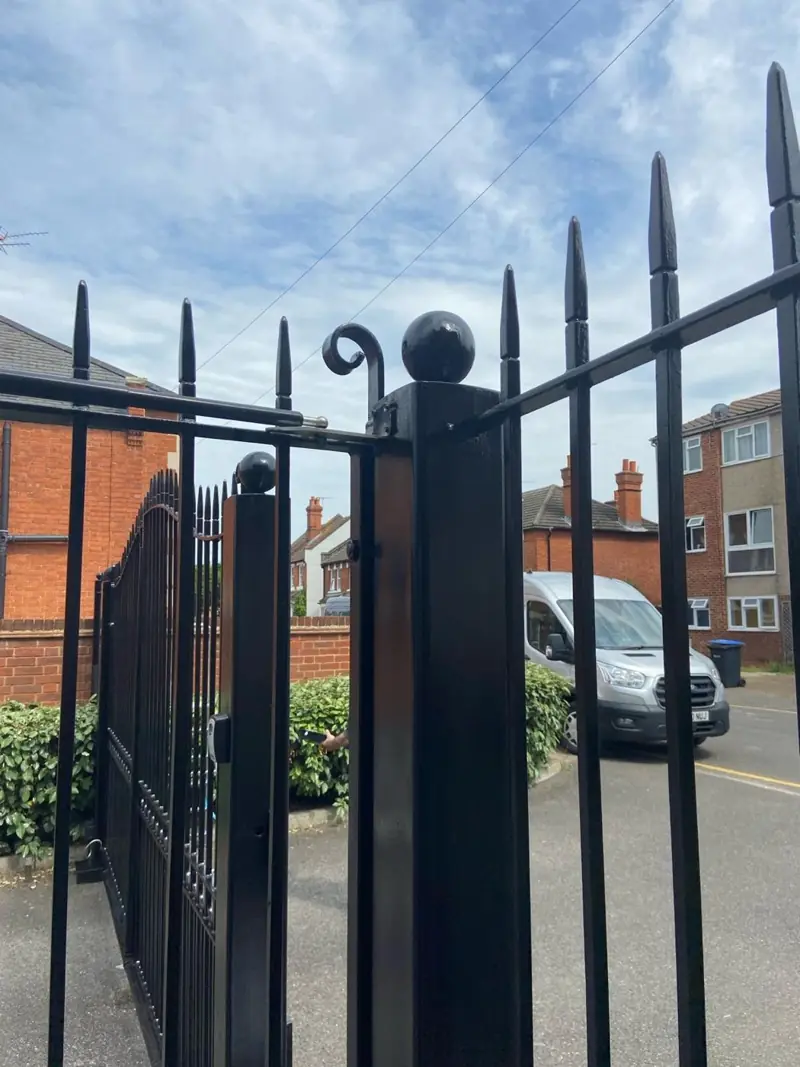
Semis on a 1930s-50s estate share boundaries on almost every side. Only your side of a shared fence is yours to treat, so we stain the face you own and leave the other face alone unless your neighbour agrees. If both of you want the job done, doing both sides in one visit saves you each a separate trip, and the colour is then the same both sides.
Ownership also matters on streets where most homes are social housing, as on Pembroke Road. Fences there may be the housing provider’s responsibility, so tenants should check before arranging work. Owner-occupied homes, which are a sizeable minority on the same streets, can book directly. Dean will look at the fences and gates, say whether stain or paint suits them and give you a free quote. Other services in the area are listed on our Spencer area page.
Last updated by Dean, DH Painter & Decorator.