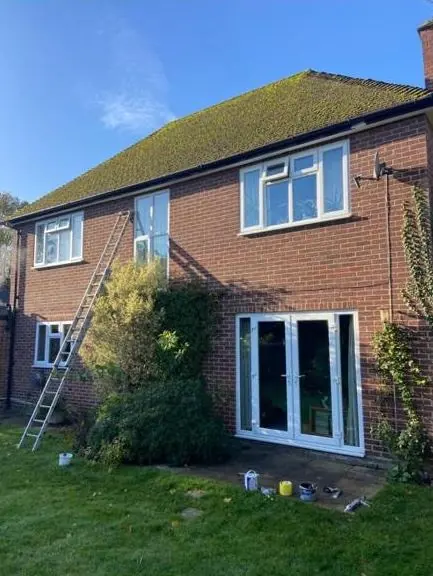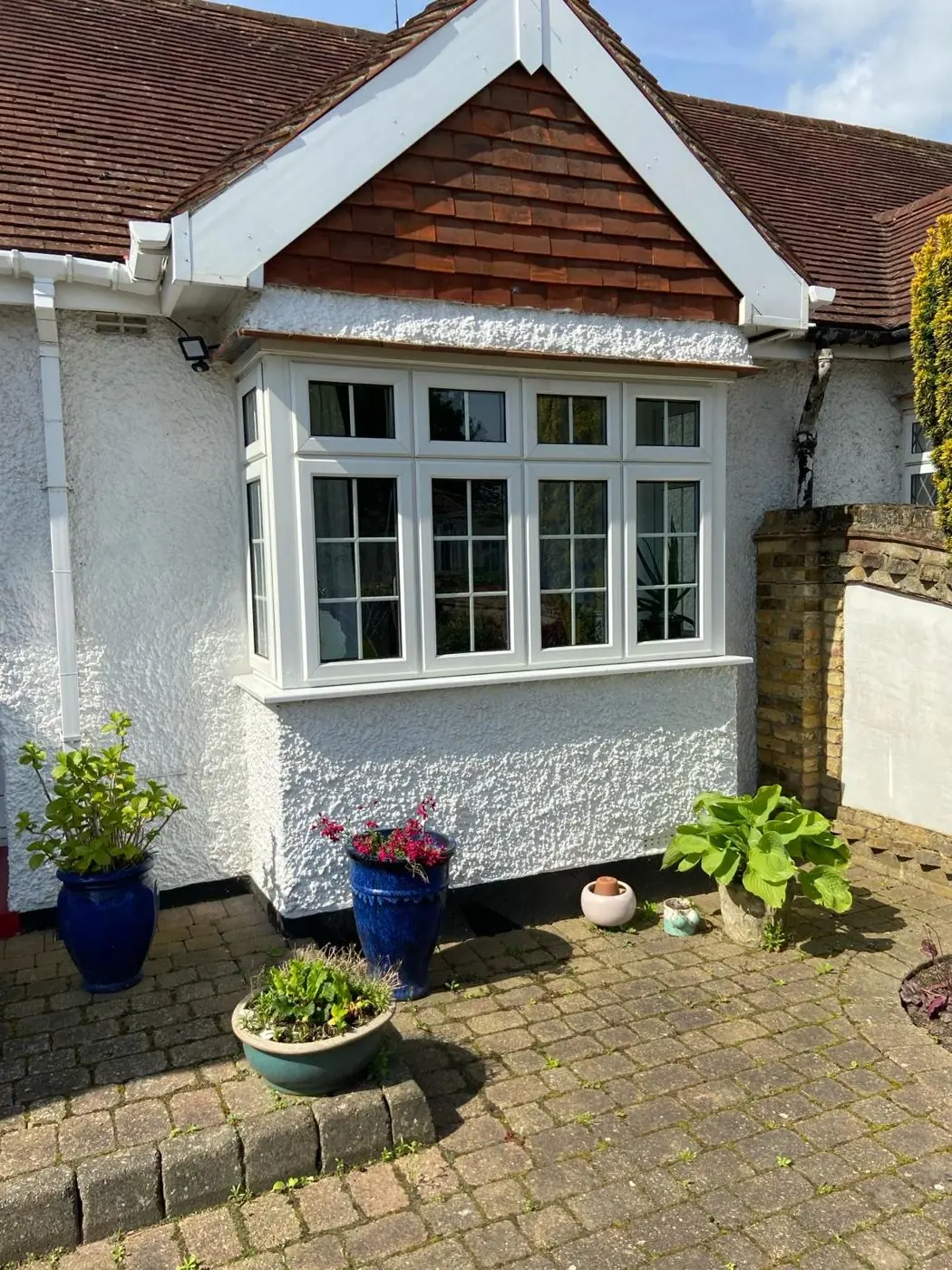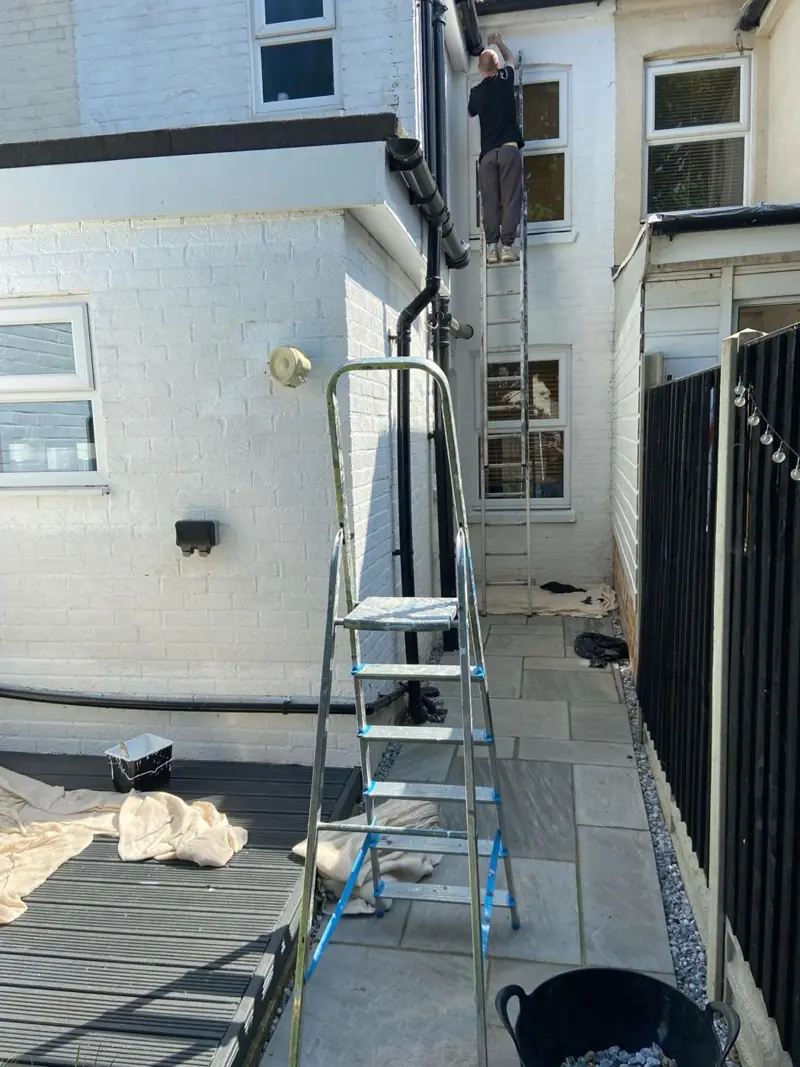
DH Painter & Decorator paints the outside of homes in St Crispin, the NN5 neighbourhood built on the grounds of the former St Crispin's Hospital on the north-western edge of Duston. Dean covers it from our Northampton base, about 2.6 miles west of the town centre, and quotes after walking round the property.
A new estate on an old hospital hill
St Crispin is not a typical Northampton suburb. The homes stand on the land of the county asylum that opened in 1876 and closed in 1995, and the whole former hospital complex and its parkland became the St Crispin’s Conservation Area in September 1996. Officially it is part of Upton parish, not Duston. So the outside of a house here is often a modern townhouse wall that looks across at Victorian red brick, a Grade II listed ironstone chapel and the tall clock tower.
That mix decides what an exterior job actually involves. On the post-1995 estate along St Crispin Drive and South Meadow Road, sales listings show uPVC double glazing. There are no sash windows to strip and reglaze on those houses, so the painted surfaces are front doors, garage doors, fascias and soffits, any rendered or boarded panels, and the timber cladding and trim on second-floor dormers.
Height, wind and the west-facing walls
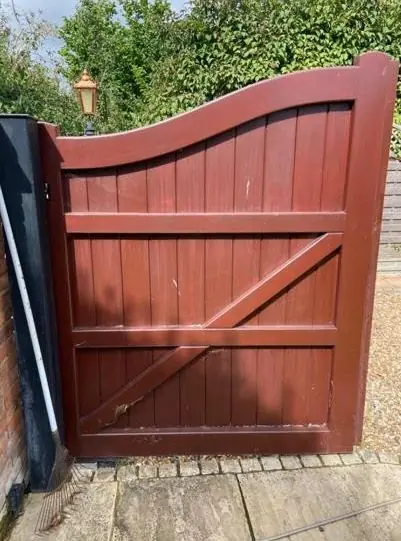
The county Historic Environment Record describes the site as elevated, with views south and west over the Nene valley. Those views come at a cost to paint. Wind-driven rain hits the west and south elevations harder than it would on a sheltered street in town, and the coating on those faces wears out first. When we price a St Crispin house we look at each elevation separately rather than treating the building as one job, because the exposed sides usually need more preparation and sometimes an extra coat.
The north side brings the opposite problem. Berry Wood and the mature parkland keep some walls and fences in shade, and shaded surfaces stay damp, grow algae and collect leaf staining. Those areas get a fungicidal wash and time to dry before any paint goes on.
| Part of the house | What we usually find | How we handle it |
|---|---|---|
| Second-floor dormer cheeks and trim | Most exposed element on the building | Tower or ladder-stand access, full prep, exterior wood or uPVC system |
| West and south walls | Weathered first by rain off the valley | Check for chalking and cracks, extra attention to sills and joints |
| North walls and boundaries | Algae and leaf stains from nearby trees | Fungicidal wash, drying time, then paint or stain |
| Front and garage doors | Factory finishes going chalky or faded | Key, prime where bare, two coats |
Shared courts, neighbours’ cars and three floors
Many of the newer homes are three-storey townhouses parked from a communal or allocated court rather than a private drive. That shapes the logistics. A tower for the top floor often has to go up on shared tarmac, so we agree the footprint with you before the day and talk to neighbours whose bays it affects. We sheet down around the base, keep spray work away from parked cars, and brush and roll near them instead. Ladders and materials are never left standing in a court used by other residents.
Apartment blocks, including St Georges House on St Crispin Drive, are a different arrangement. The outside of a block is normally the managing agent’s responsibility, so the quote goes to them and access is arranged through them.
What the conservation area means for your walls
The conservation area does not stop you painting your front door. It does matter for the surviving Victorian buildings. Their red brick, laid in Flemish bond with Bath stone and limestone dressings and terracotta mouldings, was built to be seen bare and should not be painted. The chapel and Connolly Lodge, the former isolation hospital, are both Grade II listed, so changes to their historic fabric need listed building consent and like-for-like finishes. If you own a converted flat in one of the old hospital blocks and the original timberwork needs repainting, we use breathable, traditional-compatible coatings and suggest you check with the council before changing a colour. No Article 4 direction appeared in the sources we checked, but Upton Parish Council asks owners to keep repairs sympathetic to the historic features.
For how we prepare and paint each surface, see our main exterior painting service. Our guide on when to book outside work explains why an exposed site like this is better done in a settled spell. You can find the rest of the work we cover locally on our St Crispin area page.
Last updated by Dean, DH Painter & Decorator.