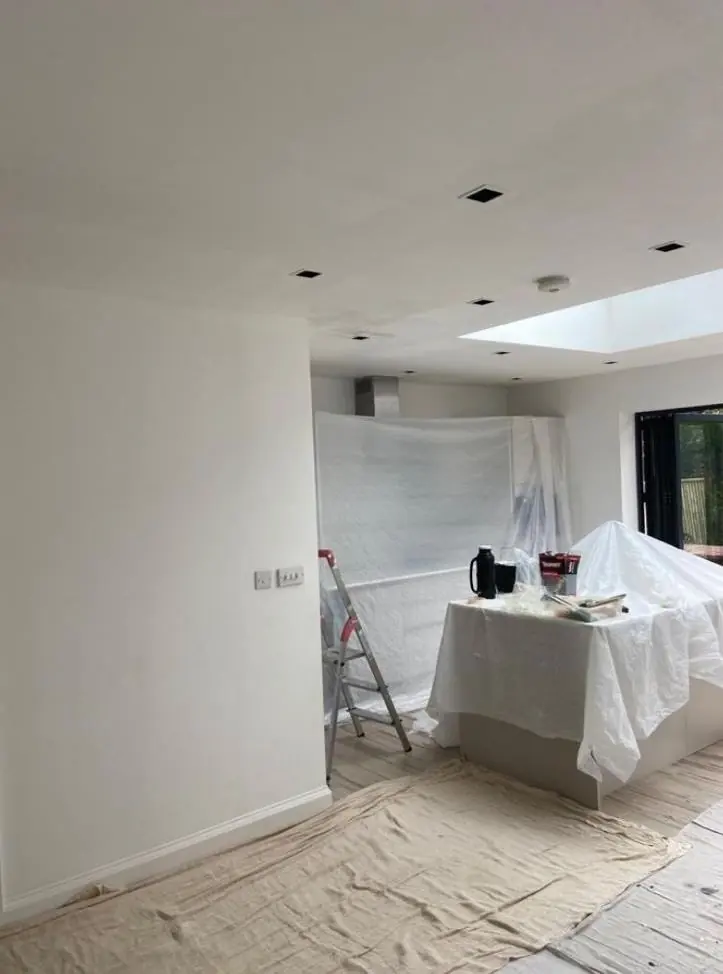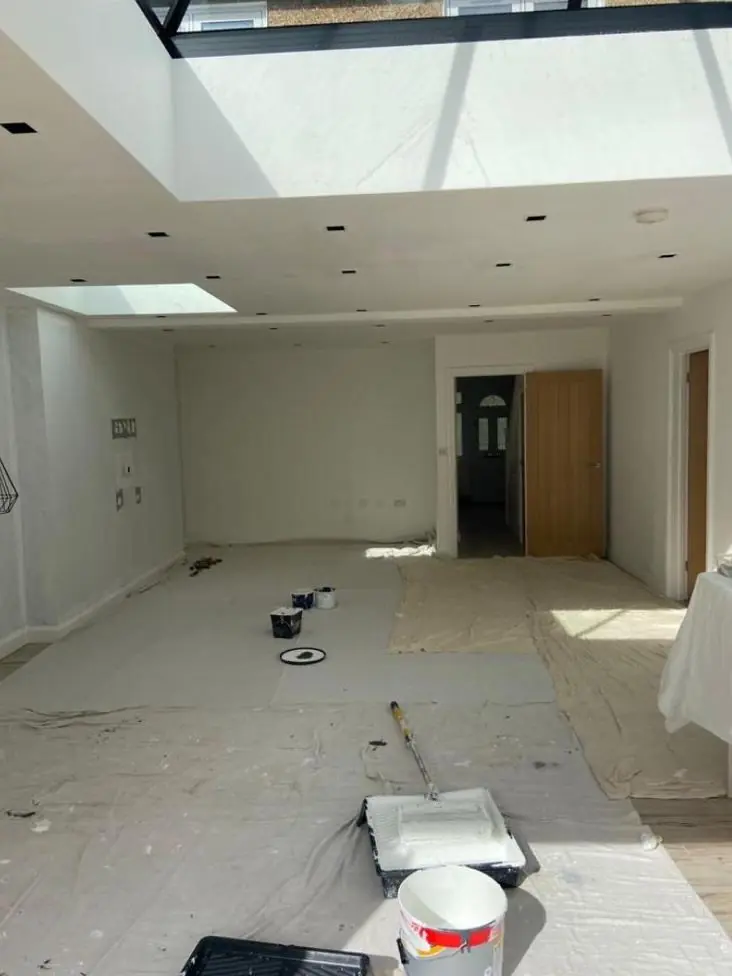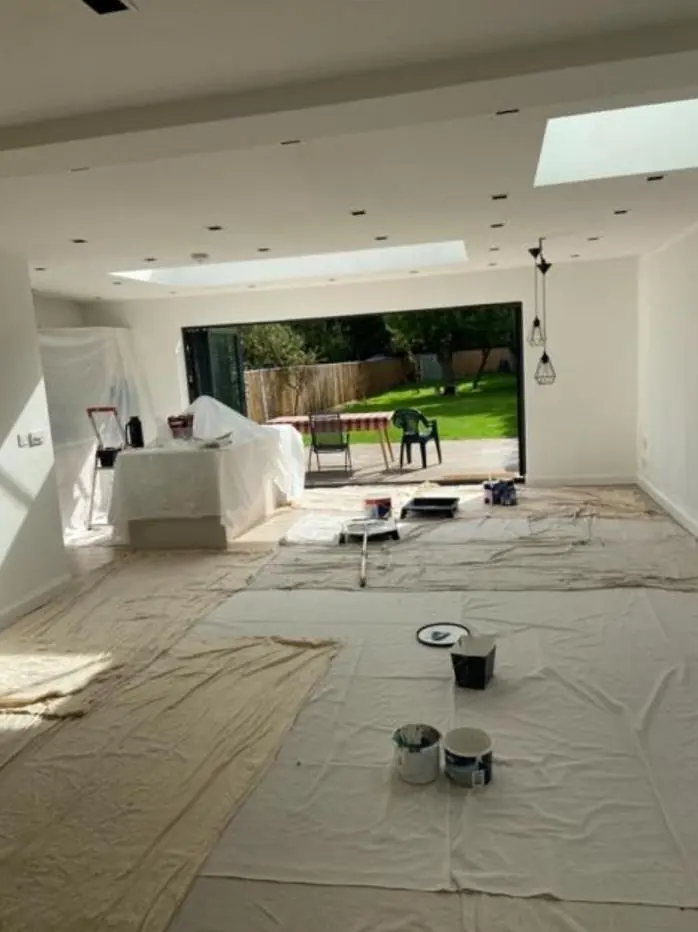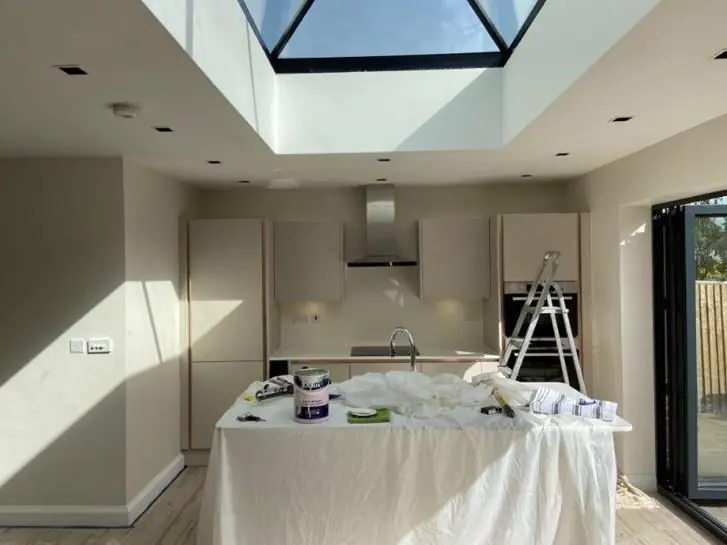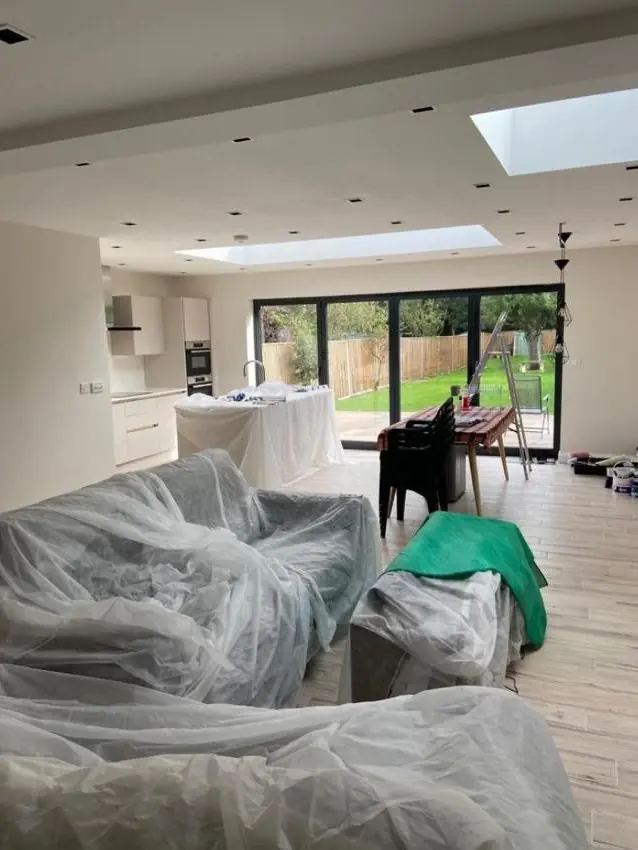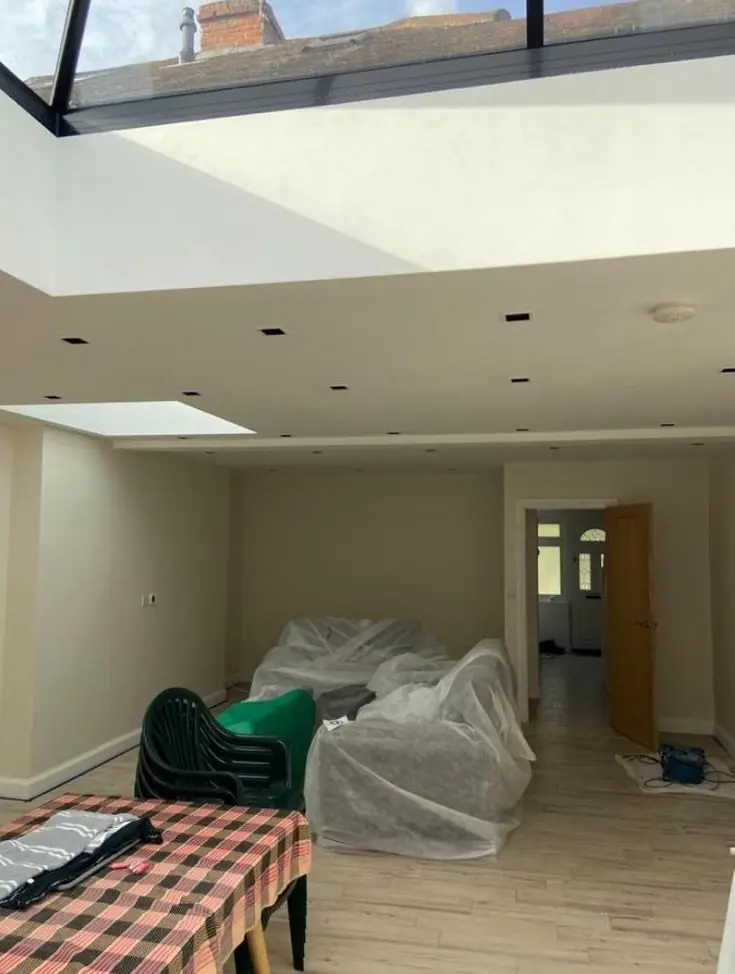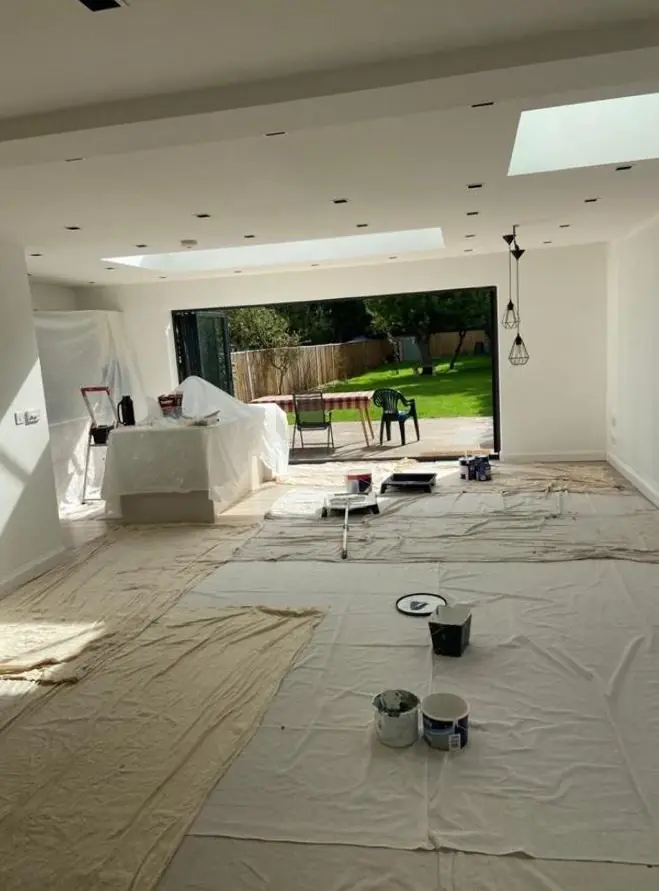
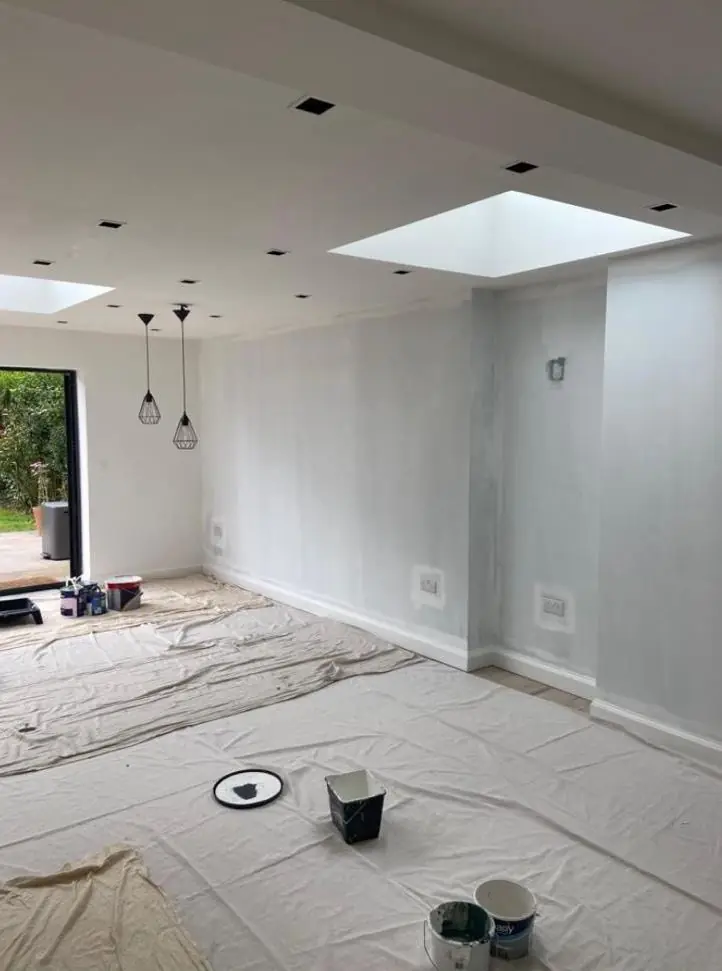
Dean decorates new plaster in St Crispin, the NN5 neighbourhood on the old St Crispin's Hospital grounds, 2.6 miles west of Northampton town centre. With new homes still being built here, that usually means mist-coating fresh walls, then coming back to fill shrinkage cracks once the house has dried out.
A neighbourhood that is still being built
Building on the St Crispin site has not finished. After the hospital closed in 1995, an estate was built on the land cleared around the main buildings, and planning consent N/2015/1454 now covers 235 more homes on the remaining hospital core: apartments converted from the clock tower and administration building, new-build flats and family townhouses. A 2026 sale listing says around 207 of those homes have not yet been delivered.
So fresh plaster is a normal part of life here. Buyers move into homes with walls that are still drying out, and owners of the earlier estate homes may add an extension or convert a room. Whichever it is, the first decoration of new plaster needs a different approach from repainting an old wall. The general method is on our new plaster and extension page and in the mist coat guide.
Builder’s emulsion, then the cracks
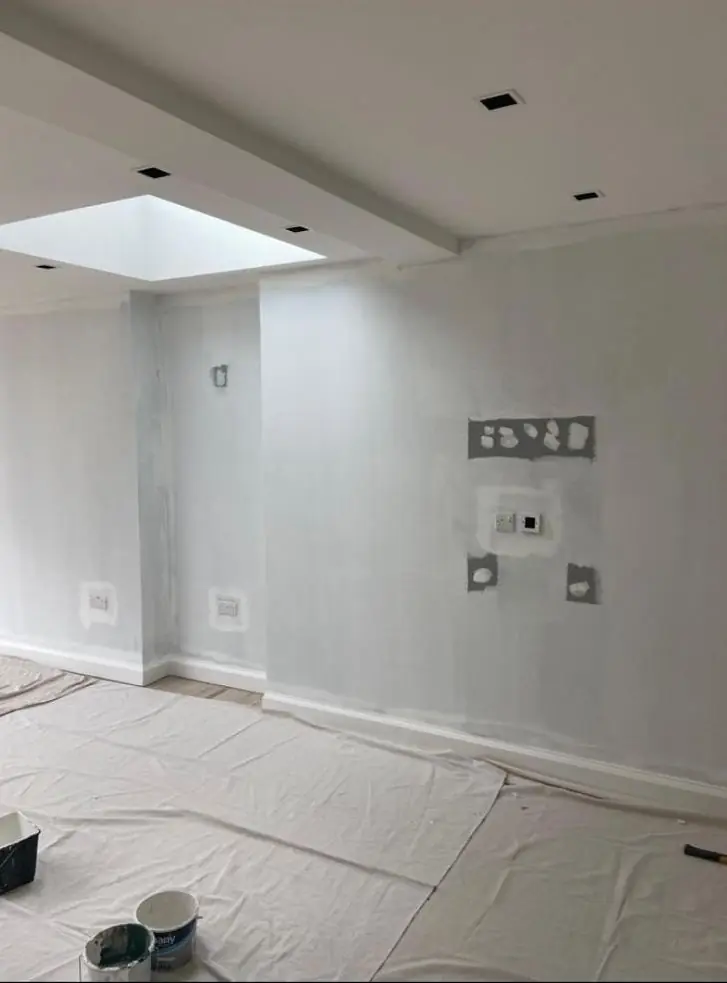
Many new homes are handed over with a single coat of trade emulsion over the plaster. It looks clean on the day you get the keys, but it is thin, it often marks if you try to wipe it, and in the first year or two it shows fine cracks as the timber and plaster in a new build dry and settle. In a three-storey townhouse those cracks tend to appear where you would expect: along ceiling joins, at the corners of the stairwell, over door frames and around the large second-floor dormers.
Our usual advice for a recently completed St Crispin home is to live with the builder’s finish for a while, then decorate properly once most of that movement has happened. When we do, the cracks are raked out, filled with flexible filler or caulk where they meet woodwork, sanded and spot-primed before full coats go on.
Plaster in the hospital conversions
The conversion flats are a different case. The new partition walls and ceilings inserted into the old blocks are normally modern gypsum plaster, which takes a standard mist coat. The original Victorian outer walls, though, are brick of the 1870s and 1880s, and any surviving historic plaster on them may be lime-based. Covering that with a plastic-rich vinyl emulsion can trap moisture. Where old and new plaster meet in the same room, Dean tests and chooses a breathable paint for the historic surfaces.
Timing your first decoration
| Situation in St Crispin | What we usually suggest |
|---|---|
| Keys just collected on a new-build home | Leave the builder’s finish for now unless you dislike the colour; plan full decoration later |
| Home a year or two old with hairline cracks | Fill, prime and fully repaint, including stairwell and dormer rooms |
| Fresh skim or plasterboard in an extension or loft room | Check dryness, mist coat, snag, then two finish coats |
| Converted hospital flat with old and new walls | Breathable paint on historic plaster, standard system on new partitions |
If you are building an extension yourself, it helps to tell us roughly when the plasterer will finish. That way we can visit, check the walls and book the mist coat for when they are ready, instead of the room sitting unfinished for weeks.
Plaster needs to be fully dry before a mist coat, and thick new skims or winter completions take longer. We check that with you rather than guess. For a sense of pricing, see the cost guide, and for other work in the area, the St Crispin page.
Last updated by Dean, DH Painter & Decorator.