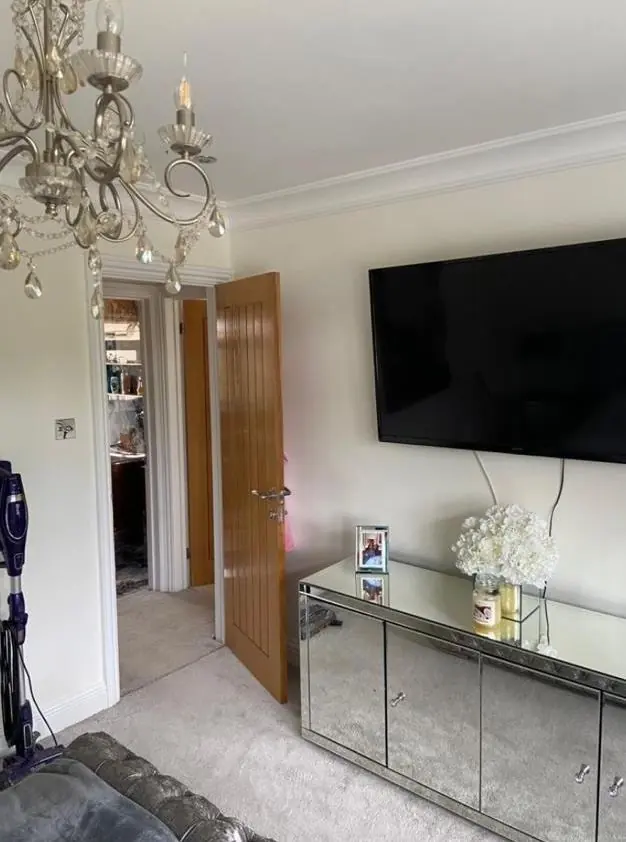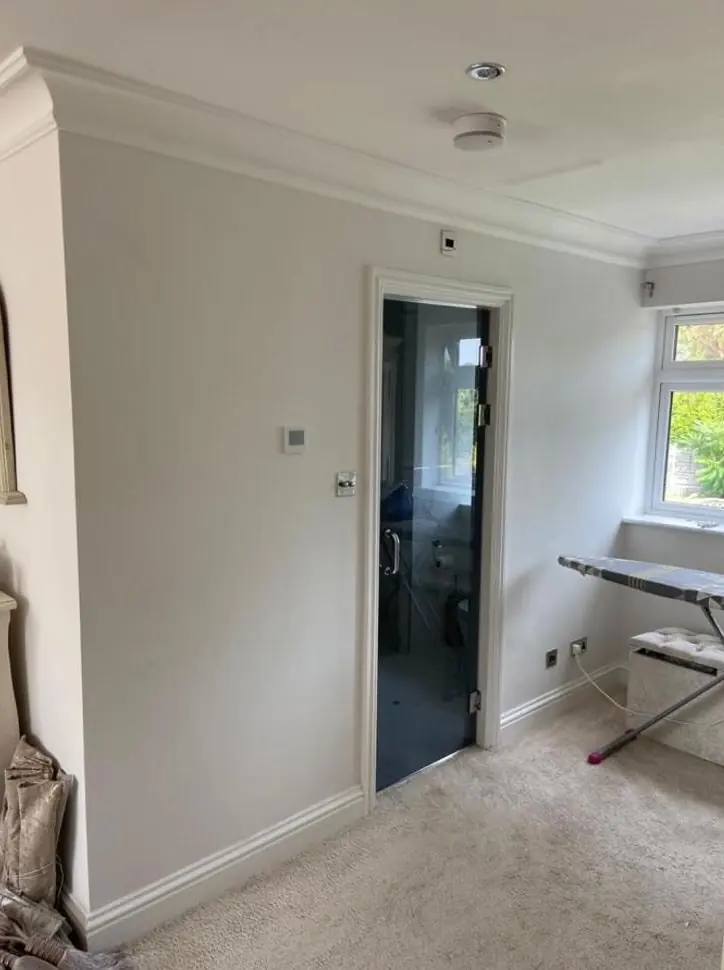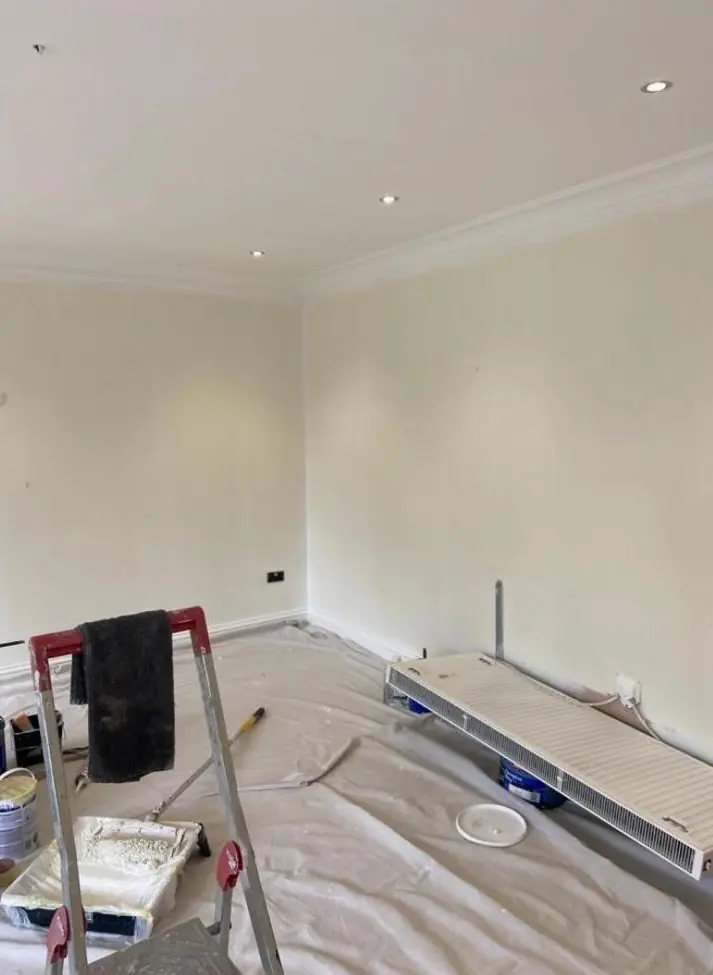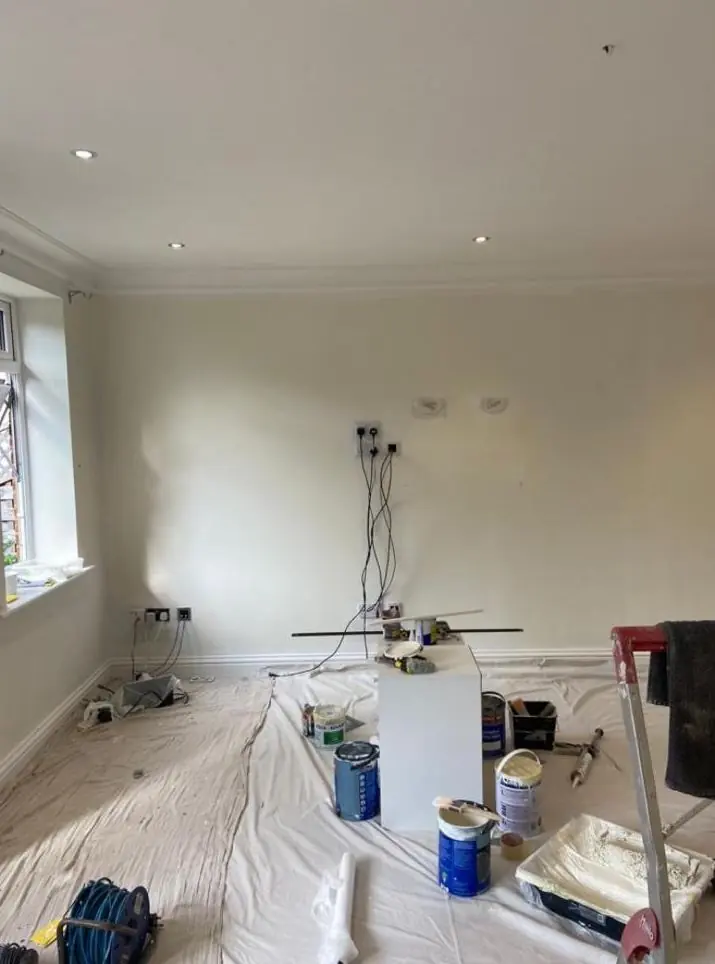
We take on decorative paint finishes in St Crispin, NN5, about 2.6 miles west of Northampton town centre. In the converted Victorian hospital buildings that usually means picking out mouldings and cornices; in the modern townhouses it is more often painted panelling or a feature wall.
Plasterwork worth picking out
The old St Crispin’s Hospital was built from 1873 to a corridor-pavilion plan by Robert Griffiths, with later additions through the 1880s. Where parts of it have been turned into flats, some interiors keep ornate plasterwork and mouldings from that period. Those details come alive when they are given their own colour rather than lost under the wall emulsion.
Picking out a cornice is slow, steady brushwork. Before any colour goes on, we check whether the moulding has been clogged by earlier coats; if the profile has softened, cleaning out the worst of it is quoted as a separate item. After that, the background is painted, then the raised parts are lined in a contrasting or slightly lighter tone with a fine brush. Done well, it makes a tall room look properly finished.
Heritage-style effects, such as a soft colour-washed wall beneath a picked-out cornice, also suit these rooms, because they echo the age of the building without imitating anything specific.
Panelling and feature walls in the townhouses
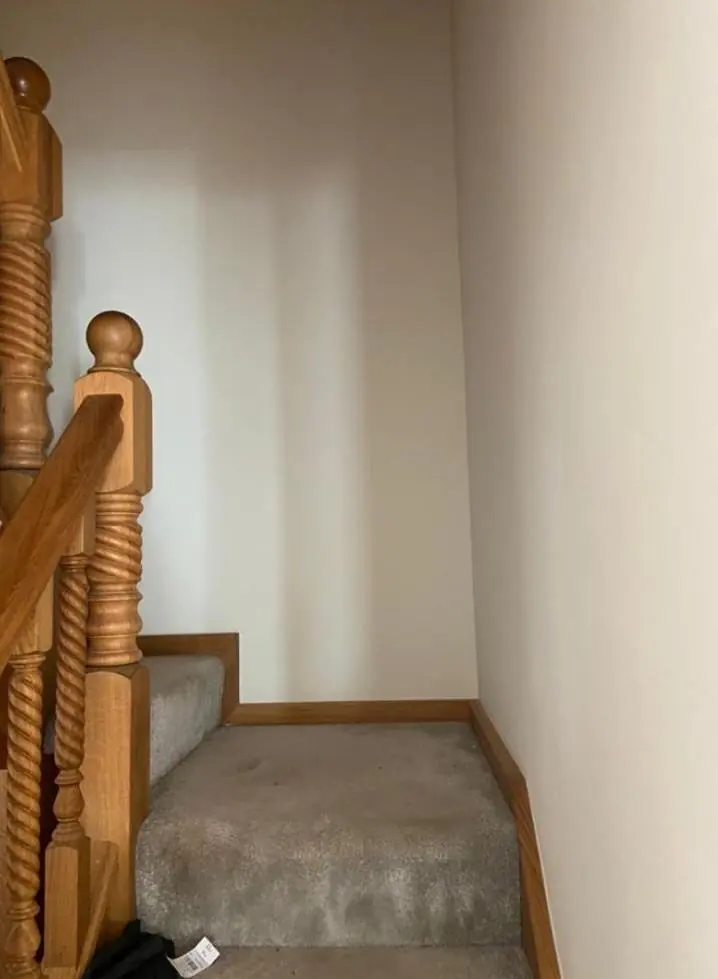
The newer houses on St Crispin Drive and the surrounding streets have plain, flat walls, which make a good base for added character. Common requests include:
- painted MDF wall panelling up the stairwell of a three-storey townhouse, where it can run the full height of both flights;
- half-height panelling in a dining area, with a darker colour below and a lighter one above;
- a two-tone or geometric feature wall in a top-floor dormer bedroom;
- a single strong colour on a chimney-style wall or behind a bed.
Colour choice for panelling in these houses often follows the light. A deep green or navy on lower panels suits a room facing south or west towards the Nene valley, where there is light to carry it, while the shaded side of a house facing the trees may suit a softer stone or putty shade that does not swallow what light there is. We paint a test board so you can see the colour on a moulded profile, not just a flat card.
Panelling on new-build walls needs the plaster to have settled first, and every joint and pin hole filled and sanded so the painted face reads as one piece.
The chapel is a different matter
The Grade II listed chapel on Upton Berrywood Road has polychromatic interior wall paintings by Henry Bird and G H B Holland, showing scenes from Arthurian legend. Work of that kind is for specialist conservators, not a decorator. We mention it because it shows how seriously the historic fabric here is treated: in listed buildings, interior features can be protected too, and consent may be needed before decorative changes are made to original surfaces.
What sits under the finish
Any effect is only as good as the wall beneath it. In converted rooms, older plaster may have fine cracks that a sheen or glaze will show up, so filling and sanding come first. Where a converted wall mixes older plaster with modern patches, the two absorb paint differently, and a sealing coat evens them out before an effect is applied. In homes on the newest phases, where 235 dwellings are consented for the old hospital core, fresh plaster needs to dry and be sealed before anything decorative goes over it.
Our decorative finishes page explains the techniques in more detail, and the St Crispin area page covers the rest of our local work.
Last updated by Dean, DH Painter & Decorator.