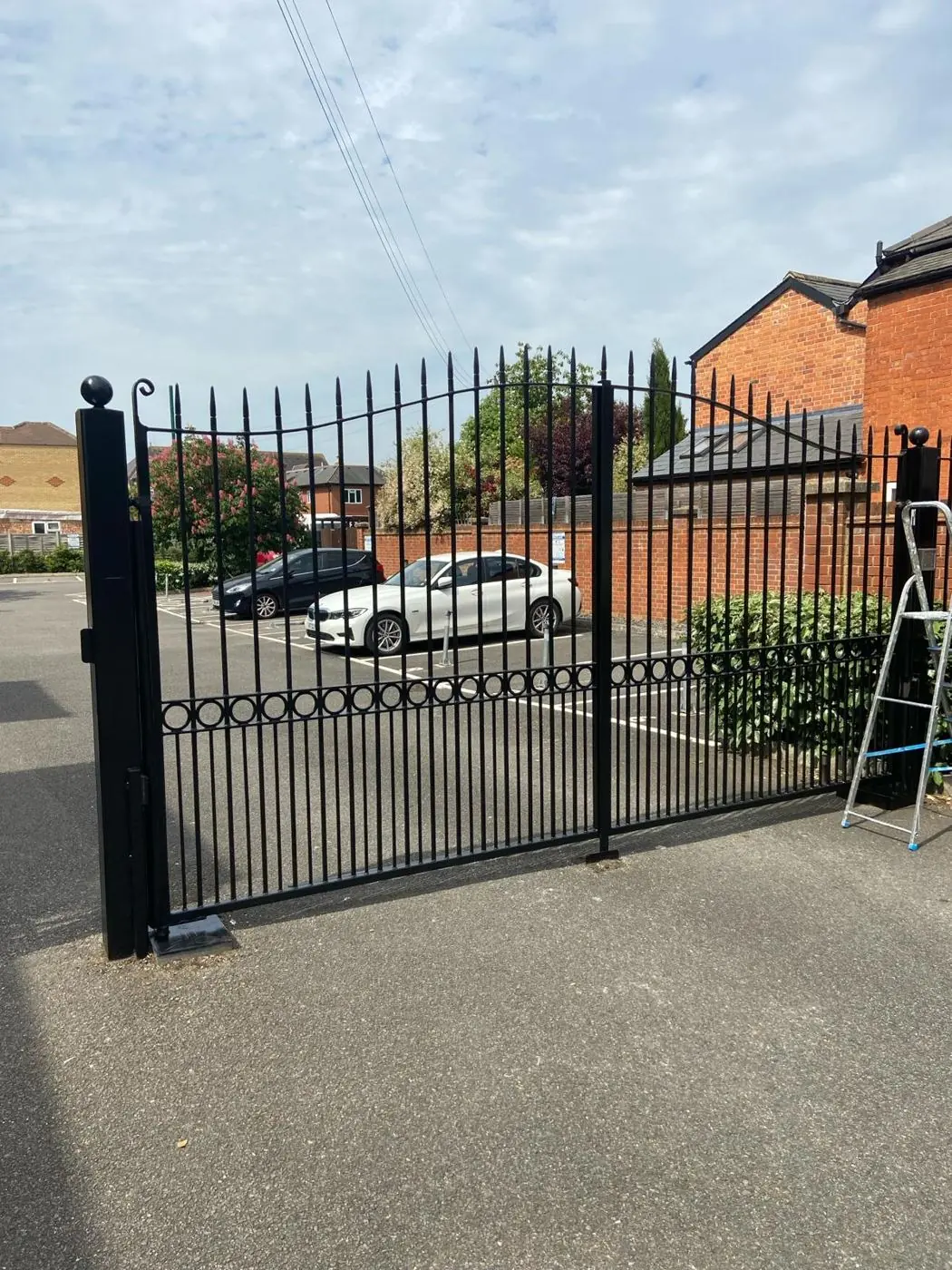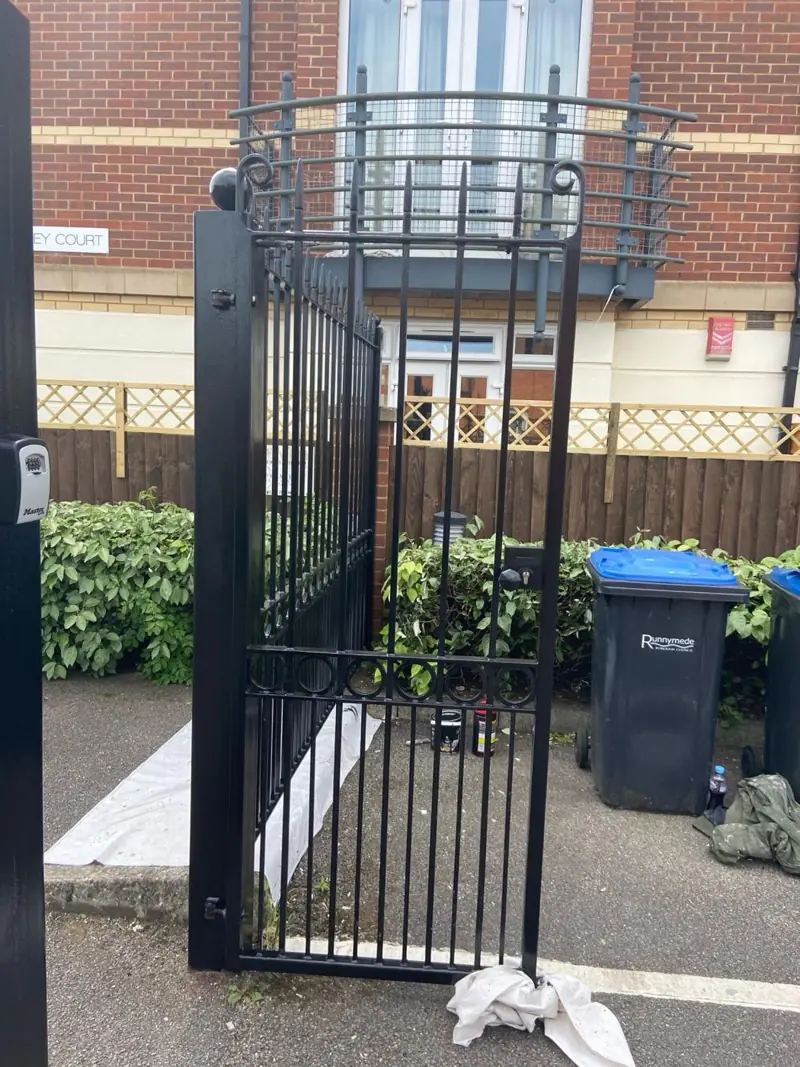
DH Painter & Decorator repaints metal gates, front railings and security fencing in St James, NN5, about 0.6 miles west of Northampton town centre. Dean, with over 30 years in the trade, takes rust back to sound metal before priming, which matters on streets exposed to road salt and spray.
What eats St James railings
Iron outside a terrace on a quiet street can go years between coats. Iron beside Weedon Road, St James Road or Spencer Bridge Road has a much harder life. These are heavy traffic routes to M1 junction 16, gritted through the winter, and passing vehicles throw a fine spray of salty water onto anything near the kerb. Salt speeds up corrosion wherever the coating is chipped, so rust starts at the base of the uprights, under the top rail and around gate hinges, then creeps along beneath paint that still looks intact from a distance.
Add the traffic film from the Air Quality Management Area along Weedon Road and St James’ Road, and you get railings that are both dirty and rusting. Paint put over either will not last.
How we deal with it, step by step
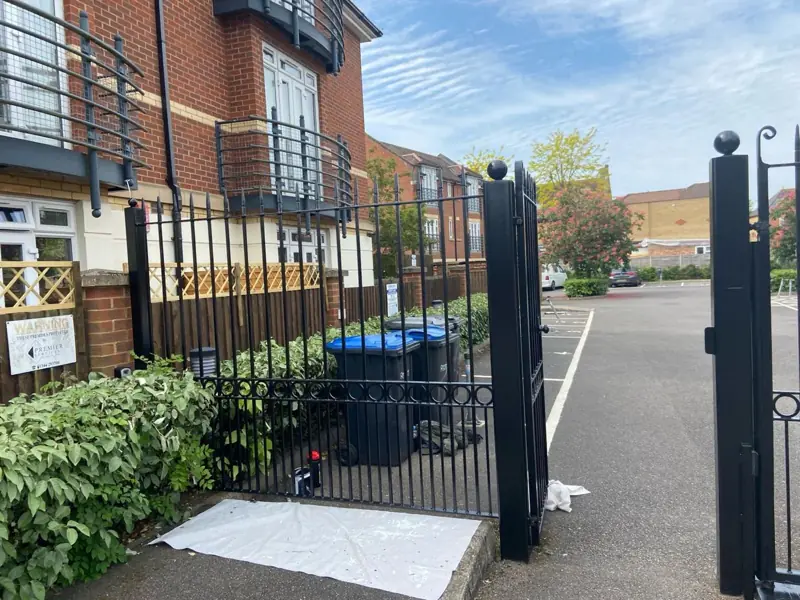
- Wash down to remove traffic grime and salt residue, then let the metal dry fully.
- Scrape off loose paint and wire-brush, by hand and with rotary brushes, back to sound metal; scrolls and tight corners are worked with emery and small brushes.
- Treat any pitting too deep to clean out with a rust converter or stabiliser.
- Prime bare metal the same day with a zinc-rich or anti-corrosive primer, because exposed iron flash-rusts quickly in damp air.
- Build up undercoat and top coat, paying extra attention to the feet of railings where water and salt collect.
Older railings may have lead in the bottom layers of paint, so we avoid dry sanding and burning off on Victorian ironwork. The full method, including how we identify wrought iron, cast iron, mild steel and galvanised metal, is on our main metal gate and railing painting page.
Terraced fronts versus industrial fencing
| Terrace railings and front gates | Security fencing at business units | |
|---|---|---|
| Where | Victorian streets across the district | St James Industrial Estate on St James Mill Road and St James Mill Business Park on Millbrook Close |
| Typical metal | Cast or wrought iron, or later mild steel | Mild or galvanised steel |
| Main concern | Salt spray, old paint layers, setting into brick or stone plinths | Long runs, galvanised surfaces needing a specialist primer, keeping site access open |
| Scheduling | Around on-street parking and match days | Around deliveries, shifts and operating hours |
On industrial sites we agree working areas with the site manager in advance so loading bays and gates stay usable. For wider work on the units themselves, our commercial painting service covers cladding and brickwork as well.
Colour, kerbside working and match days
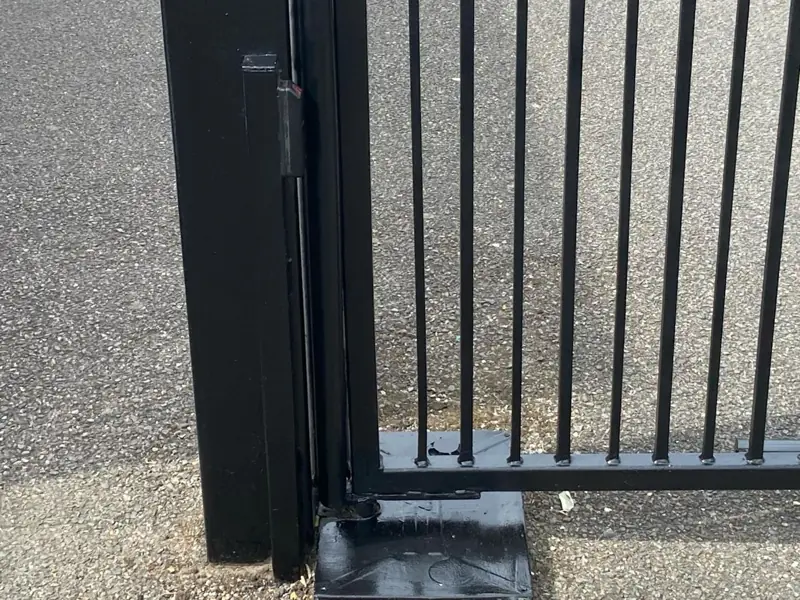
Black gloss is the traditional finish on terraced railings, but with no conservation area covering St James you can choose any colour you like. Some owners match railings to a front door, or pick a deep green or charcoal so a row of terraced houses on a street such as Althorp Road still reads as one terrace even when each house chooses its own shade. Whatever the colour, a gloss or satin finish sheds water and grime better than a matt one, which matters right beside the traffic.
Railings line the pavement, so we sheet the footway, put up wet paint signs and keep a clear path for pedestrians. On Weedon Road, fixtures at Franklin’s Gardens and Sixfields bring crowds past the front of houses, so we avoid leaving wet railings on those days. You can read about the district’s homes on our St James area page.
Last updated by Dean, DH Painter & Decorator.