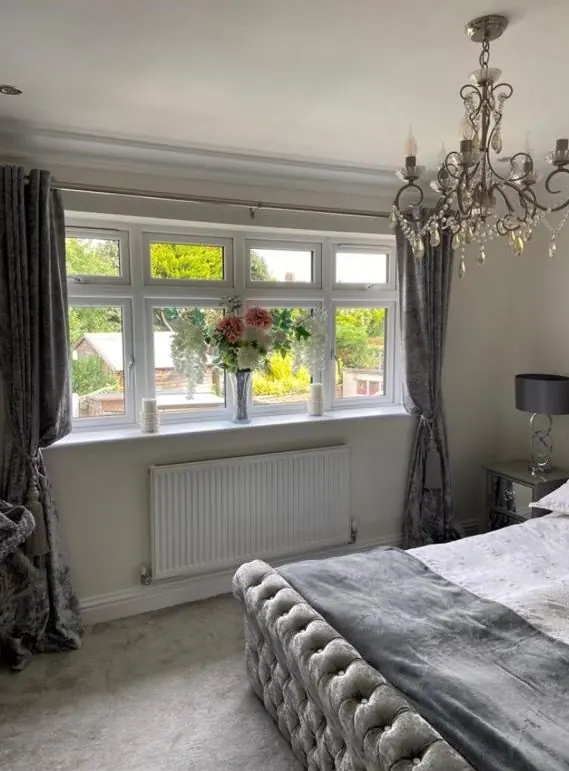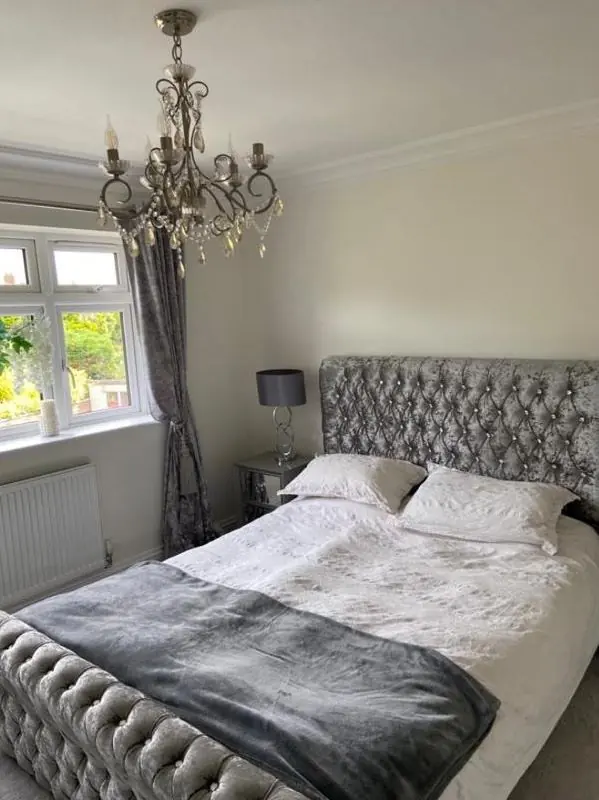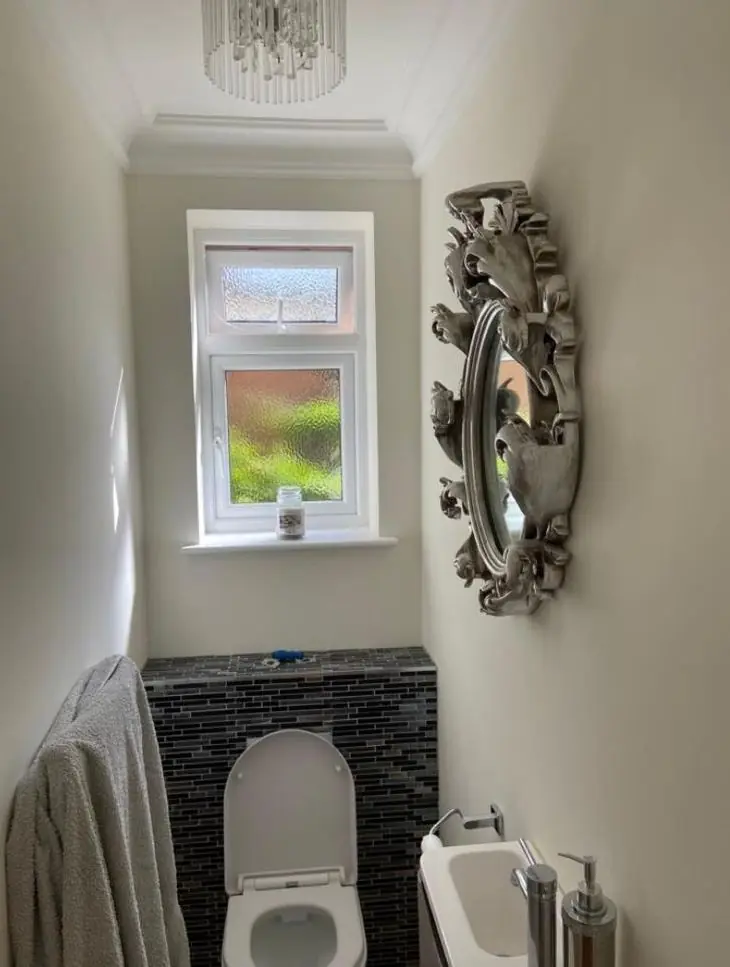
Dean at DH Painter & Decorator gives colour and finish advice as part of decorating jobs in St James, NN5, about 0.6 miles west of Northampton town centre. It covers small terrace rooms that need light, front elevations on busy main roads and finishes that stand up to rentals.
Freedom outside, but the street still matters
Unlike nearby Northampton areas covered by conservation designations or heritage Article 4 directions, St James has no conservation area, so most homeowners can choose an exterior colour without needing planning consent for it. The exceptions are the listed buildings: St James’ Church, the National Lift Tower and the 1930s transport office at the old tram depot all need consent for changes.
Having the freedom to paint a front door bright orange doesn’t always mean you should. Victorian terraces on streets like Wimbledon Street and Althorp Road were built as continuous rows, and they read as one long facade. A colour that sits within the general family of the row, such as a deeper heritage green or a muted blue on the door and a warm off-white on the bay woodwork, usually looks deliberate. A colour that ignores the neighbours tends to look like a mistake in five years.
Small terrace rooms and the light they get
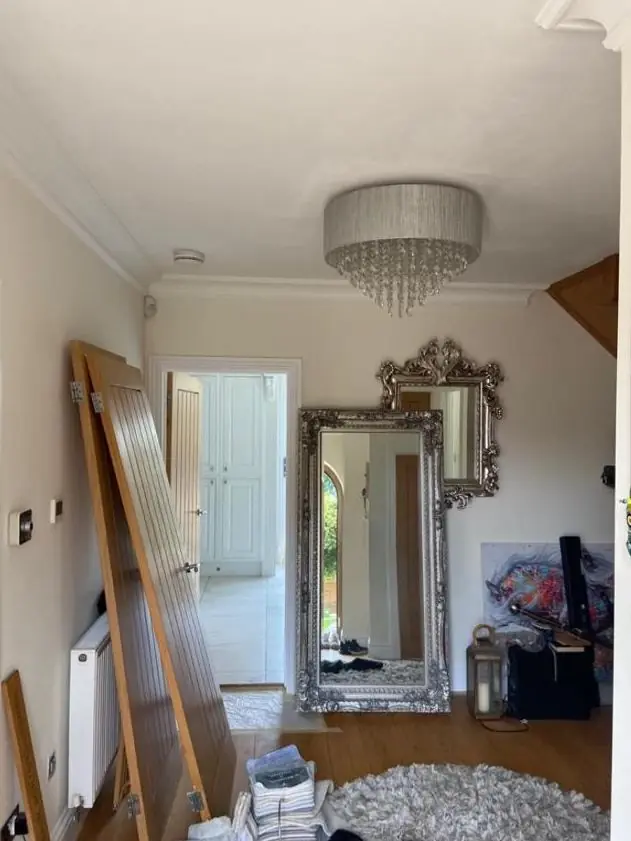
Front rooms in the district’s shoe-workers’ houses are compact. Where the front window faces north, or looks straight across a narrow street at the opposite terrace, daylight is limited and cool. Pale greys and brilliant whites go flat and slightly blue in those conditions.
What tends to work in those rooms:
- Warm off-whites and soft creams with a yellow or red undertone, which hold their warmth on a dull afternoon.
- Light-reflective emulsions on ceilings and the wall opposite the window.
- Deeper, richer colours used deliberately in the darkest room, where fighting the gloom with pale paint rarely succeeds.
- The same or a closely related colour in the narrow hallway and up the stairs, so the house doesn’t feel chopped into small boxes.
Dean looks at samples in the actual room, at the time of day you use it, rather than relying on a chart.
Picking finishes for main roads and lettings
Weedon Road and St James’ Road sit inside an Air Quality Management Area because nitrogen dioxide levels exceed the annual objective. On frontages along those routes, traffic grime settles on sills and front doors quickly. Very pale exterior colours show it within months, so we often suggest a mid-tone masonry colour and a durable gloss or satin on joinery that can be washed down. The same thinking applies to front railings, where dark colours hide road spray better.
Inside rented terraces, townhouses and flats near the station, the decision is often less about taste and more about maintenance. A consistent neutral across every room, in a scrubbable matt or eggshell, lets touch-ups blend in between tenancies. We can record the exact colours and products used so the next refresh matches. Hallways in these lets take the most wear, so a slightly deeper shade below a dado line, or a tougher finish on the lower wall, saves repainting the whole space after every move.
Newer homes and period details
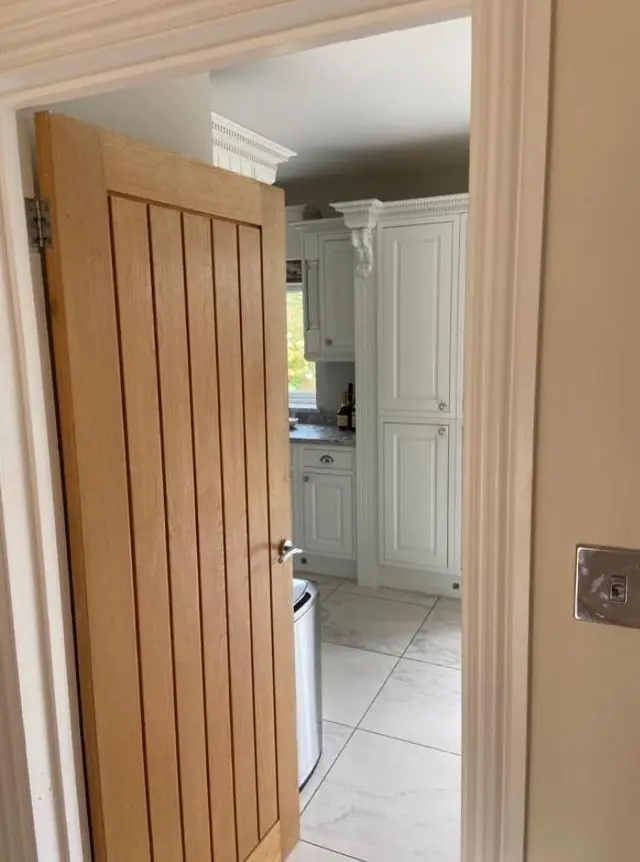
The 1999-2000 houses on the former Express Lift site and the newer townhouses around Ross Road and Countess Road have squarer, more open rooms. They take cooler greys and greens better than the Victorian rooms do and suit a feature colour on one wall. In older terraces that still have cornicing, a ceiling rose or an original fireplace, we can suggest how to pick those out in a contrasting colour or sheen.
Read more about how we approach shade, undertone and sample patches on the main colour consultation in Northampton page. For the district’s other services, see the St James area page.
Last updated by Dean, DH Painter & Decorator.