We decorate hallways, staircases and landings in St James, Northampton NN5, from the narrow halls of Victorian terraces to stairwells in newer townhouses and flats. Dean is based in Northampton, about 0.6 miles from St James, and quotes free of charge.
One straight flight, front door to back bedroom
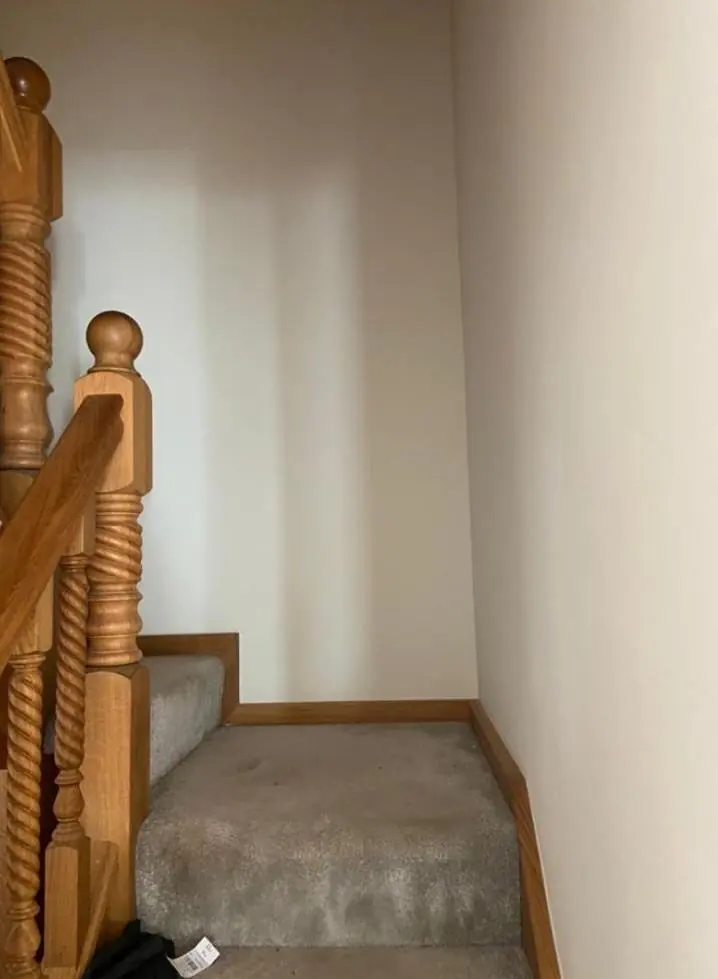
The houses put up in St James for shoe and engineering workers between roughly the 1850s and 1900 were built tight. A typical terrace has a front door opening into a narrow passage, or straight into the front room, and a single steep straight staircase rising to a small landing between two or three bedrooms. That shape decides most of how the work goes. There is no half-landing to stand a platform on, the top of the stairwell wall is a long reach above the steepest part of the flight, and the passage is often too narrow for two people to pass with a ladder.
We set up an adjustable stair platform or a combination ladder with independent legs, sized for a straight flight, and board across where the landing ceiling needs it. In a narrow hall we build the access in sections so the stairs stay usable at the end of each day.
Loading in on a terraced street
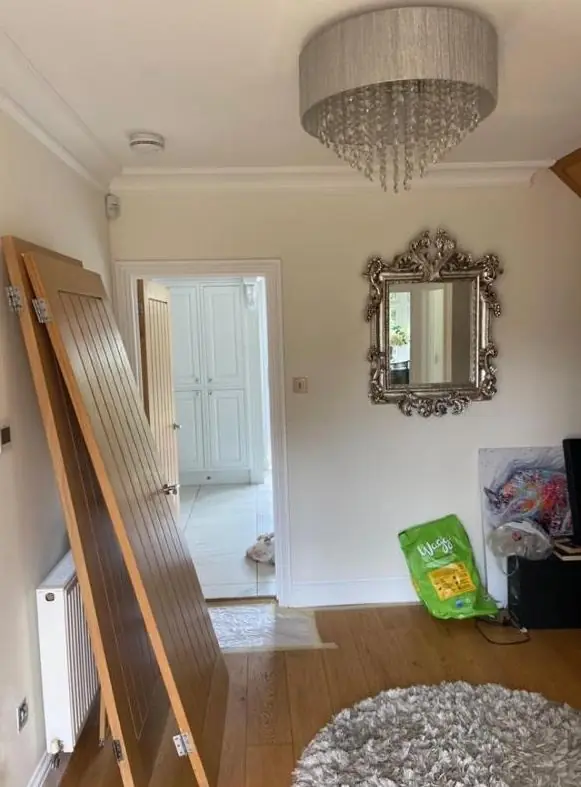
Victorian streets in St James are parked on the road, and where a terrace has no rear access, everything comes in and out through the front door. That door is usually the start of the hallway we are decorating. We bring in only what the day needs, keep dust sheets running from the step to the top of the stairs and keep the route clear for whoever lives there.
If you live on or near Weedon Road, it helps to tell us the fixture list. Match days at Franklin’s Gardens and Sixfields bring parking restrictions and heavy traffic, and we would rather avoid unloading a stair platform into that.
What takes the knocks in a St James hallway
St James has an active lettings market, and a rented terrace hallway gets bikes wheeled through it, furniture carried up a flight that was never designed for a modern wardrobe and hands on the wall all the way up. The damage is predictable: scuffs at shoulder height on the stair wall, chipped stringers and spindles, and dents along the bottom of the passage.
- Walls: a scrubbable or durable matt that can be wiped down without polishing up.
- Stringers, spindles and newels: satinwood or a hard-wearing waterborne enamel rather than soft eggshell.
- Handrails: left in a finish that stays smooth under hands, or clear-coated if the original timber is good.
Old terrace hallway plaster is often uneven, and in the low-lying, floodplain end of the district towards the Nene, the bottom of the passage wall can be damp or salty. We check that before painting and use a breathable paint where the wall needs to dry out.
Newer stairwells off Weedon Road and in the flats
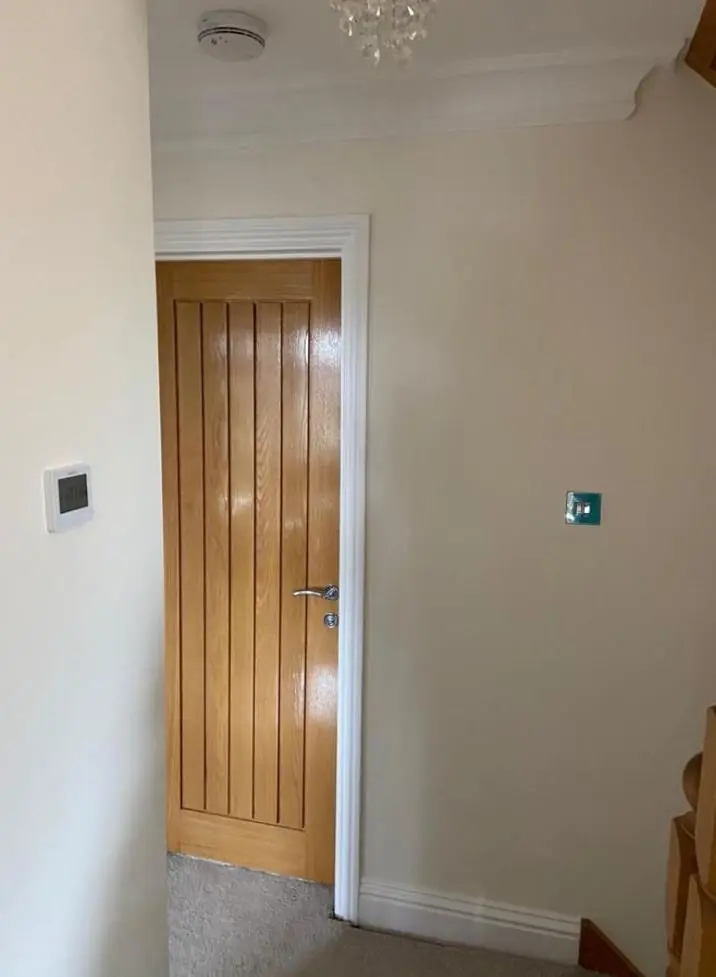
The houses built in 1999 and 2000 on the old Express Lift site, near the National Lift Tower, have plasterboard stairwells that are usually flatter and easier to reach, often with a turn or a half-landing. After 25 years the original paint is tired and the softwood spindles may have shrunk away from the handrail, so there is caulking and filling before the colour goes on. Modern townhouses on Ross Road and Countess Road are similar. Purpose-built flats can have shared stairwells too, which landlords or managing agents look after; we can price those for an agreed day so residents know when to expect us.
The general approach, including access equipment and finishes, is on our hallway, stairs and landing decorating page. For other work in the area, go to our St James page, and if you are comparing quotes, our guide to choosing a decorator may help.
Last updated by Dean, DH Painter & Decorator.