
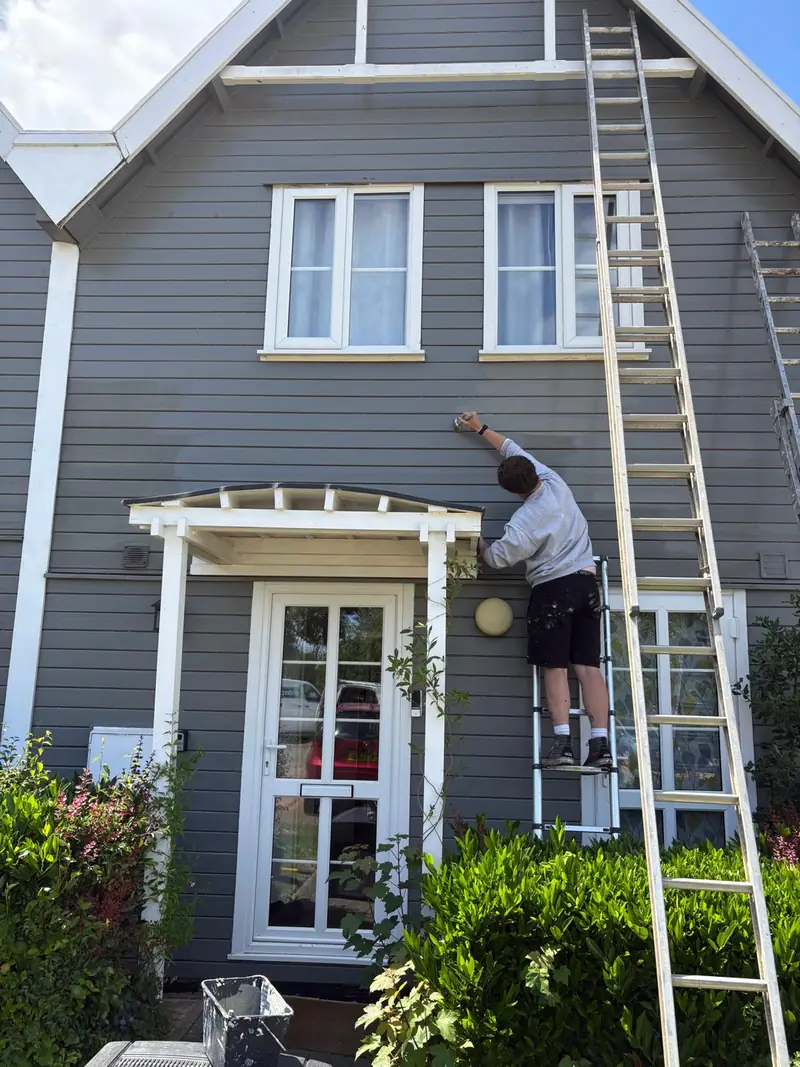
We stain and treat fences and gates in St James, NN5, 0.6 miles west of Northampton town centre. Most fence work here is on the western fringe, where about 470 homes date from the 1930s and the semis have gardens, while the Victorian terraces nearer the river have small rear yards with brick walls and timber gates.
Semis with gardens on the western edge
Head west from the terraces towards Duston and the housing changes. The Census area that covers Windsor Crescent, Westfield Road, Rosebery Avenue, Franklin Street, Peverels Way and Abbots Way is 46.9% semi-detached, against 9.4% in the Victorian core, and 60.8% of its households own their home. The Valuation Office Agency dates about 470 of its homes to 1930-39, and energy certificates for Windsor Crescent show solid-brick semis of 85 to 101 square metres. These are the St James houses with real gardens, which means side gates, panel fences between neighbours and longer runs along the bottom of the garden.
The ground helps there too. The western streets sit higher, about 70 metres at Malcolm Drive against about 62 metres on the low streets by the river, and 49 of 50 postcode points checked in that fringe area fall outside the Environment Agency’s flood zones, which is one reason that side of St James is less likely to stay wet. With no conservation area anywhere in St James, the colour of a stain is the owner’s choice.
Fences of that kind are usually a mix of ages. One run might be decades-old feather-edge boarding, the next a newer panel, and the side gate something different again. They take stain differently, so we test a patch on each before committing to a colour. Old grey timber is cleaned and allowed to dry; new, smooth panels may need weathering or a light sand before stain will soak in.
Yard gates and back walls in the terraces
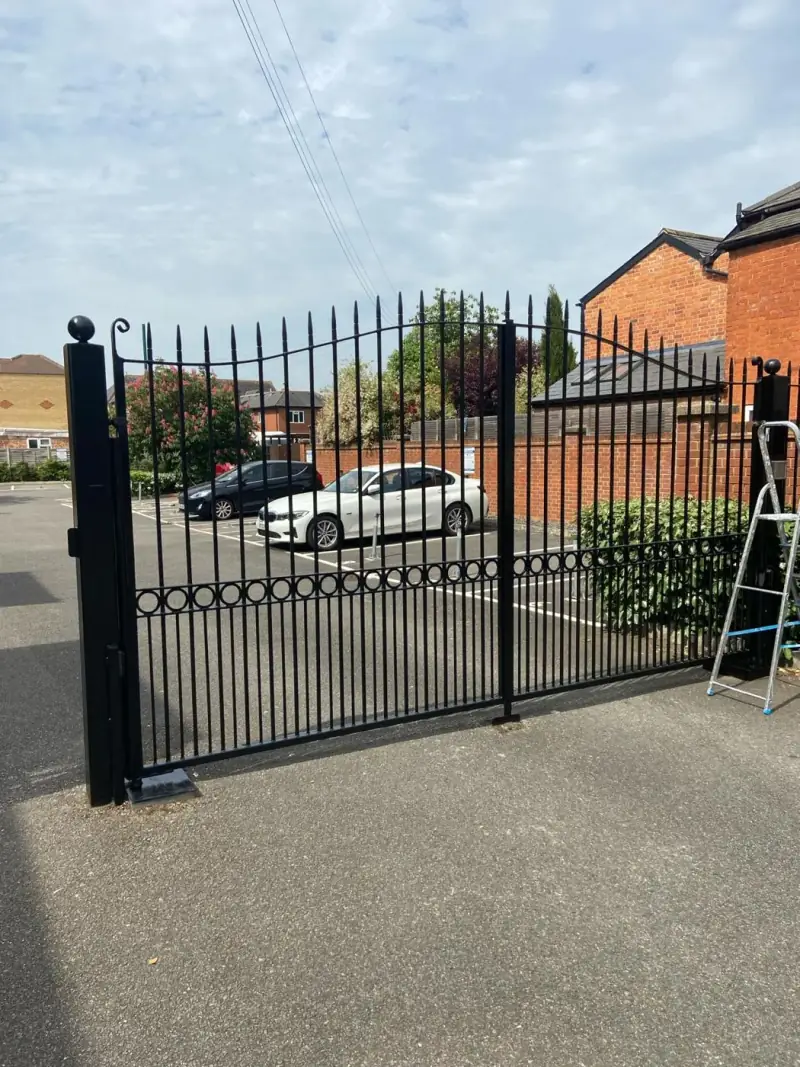
The Victorian core is different. Terraced houses there have small rear yards. The excavation of 19th-century cottages on the St James’ Road frontage found rear structures interpreted as a privy and a coal cellar. Today a terrace usually has a brick yard wall and a timber gate, perhaps with a short length of fence or trellis on top. Where a yard gate opens onto a shared path, we agree with the neighbours when it can be left open to dry. These jobs are small but fiddly: a ledged and braced gate needs stain on both faces and every edge, including the bottom edge, which is where water gets in first.
Damp ground near the river
Many of the low streets in the core, between St James Road and the Nene, fall within the Environment Agency’s flood zones, and timber close to the ground there stays wet for longer after rain. Before staining, we probe the bottom of posts, gate stiles and gravel boards for rot. A soft post needs replacing first, because stain on rotten timber flakes off within a season.
| Timber | Usual problem in St James | Treatment |
|---|---|---|
| Rear yard gate, Victorian terraces | Bottom rail and hanging stile soften first | Probe, repair, stain all faces and edges |
| Panel fence, interwar semis | Grey, dry panels and split slats | Clean, dry, then a stain matched to the timber |
| Side gate, interwar semis | Sagging, worn at the latch | Adjust if needed, sand the wear, two coats |
| Posts and gravel boards on the low streets | Rot at ground level | Replace soft posts first, then treat the base |
| Fact | Detail | Source |
|---|---|---|
| Semi-detached homes, western fringe | 46.9% of households in LSOA 033C, against 9.4% in the Victorian core (Census 2021) | Nomis (ONS) |
| 1930s homes | About 470 built 1930-39 in LSOA 033C (Valuation Office Agency) | GOV.UK |
| Windsor Crescent houses | Solid-brick semis of 85-101 m2 in sampled certificates | EPC register |
| Excavated terrace yards | Rear yards with privy and coal cellar, St James’ Road frontage | Northamptonshire HER |
Whose fence is it, and when should it be done?
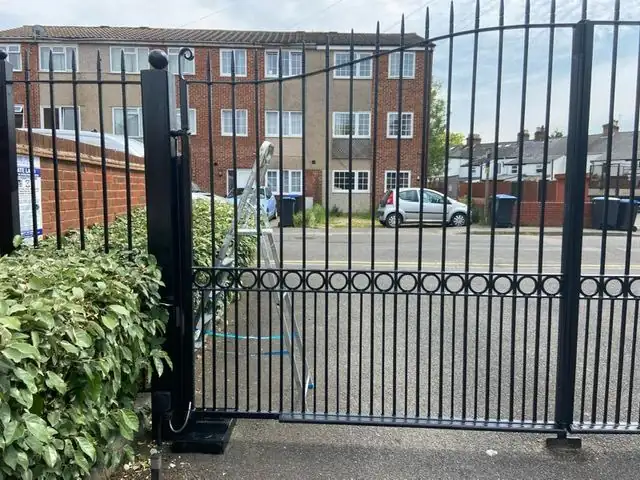
On any shared boundary, check whose fence it is before choosing a colour; the deeds usually say, and on newer developments, such as the homes built in 1999-2000 around the National Lift Tower, a management company may look after some boundaries. If the fence belongs to a neighbour, we can stain your side only, with their agreement. Stain wants dry timber and a dry forecast, and our guide to the best time for exterior painting covers the season.
If a metal gate or railing is part of the same job, our page on metal gates and railings in St James explains how that is treated. Products and the full method are on the main fence and gate staining page, and the St James area page covers the rest of our work in the district.
Last updated .


