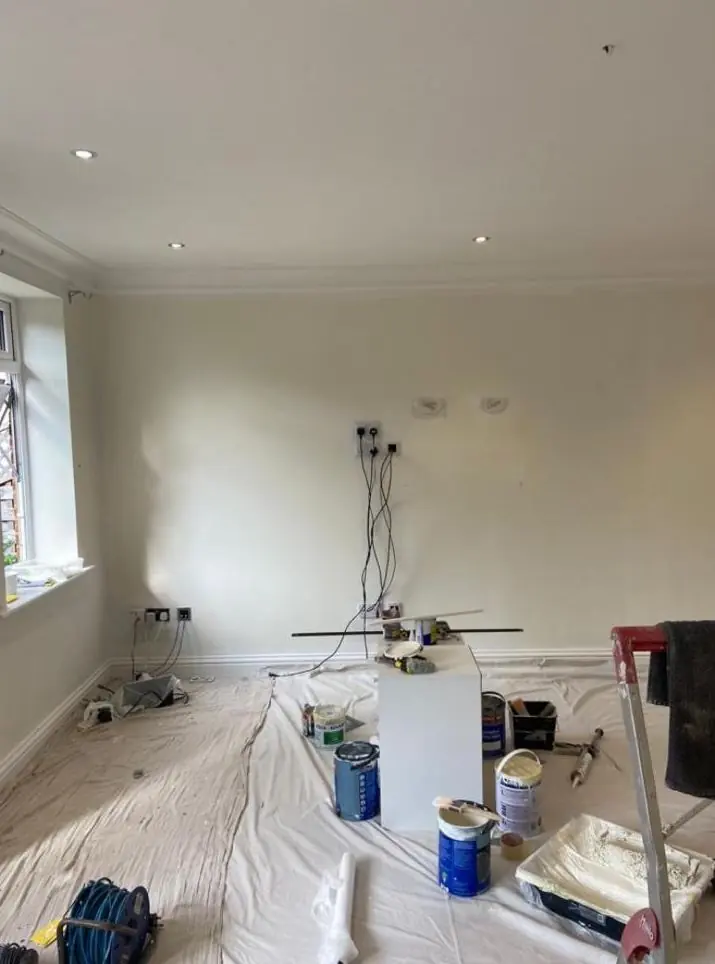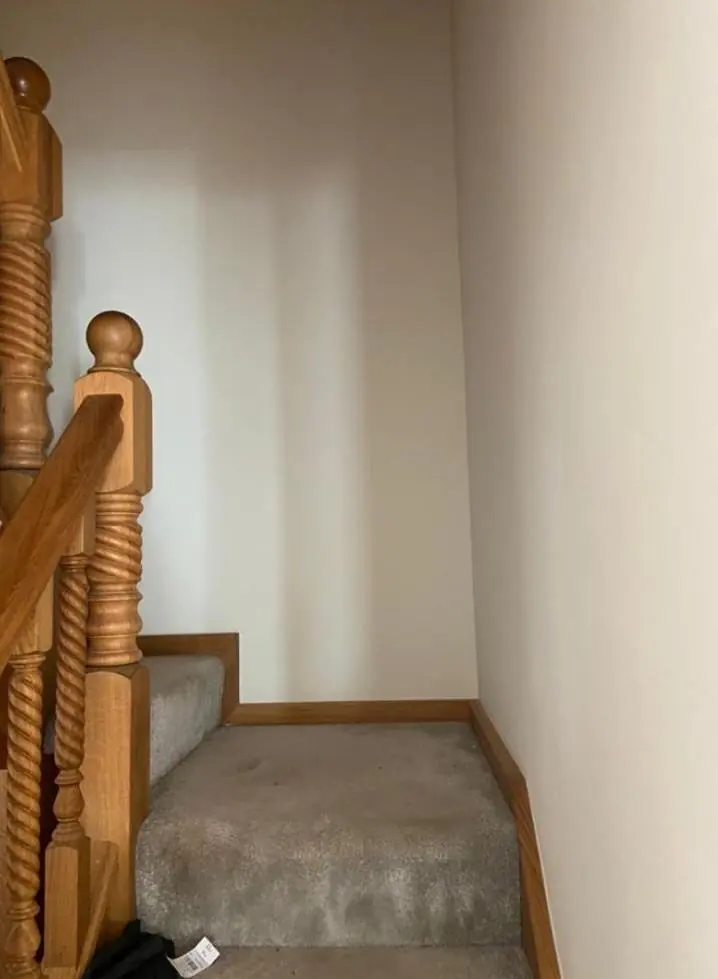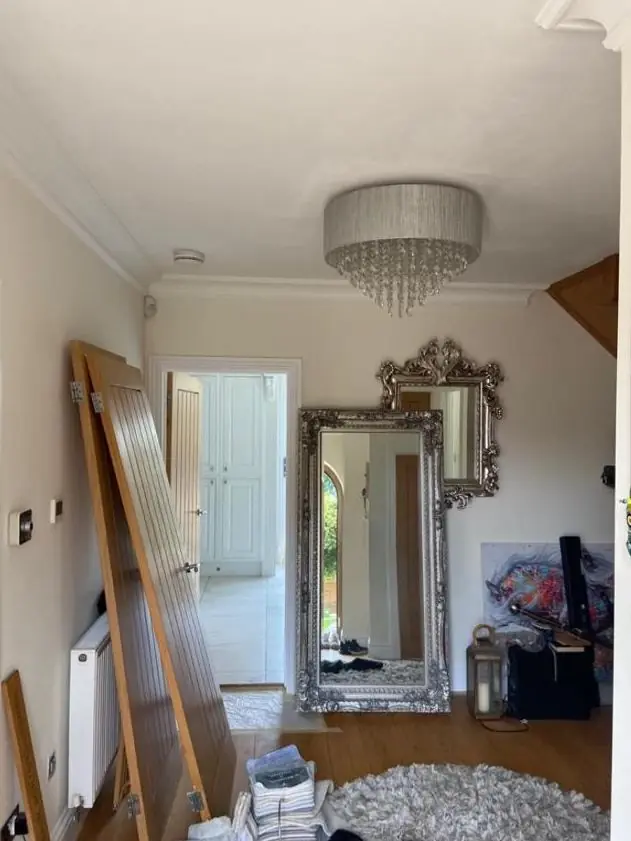
DH Painter & Decorator offers decorative paint finishes in St James, NN5, roughly 0.6 miles west of Northampton town centre. Dean picks out period plasterwork in the district's Victorian terraces and creates feature and two-tone walls in its 1999-2000 and modern homes.
What survives in the older houses
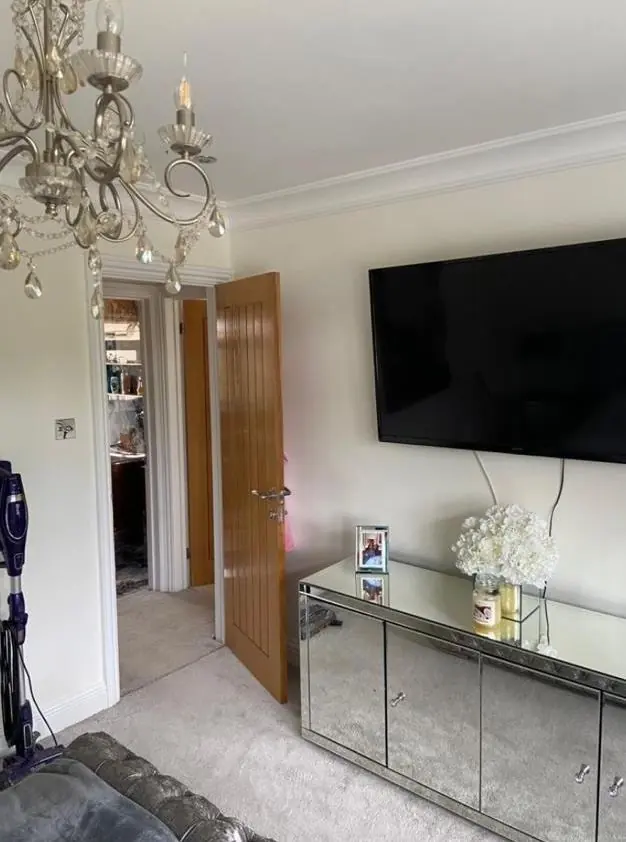
The terraces of St James were working people’s homes, built in the decades when the district’s shoe factories, tannery and engineering works were expanding. Even so, many had modest period touches: a run of cornicing in the front room, a ceiling rose, a cast or timber fireplace surround. Where those have survived later modernisation, they are usually buried under years of emulsion, with the crisp detail of the mouldings softened into blobs.
Picking them out well starts with recovering the shape. Dean assesses how clogged the mouldings are and whether careful cleaning back will improve them before any colour goes on. Where the plasterwork is cracked or partly missing, a small repair is worth doing first, since a contrast colour draws the eye straight to any gap.
Colour choices for period detail in compact rooms
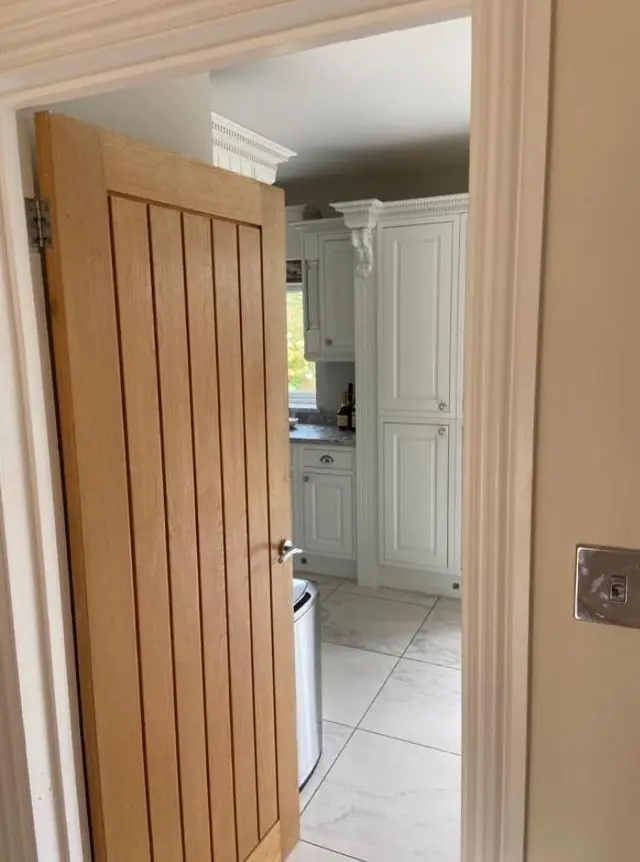
Front rooms in these houses are small, so heavy decorative treatment can quickly feel crowded. Rather than painting cornicing in a strong contrast all round, we often suggest one of these lighter-touch approaches:
- Ceiling and cornice in the same white, with the wall colour stopping cleanly at the bottom of the moulding, which makes the room feel taller.
- A rose picked out in a tone one or two shades off the ceiling, so it reads as detail rather than a target.
- A fireplace surround in a deep colour or an eggshell sheen, making the chimney breast the focal point without busy wallpaper.
- A dado-height two-tone split in the narrow hallway, with the darker colour below where bikes, bags and shoulders scuff it.
Feature walls in the newer homes
The houses built in 1999-2000 on the old Express Lift Abbey Works site, and the newer townhouses around Bruce Street, Ross Road and Countess Road, rarely have period features. Their rooms are squarer, with flat plasterboard walls, and that suits a different kind of decorative work: a crisp two-tone line, a painted arch or block behind a bed or desk, or a colour-drenched room where walls, skirting and ceiling share one shade.
Flat modern walls make sharp lines easier to achieve than on old lime-patched plaster, but they also show every imperfection in a deep colour, so joints and screw heads are filled and sanded first. In the older terraces, by contrast, a ruler-straight line along a wavy wall can look wrong, and Dean often cuts the line by hand so it follows the plaster naturally.
Where we’d hold back
Some St James ground floors on the low-lying stretches by the Nene, along parts of Weedon Road and Harlestone Road and the lower end of St James Road, have walls with residual damp or salts. Glazes and deep-colour finishes highlight staining badly, so we would rather put decorative work on a dry upper-floor wall or a chimney breast, and keep breathable plain paint on suspect lower walls.
The same caution applies to listed buildings. St James’ Church, the National Lift Tower and the retained 1930s transport office at the old tram depot all need consent for alterations, and decorative treatments to historic fabric fall under that, so we would not start work on anything of that kind until the owner has confirmed permission is in place.
In let homes, which several agents advertise across St James, elaborate effects are hard to repair between tenancies. A simple painted feature that a landlord can touch up from a labelled tin usually makes more sense.
The wider range of effects we offer, from faux finishes to painted panelling, is described on the main decorative finishes in Northampton page. Our St James area page covers the district’s housing and the other decorating we do there.
Last updated by Dean, DH Painter & Decorator.