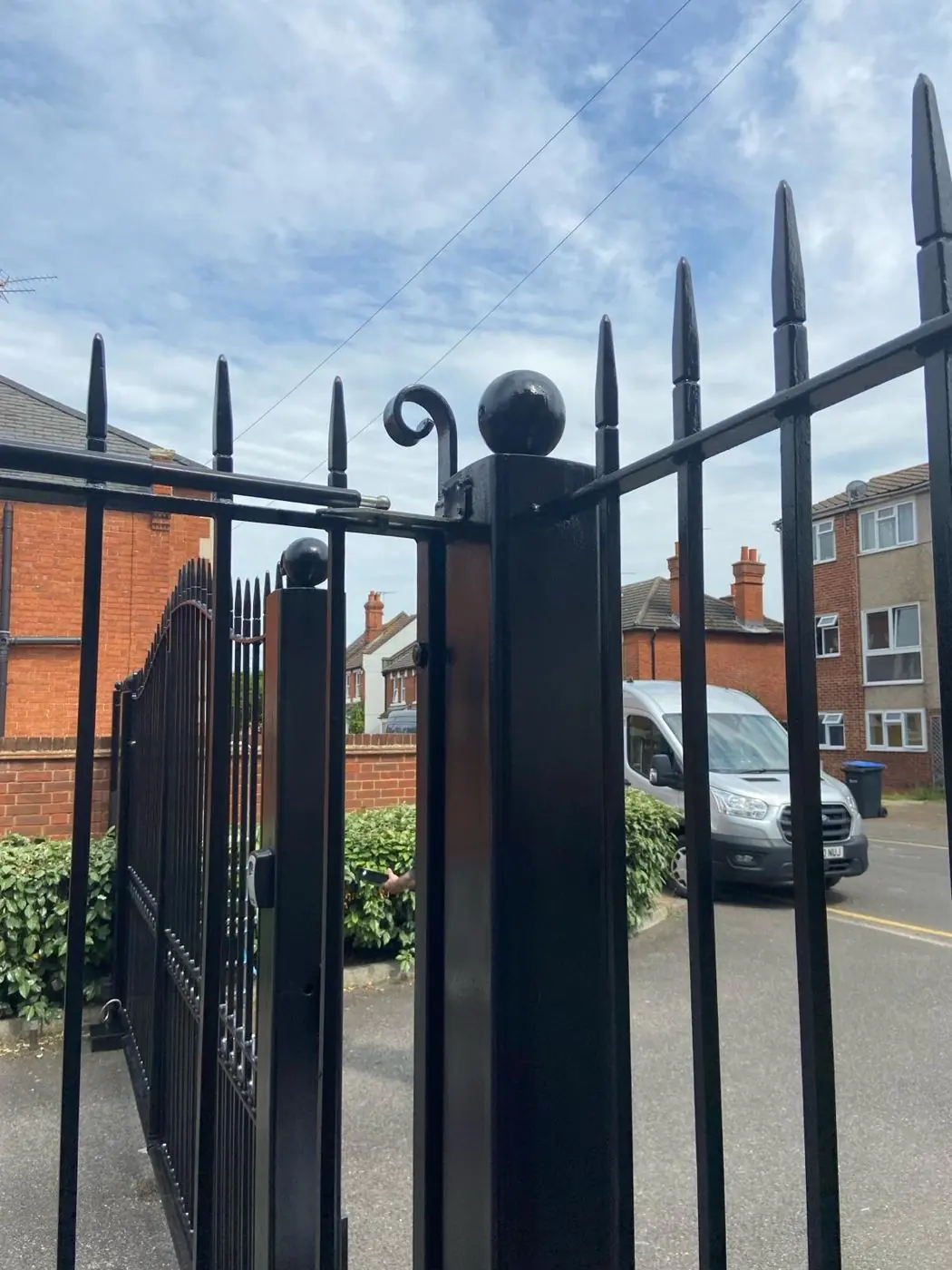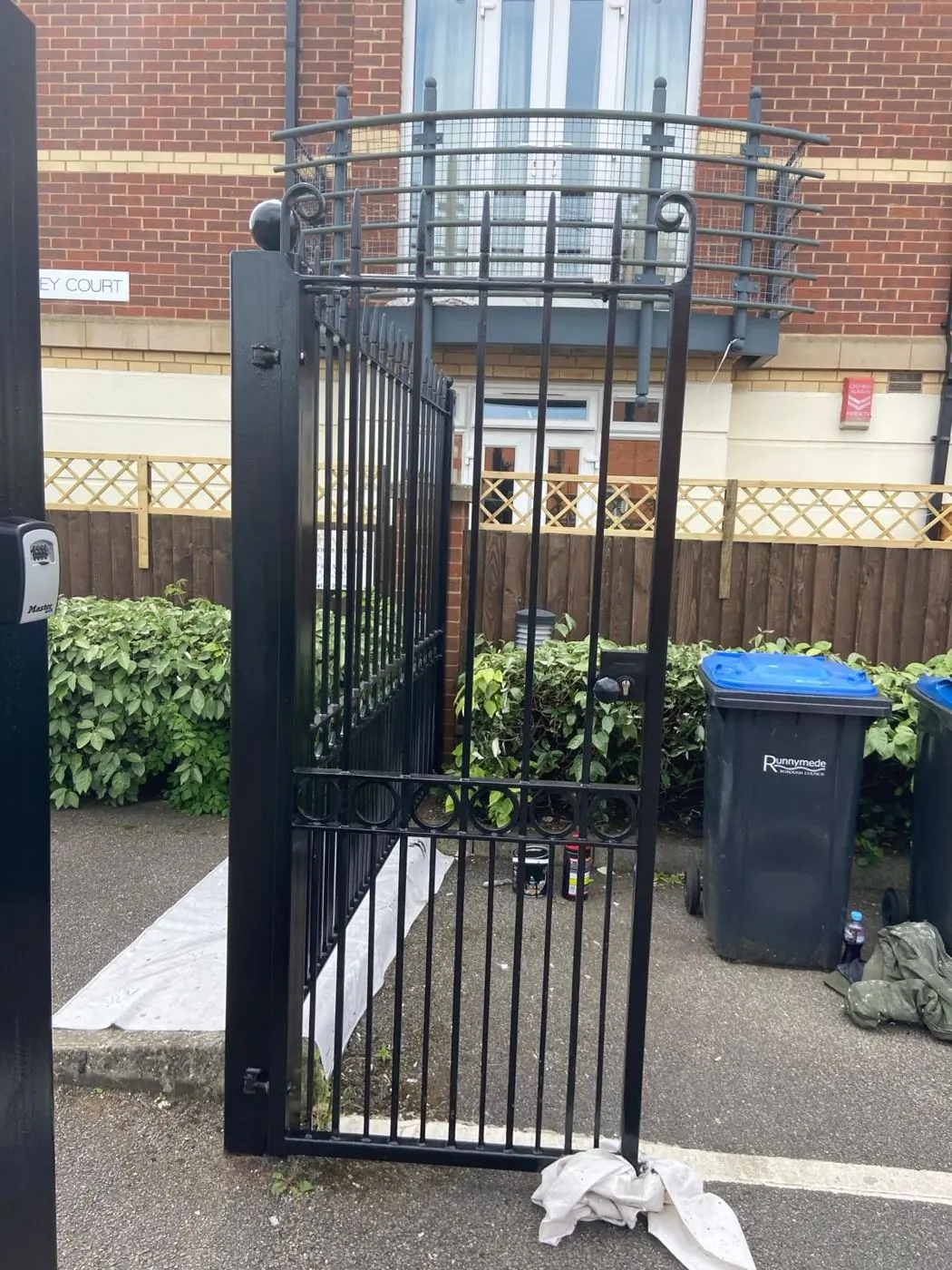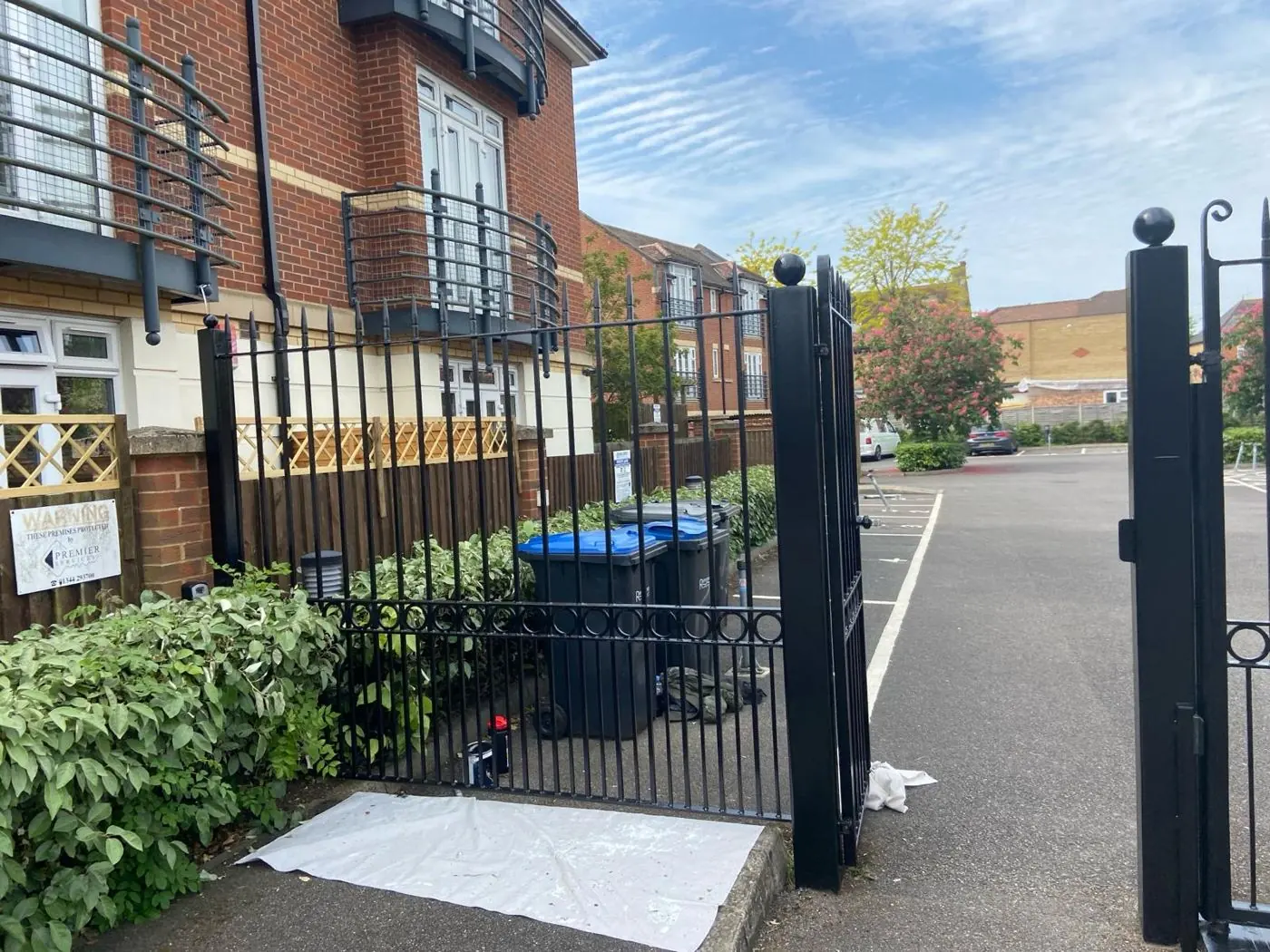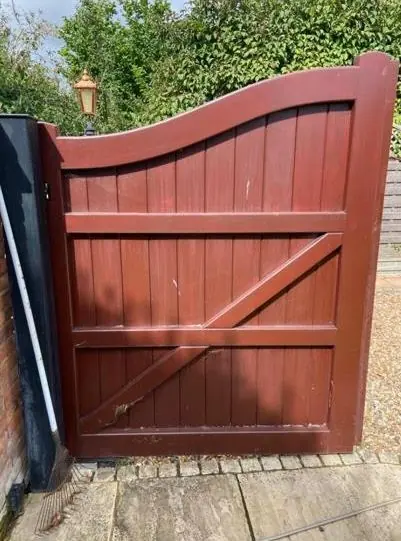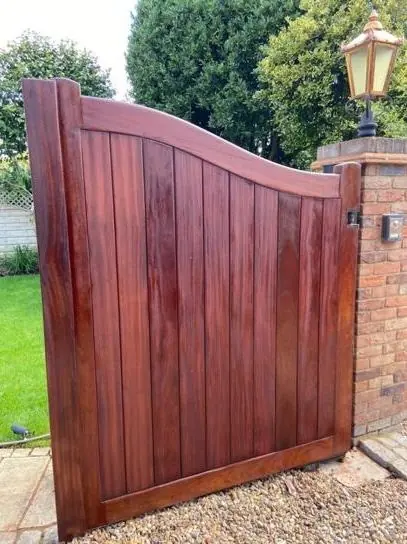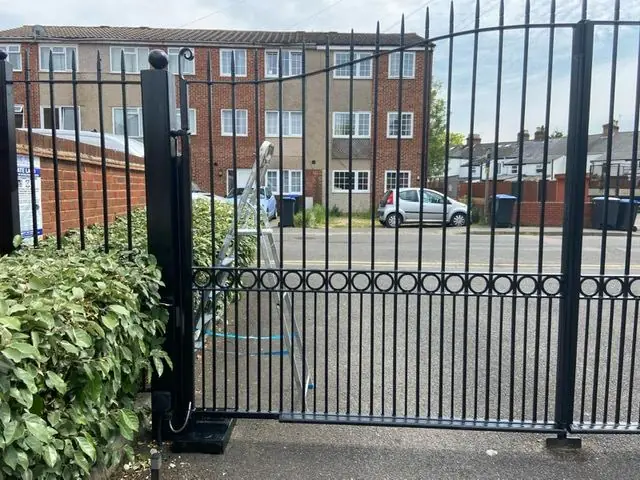
Dean paints metal gates, railings and other exterior ironwork in Dallington, NN5, about 1.3 miles north-west of Northampton town centre. Rust is taken back to sound metal before priming, and in the conservation area we keep to traditional dark colours.
Ironwork among the sandstone
Older properties in the conservation area, and the grounds of Dallington Hall, may have iron gates and railings, some of them set straight into sandstone walls or piers. Iron of that age is usually wrought or cast, and often wears decades of paint layered over earlier rust.
Before any quote, Dean works out what the metal is. A tap and a look at how the rust has formed usually tells wrought iron from cast, and both from later mild steel repairs welded in alongside them. An old gate can be a mix of all three after years of mending, and each part needs the right primer.
Where the bars meet stone, rust is more than a cosmetic problem. Corroding iron expands, and in a stone socket or coping that swelling can crack the masonry around it. Getting the rust out of those joints and sealing them is the most important part of any railing job near the green.
A damp valley is hard on bare metal
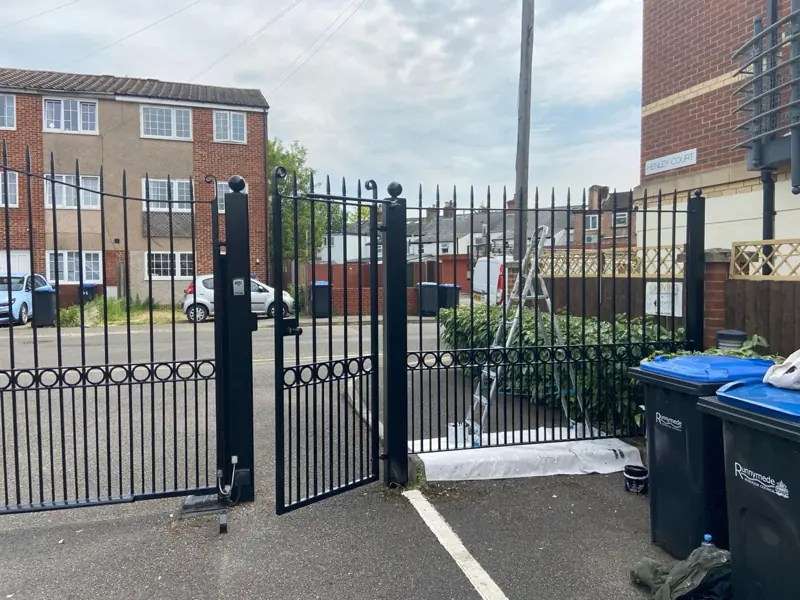
Down by the Dallington Brook the air is often damp first thing, and the old trees keep much of the village in shade. Bare metal in that air rusts quickly once the coating is chipped. Leaf litter piling against the foot of a railing or the bottom rail of a gate holds wet against it for weeks. This is why the prep matters more here than the colour:
- loose paint and scale come off with scrapers and wire brushes, and pitted areas are worked back to sound metal;
- cast iron is cleaned carefully, since it is brittle and does not like heavy impact;
- bare patches get a rust-inhibiting metal primer the same day, before moisture settles on them;
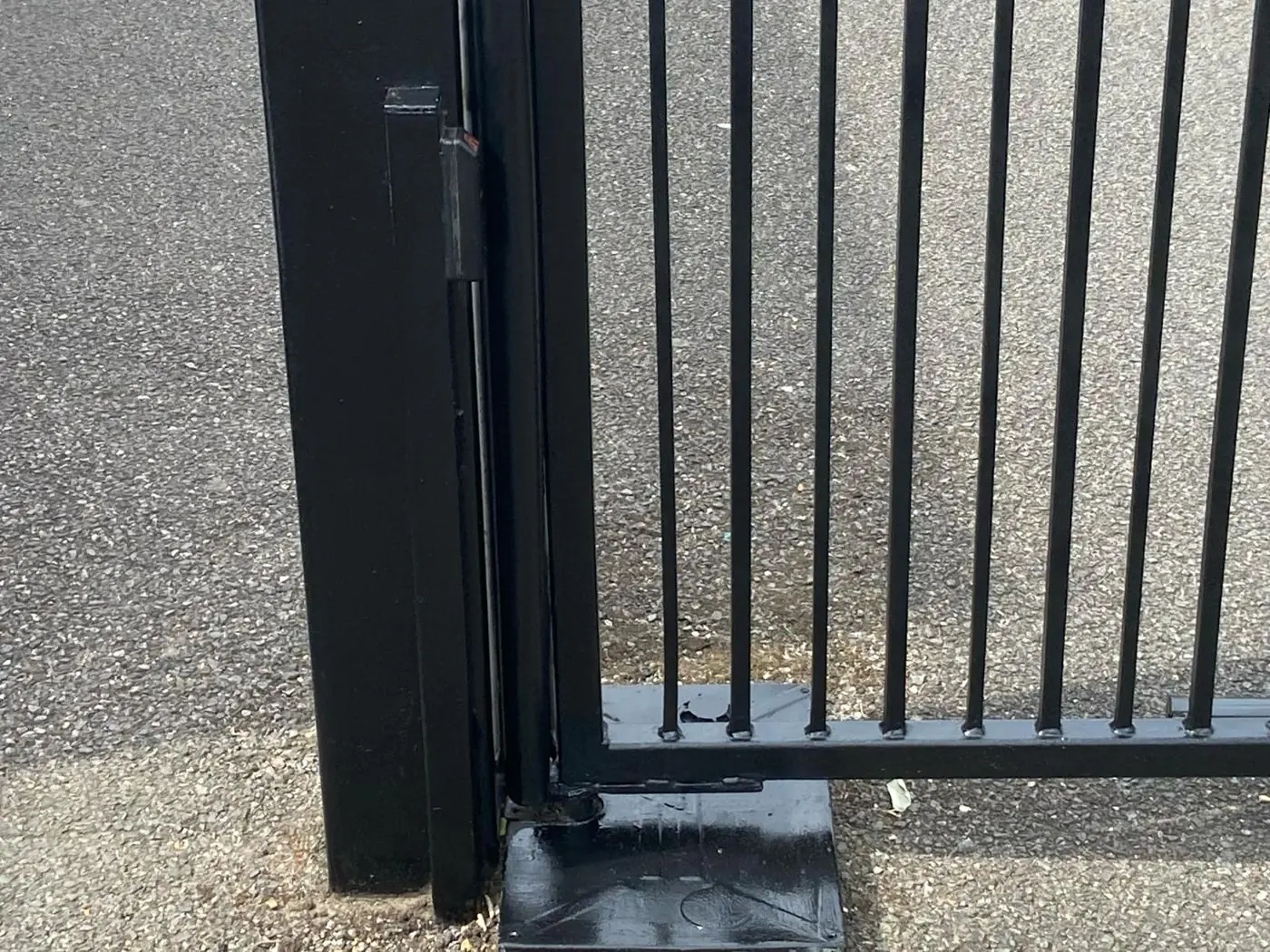
- bases and hinge areas are cleared of debris and given extra attention;
- top coats go on in a dry spell, never onto metal still wet with dew.
The full method, including how wrought iron, cast iron, mild steel and galvanised steel each need different primers, is on our metal gate and railing painting page.
Colours that respect the conservation area
Within the Dallington conservation area, black or other dark traditional colours are the usual choice for gates and railings, and they sit naturally beside the sandstone, the church and the old trees. On a listed building, or ironwork attached to one, any change in colour or finish needs listed building consent, so a like-for-like repaint is the straightforward route. If you are not sure whether your railings are covered by a listing, check with the council before planning a change.
The same care applies to other metal on these buildings. Leaded-light metal casements, like those on the Wheatsheaf and Brookside, can be keyed by hand and given a rust-inhibiting primer on the same visit, with the lead cames left untouched so no pane works loose. On a thatched building, no heat is used to remove old paint from any metalwork near the roof.
Newer gates outside the old core
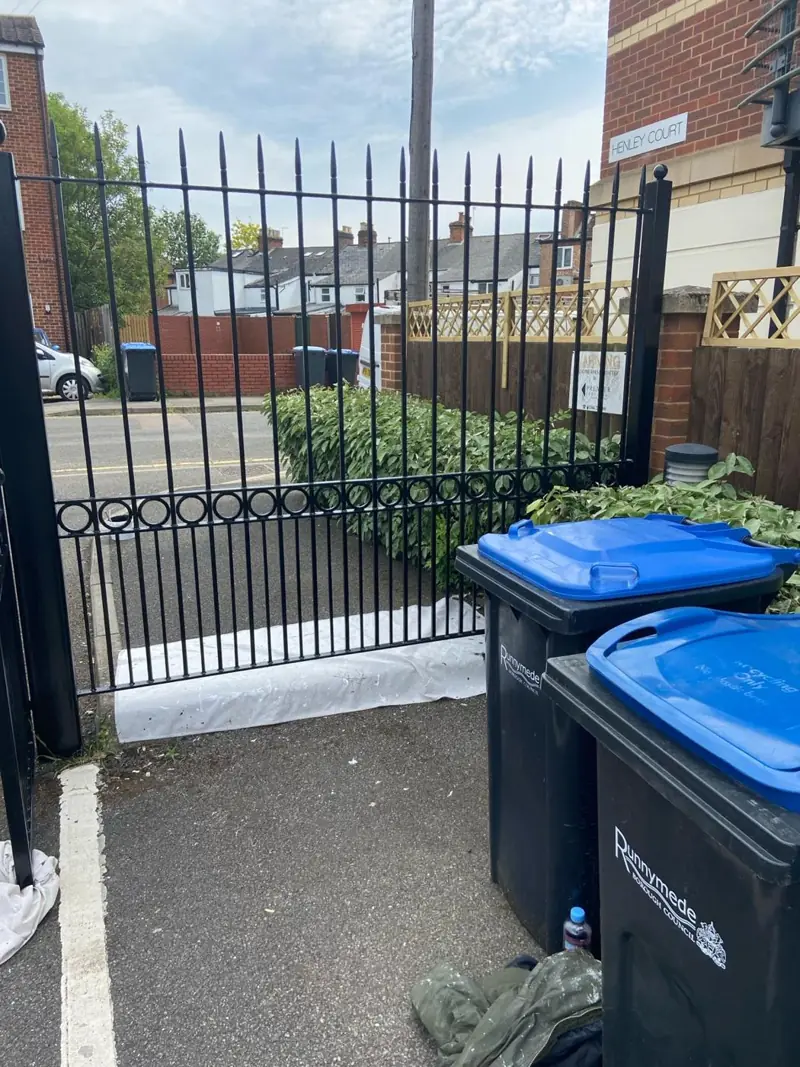
Beyond the conservation area, metalwork in Dallington is mostly modern fabricated gates and railings on suburban houses, plus whatever comes with the new homes at Dallington Grange. Mild steel needs rust treated and primed; galvanised steel needs a primer made for zinc, or the paint will peel. Powder-coated gates can usually be keyed and overpainted once they start to fade. Tell us what you have and Dean will price it. For the wider local picture, see our Dallington page.
Last updated by Dean, DH Painter & Decorator.