DH Painter & Decorator offers decorative finishes in Pitsford, 4.7 miles north of Northampton. The village's older farmhouses suit limewash, its Georgian houses suit graining and picked-out plasterwork, and listed buildings may need consent before historic finishes are changed.
Houses built for hand finishes
Pitsford holds more high-status older houses than its 671 residents might suggest. Pitsford Hall was built in 1764 by the architect John Johnson in dressed Pendle stone. The Manor House, The Old Dower House and Pitsford House stand in large walled, tree-lined plots. The Birches is an early Arts and Crafts house, and Middlesex House dates from 1910. Houses of these ages were decorated with techniques that are now rare: limewash, distemper, wood graining and picked-out mouldings. Restoring or reinterpreting those finishes is where decorative work in the village earns its place.
We cover Pitsford from our Northampton base, about 4.7 miles south on the A508. The full range of effects we offer is on our decorative finishes page; this page is about which of them fit Pitsford houses.
Limewash for farmhouses and barns
Limewash is the decorative finish most at home here. It is a breathable coating of slaked lime and water, sometimes tinted with earth pigments, and it was the normal finish on lime-plastered walls in the farmhouses and barns of the 17th to early 19th century that make up much of the conservation area. It dries to a soft, chalky surface with natural variation, which flatters uneven cottage walls in a way flat emulsion cannot.
It is slow. Limewash goes on in several thin coats onto a dampened surface, and each coat needs time to cure, so a room cannot be rushed. It will not bond over modern vinyl paint, which has to come off first. Indoors it suits halls, barn conversions and rooms with exposed stone or rough plaster. Outside is another matter: the conservation area appraisal notes that painted finishes are uncommon on the village’s historic buildings and most of the stone is meant to stay bare, so a limewashed façade should be discussed with the council before anything is applied.
Graining, panelling and picked-out plasterwork
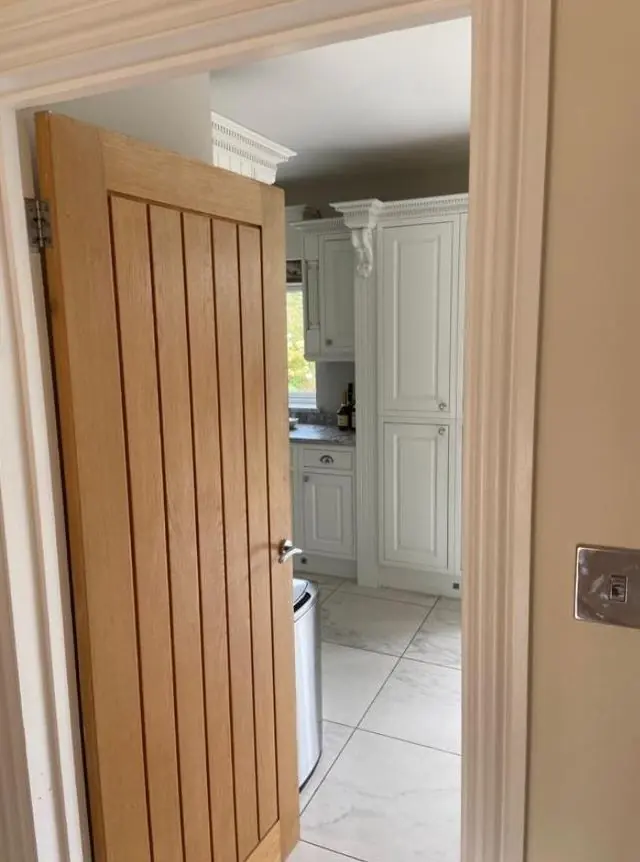
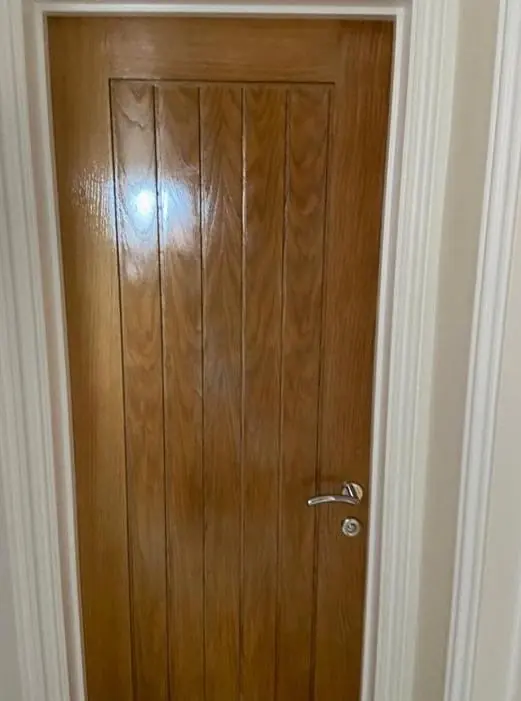
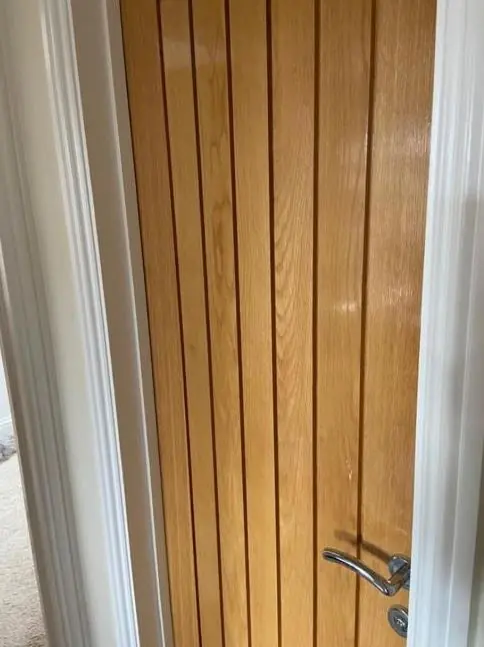
Georgian and Victorian houses in the village have four- and six-panel doors, and larger houses of that era typically carried cornices and moulded plasterwork as well. Wood graining, a painted imitation of oak or another timber built up in glaze and then combed or brushed, was often applied to softwood joinery of that period. Where traces of old graining survive under later paint, we can try to match them; where none survive, a grained door can still be a deliberate choice for a hall or study.
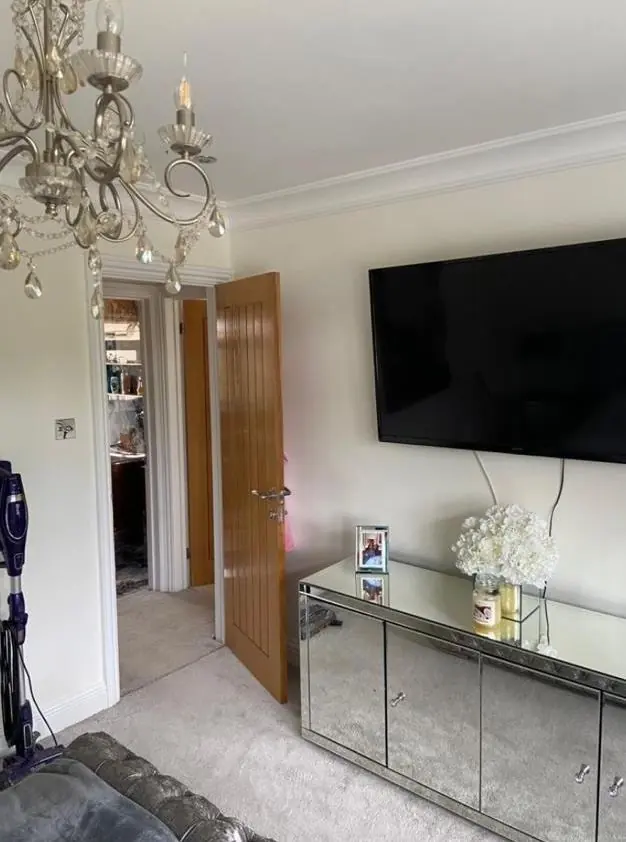
Picking out is simpler: cornice, ceiling rose, dado rail and panel mouldings painted in a second shade so the plasterwork reads. In large rooms with original cornicing, a scheme of two or three related tones looks more at home than a single flat colour.
The Birches calls for a different touch. Arts and Crafts interiors favoured natural timber, earthy colour and visible craft over imitation, so oiled or waxed woodwork and muted greens and ochres respect that style better than faux marble would.
When listed building consent comes into it
Several Pitsford buildings are listed, including Pitsford Hall, The Griffin Inn and a number of cottages on High Street, Manor Road and Grange Lane, among them Elm Cottage and Paddock Cottage. Decorative work that strips historic finishes, panelling or plasterwork, or applies something new to a feature of special interest, can need listed building consent from West Northamptonshire Council. Repairing an existing finish in matching materials is usually the less contentious route. We will say when we think a check is sensible, but the decision rests with the council.
Modern feature work on the newer streets
On Drummond Close, Broadlands and Glebe Lane, decorative work suits a lighter, more contemporary approach: a colour-blocked wall, a painted arch behind a bed, or a two-tone split down a hallway. These use standard paints on gypsum plaster and need no consent. To talk through a finish for your house, call Dean on 07539 779 036, or visit our Pitsford area page.
Last updated by Dean, DH Painter & Decorator.