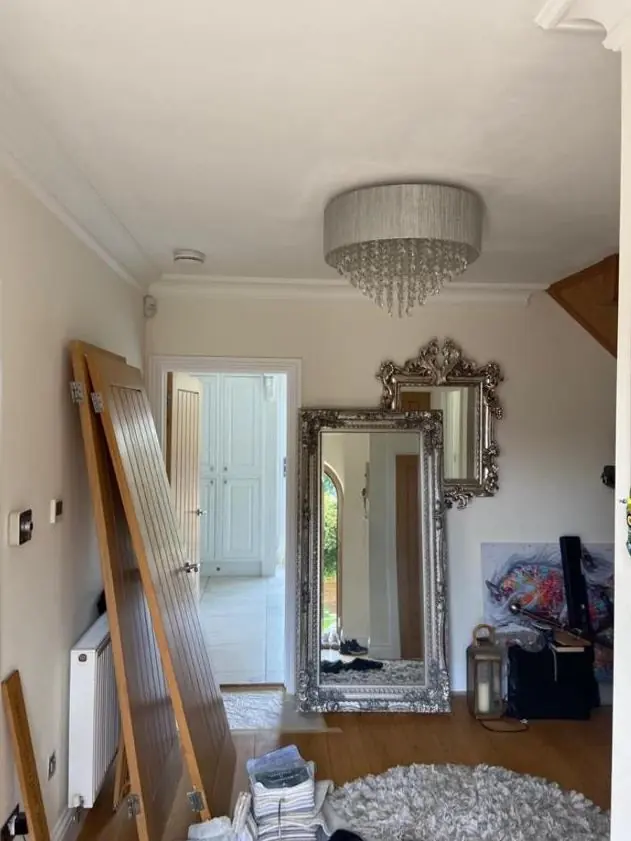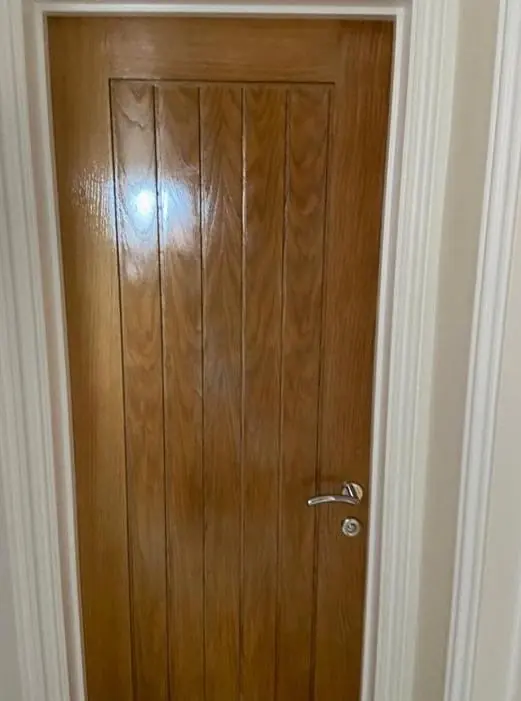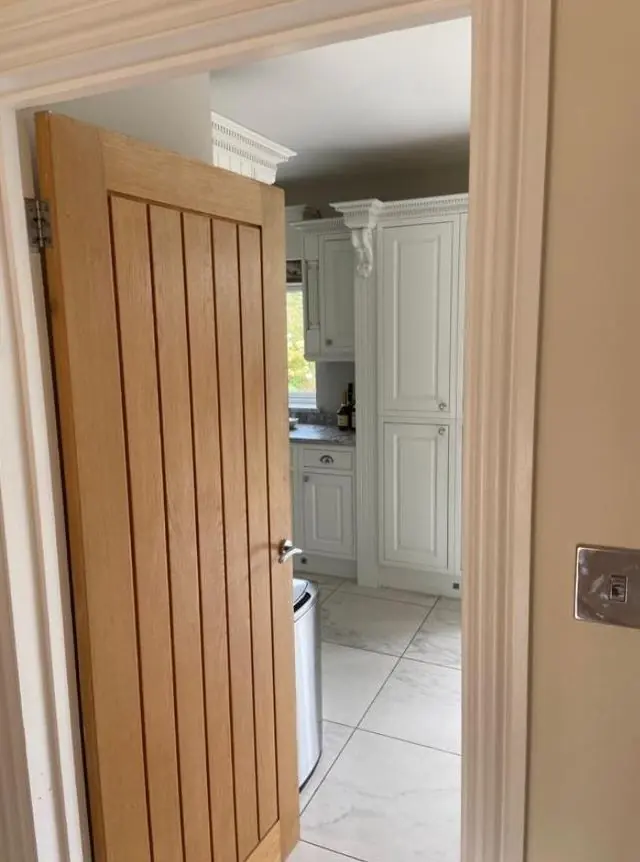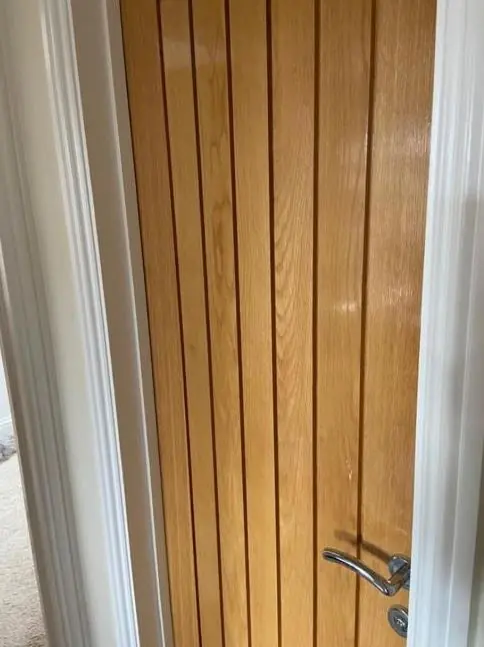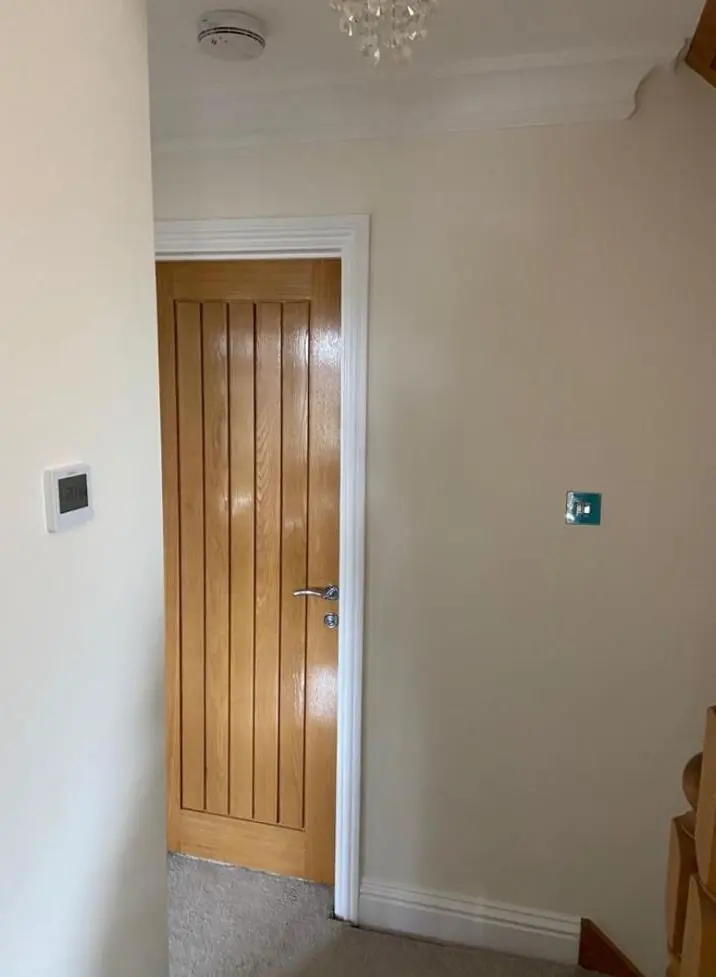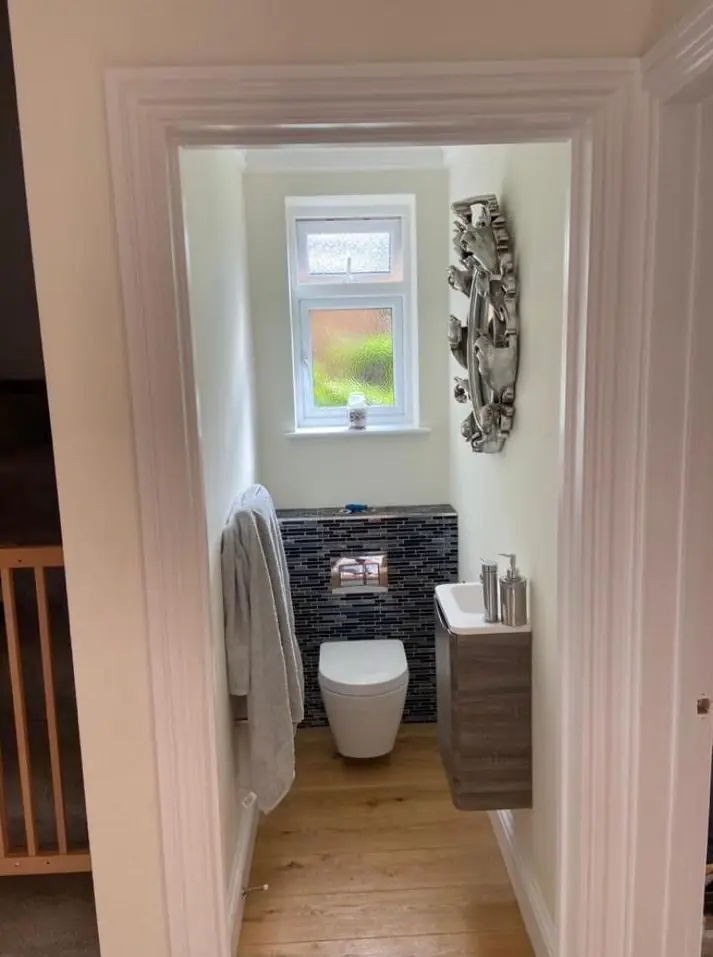
DH Painter & Decorator paints doors, skirtings, architraves and window joinery in Pitsford, a conservation village about 4.7 miles north of Northampton town centre. Dean prepares old plank and panelled doors by hand, keeps original ironmongery clear of paint, and uses hard-wearing finishes on the newer houses.
Plank doors, panelled doors and the joinery of a stone village
Pitsford sits on high ground about 4.7 miles north of Northampton town centre, in the NN6 postcode, and much of the woodwork in its older houses is as old as the walls around it. Its historic core, a conservation area since 1990, is built of coursed Pendle stone, and the former farmhouses, barns and cottages along Manor Road, Moulton Road, Church Lane, Grange Lane and the eastern end of High Street date mostly from the 1600s to the early 1800s. Inside those buildings you find timber plank doors, some hung on ornate iron hinges, four- and six-panel Georgian and Victorian doors, deep window reveals cut through solid walls, and original skirtings that have taken coat after coat over the years.
That changes how the work is done. A planked door with Gothic iron strap hinges can’t be rolled over in an afternoon. The hinges and latches are masked or taken off and set aside, never painted over, and the boards are prepared by hand so the joints between planks stay crisp instead of filling up with paint. Panelled doors get the same patience: mouldings are cleaned out, old runs are cut back, and the panels are painted in the traditional order so stiles and rails finish clean. The general sequence of preparation and coats is on our main door, skirting and woodwork painting page. This page covers what is different in Pitsford.
Deep reveals, settled skirtings and small-pane casements
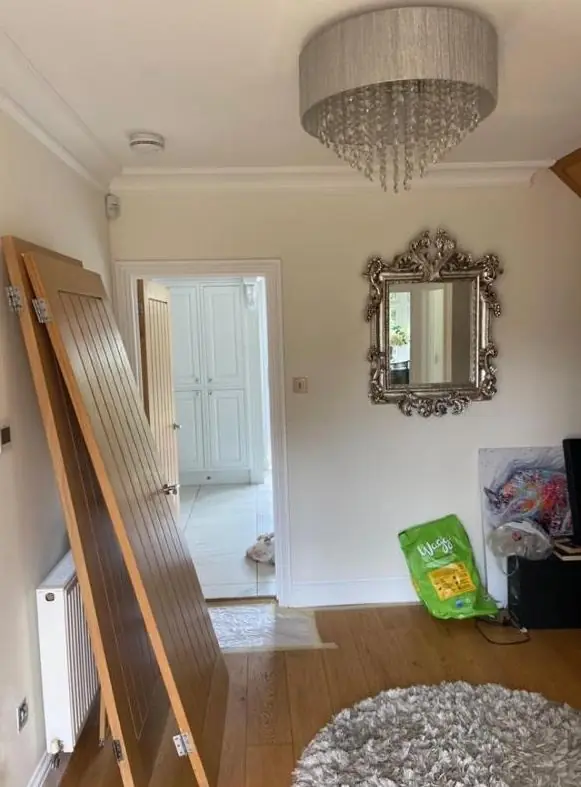
Solid stone walls give window reveals and sills far deeper than in a modern house, and they are rarely square. Skirtings in the old cottages follow floors that have moved over centuries, so the caulk line along the top edge has to follow the wall, not a spirit level. Where timber has shrunk away from lime plaster, we use a flexible filler and keep the bead narrow. Rigid filler packed into that gap tends to crack again as the building moves through the seasons.
Windows deserve their own note. The conservation area guidance describes the village’s historic windows as timber casements with small panes, some lead-lined or divided by glazing bars, generally painted white or cream. Each bar is cut in by hand on both faces, which is slow. In the older houses it is often the biggest single part of a woodwork job, so it should be priced honestly from the start. The painter and decorator cost guide explains how we build a quote.
Article 4 proposals and keeping original joinery
The 2019 appraisal proposed Article 4 directions on a number of named houses. They cover alteration of windows at, for example, The Old Dower House, The Birches, Pitsford Grange and The White House, and alteration of doors at The Old Dower House, Pitsford House West and Pitsford Farmhouse. West Northamptonshire Council consulted on Pitsford Article 4 directions in 2021, and we have not confirmed whether they are now in force. Either way the guidance points one direction: repairing and repainting original timber is preferred over replacing it, and the guidance says uPVC replacements are not normally supported in the conservation area.
In practice, that means keeping colours conservative on street-facing doors and windows and checking with the council before a strong change. In a listed building such as White Horse Cottage on High Street or Elm Cottage on Manor Road, consent can extend to interior works too, so ask before stripping old joinery back to bare wood. Dean will tell you where he thinks a check is sensible. The decision stays with you and the council.
Thatch, timber lintels and the newer estates
Two smaller details matter here. Paddock Cottage, York Cottage and Nos 20 and 21 Manor Road are thatched, so heat guns are not used anywhere near them; old paint comes off by scraping and sanding instead. On former agricultural buildings, exposed timber lintels over windows are traditionally painted white or black, and that is worth keeping when the joinery is redone.
Away from the historic core, the post-war and modern houses on Drummond Close, Broadlands and Glebe Lane have machined doors, softwood or MDF skirtings and modern architraves. There are no heritage limits on those, so the priority is durability: a tough satin or eggshell on skirtings that take vacuum knocks, and water-based finishes that hold their white. Our Pitsford area page covers how we work across the village.
Last updated by Dean, DH Painter & Decorator.