
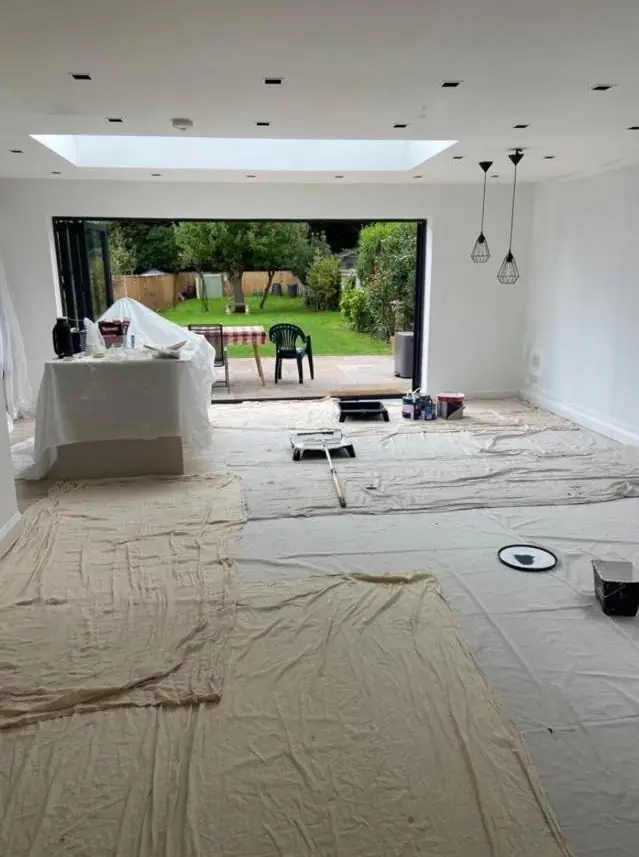
An extension to one of Pitsford's stone houses puts new gypsum plaster against old lime on solid Pendle stone walls, and the two need different paint. DH Painter & Decorator paints new plaster across the village, 4.7 miles north of Northampton, with mist coats on the new work and breathable finishes where it meets the old.
Where new gypsum meets old lime
An extension or a new opening in one of Pitsford’s stone houses usually leaves new gypsum plaster butting up against old lime plaster on a solid Pendle stone wall. The two behave differently. Fresh gypsum is very absorbent and needs a diluted mist coat so the first layer of paint bonds. Old lime is breathable and moves slightly with moisture, so it wants a breathable paint, not the vinyl emulsions that suit modern plaster. Along the line where they meet, hairline cracks are common as the new work dries and settles.
We treat the two surfaces as separate jobs that meet at a line. The new plaster gets its mist coat once fully dry; the old lime walls get breathable paint; and the junction is bridged with scrim tape or a flexible filler before the finish, so a crack does not reappear through it a month later. A breathable matt on both sides of the line usually gives the most even look. Our guide to painting new plaster with a mist coat covers mixing and timing.
Extensions the conservation area expects
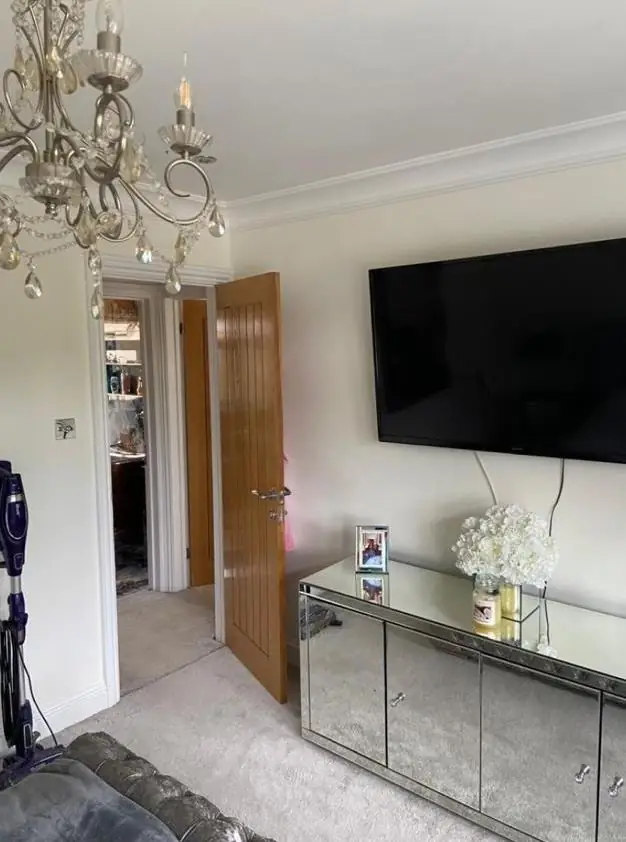
The conservation area appraisal expects extensions to be subordinate to the main house and built in sympathetic materials, which in Pitsford generally means stone or matching brick outside and timber joinery. Inside, the result is often a new room with modern plaster opening off an old one, sometimes through a thick stone wall. The paint for the new room can be ordinary; the part to get right is the opening, where old and new plaster wrap round the reveal.
The village has a long habit of extending old buildings. The appraisal points to stone barns extended or heightened in brick, Peartree Cottage’s barn among them. Conversions of barns and outbuildings put new plaster or dry lining inside an old stone shell, and the stone behind can bring moisture through to the new surface if the wall is not detailed properly. Paint does not cure damp, so we check for it before decorating.
In one of the parish’s 13 listed buildings the rules tighten. Repairs to old plaster are often expected to be in lime to match, and new lime plaster takes weeks to harden before it can be painted, then needs limewash or a breathable mineral paint. If the plasterer is using lime, we plan the decorating dates around that.
New houses in old-looking stone
Some recent infill is built in vernacular stone so it reads as part of the old village: Manor Lodge, The Old Forge and 1-4 Drummond Cottages. Behind those walls are modern construction and modern plaster, so inside they are painted like any new build: a mist coat, then two finish coats once the plaster has dried. The post-war and modern houses at Drummond Close, Broadlands and Glebe Lane are the same, with plasterboard and skim, and an extension to one of them is simpler, since both sides of the joint are gypsum.
| Situation | Before painting | First coats |
|---|---|---|
| New gypsum skim in an extension | Fully dry, even pale colour | Mist coat, then two coats |
| Gypsum meeting old lime plaster | Junction scrimmed or filled flexibly | Breathable matt on both sides |
| Dry lining inside a converted stone barn | Moisture checked at the stone wall | Mist coat on the new skim |
| New lime plaster repair | Several weeks to harden | Limewash or breathable mineral paint |
| Modern infill in vernacular stone | As any new build | Mist coat, then two coats |
| Fact | Detail | Source |
|---|---|---|
| Extensions in the conservation area | Expected to be subordinate, in sympathetic materials | West Northamptonshire Council |
| Barns extended in brick | Stone barns extended or heightened in brick, such as Peartree Cottage barn | West Northamptonshire Council |
| Vernacular stone infill | Manor Lodge, The Old Forge, 1-4 Drummond Cottages | West Northamptonshire Council |
| Ground water | Numerous springs surround the village | West Northamptonshire Council |
How long should new plaster dry in Pitsford?
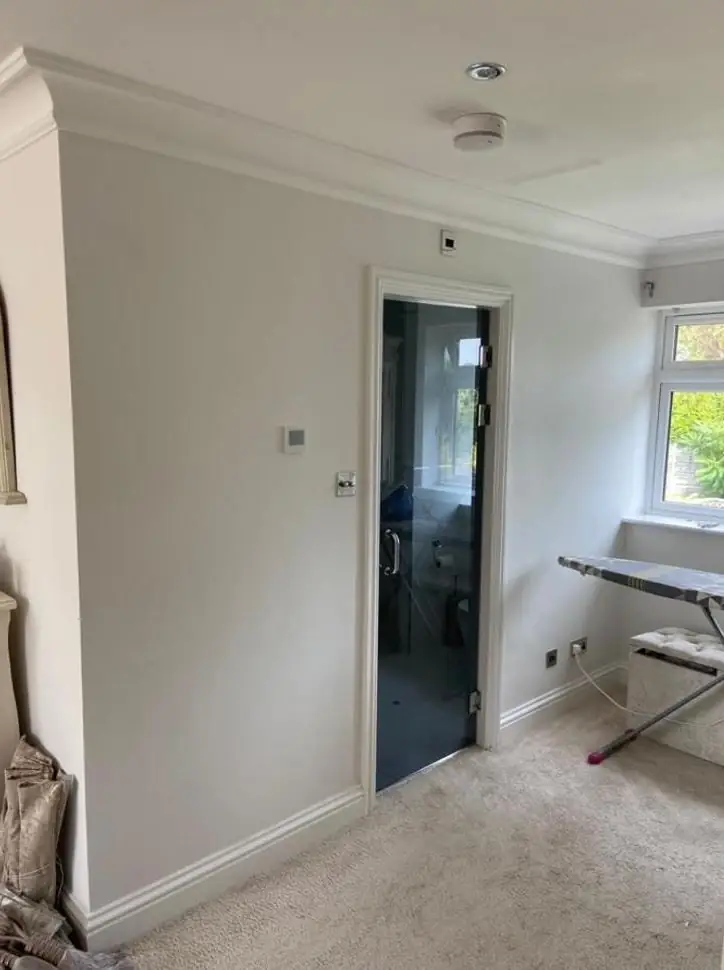
Sometimes longer than you would expect. The appraisal records numerous springs round the village, and a solid-walled stone house has no cavity to stop ground moisture reaching the plaster. A thin skim over plasterboard dries in days; a backing coat and skim on a solid wall takes weeks, and longer in winter. We go by colour and a moisture meter, not the calendar: plaster that is still patchy and dark is not ready, and painting too soon traps the water and the paint peels.
Our main new plaster and extension painting page has the full process, and the Pitsford area page covers the village’s houses as a whole.
Sources
- Pitsford Conservation Area Appraisal and Management Plan (2019), West Northamptonshire Council (accessed 2026-11-17)
Last updated .


