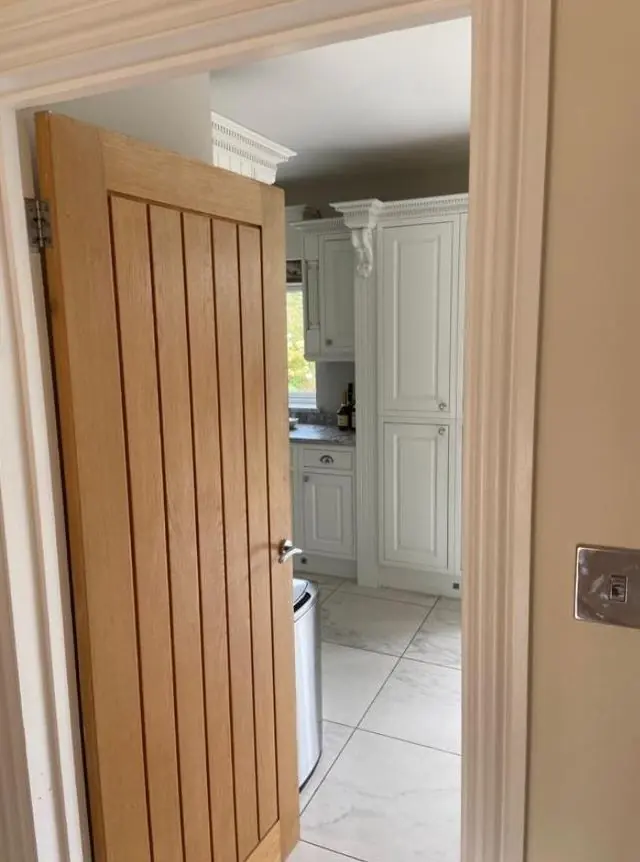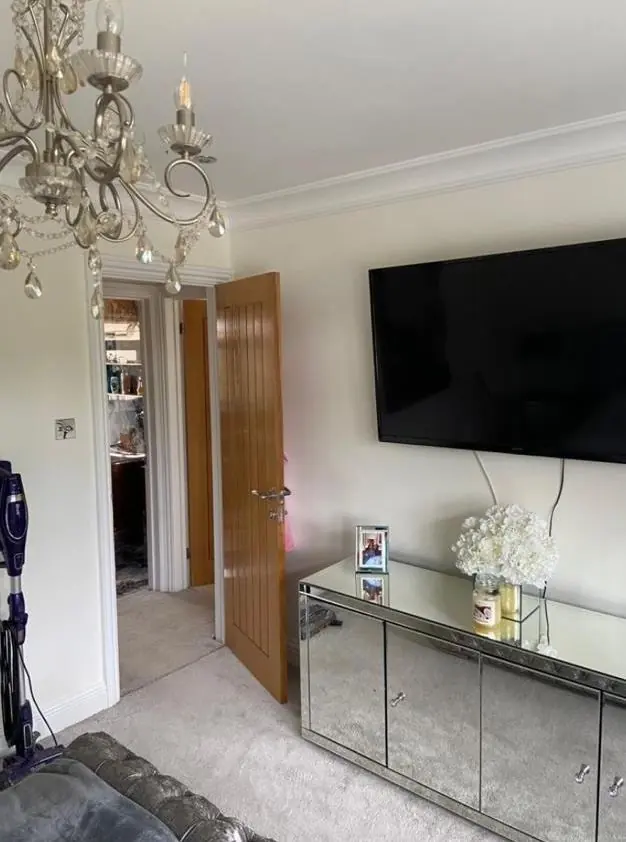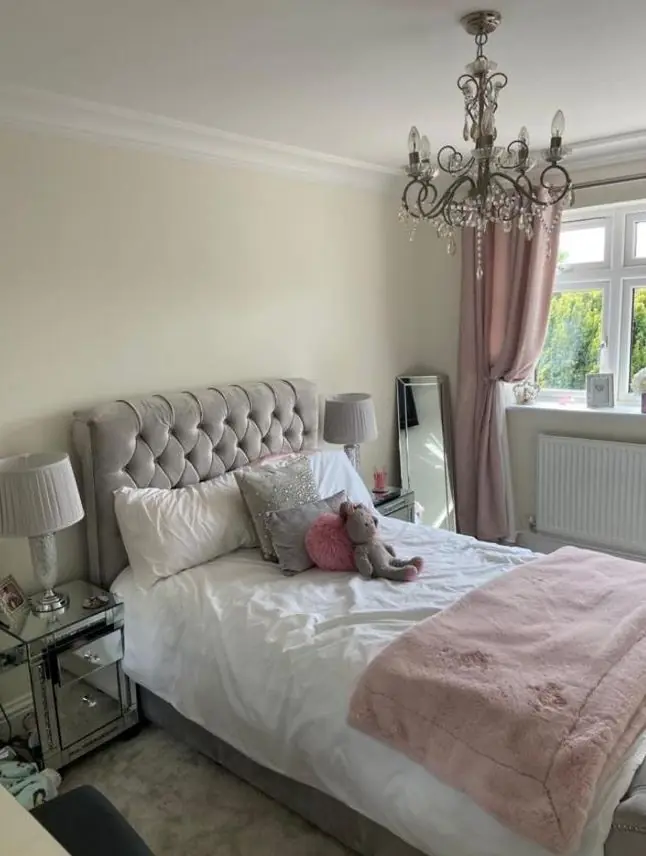
Dean hangs wallpaper and lining paper in Pitsford, a village 4.7 miles north of Northampton. In the stone cottages of the old core that means cross-lining uneven lime plaster first; in the bigger period houses, traditional papers; on the estates, quick paste-the-wall feature walls.
Walls that are rarely plumb
Paper shows the shape of a wall in a way paint never does. In Pitsford’s historic core, mostly 17th to early 19th century farmhouses, barns and cottages, the walls are coursed Pendle rubblestone with a thick lime-plastered face, and they are seldom flat or upright. Corners lean, reveals taper and a chimney breast can sit off square. A vertical stripe hung to a true plumb line will drift visibly away from a leaning corner; hung to the corner, it leans with the room. Neither is wrong, but the choice should be made before the first length goes up.
We cover Pitsford from Northampton, about 4.7 miles to the south. The full hanging process is on our wallpaper hanging page; this page is about what Pitsford walls ask of it.
Why lining paper comes first on lime plaster
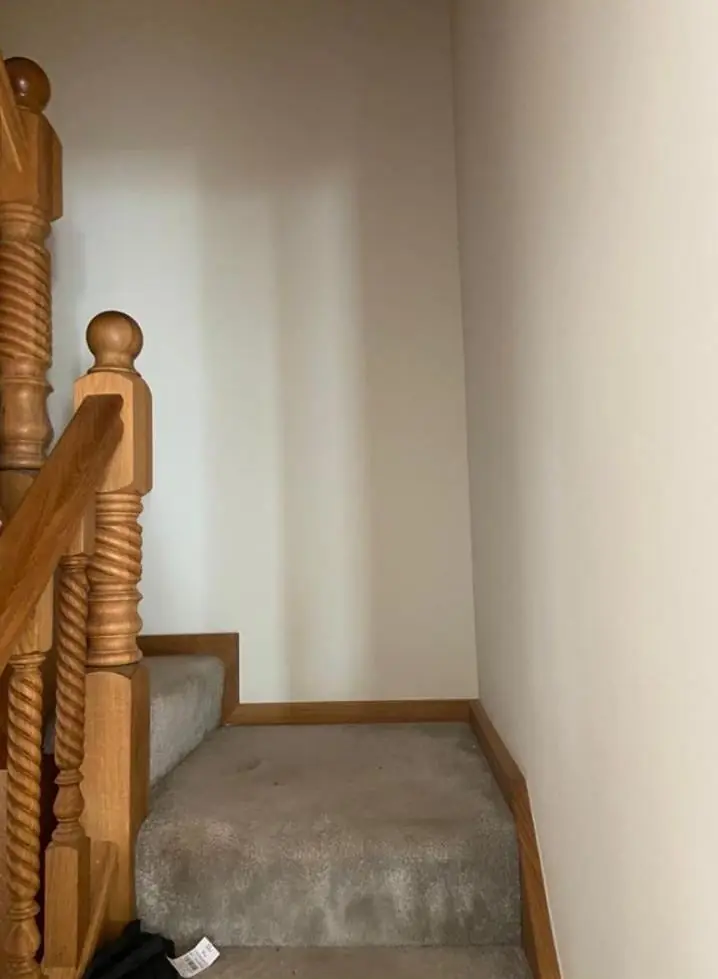
On old lime plaster we nearly always cross-line before hanging the decorative paper. Lining paper evens out shallow hollows, gives the paste an even surface to grip, and spreads small movements in the plaster so they do not open the seams of the top paper. It also helps where decades of patching have left a mix of lime and gypsum repairs that soak up paste at different rates and would otherwise dry patchy.
Damp has to be ruled out before any of that. The village stands on high ground with springs all round it, many plots are shaded by protected trees, and solid stone walls have no cavity to keep moisture away from the plaster. Paper is a poor choice on a wall that is still damp, because it will lift and stain. We check with a meter, and where a wall stays damp we say so and suggest a breathable paint finish until the cause has been dealt with.
Pattern scale, from cottage to country house
Pitsford’s houses vary hugely in scale, and the paper should follow. Cottage rooms are often low with small windows, so a small or open repeat sits better than a large drop pattern, which on uneven wall heights can waste a large share of each roll in matching. Where a ceiling slopes or a beam crosses the wall, a non-directional design hides irregular cut lines far better than a stripe or a strong geometric.
The larger Georgian and Edwardian houses are the opposite case. Principal rooms in houses of the age of The Old Dower House or The Manor House have the height and wall space for traditional papers, including large repeats, damasks and borders run at picture-rail height. Hand-printed papers are less forgiving than machine-made ones, some need the wall pasted rather than the paper, and a few still need edges trimmed by hand, so send us the make and roll number when you ask for a quote.
Practical papers on the estates
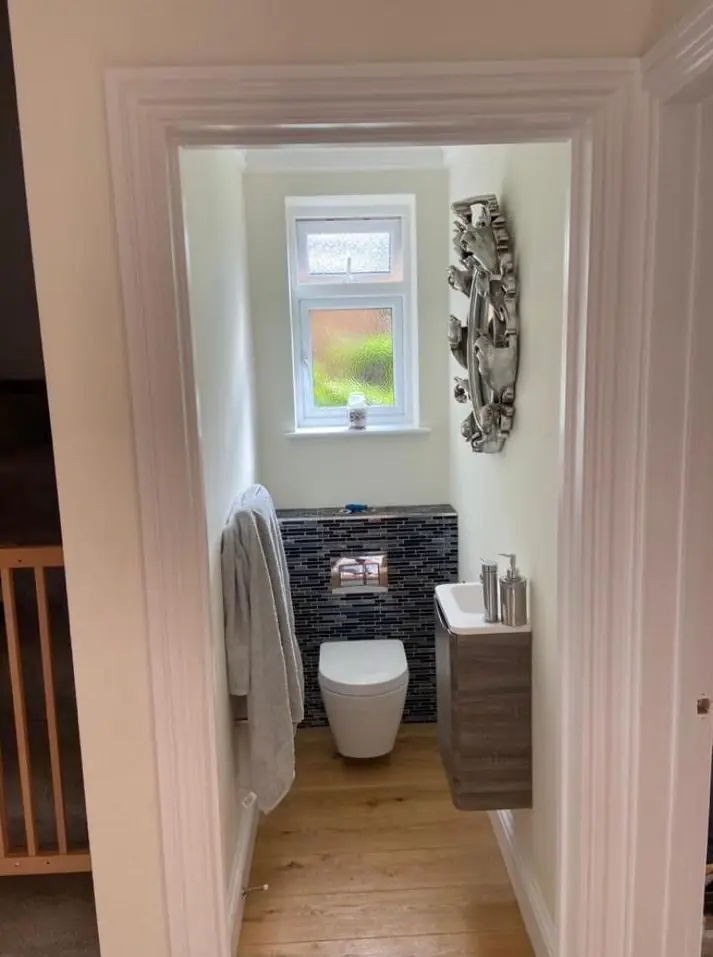
Hanging paper on Drummond Close, Broadlands and Glebe Lane is a simpler job. These are post-war and modern brick houses with gypsum plaster or plasterboard, close to flat, and a sizing coat is often all the preparation they need. Paste-the-wall papers go up quickly here, and washable vinyls suit halls and bathrooms that take daily wear. A feature wall behind a bed or in a chimney alcove suits rooms of this kind well.
Rolls, batches and getting in the door
All rolls should come from one batch, and we work out the quantity after measuring, with spare for pattern repeat on uneven walls. Manor Road is very narrow and climbs a short hill, and some cottages open almost directly onto the road, so we agree where to set up pasting tables when we visit. See our Pitsford area page for the other work we cover in the village, or call Dean on 07539 779 036 to arrange a look at the rooms.
Last updated by Dean, DH Painter & Decorator.