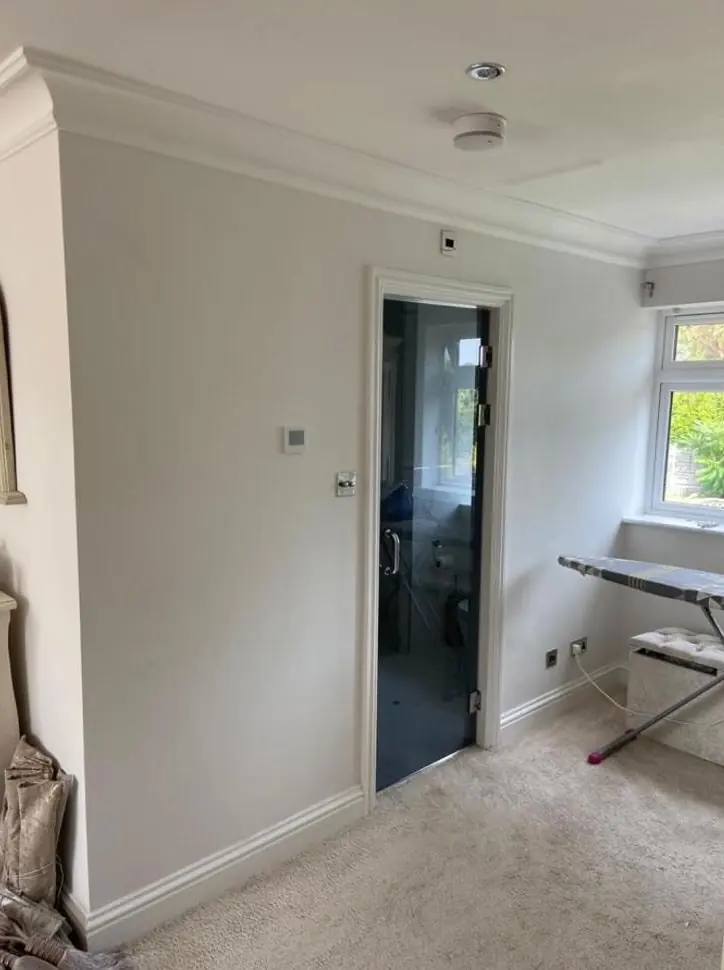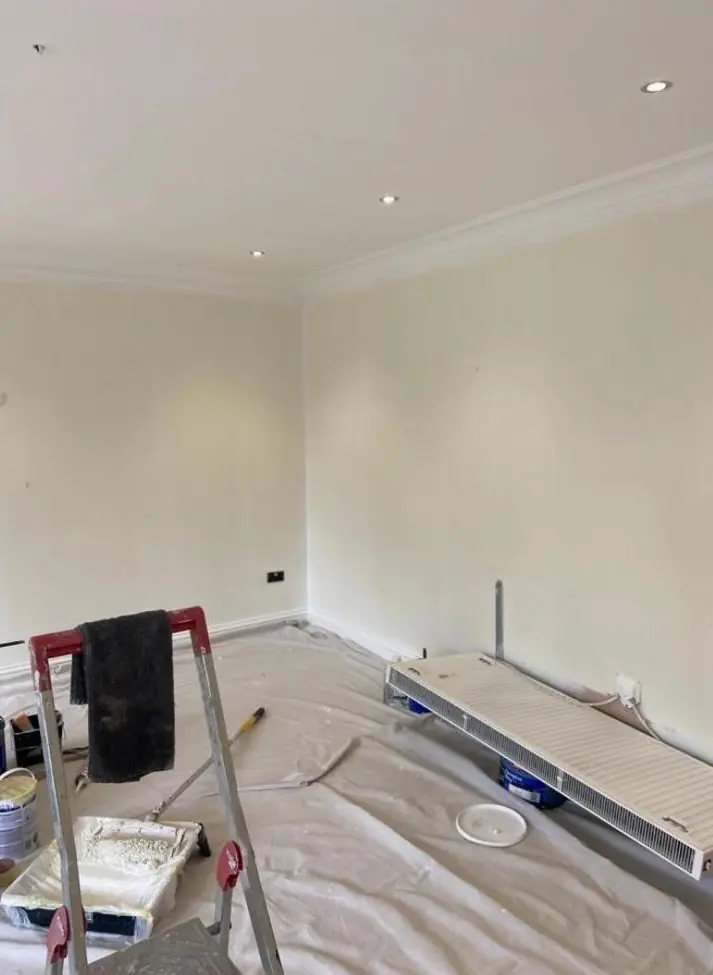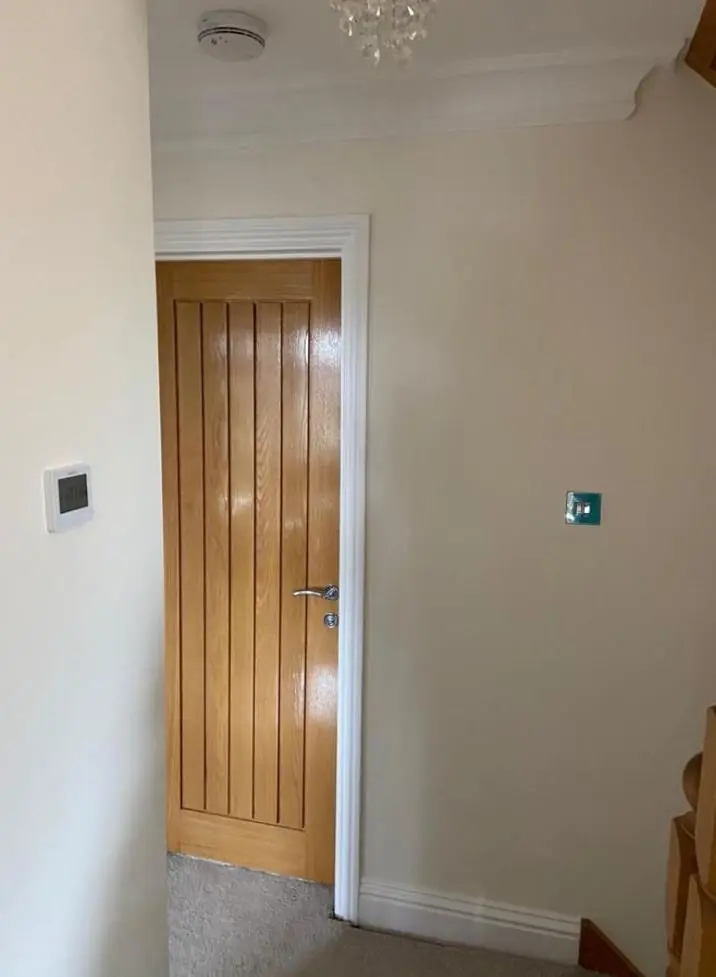
Dean paints decorative finishes for owner-occupiers in Thorplands, the NN3 estate about 3.3 miles north-east of Northampton town centre. Homes there were mostly built in the 1970s with plain walls and no period mouldings, so decorative work means adding detail with paint and panelling, not restoring old features.
Rooms that were built plain
In an Edwardian house, decorative painting usually means picking out what is already there: cornices, picture rails, ceiling roses. Thorplands is different. The core of the estate went up between 1967 and 1975, with later homes on Huxloe Rise mostly around 1979 and on Pindar Rise between 1971 and 1986. Homes of that age were finished simply, with flat walls and ceilings, plain skirtings and door linings, and little or no moulding. Any character a room has now, you add.
That makes decorative work here a matter of design more than restoration. It also means it is not for every home. Much of the estate is rented, and most landlords want plain, easily matched walls. Decorative finishes make most sense here for owner-occupiers who plan to stay, and the sensible approach is to choose one or two features that suit compact rooms rather than to decorate every surface.
Ideas that suit a 1970s terrace or a later Rise home
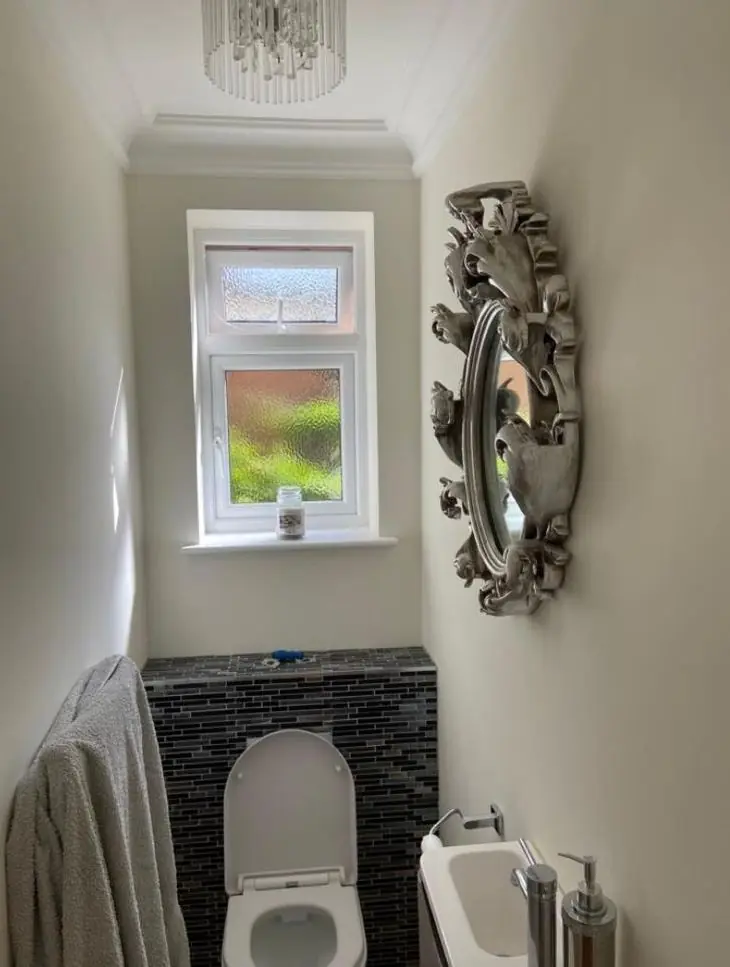
- Painted wall panelling. Slim battens or MDF panels fixed to a plain wall and painted out in one colour, with joints filled and caulked so they read as one piece. Works well on a bedroom wall behind the bed or on the lower half of a lounge wall.
- A two-tone stair. The houses here have straight-flight stairs. A darker colour below a crisp line that follows the rake of the stairs, with a lighter colour above, gives a narrow stairwell some shape and hides the scuffs that collect at hand and bag height.
- Colour blocking. A painted arch behind a desk or a shelf, or a block of colour that marks out a dining corner in a kitchen-diner. It needs careful masking and a sharp edge, but no extra materials.
- Limewash-effect or soft-texture walls. A layered, brushed finish on one wall adds movement to a room that has none. In a small room, keep it to a single wall.
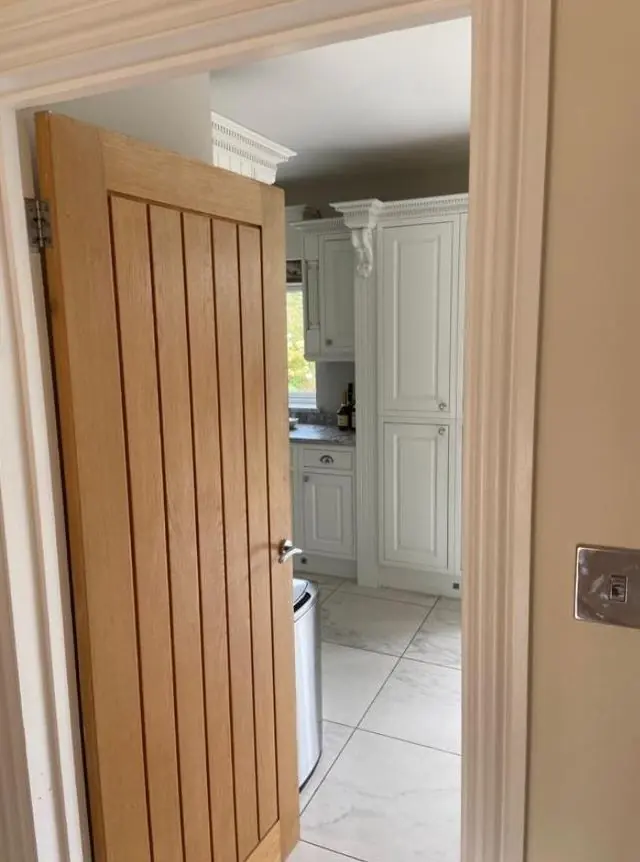
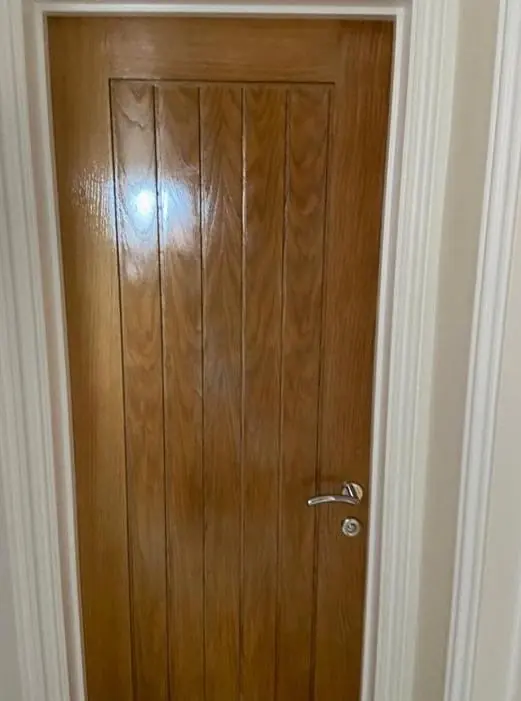
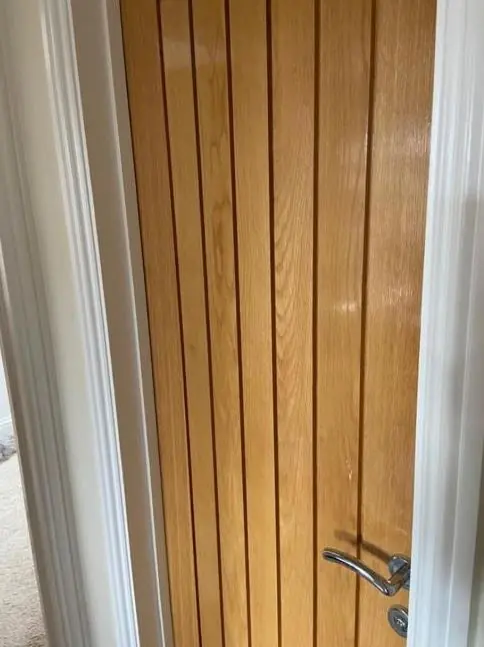
- Doors in a contrast colour. Original flat softwood doors painted in a strong colour, once the old gloss is keyed and filled, give a hallway some interest at low cost.
Our main decorative finishes page explains how the faux effects and panelling are built up in layers.
The wall underneath decides the finish
Any effect with sheen, a hard painted line or a glaze shows the surface below it. After fifty years of repainting and patching, walls in Thorplands are rarely perfectly flat, and a crisp horizontal line across a wall that dips will look crooked even if it is level. So decorative work starts with ordinary preparation: filling, sanding and sometimes lining the wall so the effect has a true base. Panelling is forgiving here, as the battens can be packed out to sit flat on an uneven wall.
When we would suggest something simpler
If the house is rented out, or you expect to sell or let it in the next year or two, a heavy effect can work against you. A tenant cannot patch it, and a buyer may want to paint over it. In that case Dean will usually point you to a good colour scheme instead, which our colour advice covers. The same goes for anything in the shared stairwells of the flats on the courts, which are the freeholder’s or housing provider’s to decide.
Arranging a visit
Thorplands is a short run out from our Northampton base. Dean can bring sample boards of a panel profile or a two-tone line to the room itself, talk through what would suit it and quote in writing. Ring 07539 779 036, or see the Thorplands page for the everyday painting work we also do there.
Last updated by Dean, DH Painter & Decorator.