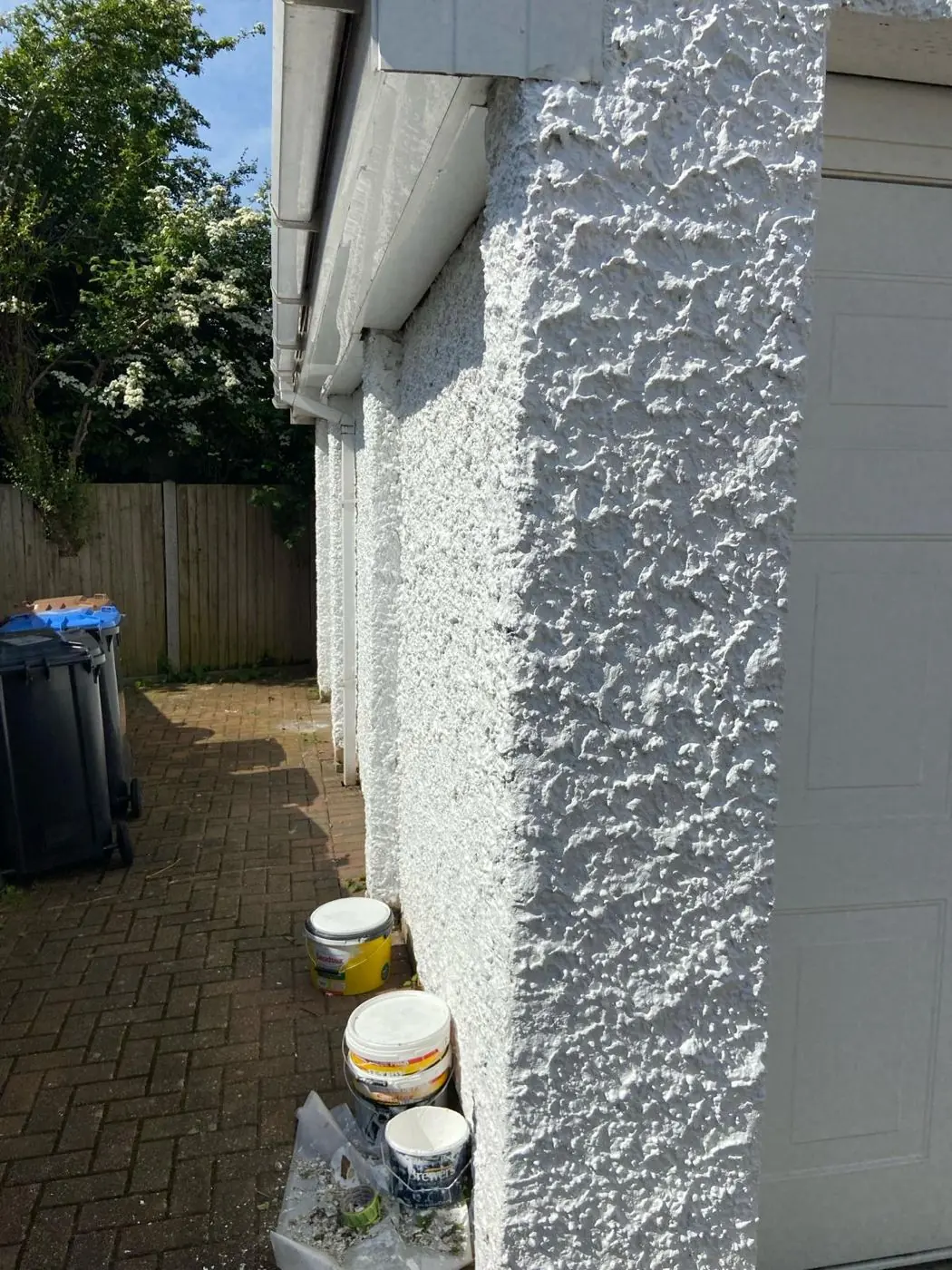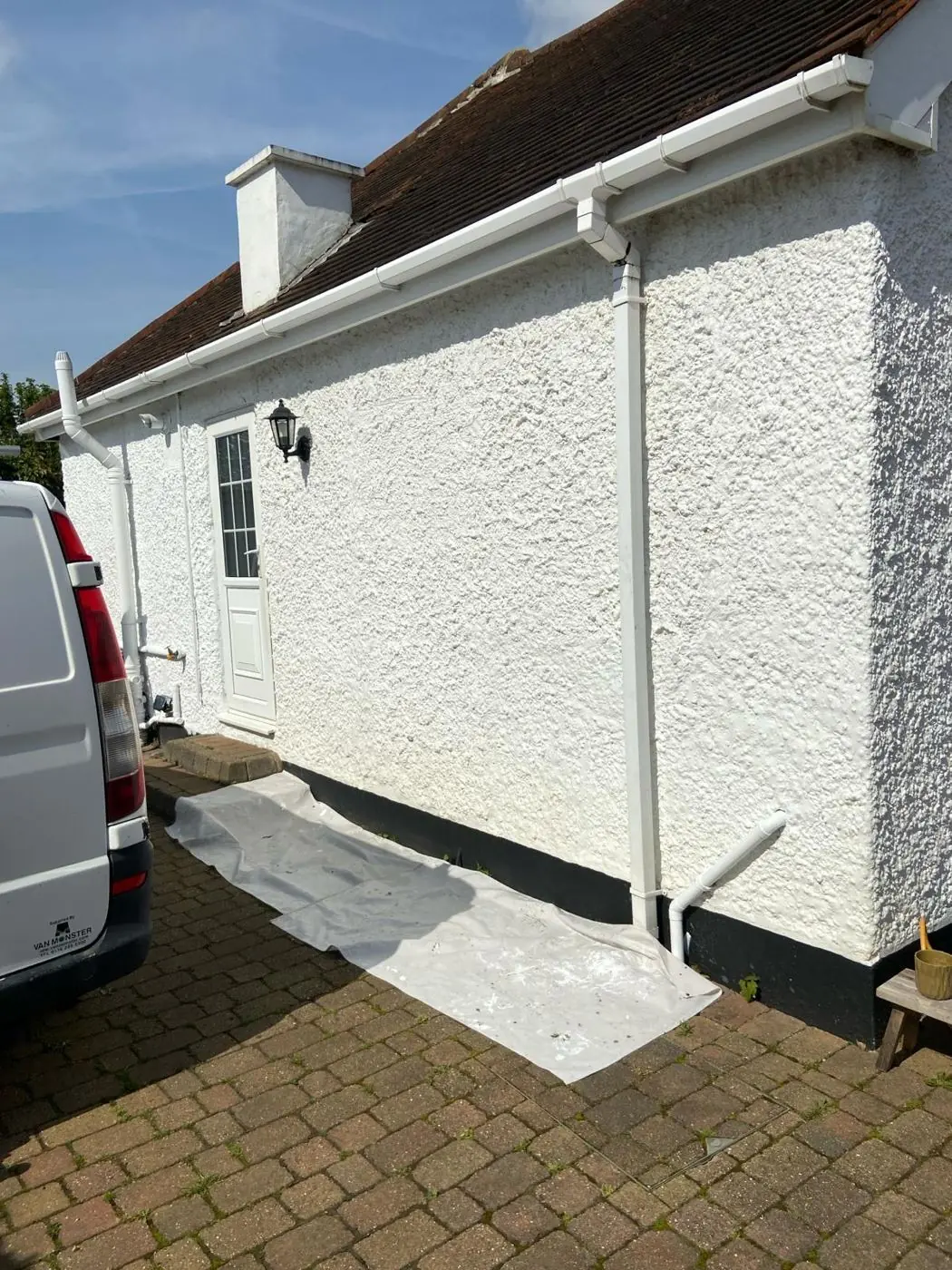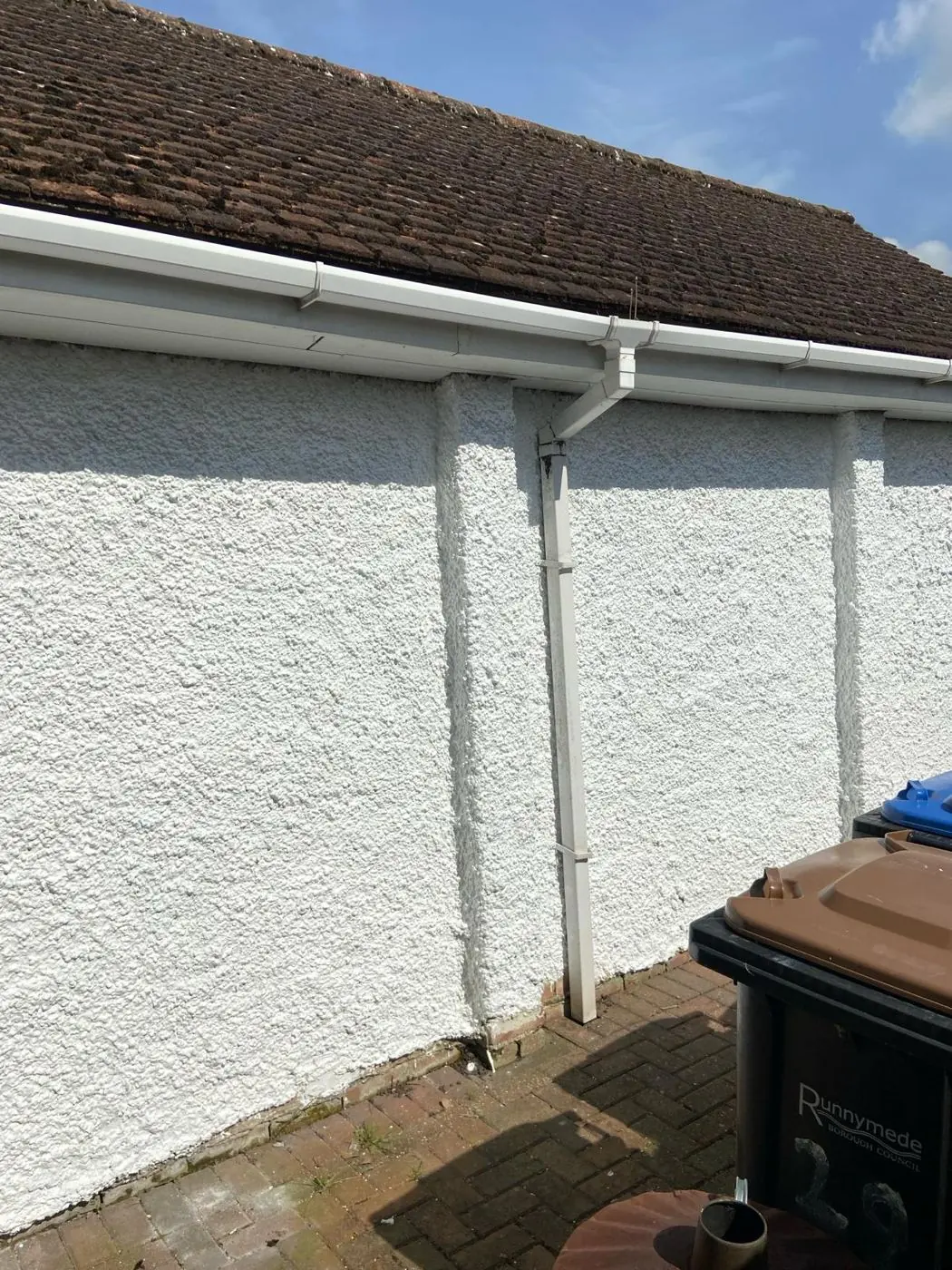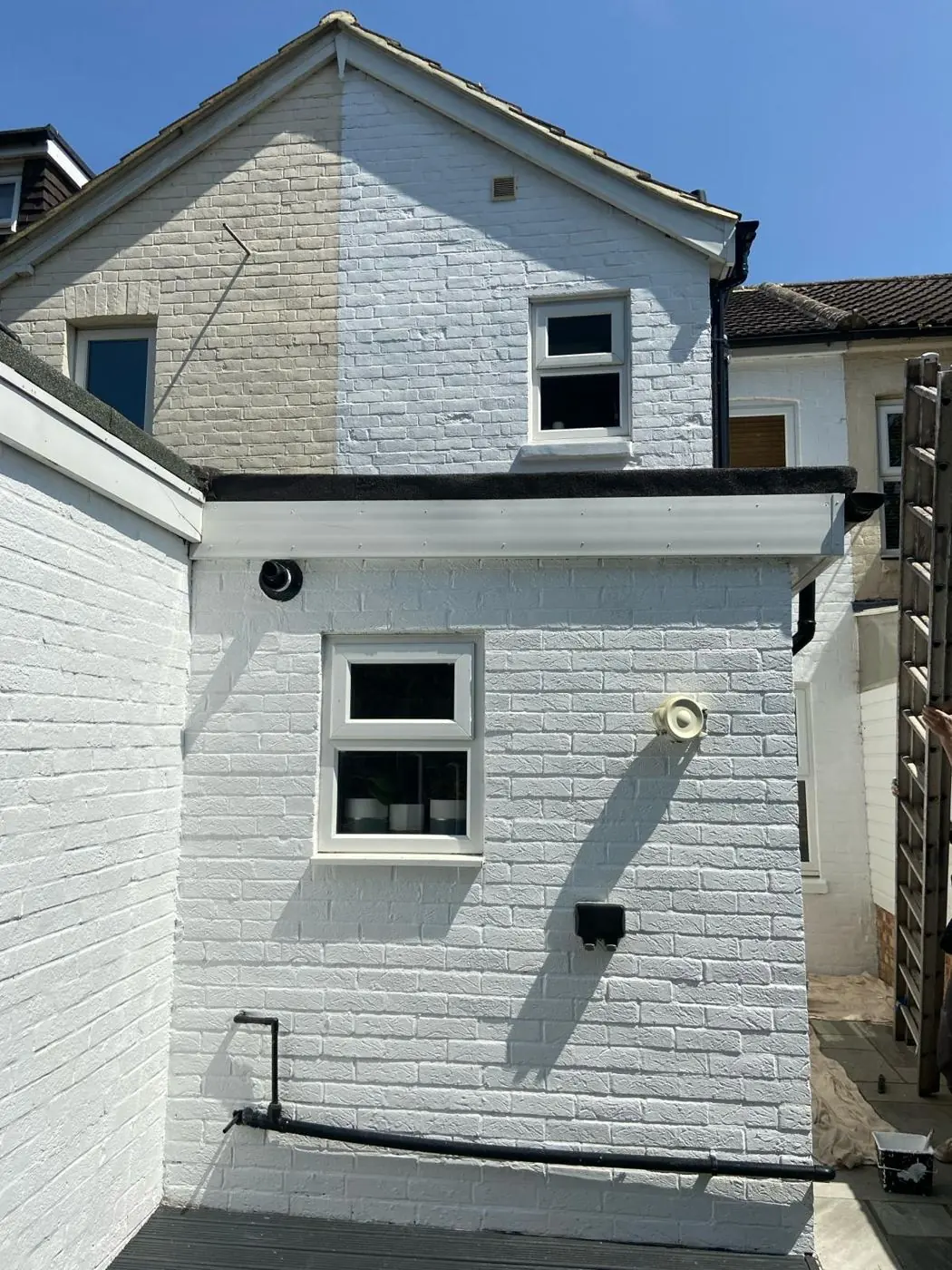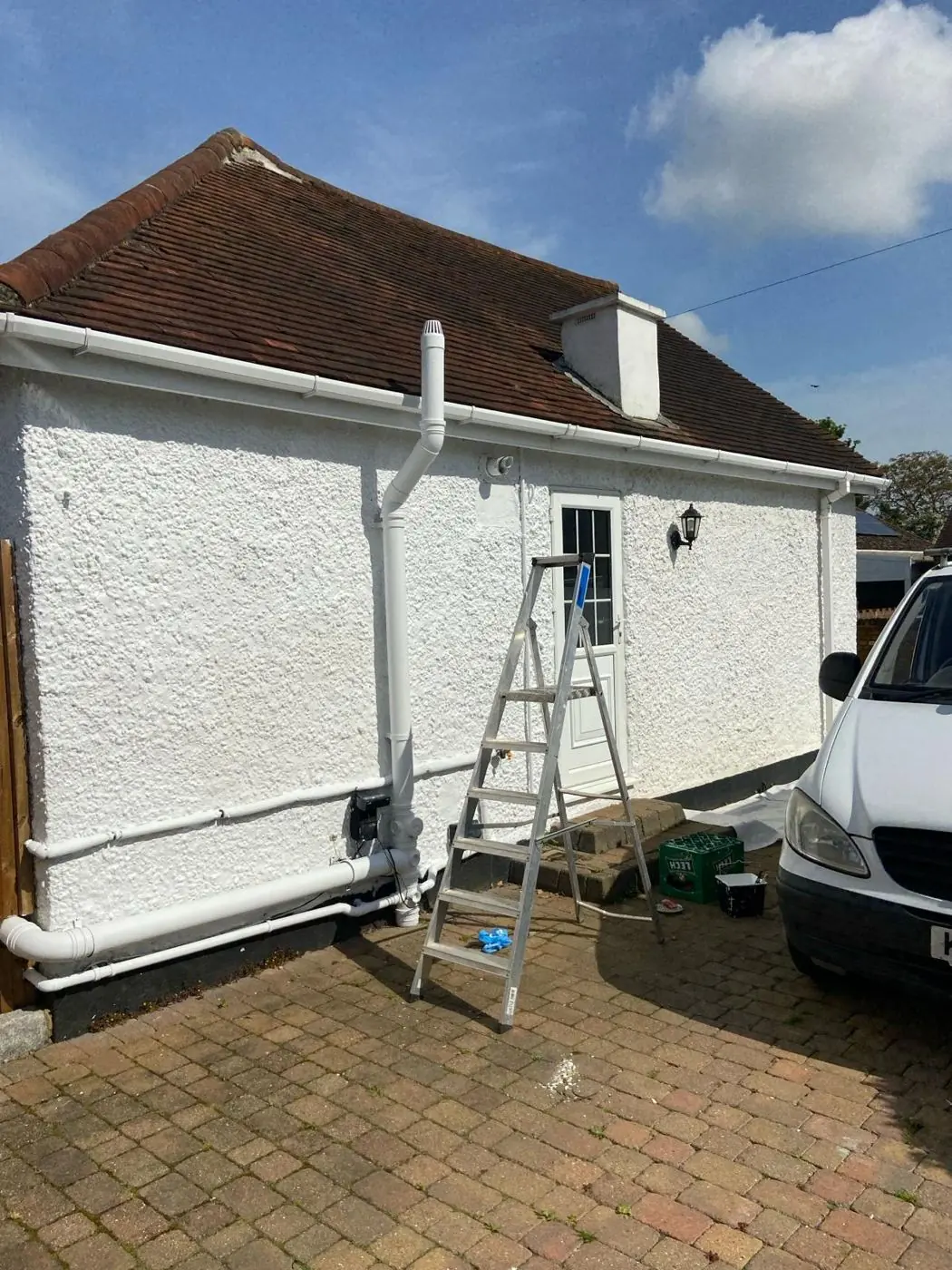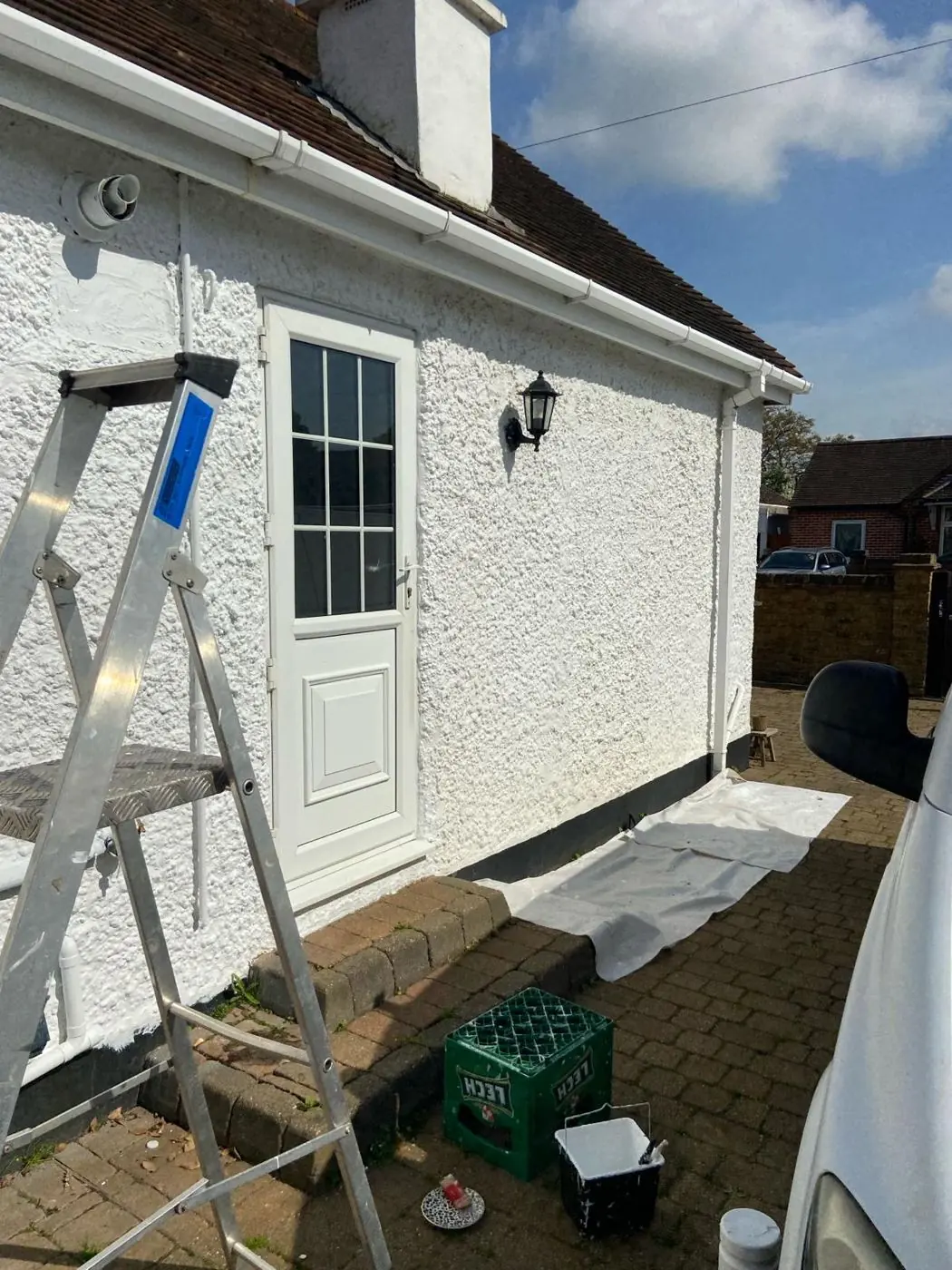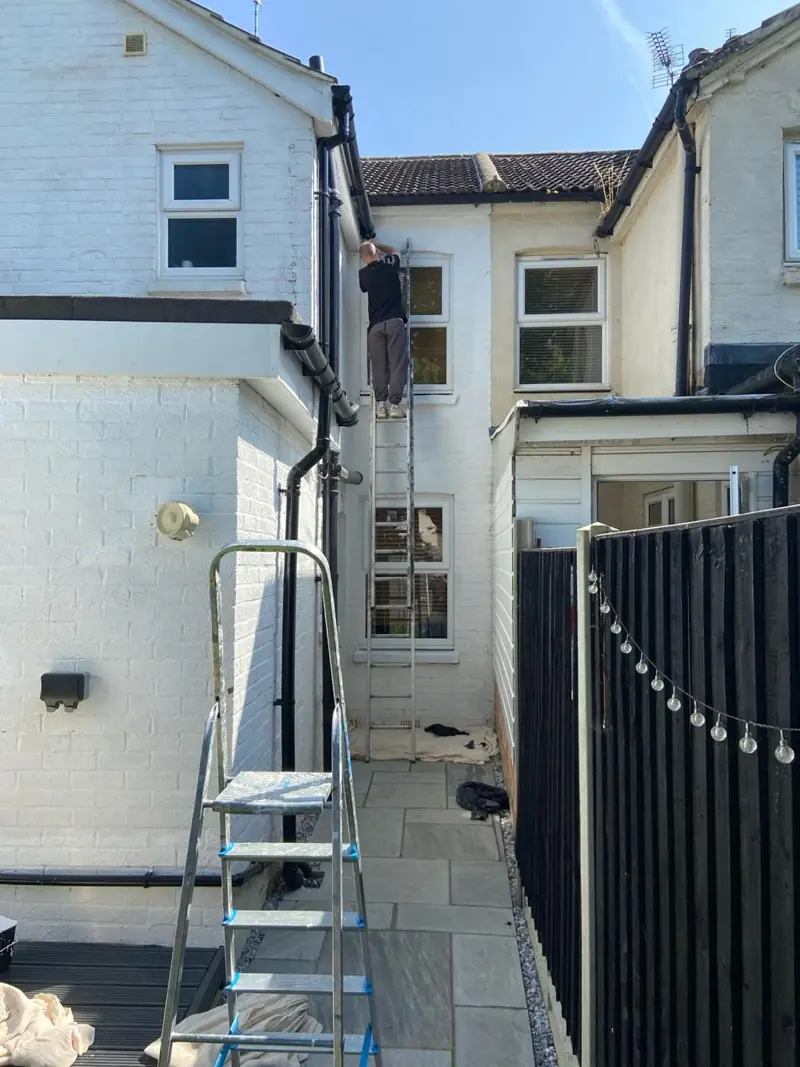
We paint rendered and masonry walls in Thorplands, NN3, about 3.3 miles north-east of central Northampton. The housing records we rely on do not say what these 1970s homes were finished in, so Dean starts every job with a close look at the wall before recommending any coating.
Nobody has written down what these walls are
For many Northampton suburbs you can say with some confidence what a typical house is faced in. Thorplands is harder. The homes date mostly from 1967 to 1975, centred on 1971, in the years after Northampton became a New Town in 1968. The property records for the courts give build years, house types and tenure, but not the wall material or finish. We would rather say that plainly than guess.
In practice that means we do not quote a Thorplands masonry job from a photo or a postcode. We come out, look at the wall and test it, and only then talk about products. If your house turns out to have no render or painted masonry at all, we will tell you, and the conversation moves to the woodwork instead.
What we check on a Thorplands gable
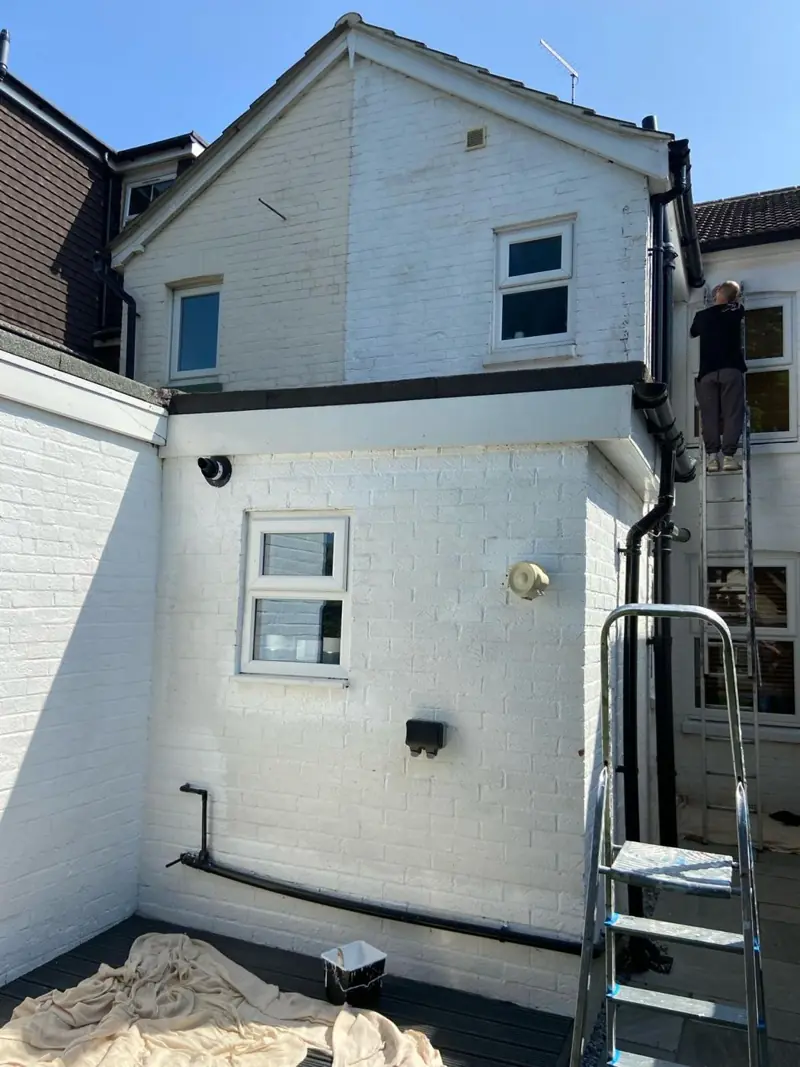
End-terrace gables are the largest single wall surfaces on the estate, and every court we have looked at in the records has end terraces. Where a gable or front has been rendered or painted at some point, the survey covers:
- tapping for hollow or loose render that would come away under a new coat
- cracks, and whether they are fine surface crazing or something that needs repair first
- chalking, where an old coating rubs off on your hand and will not hold new paint without a stabiliser
- the type of paint already on the wall, because some older coatings trap moisture and should not be over-coated with more of the same
- gutters and downpipes leaking onto the wall, which have to be fixed before any paint will last
Damp, shade and the open-space edges
Unnamed watercourses, some piped underground, cross the estate by Holmecross Road and run up to Thorplands Open Space. Homes that back onto that open space, or onto the Crestwood and Round Spinney green corridors, can have walls that stay shaded and slow to dry. Those are the elevations where green growth and flaking tend to show first. A fungicidal wash and enough drying time before coating matter more there than on a sunny front, and the paint needs to let the wall breathe so moisture can escape.
The busy roads around the edge, Lumbertubs Way and Talavera Way, are another factor for homes close to them, as traffic grime builds up on walls facing the road and needs washing off before painting.
Choosing the coating, and who has a say
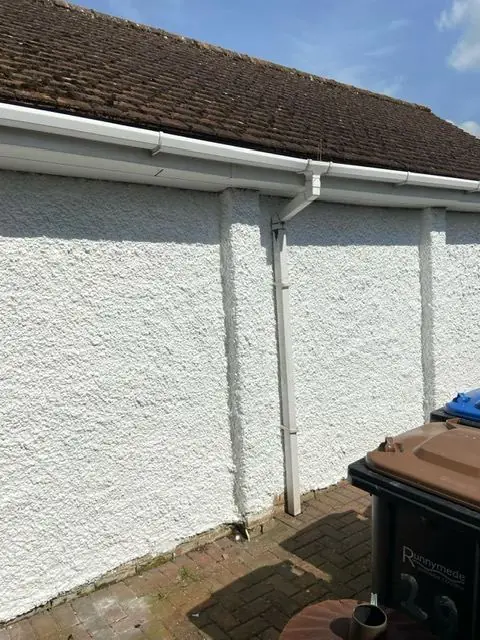
Once the wall is understood, the choice is usually a breathable masonry paint applied in two coats over a properly prepared surface. Our render and masonry painting page sets out the full process, and our guide to painting render and roughcast explains the products in more detail.
Colour is not a heritage matter on this estate, as no conservation area covers it. Tenure matters more here. A large share of homes on courts such as Great Holme Court, Waterpump Court and Midfield Court are social housing, and painting the outside of a rented home generally needs the landlord’s agreement. Owner-occupiers on a terrace may also want to think about how a new colour will sit beside unpainted or differently painted neighbours.
Access on a low-rise estate
Thorplands terraces and flat blocks are low-rise, so walls can usually be reached from ladders or a small tower rather than a full scaffold. The tower has to fit on a court footpath without blocking it for neighbours, and gear is carried in from shared parking. We plan both before booking the work. Read more about the estate on our Thorplands area page.
Last updated by Dean, DH Painter & Decorator.