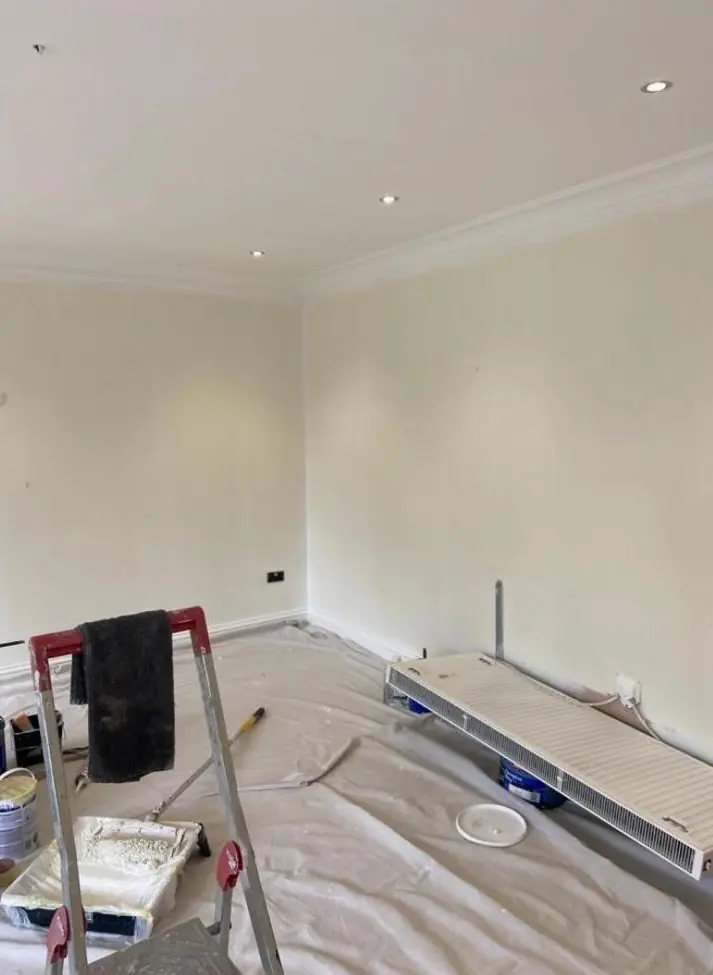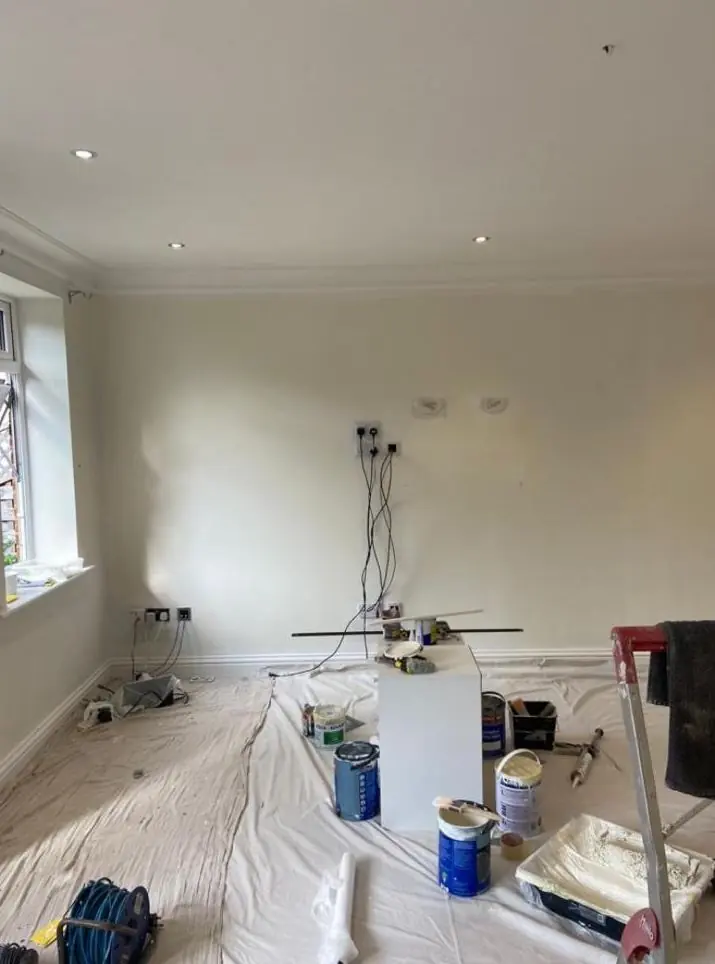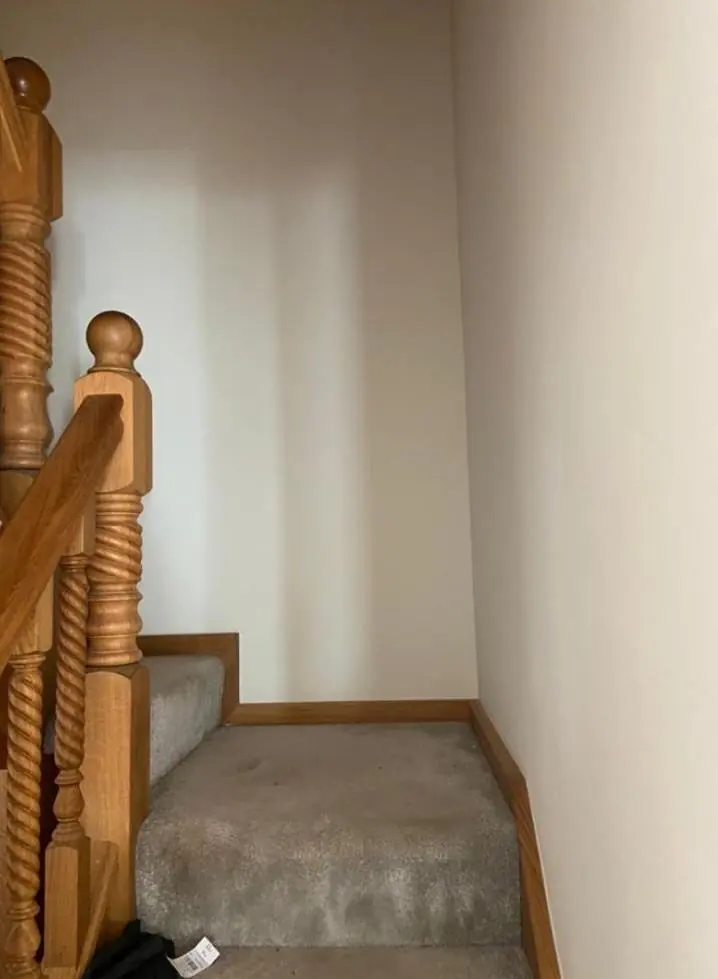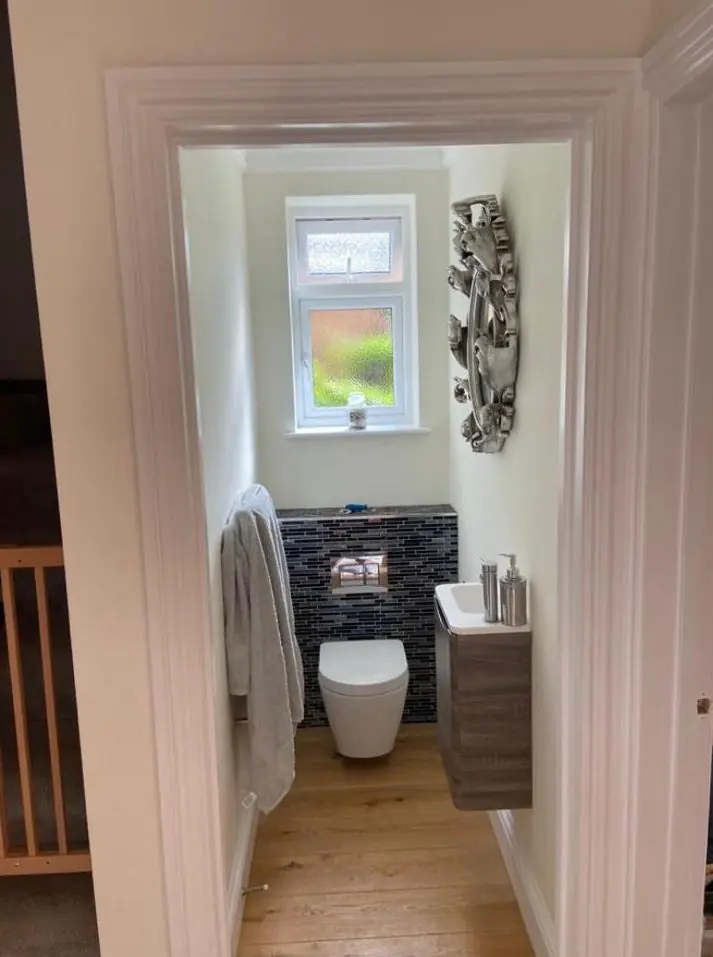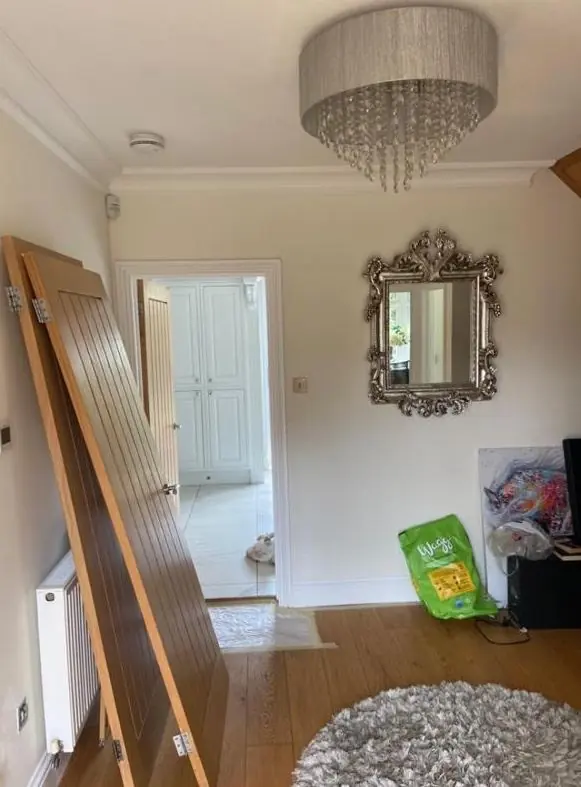
We paint panelling and decorative finishes in Boothville, about 3 miles north-east of Northampton town centre in NN3. The larger detached houses on Booth Lane North and Chartwell Avenue suit panelled halls and dining rooms, while bungalows and semis suit feature walls in the bay or by the fire.
Painted walls on Booth Rise, long before ours
Decorated rooms in Boothville have a longer history than most people expect. Between 1938 and 1977, gardens behind the eastern side of Booth Rise turned up finds from a possible Roman villa, among them tessellated pavement, roof and flue tiles, coins and fragments of painted plaster, as recorded in the Northamptonshire Historic Environment Record. None of it is on show, but someone was finishing walls here well before the houses went up.
Halls and dining rooms in the larger detached houses
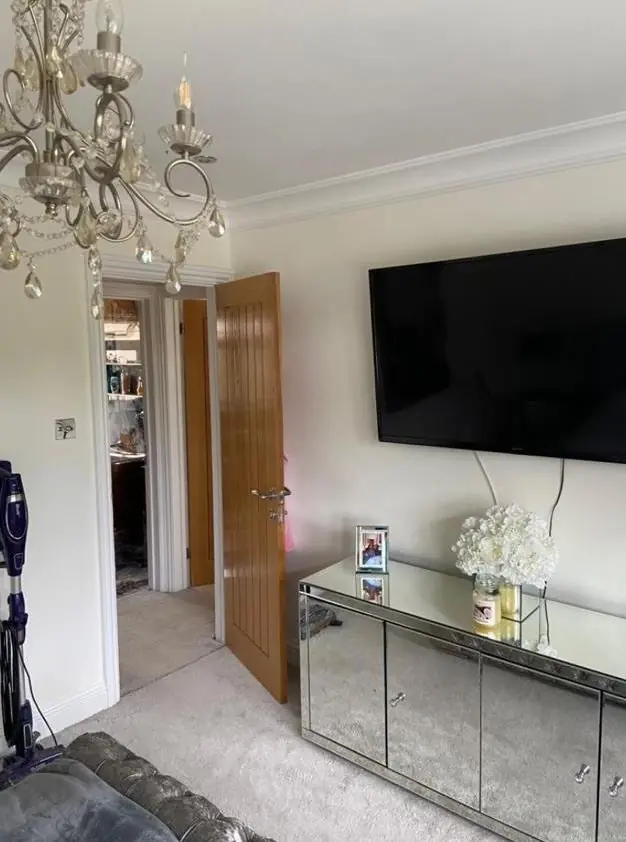
Today, the homes most suited to decorative work are mostly the bigger detached ones: double bay-fronted houses on generous plots along Booth Lane North, and individually built houses at the end of the no-through road on Chartwell Avenue. With several reception rooms, they tend to have a proper dining room and an entrance hall wide enough for a finish to read, rather than one squeezed into a narrow passage.
Panelling is what most people ask about for these rooms. The usual choices are:
- Shaker-style panelling to dado height in the hall, painted a deeper shade than the wall above.
- Picture-frame mouldings in a dining room, either picked out in contrast or painted the same colour as the wall for a quieter look.
- Full-height panelling behind a dining table, painted in a durable eggshell that takes chair knocks.
- A two-tone split wall with no panelling at all, where a crisp painted line does the same job for less disruption.
Whatever the style, the finish depends on the preparation: MDF primed and sealed on every cut edge, joints caulked, pin holes filled and sanded, then two finish coats. Without that, the joints show within months.
Where an extension meets the original house
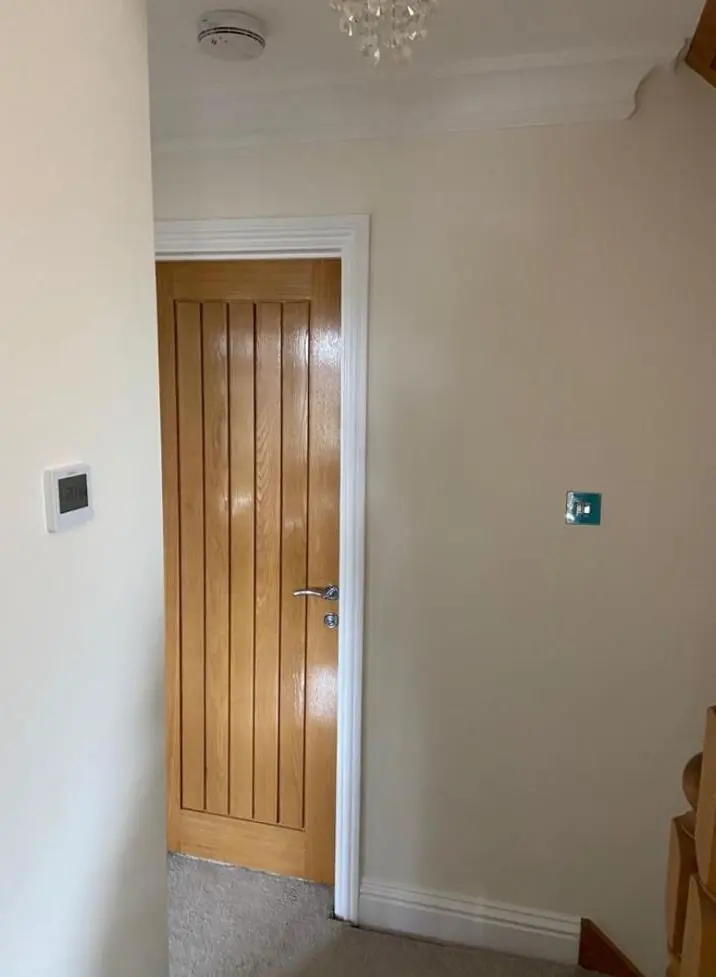
Many Boothville homes, bungalows and 1930s semis alike, have been extended, which leaves rooms where old and new joinery sit side by side: original doors and skirtings next to modern ones with a different moulding. A decorative scheme can pull them together. Painting skirtings, panelling and doors in one deeper colour makes mismatched profiles read as one set, and a panelled dado running across the line where old wall meets new hides a slight change in plaster level better than flat emulsion. We still fill and stabilise that junction first, because panelling fixed over a moving crack will show it in the end.
Feature finishes for the bay and the fireplace wall
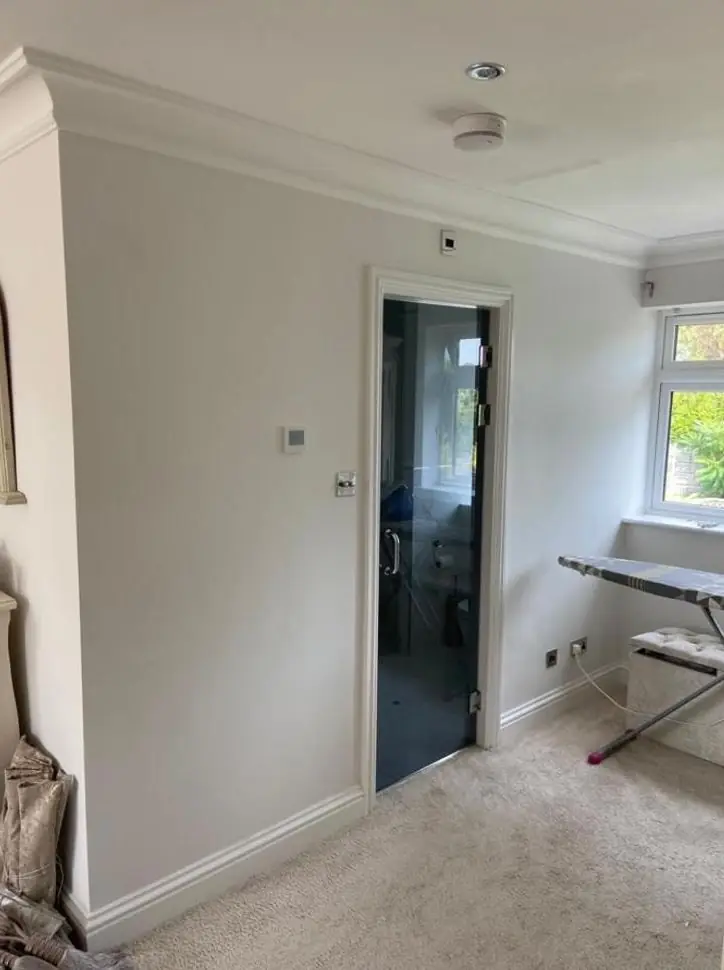
In the bungalows and bay-fronted semis, the lounge bay and the chimney breast or gas-fire wall are the natural places for a feature. Options that suit those rooms include:
- Colour-drenching the bay, with walls, reveals and bay ceiling all in one colour so it reads as a deliberate alcove.
- A limewash-effect paint on the chimney breast, which gives soft movement without a pattern.
- A painted arch or block of colour behind a fire or sideboard.
Boothville’s bright, south-facing rear rooms throw strong raking light across walls, which shows up texture. That flatters a limewash effect but exposes any unevenness under a smooth, dark feature colour, so we adjust the prep to the finish.
Getting a quote
Boothville is around three miles from the town centre, so Dean can come out, look at the room, talk through which finish suits it and give you a written quote. Examples of the work and how it is built up are on our decorative finishes page, the plain paintwork that goes alongside is covered under interior painting, and the Boothville area page lists our other local services.
Last updated by Dean, DH Painter & Decorator.