We apply decorative finishes in Little Billing, NN3, about 3.2 miles north-east of Northampton town centre. For the listed stone core that usually means traditional limewash and period paintwork; in the newer houses on the closes, feature walls and panelling are the usual requests.
In the old core, limewash is the decorative finish
Ask about decorative finishes in a village of thatched stone cottages and the honest answer is that the traditional finish already is the decorative one. Limewash is built up in thin coats, each one brushed in and allowed to carbonate. It dries with a soft, slightly uneven depth that moves with the light, and it lets solid stone breathe. Faux marble or metallic glazes look out of place on a 17th-century wall. On the coursed rubble of the Church Lane and Orchard Hill cottages they would also trap moisture.
Most of those walls are bare stone and are meant to stay that way. Where a wall is already limewashed or colour-washed, though, keeping that finish in good order is skilled decorative work in its own right, and it is the job we would most often recommend here.
Two colour-washed walls, two different substrates
The listing descriptions name two colour-washed elevations in the village, and they are not the same job:
| Building | What is under the colour | What that means |
|---|---|---|
| Hastings Cottage (Grade II, 17th century, thatched) | Cement render | Limewash bonds poorly to dense cement, so a breathable mineral finish may suit it better. We test the existing coat first. |
| The Old Rectory, east front (Grade II) | Stone | Traditional limewash or a compatible breathable wash, matched to the existing colour. |
In both cases we start by finding out what the current coat is: limewash, a cement-based paint or a modern masonry paint. Putting the wrong system over it causes peeling within a few seasons. Hastings Cottage is also thatched, which means hand-only stripping with no flame or hot air, and access set so it never leans on the thatch eaves. Both buildings are listed, so changes of finish or colour should be agreed with West Northamptonshire Council beforehand.
Period paintwork in the Old Rectory’s panelled hall
Inside, the Old Rectory’s listing mentions a panelled hall and a fine staircase. Rooms like this suit traditional decorative paintwork: picking out mouldings in a second tone, a flat or eggshell finish on the panels rather than gloss, and a cornice treated as part of the scheme. Old panelling carries many layers of paint, and early coats may contain lead, so we prepare it with care and don’t sand it dry. The building now houses a day nursery, which would mean low-VOC materials and work timed around its hours.
Feature walls and panelling in the newer houses
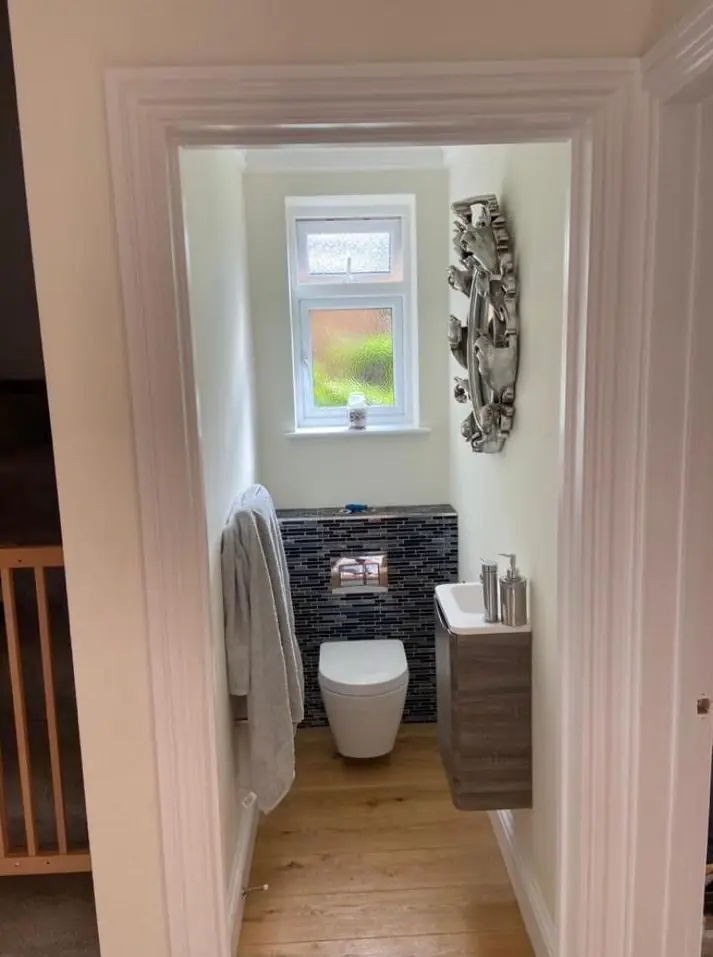
The houses on the closes around Valley Road, such as Russet Drive, Pippin Lane and Damson Dell, have none of those constraints. Here people tend to ask for:
- Painted wall panelling or a half-height dado in a hallway or dining room.
- A colour-blocked feature wall, or an arch painted behind a bed or desk.
- A soft limewash-effect emulsion, which gives some of the old-village texture on modern plaster.
The full range of effects, and how we prepare for them, is on our main decorative finishes page.
What we would steer you away from
On listed stone in Little Billing we would not recommend acrylic masonry paint, plastic sealers, or textured coatings. Each traps moisture in a wall that needs to dry out. We would also not paint the ironstone quoins at Corn Ricks or the ashlar dressings at 2 Orchard Hill, which are meant to be seen. For more on the village, see our Little Billing area page.
Last updated by Dean, DH Painter & Decorator.