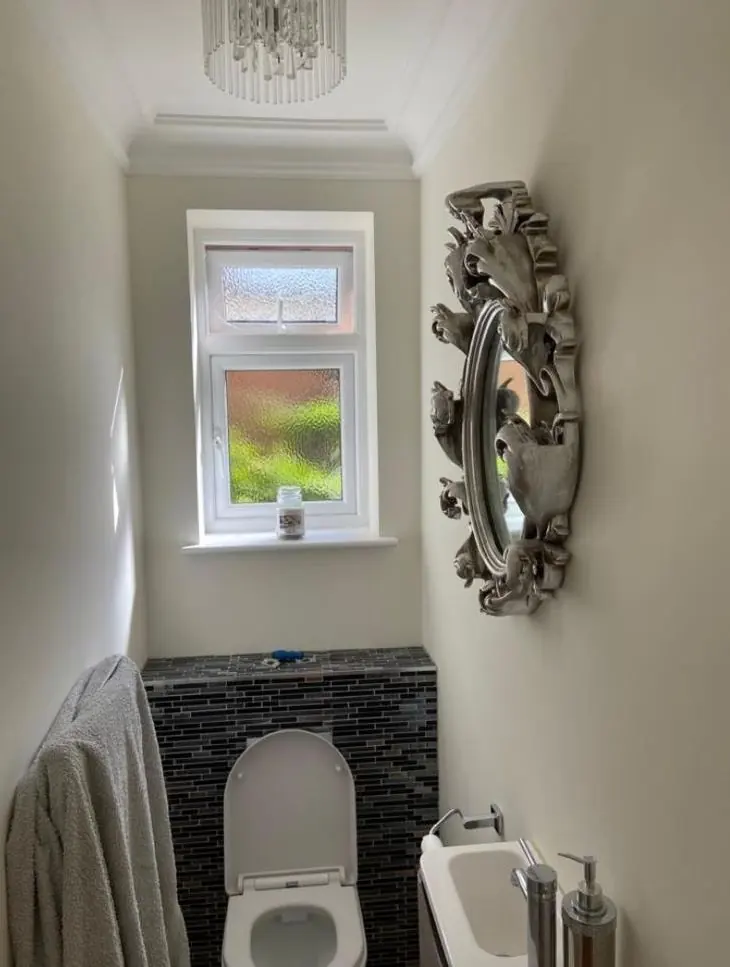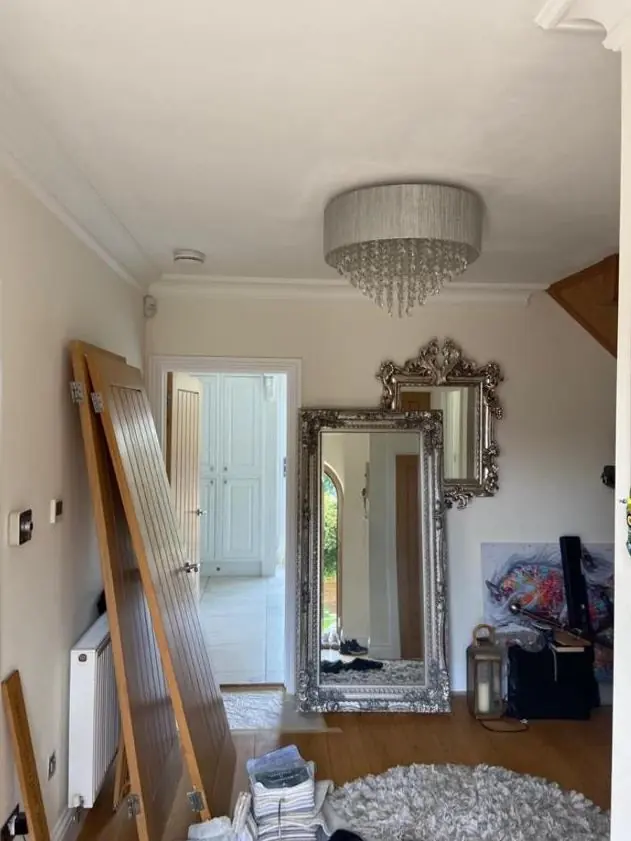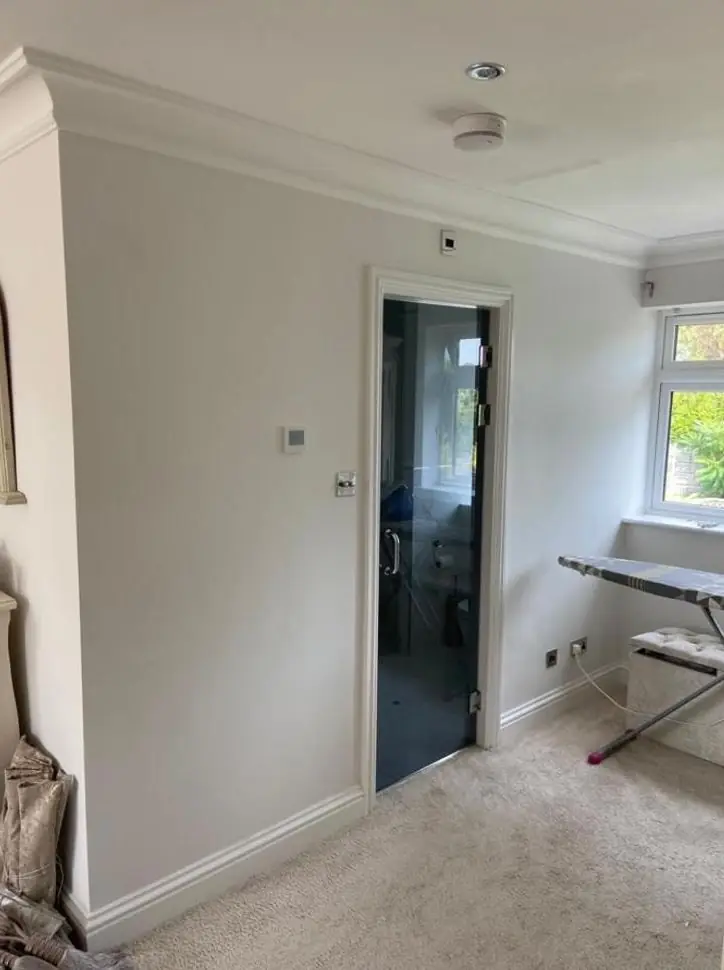
Dean paints decorative finishes for homes in Moulton Leys, on the north-east edge of Northampton about 3.3 miles out in NN3. The estate's modern rooms have little period detail of their own, so panelling, two-tone schemes and paint effects are the usual ways to add some.
Adding detail to rooms that came without it
A Victorian terrace already has cornices, picture rails and a fireplace to pick out. Homes across this NN3 estate were built with plain, regular rooms: flat plaster or plasterboard walls, simple machined skirtings and moulded doors. That is not a fault, and it makes these rooms a blank canvas. Decorative work here is less about restoring detail and more about deciding where a room needs some, and keeping it in proportion to ceilings of ordinary modern height.
The finishes we offer and how each is built up are described on our main decorative finishes service page. Below is how they translate to an estate house.
Panelling on plasterboard
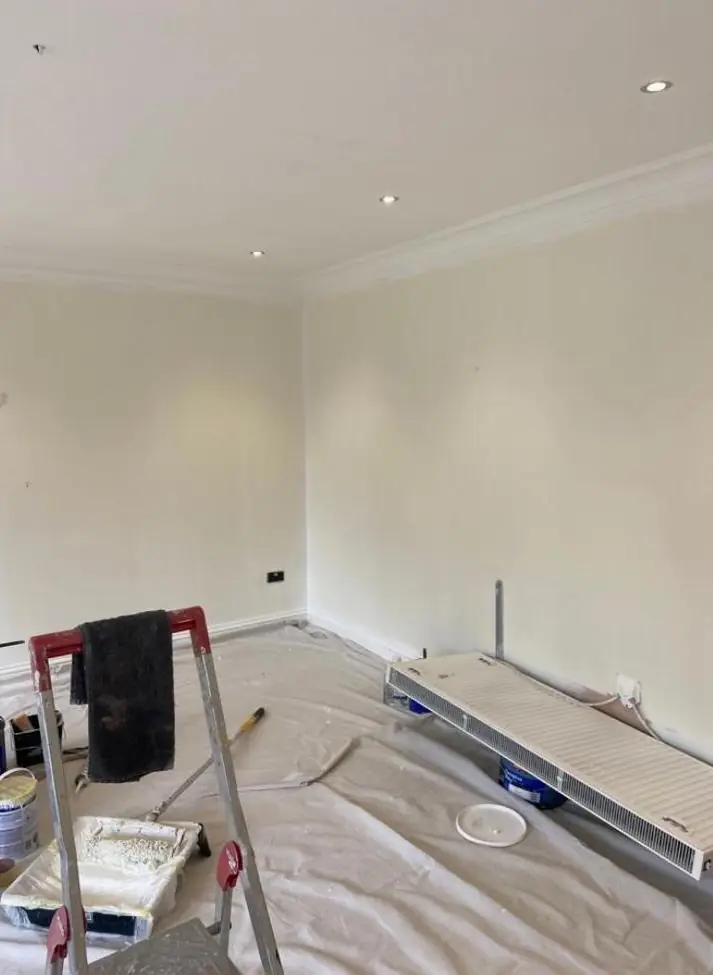
Wall panelling, whether shaker-style frames, vertical boards or a grid of MDF strips painted in one colour, is the most requested way of giving a modern room some structure. Fitting it to plasterboard needs a little more thought than fixing to solid plaster or brick:
- Strips are bonded with a panel adhesive and pinned into the timber or metal studs behind the board wherever they cross one, not just into the board itself.
- Joints, pin holes and mitres are filled and sanded before painting, so the panelling reads as one piece rather than a kit of parts.
- The panels and wall between them are painted in the same colour and sheen for a calm, built-in look, or the frames go a shade darker for definition.
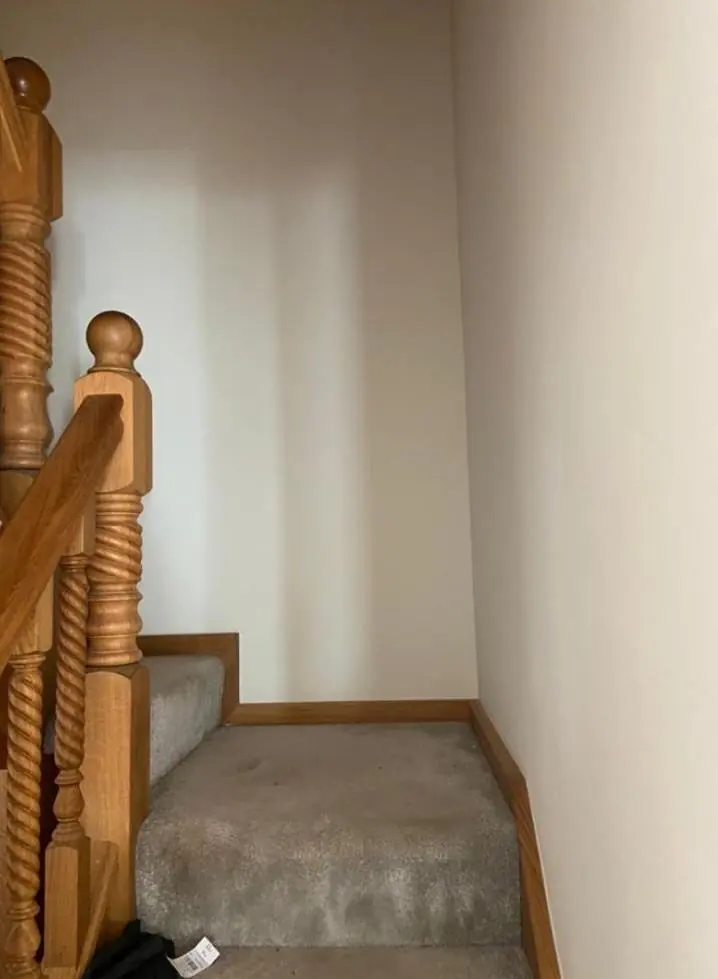
Half-height panelling suits hallways and dining areas; full-height works on a bedroom wall behind the bed. On the straight staircases common on the estate, panelling that follows the stair rake up the wall gives the hall a line it otherwise lacks.
Colour-blocking, arches and two-tone walls
Where panelling would crowd a smaller room, colour does the job. A painted arch behind a desk or a dressing table, a horizontal split with a deeper shade below a crisp line at dado height, or the ceiling carried down the top of the walls to a set line all add interest without any joinery. These rely on very clean edges, so the walls are filled and sanded flat first and the lines are masked with low-tack tape and sealed before the second colour goes on. Modern plasterboard walls are an advantage here, as a straight line looks straight on a flat wall.
Effects that suit family use
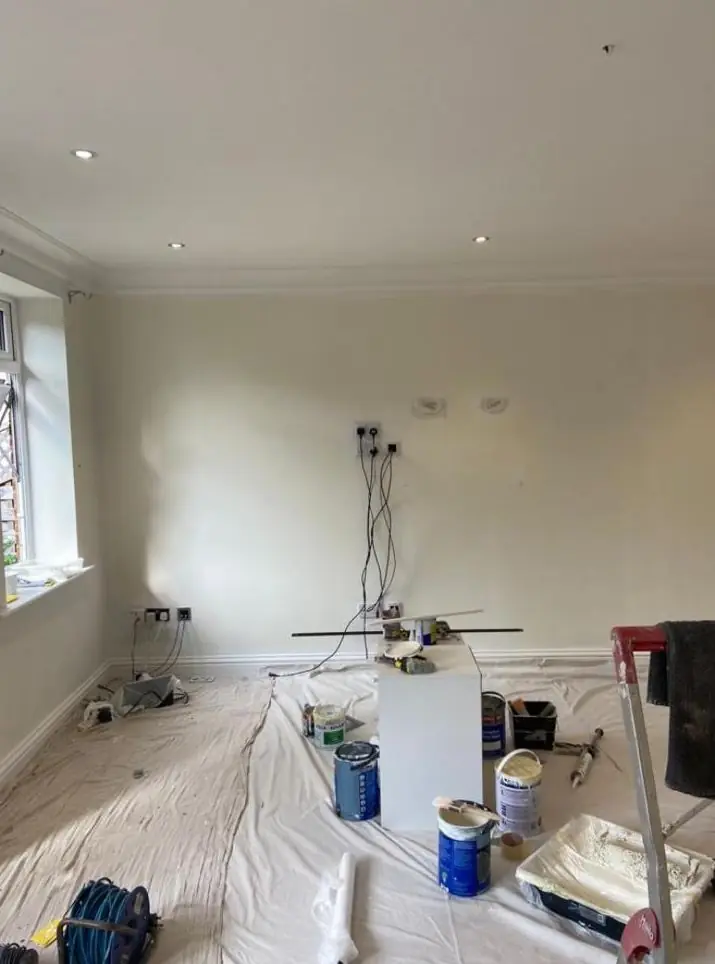
Hand-applied effects such as limewash-style washes, colour-washing and subtle sponged textures can soften a flat modern wall. In a bedroom or living room almost anything works. In halls, landings and children’s rooms, where walls take daily knocks, Dean steers towards effects that can be touched in or recoated without redoing the whole wall, and avoids glazes that show every repair.
What we would leave alone
Only one building here has genuine period detail: the stone-built Moulton Lodge, whose sashes and glazing bars are original. As a Grade II listed house it needs consent for alteration, and faux or decorative treatments have no place on it. Original detail is repaired and kept, never imitated or painted over with an effect. In the modern houses, a scheme is planned around how you use each room, how much light it gets and how hard it is used. A short visit lets Dean see the space, sketch where panelling or a colour block would sit, and quote in writing. Painting and decorating across the wider estate is covered on the Moulton Leys hub.
Last updated by Dean, DH Painter & Decorator.