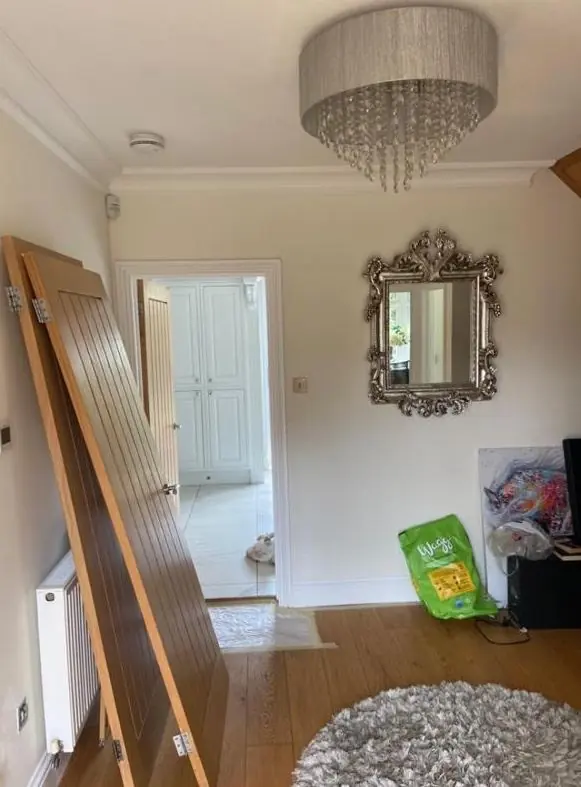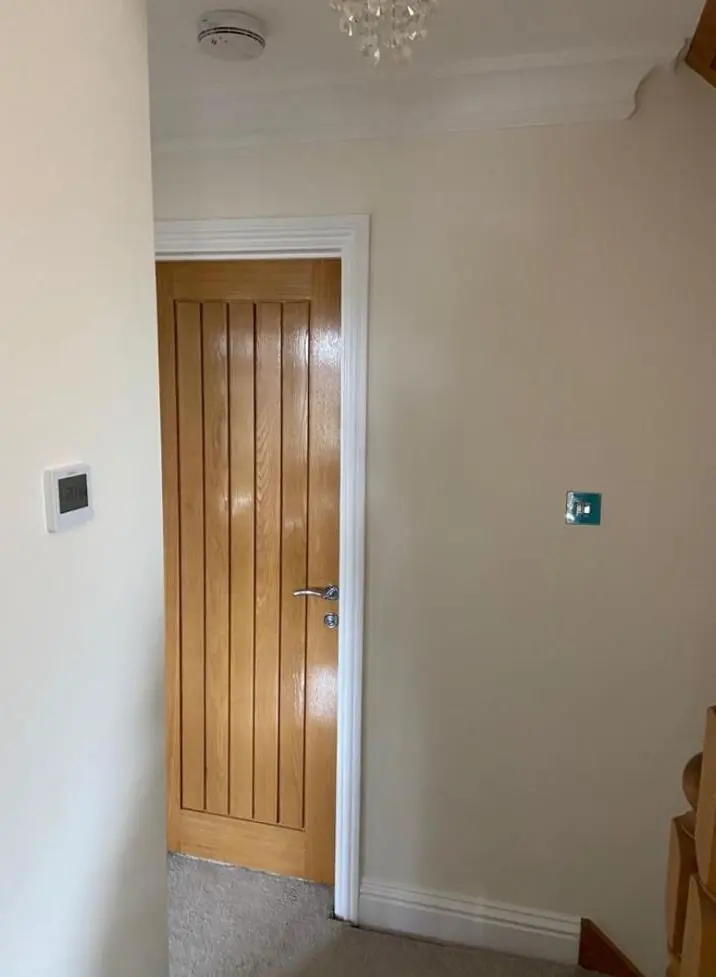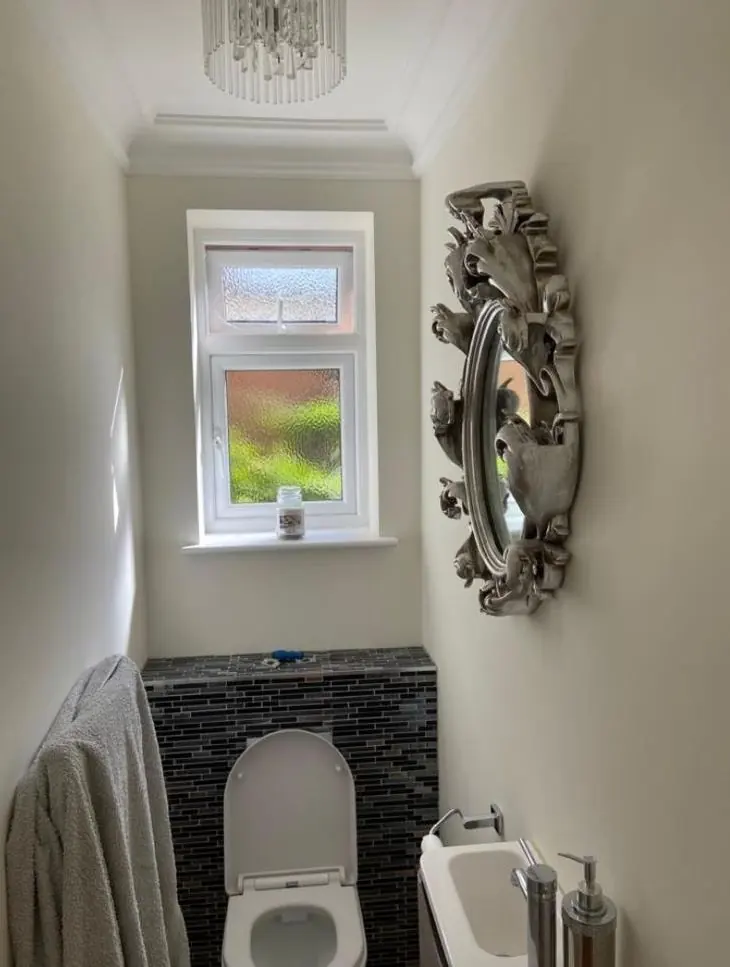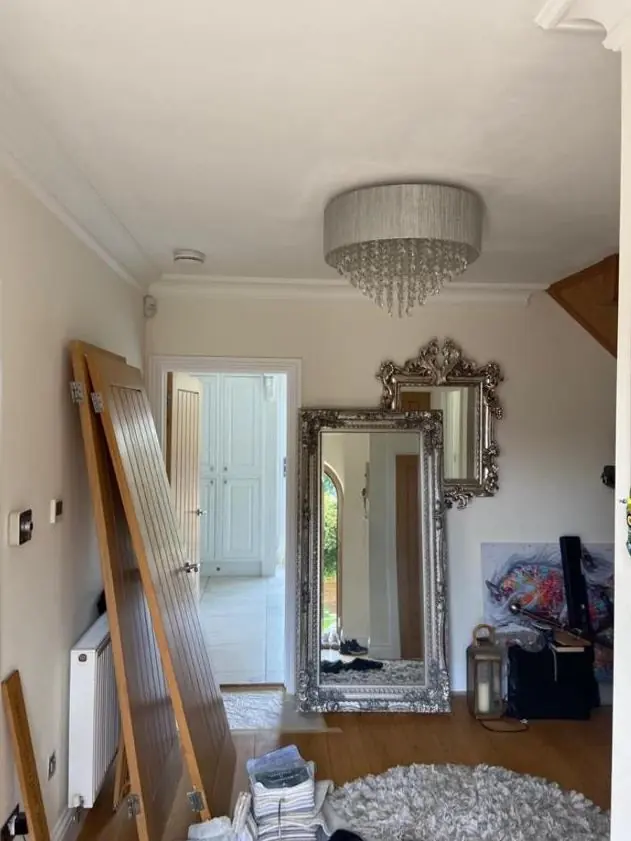
Dean applies decorative and traditional paint finishes in Weston Favell, NN3, roughly 2.9 miles north-east of Northampton town centre. In the conservation-area village that tends to mean limewash and flat, chalky period paints on old walls; in the suburban houses it means feature walls, two-tone schemes and picked-out mouldings.
Old finishes for old houses
Weston Favell’s village core still has houses from the 1600s. Hervey’s Cottage on Church Way is late 17th century. The Grange at 10 High Street is 17th century with a 19th-century wing. The Rectory at 48 Church Way was built around 1758 by the Rev. James Hervey, and The Priory at 113 High Street dates from the early to mid 19th century. All are listed.
Houses of that age were decorated with materials that behave nothing like modern emulsion. Limewash, soft distemper and flat, chalky paints were the norm, and they suit the lime plaster and solid stone behind them. For owners who want a room to feel of its period, the decorative finish is often a traditional one: a limewashed wall with a gentle, cloudy depth, or a deep, completely flat heritage colour that soaks up light rather than reflecting it.
What limewash and flat period paints actually do
Limewash is built up in several thin coats, brushed out and left to cure slowly. Each coat dries lighter than it goes on, and the finished surface has a slight movement in colour that no roller-applied paint copies. It lets the wall release moisture freely, which is why it has lasted on solid walls for centuries. The trade-off is that it marks more easily and can rub off on clothing, so it suits sitting rooms, bedrooms and hallways better than a busy kitchen.
A flat, breathable mineral or clay paint gives a similar soft, matt look with more resistance to knocks, and is often the practical choice where a limewashed look is wanted in a room that gets heavy use. Dean will talk through which suits the room and the wall before anything is mixed.
Both need the right base. Neither will sit properly over a modern vinyl or acrylic coating, so where earlier decorators have put modern paint on old plaster, it may need taking back first. In a listed house, that removal is exactly the sort of work that should be cleared with the conservation officer.
Consent, samples and doing it once
Because listing covers interiors, a traditional finish in one of Weston Favell’s 13 listed buildings is only applied once the owner is satisfied it is allowed. Going back to limewash on a wall that was historically limewashed is often welcomed; stripping out old finishes to get there is the part that may need consent.
We usually test a small, out-of-the-way patch first so you can see the real colour and texture dry, in your own light, before committing a whole room. With limewash in particular, the colour on the brush is a long way from the colour a week later.
Feature walls and detail in the 20th-century houses
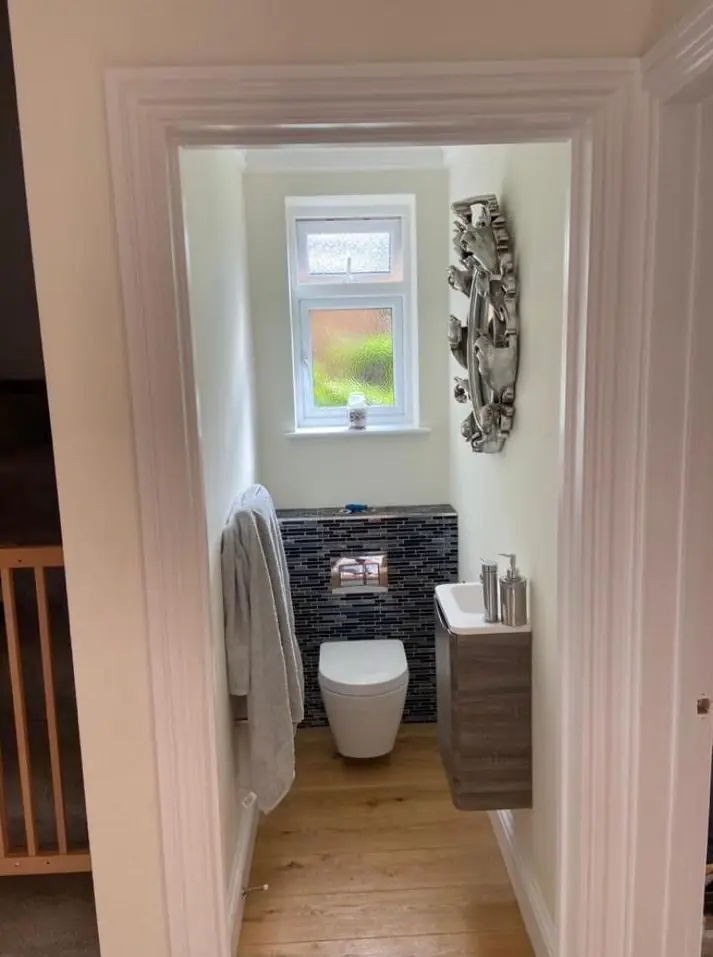
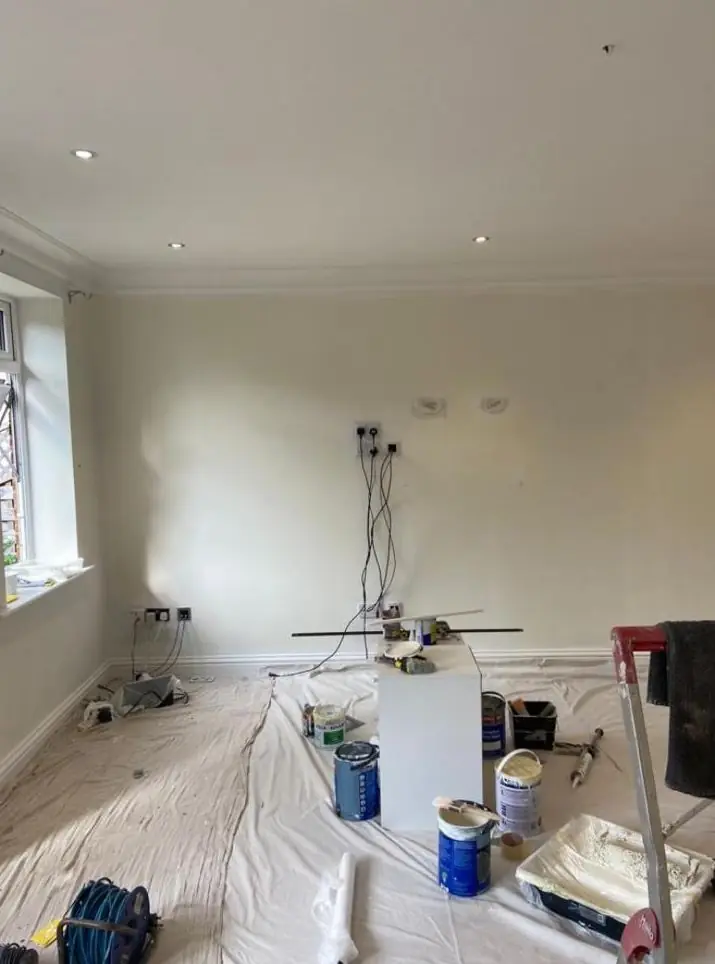
Beyond the stone walls of the old village, most of Weston Favell is 20th-century suburban housing: semis, detached houses and flats built as Northampton spread east from the 1920s, plus the newer closes like Kestrel Close and The Smithy. Here decorative work is more about adding interest to plain, regular rooms. Common requests include:
- A two-tone wall split at dado height, with a crisp painted line instead of a rail.
- A single feature wall or chimney breast in a deeper colour or a hand-applied effect.
- New MDF panelling painted so the joints and pins disappear.
- Coving, ceiling roses or a fire surround picked out in a contrasting shade or sheen.
These houses have modern plaster, so there is no breathability constraint, and the choice of paint is wide open.
The main decorative finishes page explains the effects and detailing we offer in more depth. For the rest of our work in the area, see the Weston Favell area page, and for planning a budget, the painter and decorator cost guide.
Last updated by Dean, DH Painter & Decorator.