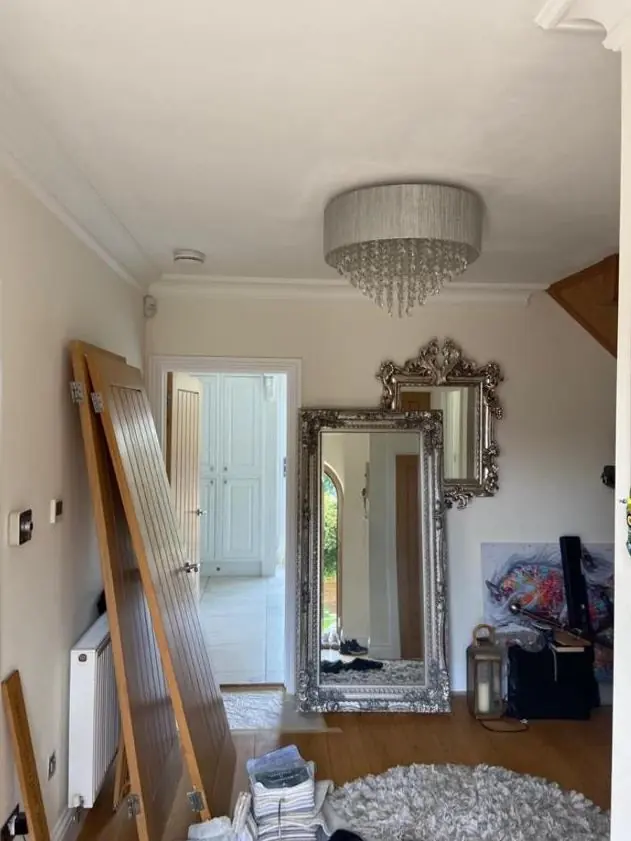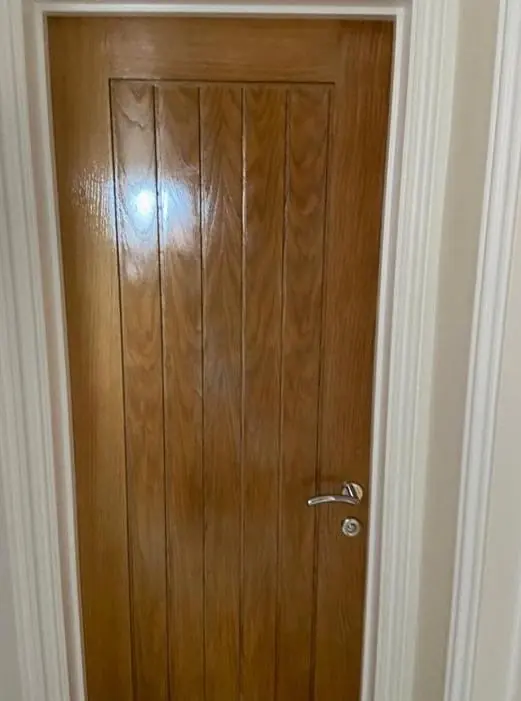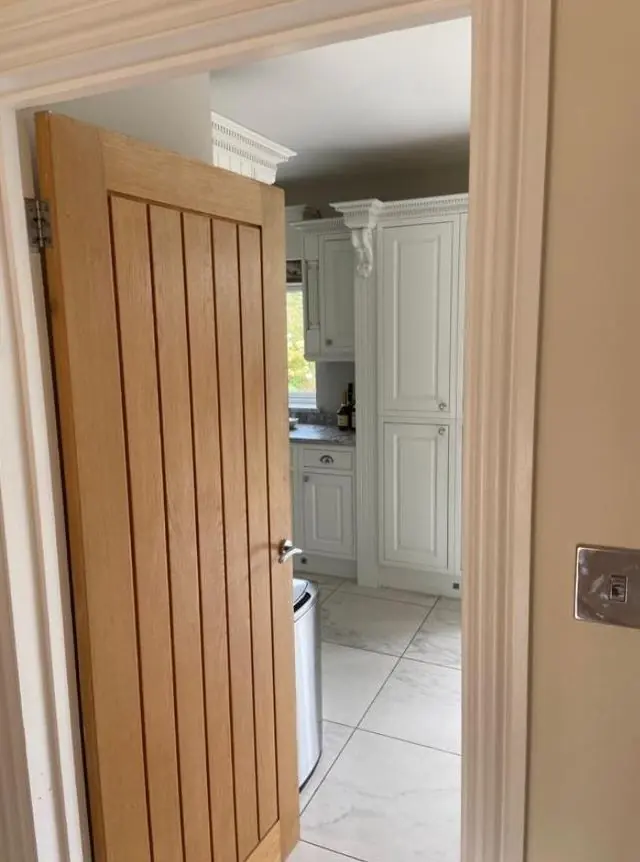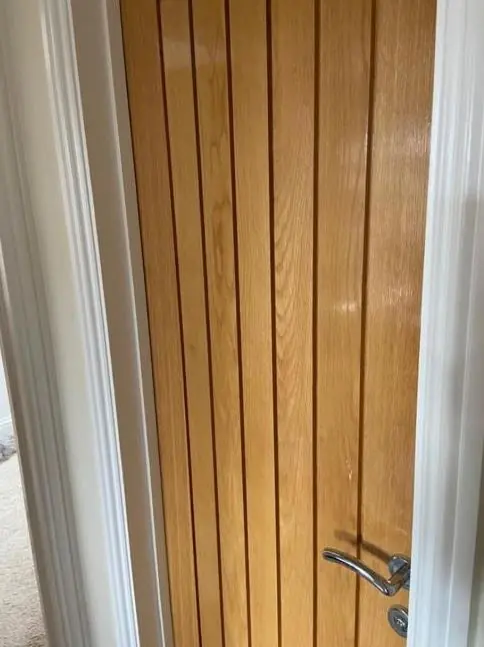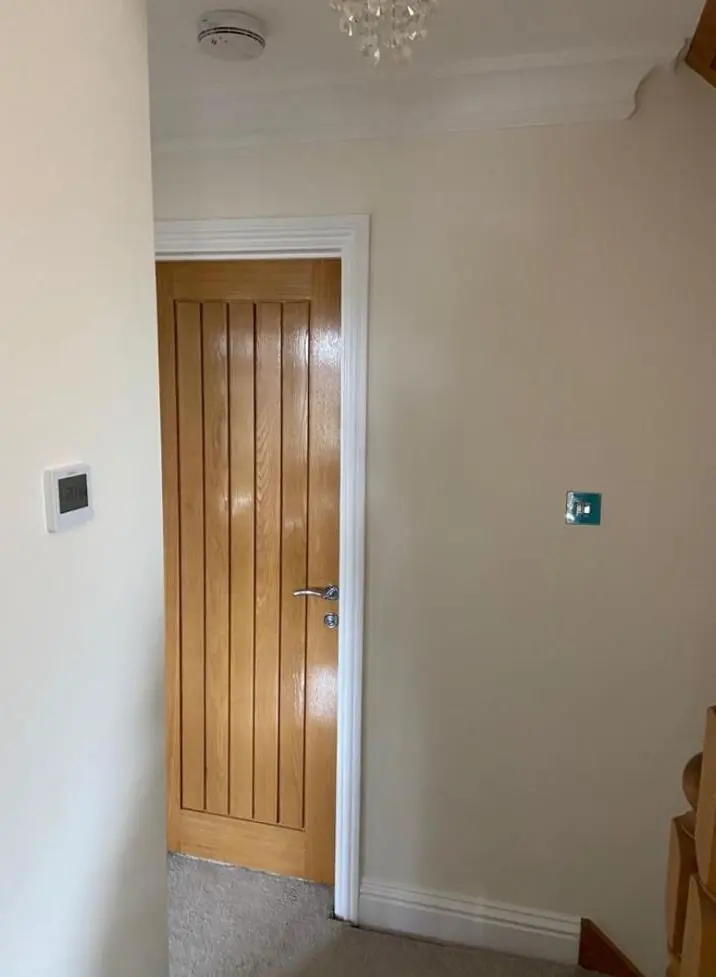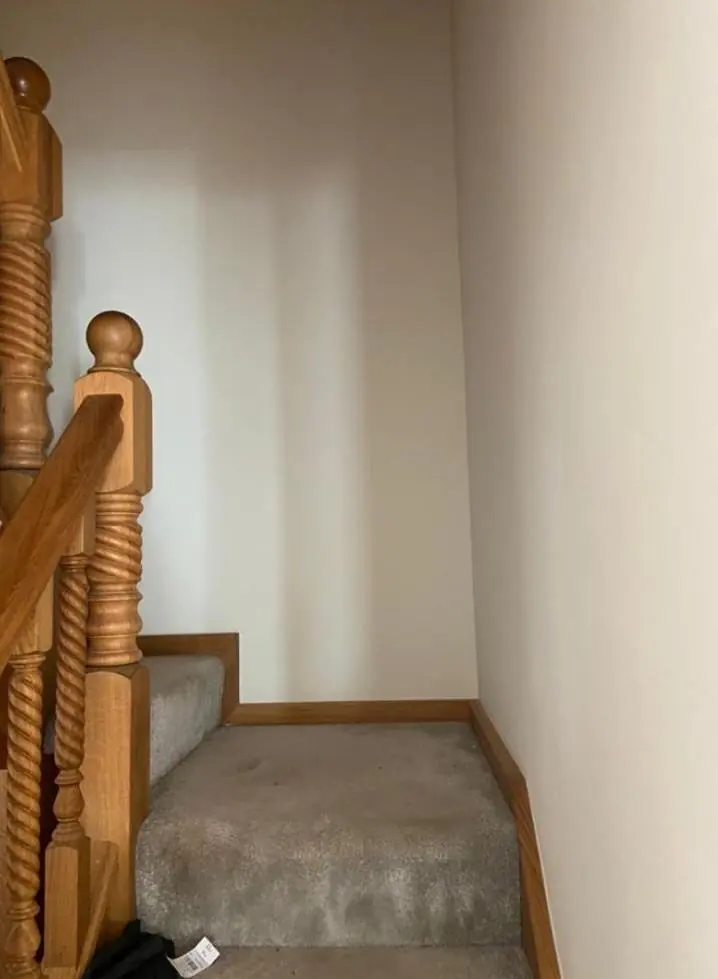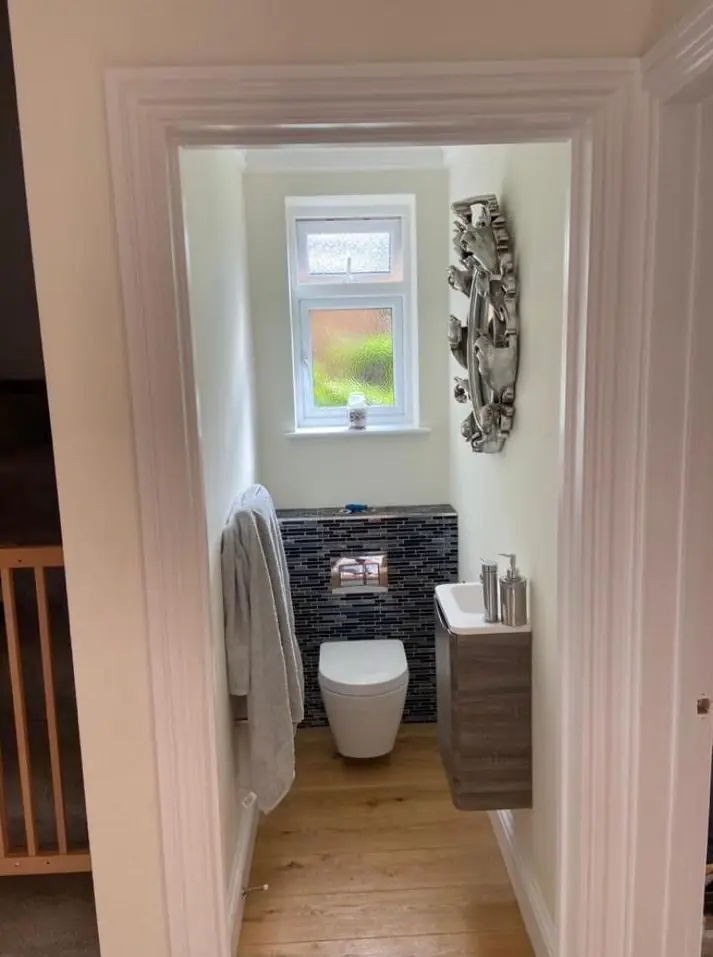
DH Painter & Decorator paints internal doors, frames, skirtings and architraves in Pineham, the NN4 estate by Upton Country Park. Dean prepares the builder-finished MDF woodwork found throughout the estate's new-build houses so the new satinwood or gloss sits evenly and lasts.
What the builder left on Pineham woodwork
Pineham Village went up after the 2007 planning permission as a single Taylor Wimpey development, so most houses share the same kind of joinery: MDF skirtings, architraves and doors that were often factory-primed or builder-finished with a quick coat on site. That finish was there to get the house handed over, not to stand up to ten years of hoovers, toys and boots.
The result is easy to spot a few years in. Skirtings look slightly grey where the primer shows through, the top coat has worn off the top edge of each board, and the door edges by the handles are dull and marked. Painting straight over that with one more coat of satinwood tends to give a patchy, thin result, because the new paint is sitting on a surface that was never properly built up.
Building the finish up properly
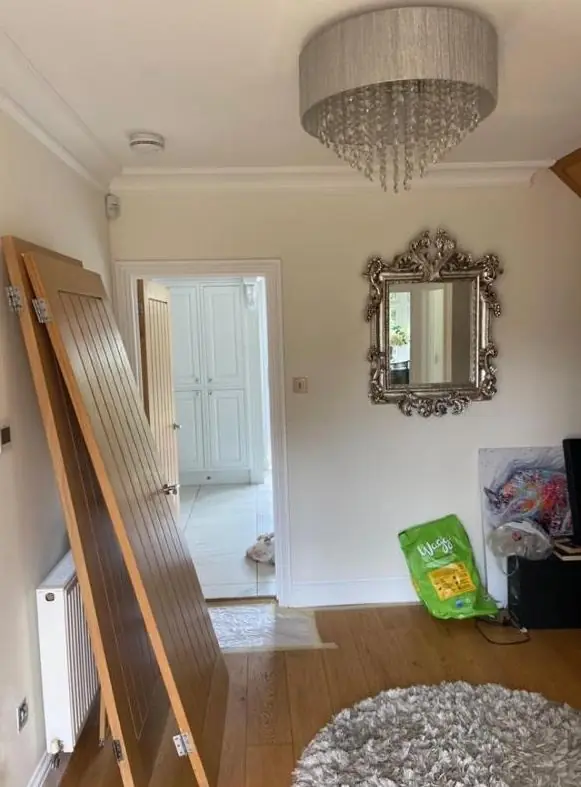
On a Pineham house we treat the first repaint of the woodwork as the coat system the builder skipped. Each board, lining and door is degreased, then keyed with a fine abrasive so the new paint has something to grip. Any bare MDF, usually on cut ends and where skirtings were scribed to the floor, is spot-primed with an MDF-suitable primer so it does not swell or drink the paint. Then comes a full undercoat, followed by the finish coat in satinwood, eggshell or gloss.
New houses also move as the timber and plaster dry out. The gap where skirting meets wall and the joint where architrave meets plaster often open up into a fine line in the first few years. Those gaps are cleaned out and filled with a flexible decorator’s caulk before the undercoat, so the line of the woodwork is crisp again.
| Item | Common Pineham condition | What we do |
|---|---|---|
| MDF skirtings | Primer showing through, worn top edge | Key, spot-prime, undercoat, top coat |
| Architraves | Hairline gap to the plaster | Caulk, then two-stage paint |
| Internal doors | Thin single coat, marks by handles | Clean, sand, undercoat, finish both faces and edges |
| Door linings | Chipped by hinges and furniture | Fill dents, prime bare spots, recoat |
Counting the doors in a three-storey townhouse
The three-storey terraced townhouses on Mayfly Road and similar streets carry more joinery than their footprint suggests. With bedrooms and bathrooms spread across three floors, there are doors and linings on every landing, plus long runs of skirting up the stairs. The count climbs quickly once cupboard doors are included. Pricing and planning a job like that is easier when we can see it, so we walk through every floor before quoting and list the items so you can choose all of them or just the floors that need it most.
We usually work floor by floor so only one level has wet paint at a time. Doors are painted in place, hinges masked or removed, and wedged open to dry, so bedrooms stay usable each night.
Painting tight to stone feature walls
Some Pineham houses have natural stone feature walls inside, and where a skirting or architrave runs into one of those, the paint has to stop cleanly. Stone is porous, so a smear of satinwood soaks in and is very hard to remove. We mask the stone edge with low-tack tape, cut in by hand and keep a damp cloth ready, rather than relying on clean-up afterwards.
Our main door and skirting painting page explains finishes and paint choice in more depth, and our Pineham area page covers the other work we take on across the estate. For a sense of what affects the cost of a woodwork job, see the painter and decorator cost guide.
Last updated by Dean, DH Painter & Decorator.