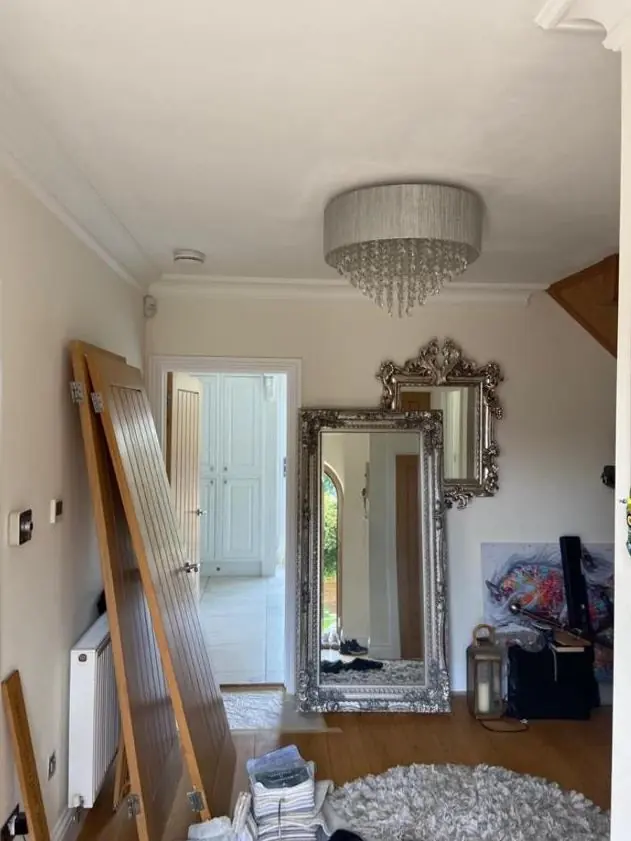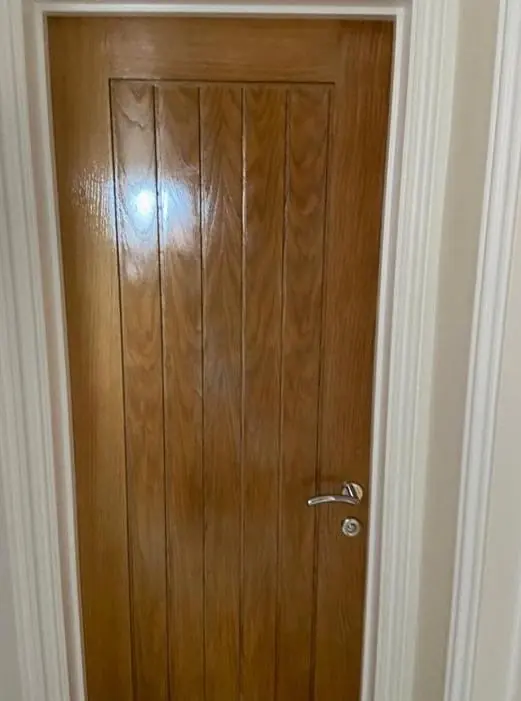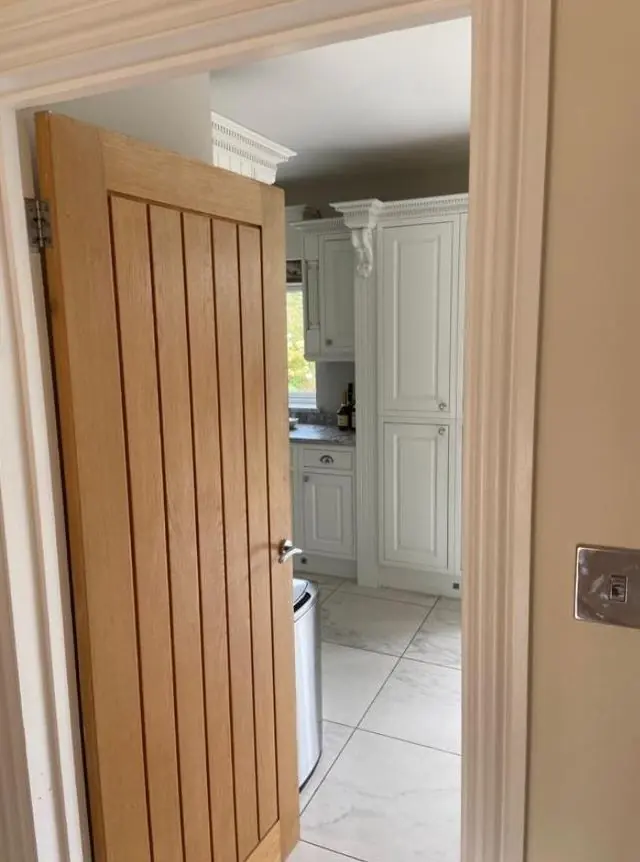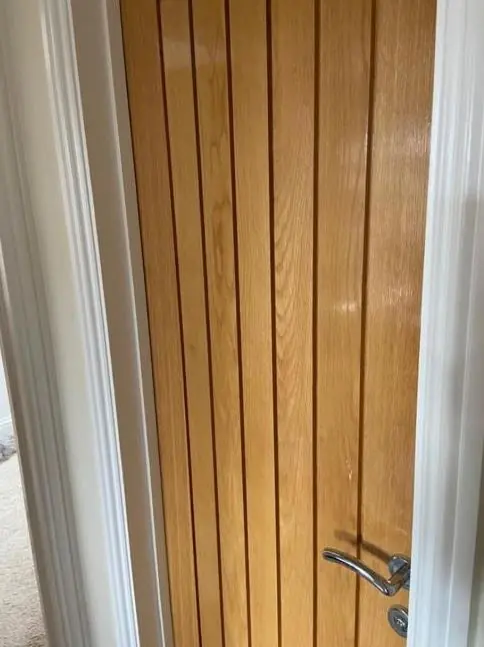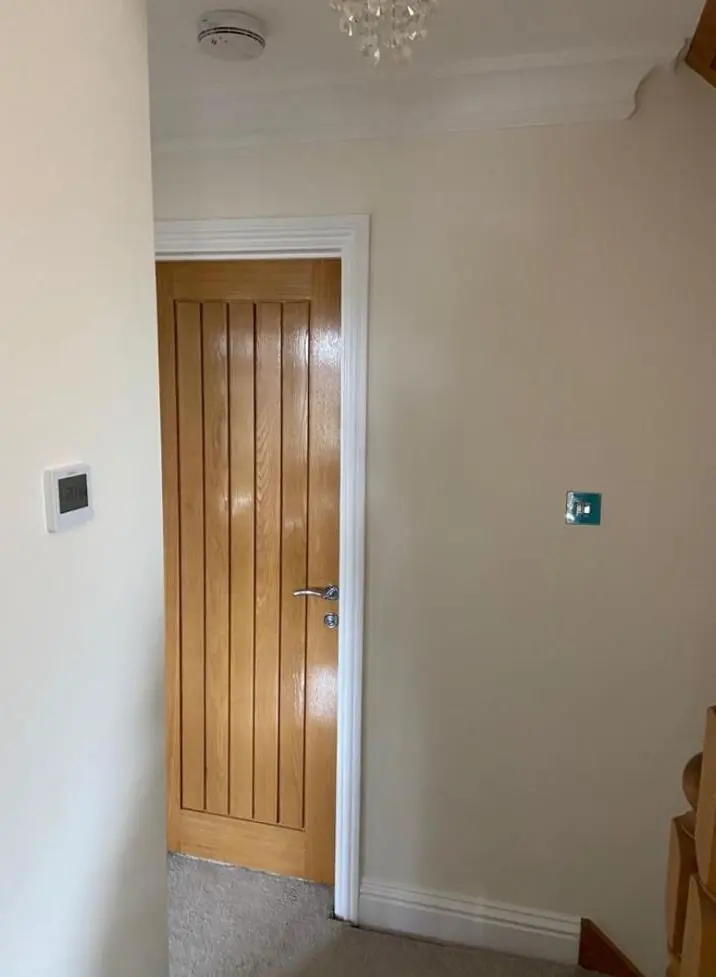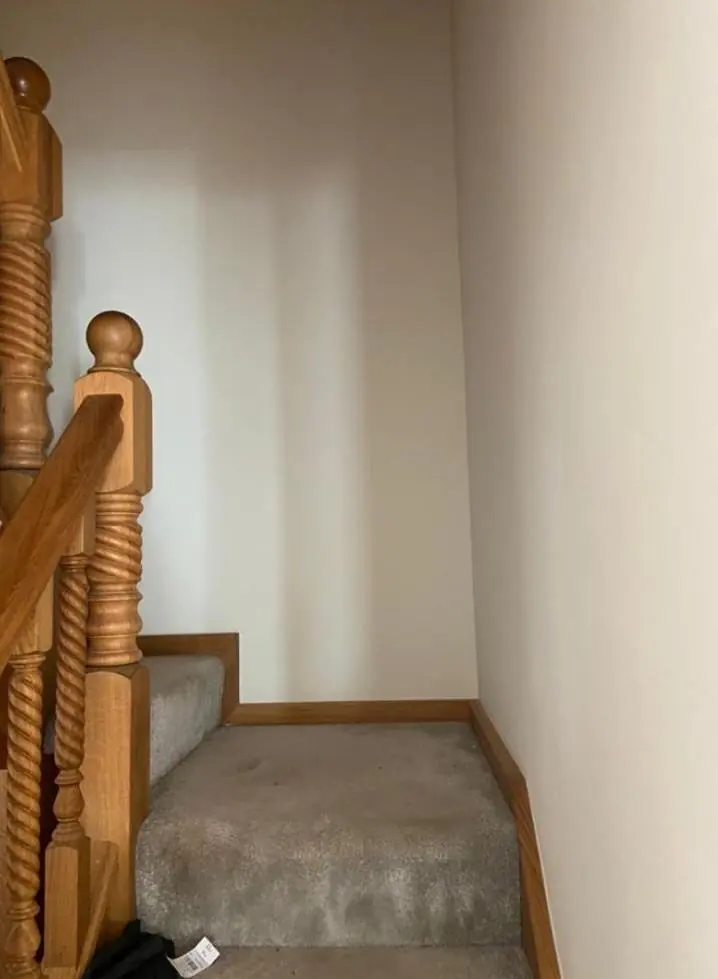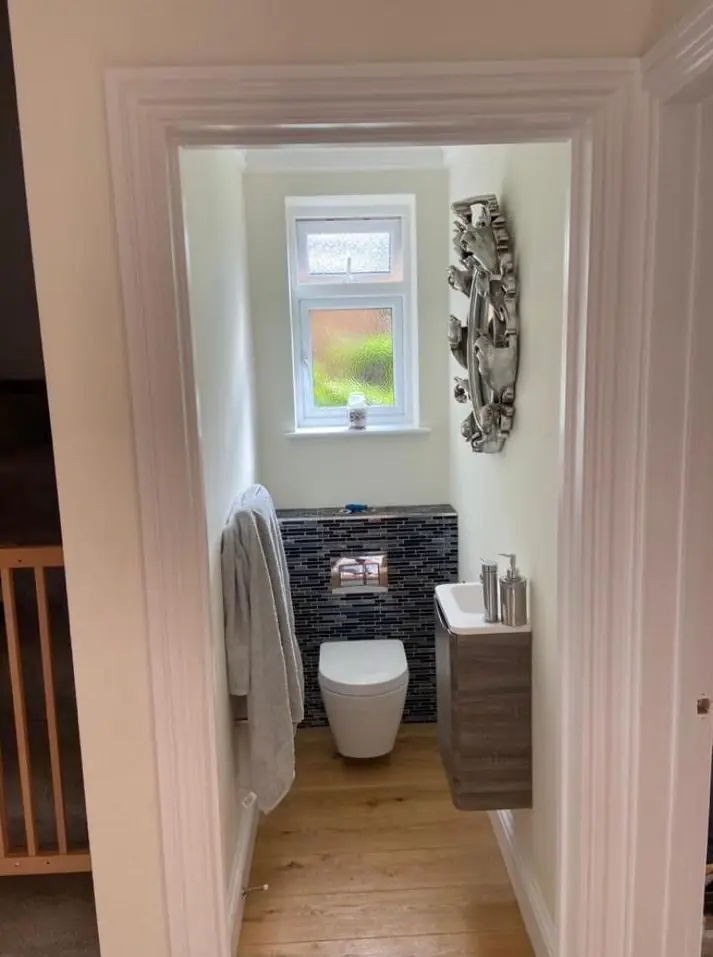
DH Painter & Decorator paints doors, skirting boards, architraves and other woodwork in Briar Hill, Northampton NN4. Dean works from Northampton, about 1.3 miles north-east of the estate, and quotes free for anything from a single hallway of skirting to every door in a house.
Two kinds of joinery on one estate
Almost every house in Briar Hill went up after building began on the old Briar Hill Farm land in 1969, so most of the woodwork we would be asked to paint here is estate joinery from the 1970s and 1980s: softwood skirting boards, architraves and internal doors in modest rooms. Standing among those terraces is the house the estate takes its name from. Briar Hill House, the former farmhouse, dates from the early 19th century and was Grade II listed in 1976. Its sash windows with glazing bars and its six-panel front door in a fluted Doric pilaster surround are a different class of work from anything on the estate, and we price and plan them separately.
Softwood skirtings and doors in the estate houses
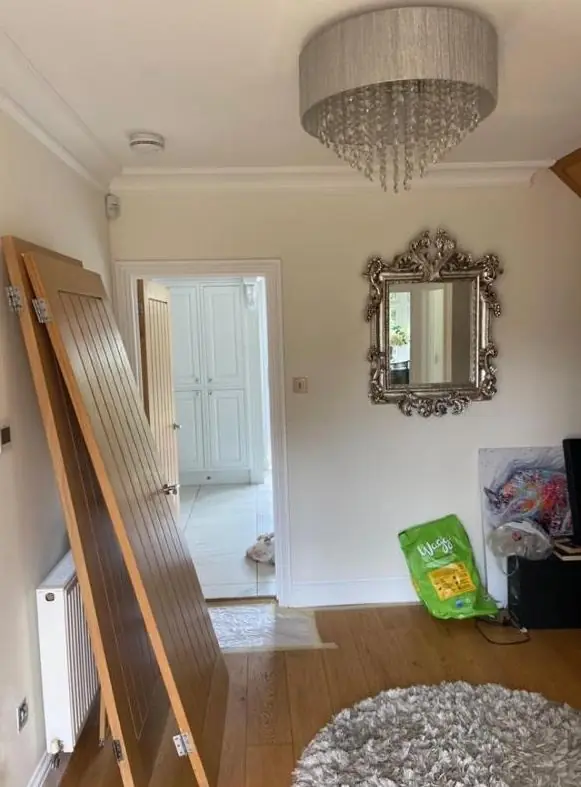
Fifty years of hoovers, school bags and shoes leave a predictable pattern on estate woodwork. The bottom rail of internal doors, the skirting along the hall and up the stairs, and the architrave edges by light switches take the most knocks. On a typical Briar Hill terrace that woodwork has usually had several coats of oil gloss over the decades, sometimes yellowed, sometimes with drips and runs from earlier efforts.
Our approach is to sand back the runs and flaking edges, fill dents and open joints, caulk the gap where skirting meets wall, and key the old gloss so the new coat holds. For family houses and lets we normally recommend a scuff-resistant satin or eggshell, which hides small marks better than high gloss and is easier to touch up between tenants. Water-based versions stay white rather than yellowing in rooms that get little daylight, which matters on an estate laid out on a north-facing slope of the Nene Valley.
- Internal doors: both faces and all edges, with the hinge side done so the door can close the same day
- Skirtings: degreased and keyed, with cracked caulk cut out and renewed
- Architraves and window boards: filled where hinges, nails or curtain fittings have been moved
- Stair strings and spindles: done with the hall if the staircase is part of the job
Woodwork at Briar Hill House
Because the farmhouse is listed, changes to its sashes or its door surround may need listed building consent, and the owner should check that with West Northamptonshire Council before any work that goes beyond like-for-like repainting. Within those limits, the joinery calls for traditional preparation: loose putty and failed paint carefully removed from the glazing bars without damaging old glass, bare timber primed promptly, and an oil or quality water-based gloss chosen to match the existing finish. The cornice hood and pilasters on the doorcase need patient hand work rather than speed. We would always look at the house before quoting so the method suits what is actually there.
Estate windows and front doors
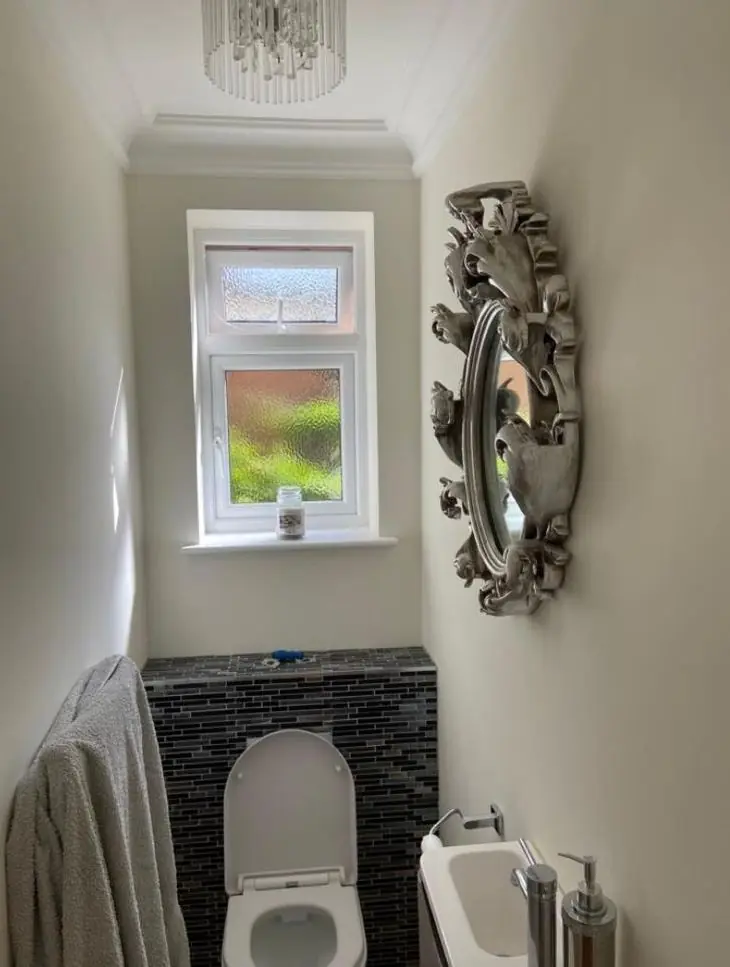
A recent Southwood Hill listing mentions double glazing, and where the frames are uPVC, outside woodwork is limited to front and back doors, porch timber and any remaining frames. Some front doors here face footpaths rather than roads, part of the estate’s network of walkways around Hunsbarrow Road and its underpass, and many have had decades of weather on a slope where north-facing doors dry slowly. An exterior door is painted on a dry, settled day, with the door wedged open long enough to cure on its edges.
Getting the job organised
Terraces such as those on Southwood Hill share a communal parking court, so tools and dust sheets come in on foot. We keep everything in one room at a time and leave doors usable overnight. Our main door and skirting painting page goes into paint types and hardwood finishes in more depth, and the Briar Hill area page covers the other work we take on across the estate.
Last updated by Dean, DH Painter & Decorator.