Dean hangs wallpaper across Hunsbury Meadows, the NN4 parish estate 2.2 miles from Northampton town centre. That covers stripping and re-hanging in the original 1996-2001 houses, and hanging on previously painted plasterboard in the 2012-15 Pineham Lock phase, where walls need sizing before paper goes up.
Choosing which wall gets the paper
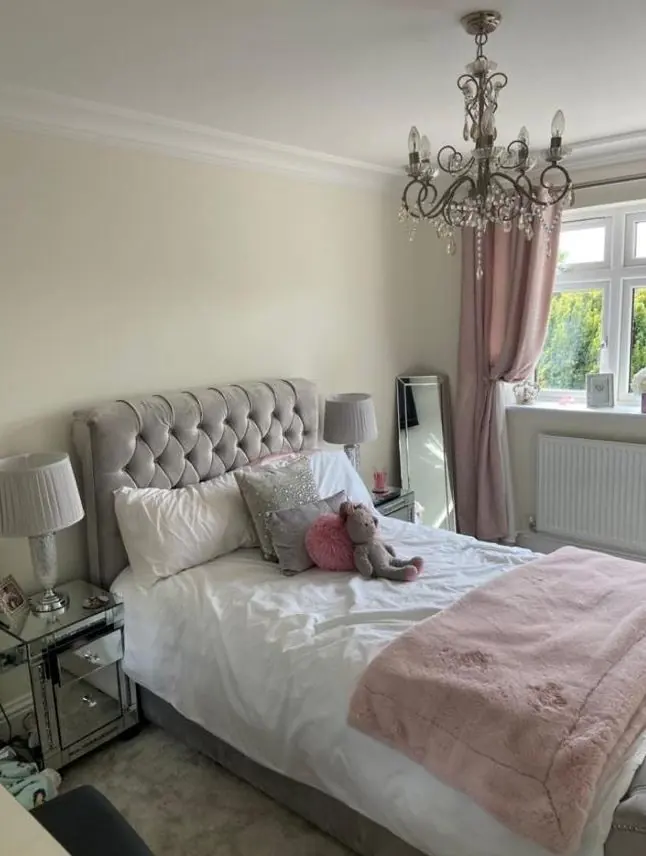
In a detached house with several reception rooms, papering every wall is rarely the plan. More often an owner wants one wall to carry a pattern: the chimney-breast wall in the lounge, the long wall behind a dining table, or the wall at the head of a bed. The late-1990s houses on streets such as Whitesands Way, Quarterstone and Cauldecott Close have rooms big enough for a bold design to sit on one wall without crowding the space, and the other walls can then be painted in a colour pulled out of the paper.
The decision changes in the Pineham Lock homes from 2012-15. Open-plan kitchen and living areas are common in new-build layouts like these, and there is no obvious edge to stop a paper at. We look for a natural break, such as a return wall, a chimney recess or the end of a run of units, so the paper reads as a deliberate panel rather than something that ran out.
Plasterboard that has only ever seen emulsion
Pineham Lock walls are typically plasterboard finished with the developer’s matt paint, and many have never been papered. Pasting straight onto that surface causes two problems. The paste soaks into the thin paint and the board face unevenly, so lengths can slip or dry with open seams. The bigger issue comes years later: paper hung on unsealed board bonds to the paper face of the plasterboard, and stripping it tears that face away. That leaves a wall that needs skimming before it can be decorated again.
So before hanging we:
- fill and sand the joint lines and screw heads, which show through thinner papers;
- apply a wallpaper primer or size, so the paste grips now and the paper strips cleanly later;
- hang lining paper first under heavier or darker designs, where the board joints would otherwise ghost through.
It adds a morning to the job, but it keeps the wall reusable for whoever redecorates next.
Stripping what earlier owners left
The core estate’s houses are 25 to 30 years old, and some will have changed hands since. Any earlier owner may have left paper behind: vinyl, woodchip painted over several times, a border at dado height. Taking them off is often the slowest part of a room. We steam and scrape carefully, testing first to see whether the paper sits on plaster or board. Any torn patches are sealed and filled before the new paper goes up, otherwise the damage shows through.
Long drops, French doors and open-plan breaks
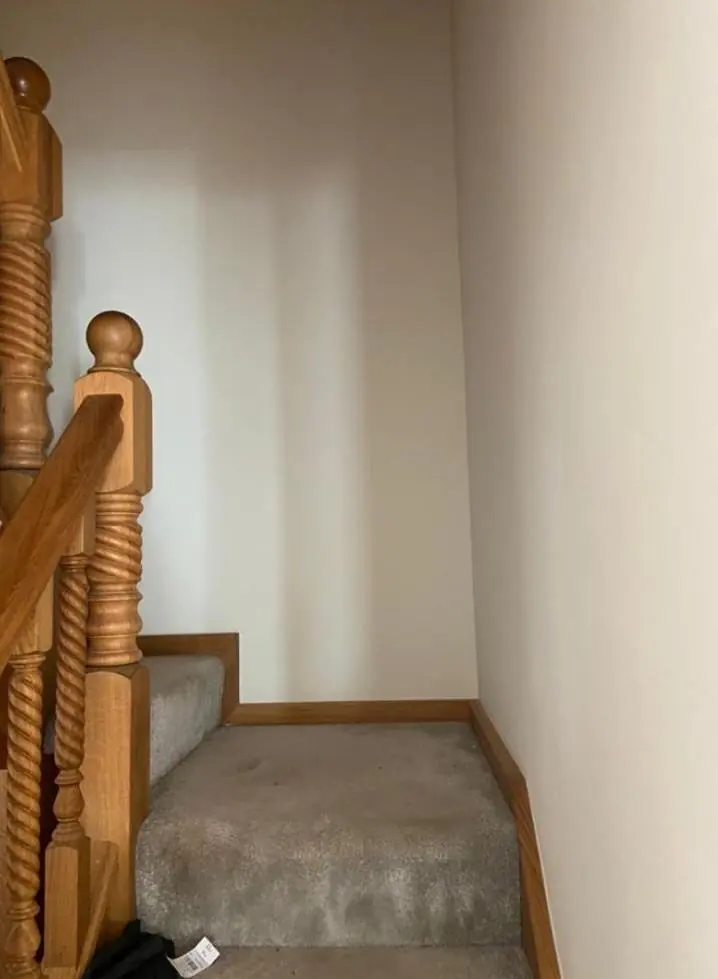
Some of the larger houses have a two-storey hall or tall stairwell. Papering a stairwell wall means drops much longer than a standard room height. The pattern has to stay matched across lengths that start at different heights on the stairs, and the top of each length is reached from a stair platform or tower, not a ladder balanced on a step.
A sales listing for one house here describes French doors in both timber and uPVC. A wall with French doors in it means many short lengths cut around the frame and above the head, where a mismatch shows straight away. Walls facing glazing that gets strong sun also fade faster, so we suggest a lightfast paper for those rooms.
Dean covers Hunsbury Meadows from Northampton, about 2.2 miles away. Paper choice, pattern types and the full hanging process are on our wallpaper hanging page, and the Hunsbury Meadows overview covers the estate’s other decorating work.
Last updated by Dean, DH Painter & Decorator.