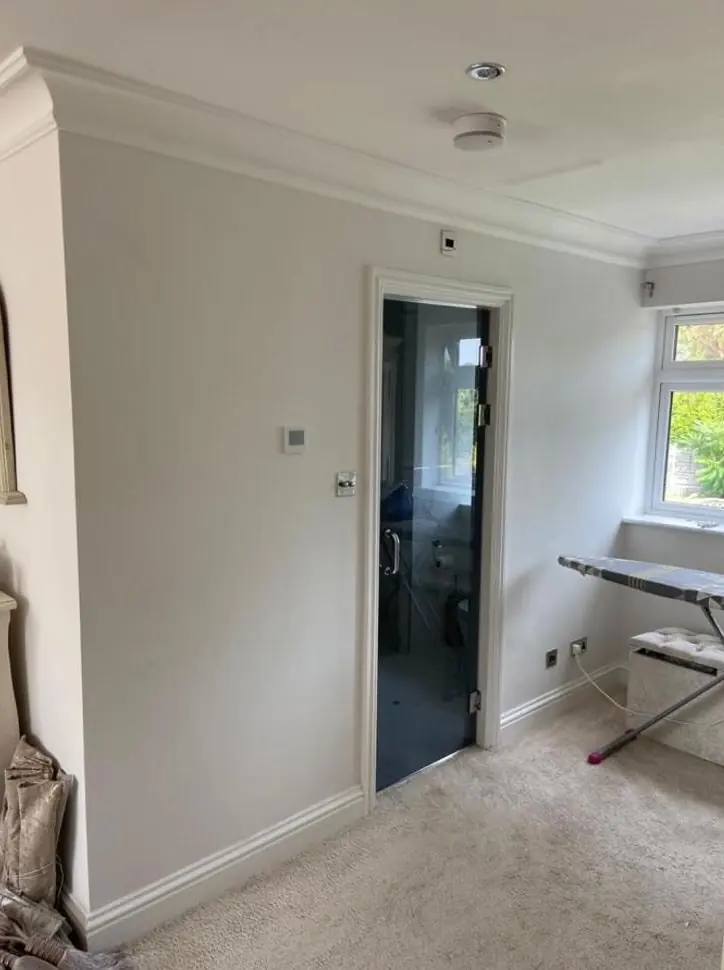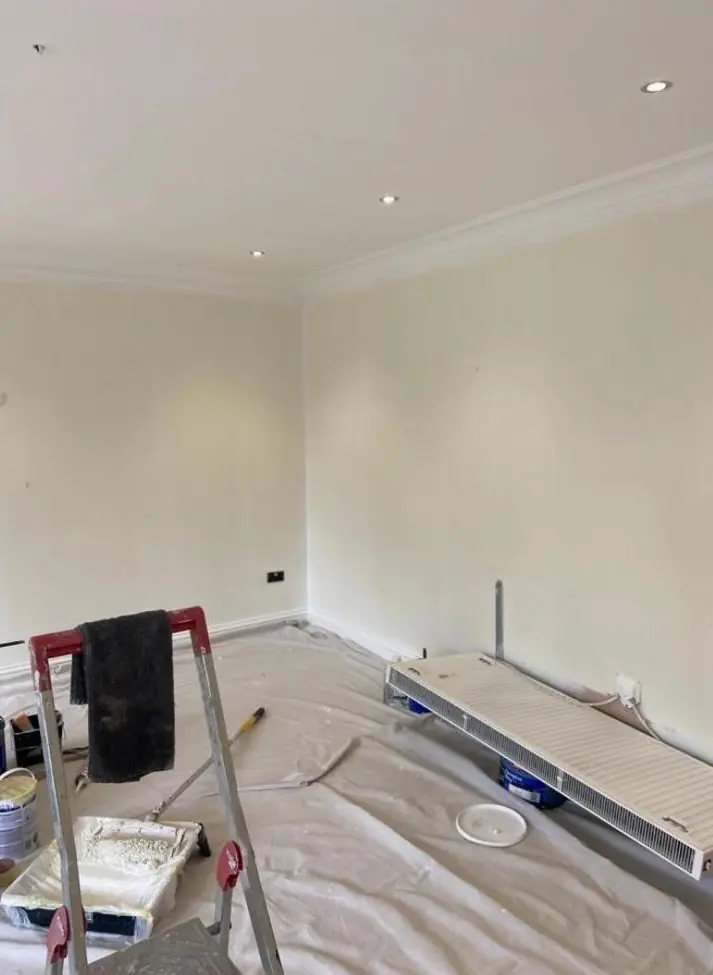
Dean from DH Painter & Decorator hangs wallpaper in Pineham (NN4), the modern Taylor Wimpey estate on Northampton's south-western edge, 2.7 miles from the town centre. Most Pineham work is feature walls in plain new-build rooms, hung over walls that are checked for dryness and sized properly first.
Plain rooms, ready for a pattern
Most Pineham Village houses were handed over with smooth, plain-painted walls. For many owners, the first change worth making is not a new paint colour but a papered wall that makes one room feel like theirs: behind the bed, across a dining wall, or along the run of the living area. Because neighbouring houses repeat the same plans, a feature paper is also one of the quickest ways to make your interior look different from the identical plan next door.
The general process of stripping, lining and hanging is set out on our main wallpaper hanging page. Here we focus on what is particular to papering a young house in Pineham.
Hanging paper on walls that are still young
Paper adhesive pulls on whatever the wall surface is made of. On a new-build that is often a thin builder’s emulsion over plaster or plasterboard that may not have been fully dry when it was painted. If that coating is loose or chalky, the paste soaks in, the paint softens and the paper lifts at the seams as it dries, taking the old paint with it.
So before any roll is cut, we check:
- whether the existing paint is sound, using a simple tape test on the wall to be papered;
- whether any area is fresh plaster from a newer phase or an owner’s extension, and how long it has had to dry;
- whether the wall needs a sealer or size coat so the paste grips evenly and the paper can slide into position;
- whether there are settlement cracks at the ceiling or corners that should be filled first, since paper will crease over a moving gap.
On walls that are too new to paper safely, we will say so and suggest waiting, or painting that wall for now.
Stairwells and top-floor bedrooms in the townhouses
The three-storey townhouses, such as those on Mayfly Road, offer bigger papering projects than the feature-wall jobs above. The stairwell rises through two flights, giving long drops that need the pattern matched from top to bottom and the length measured individually as the stair line climbs. That work is done from proper staging, not from steps on the treads.
The top-floor bedrooms can bring their own challenges: a Velux roof window cut through the slope and the reveals around it. Paper around a roof-window reveal needs careful relief cuts, and if there are condensation marks on that wall, they are treated and sealed first so they don’t show through a pale paper.
Working around stone and choosing a paper
Some Pineham houses have a natural stone feature wall. That wall already provides texture, so papering the wall beside or opposite it usually works better with a quieter design. We also keep paste well away from the stone face, since it is porous and will mark.
For a family house on this estate, durability usually matters as much as looks. Non-woven and vinyl papers suit busy halls and children’s rooms because they wipe clean and are easier to strip later. Heavier designer papers are fine in a main bedroom or dining space. If you would like help pairing a paper with paint colours, our colour and finish advice can be part of the same visit.
Pineham is reached easily from our Northampton base. Dean will measure up, tell you how many rolls to order allowing for pattern repeat, and give a written quote. More about the area is on our Pineham page.
Last updated by Dean, DH Painter & Decorator.