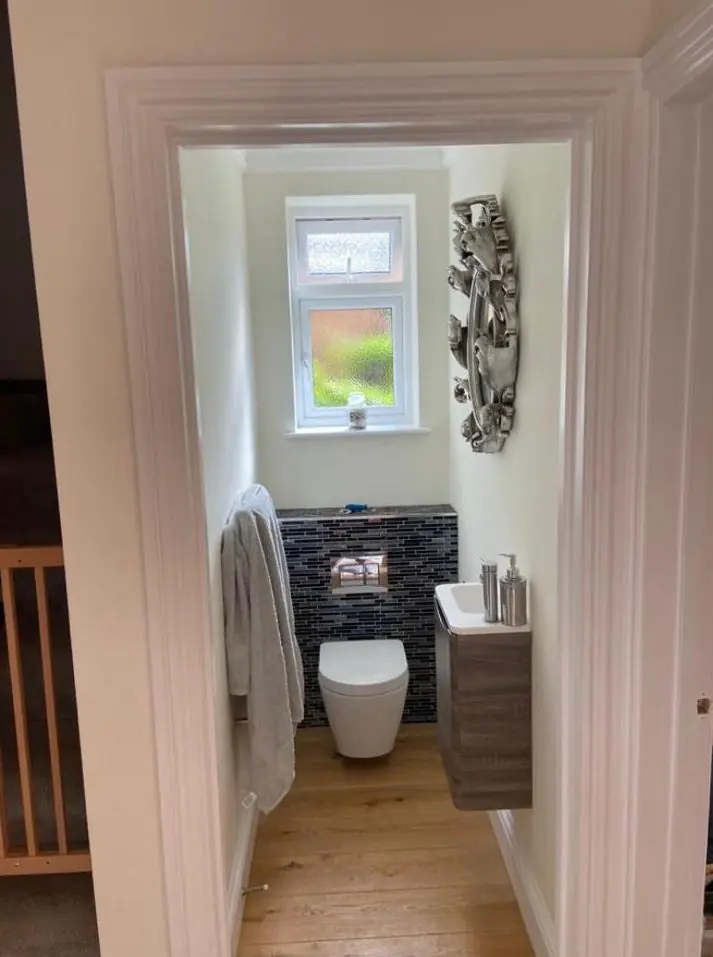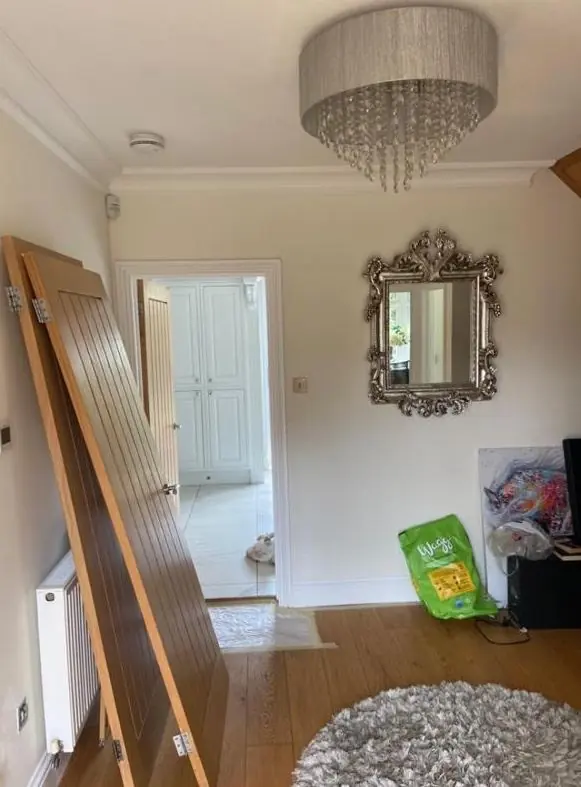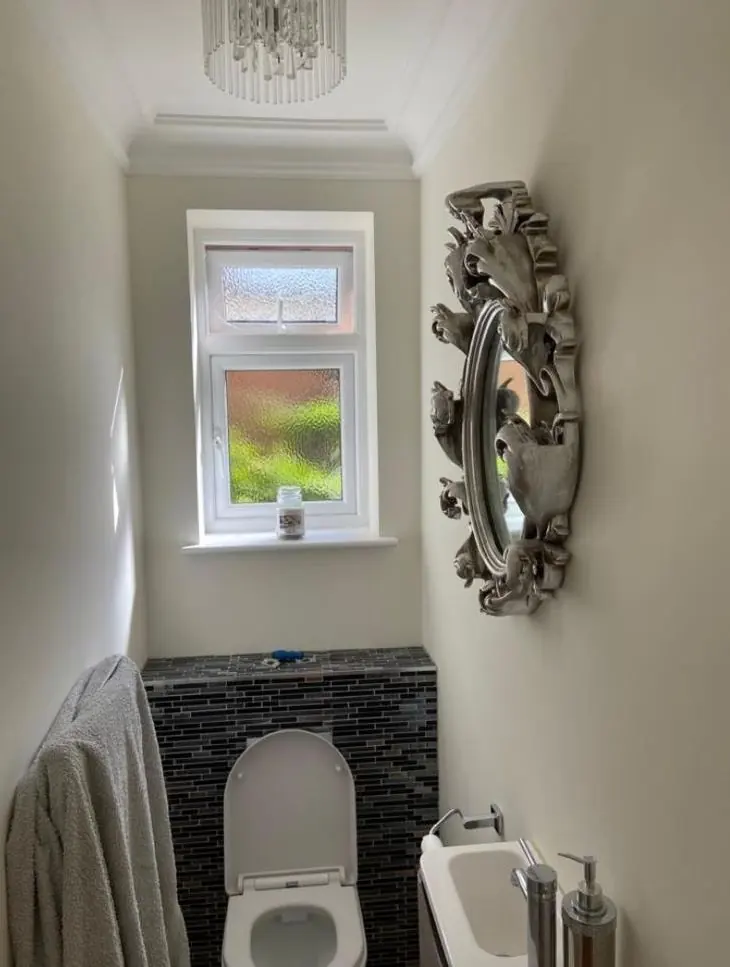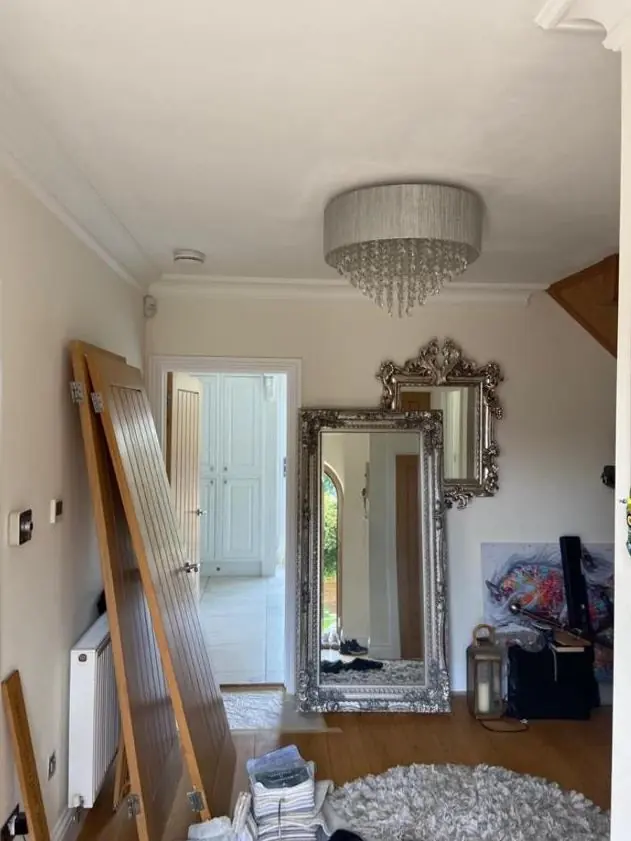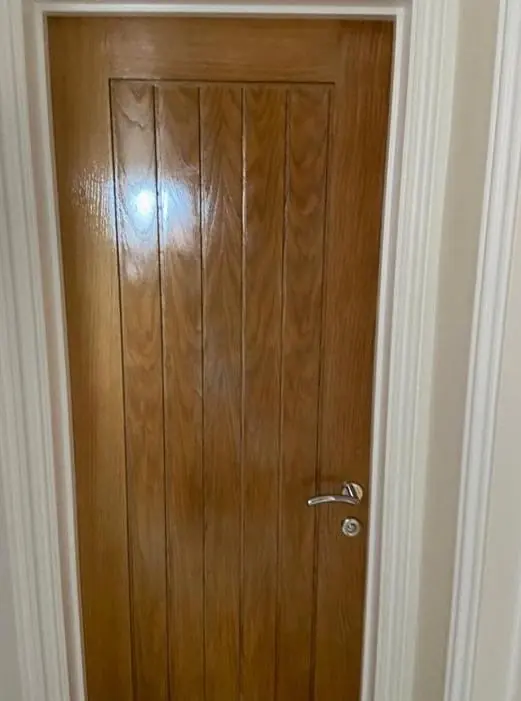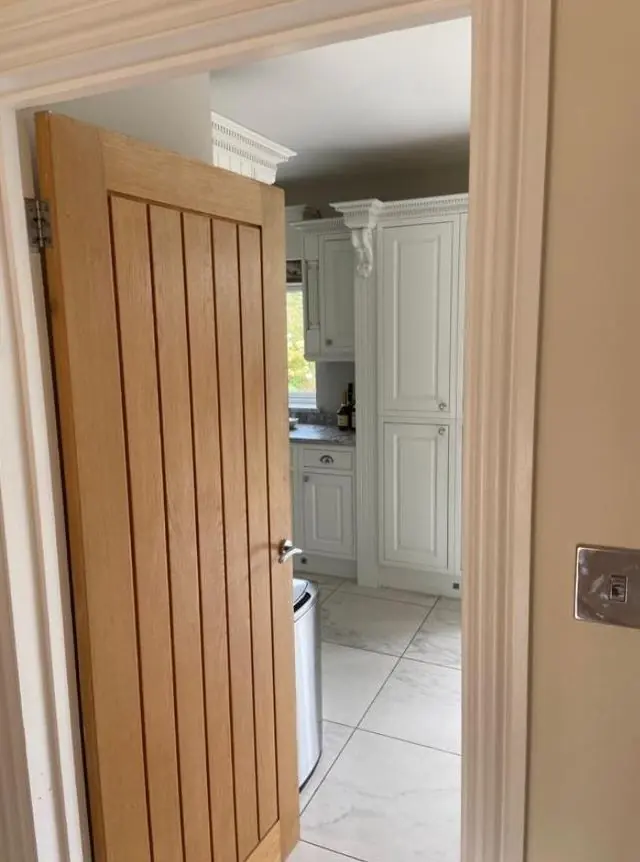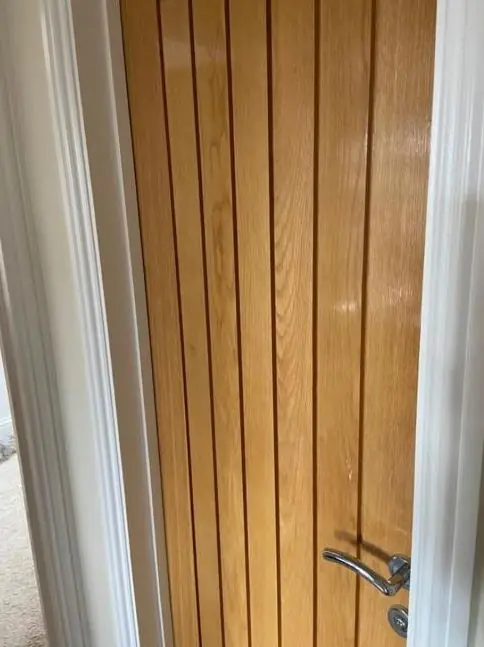
Dean paints internal and external doors, skirtings, architraves and window joinery in Weedon Bec, an NN7 village eight miles west of Northampton. Work here ranges from flood-marked skirtings in the village centre to listed cottage joinery and standard estate woodwork.
Skirtings in the streets that keep flooding
Surface water reached homes on West Street, New Street, Church Street, Bridge Street and South Street in November 2012, on 24 November 2024 and once more in March 2025, and a failed culvert on the Whettles footpath separately flooded St Peters Way and Martins Way. In a ground-floor room the skirting board is the first piece of joinery that water reaches, and it is usually the last to dry out properly.
Painting a wet skirting is a waste of money. Softwood that has soaked up floodwater swells, the paint film lifts along the top edge and tide marks bleed through new coats. We check the timber and the wall behind it with a moisture meter before anything is opened, and if the reading is still high we come back later rather than seal the damp in. Once the board is dry the work is:
- Rubbing down raised grain and flaking gloss along the bottom third of the board.
- Spot-priming bare timber and any stained patches with a stain-blocking primer.
- Refilling the joint where the board has shrunk away from the wall, using a flexible filler that can take some movement.
- Two finish coats in a durable satin or eggshell that wipes clean.
If the skirting has rotted at the base or the plaster above it has been renewed, the carpenter or plasterer needs to finish first. We can paint the new board and the fresh plaster in one visit after that.
Old joinery in Upper and Lower Weedon
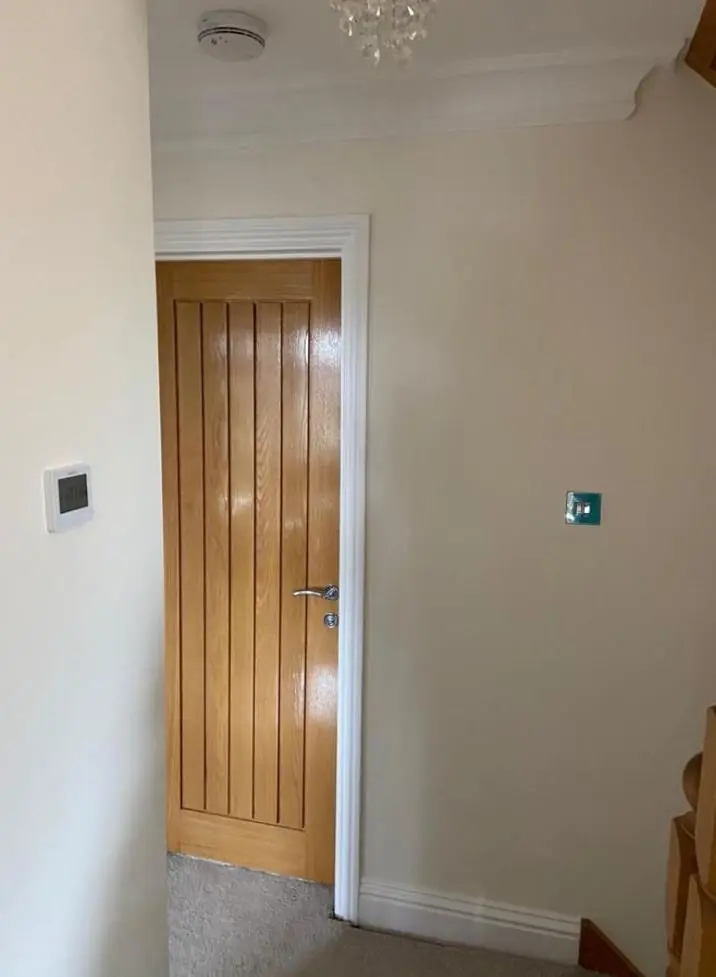
The cottages and farmhouses of Upper and Lower Weedon date from the late 17th and 18th centuries, and their joinery has usually been repainted many times since. Inside, expect panelled doors, tall skirtings and window boards under thick build-ups of old paint. Older layers can contain lead, so we test before sanding or heat-stripping heavily coated woodwork, and we prefer wet abrading where lead is present.
Walls in these cottages are rarely straight, so a skirting will rise and fall along a run. We cut the top edge in by hand instead of trusting long runs of masking tape, which leave a wavy line on uneven plaster. Where a door has dropped over the years, we ease it before painting so the new coat is not scraped off the first time it closes.
Casements set in stone mullions
Many of the ironstone and limestone cottages have stone mullion windows with timber casements fitted between them. Rain runs down the stone and sits on the sill, so the bottom rail of the casement stays wet longer than any other part of the frame. That is where paint fails first. We cut in tight against the stone without getting paint on it, because bare stone in these buildings should stay bare, and we use a microporous joinery paint that lets the timber breathe. If you live in one of the 50 listed buildings in the parish, ask us about colour before we start: a change from the existing finish may need consent from West Northamptonshire Council.
Estate woodwork at Cavalry Fields, Holm Close and Harmans Chase
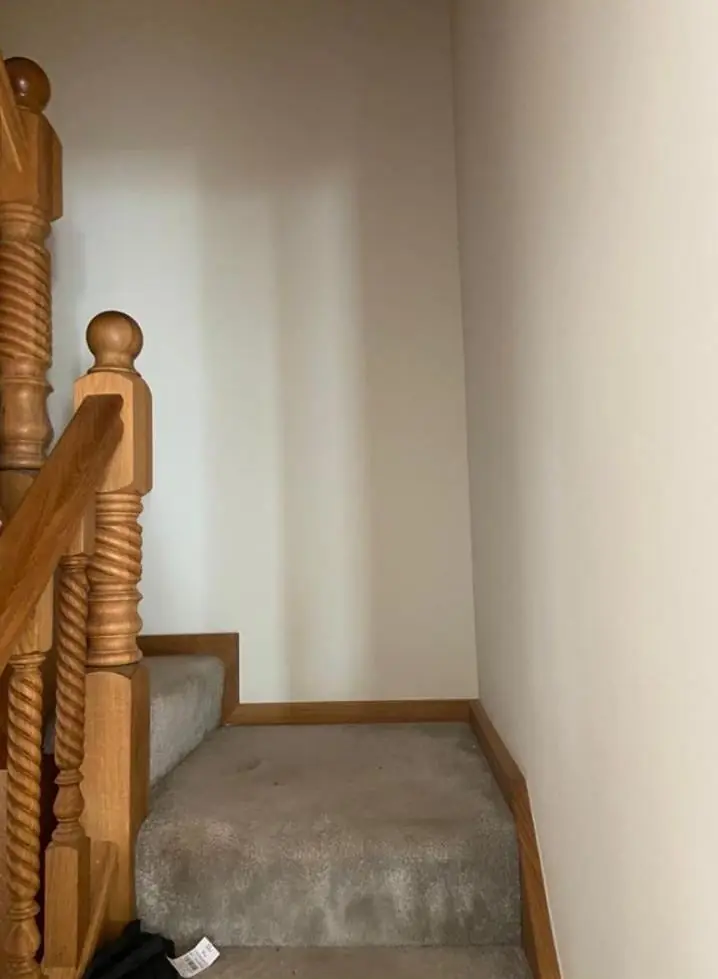
The 20th-century estates and the newer houses at Harmans Chase have standard softwood or MDF skirtings and flush or moulded internal doors. There is no listing to think about and the walls are flat, so the job is mostly preparation and a clean finish. Yellowed oil-based gloss is a common complaint, and many people move to a water-based satin that stays white. Our main door and skirting painting page explains that preparation in full.
The estate homes usually have a driveway Dean can park on. For the older streets we bring the smaller kit in a van that fits under the viaduct pinch points at the east end of the village. More on the village itself is on our Weedon Bec area page.
Last updated by Dean, DH Painter & Decorator.