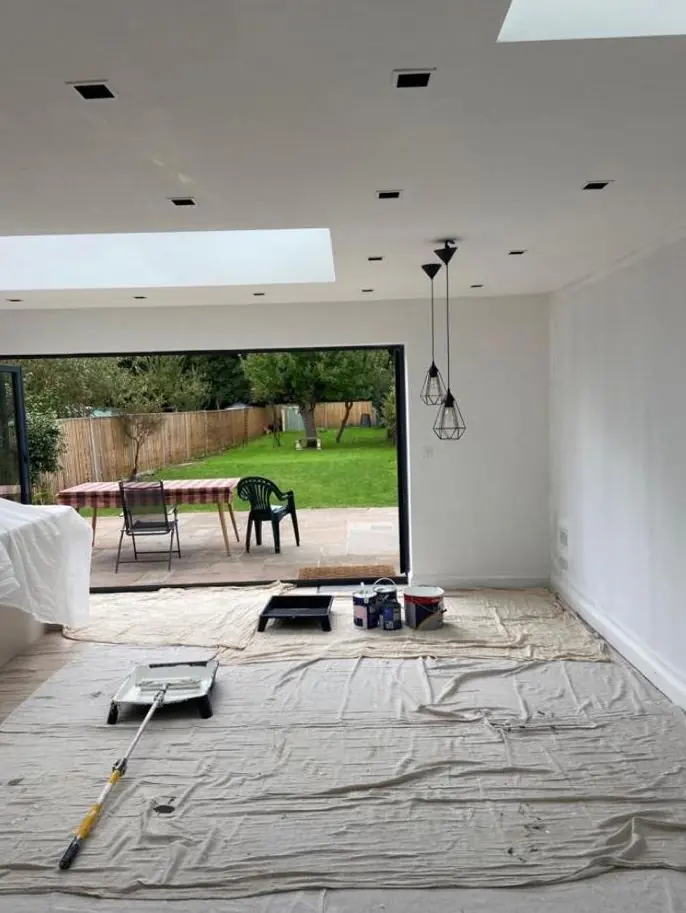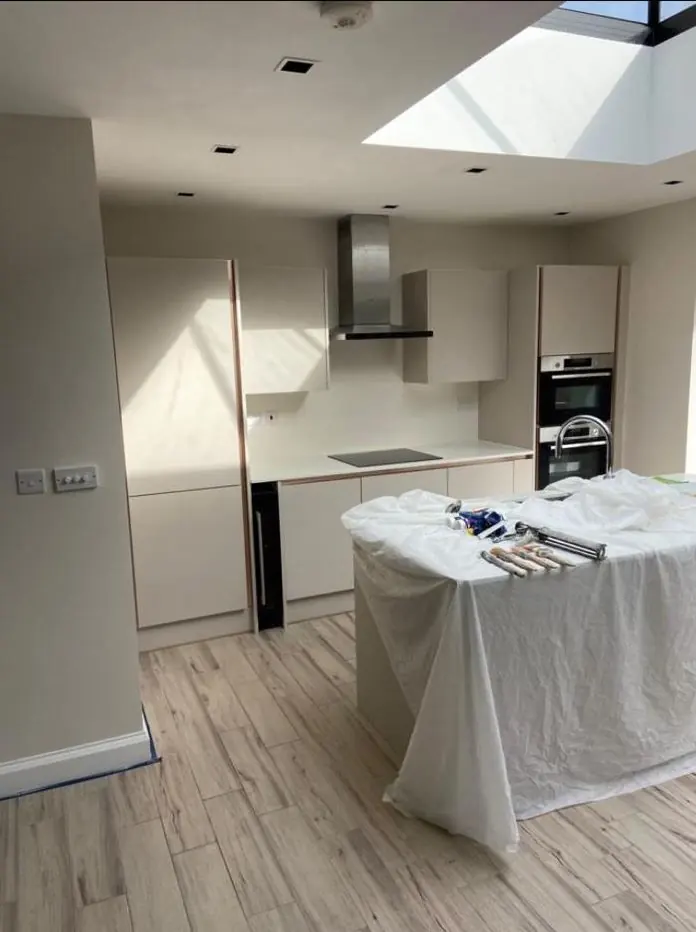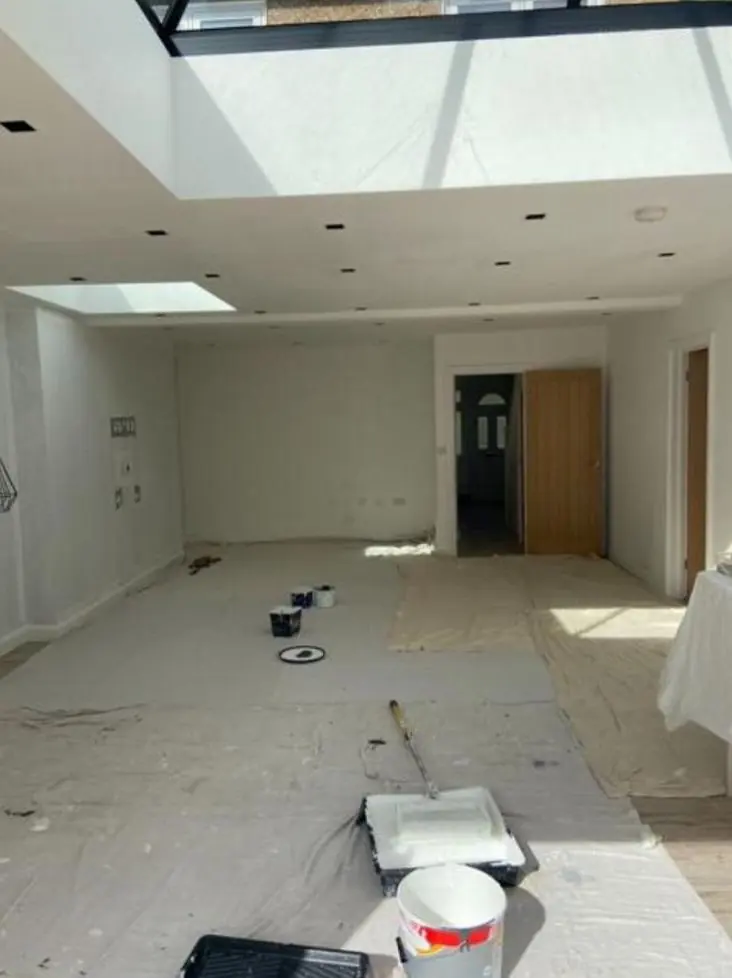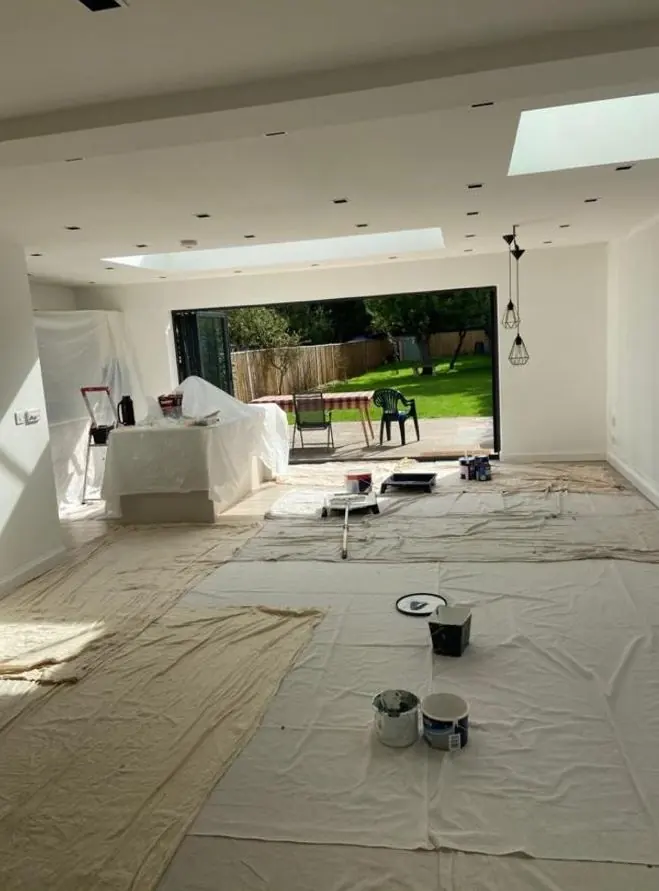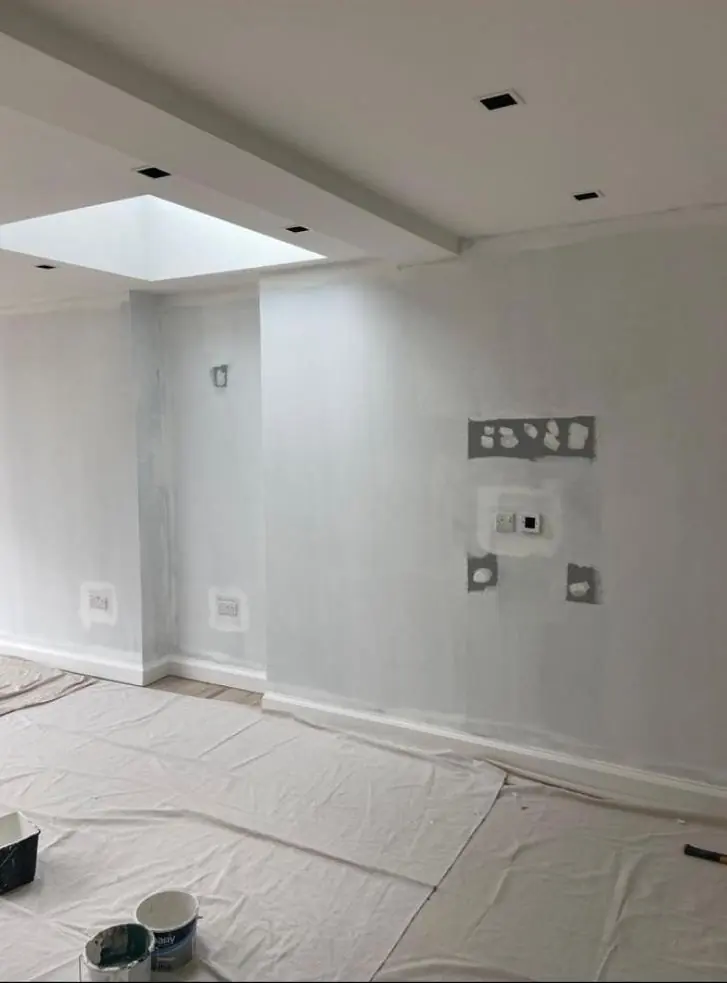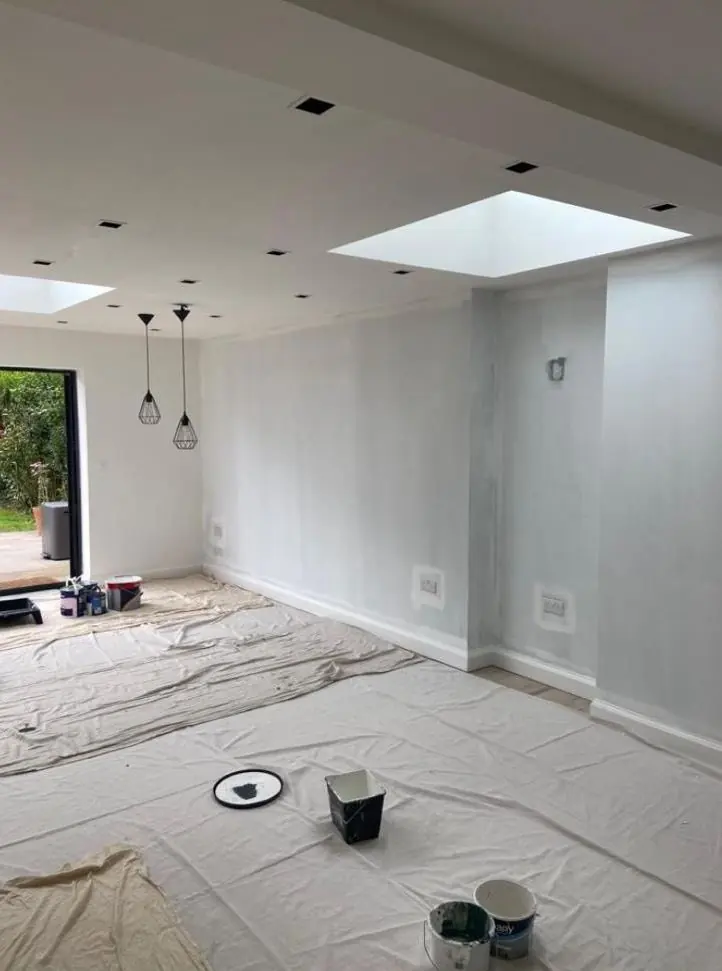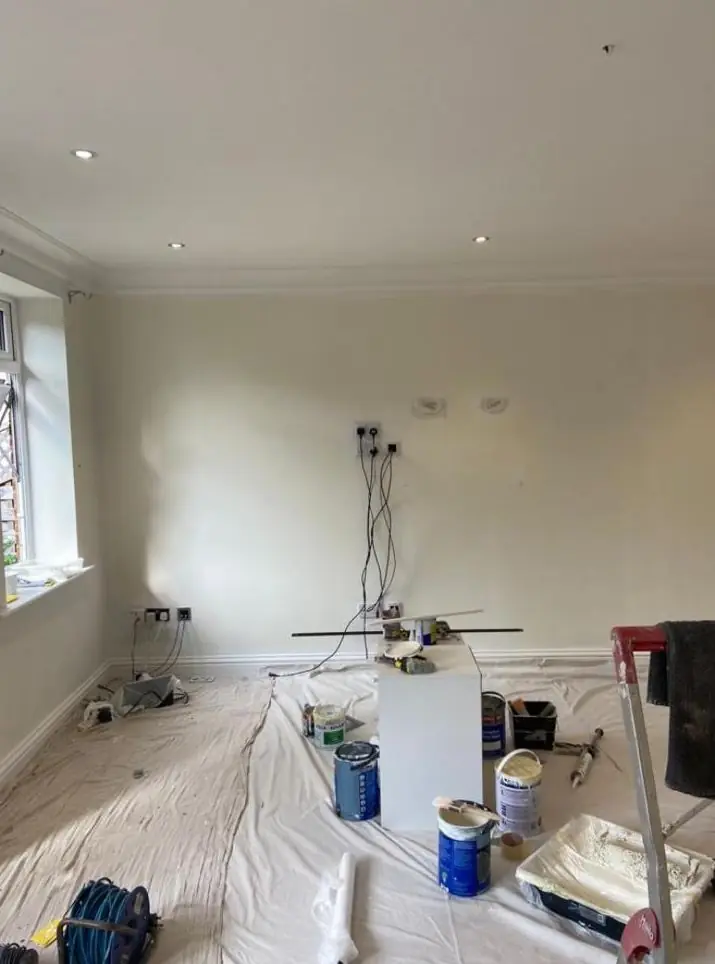
Dean paints new plaster in Weedon Bec, a village 8 miles west of Northampton, once your plasterer or builder has finished. Most of the work here comes from two sources: lower walls replastered after surface-water flooding in the village centre, and extensions on the 20th-century and newer estates.
Replastering after the 2024 and 2025 floods
Since the flood storage reservoir upstream on the River Nene was built in 2002/3, Weedon’s floods have mostly been surface water rather than the river. Even so, surface water reached the village centre and South Street three times in 13 years: November 2012, 24 November 2024 and March 2025. When water gets into a ground-floor room, the usual repair is to hack off the lower plaster, let the masonry dry and replaster, sometimes with a more flood-resilient finish. That leaves a band of new plaster around the bottom of the room and an older, painted wall above it.
Decorating that kind of repair well depends on three things: the new plaster being completely dry, the right first coat on it, and painting the whole wall afterwards so the join disappears. Painting only the new band almost always leaves a visible line.
Why dry means dry in these houses
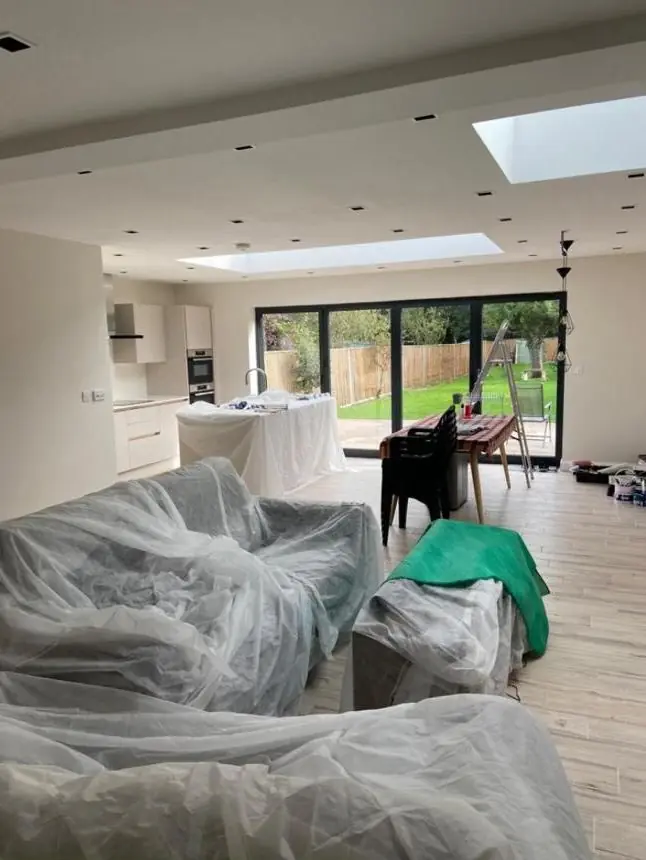
New plaster on a solid stone or old brick wall in the village centre dries more slowly than plaster on plasterboard in a newer house. The wall behind may still hold water from the flood. We check readings at the bottom of the wall, behind radiators and in corners, because those are the last places to dry. Fresh plaster is ready when the colour is even and pale with no darker patches.
When it is ready, the first coat is a mist coat: a thinned, breathable emulsion that soaks into the plaster and gives the finish coats something to grip. Vinyl or silk paints sit on the surface and can peel off new plaster, and they stop the wall drying out any further. Our guide to painting new plaster covers how the mist coat works and how long to wait.
Lime plaster in the listed cottages
Weedon’s older cottages are ironstone and limestone, and walls like these need to breathe. If a repair to one of them uses lime plaster rather than gypsum, it needs a breathable paint such as a clay-based or mineral emulsion, or limewash, not a standard contract matt over a vinyl finish. Ask your plasterer which they have used, as it decides the paint. On a building like the Old Bakehouse on Church Street, limestone with ironstone dressings, a lower-wall repair has to match the wall’s breathability as well as its surface. For listed buildings, of which the parish has 50, it is worth checking the repair approach with West Northamptonshire Council before work starts.
Extensions on the estates
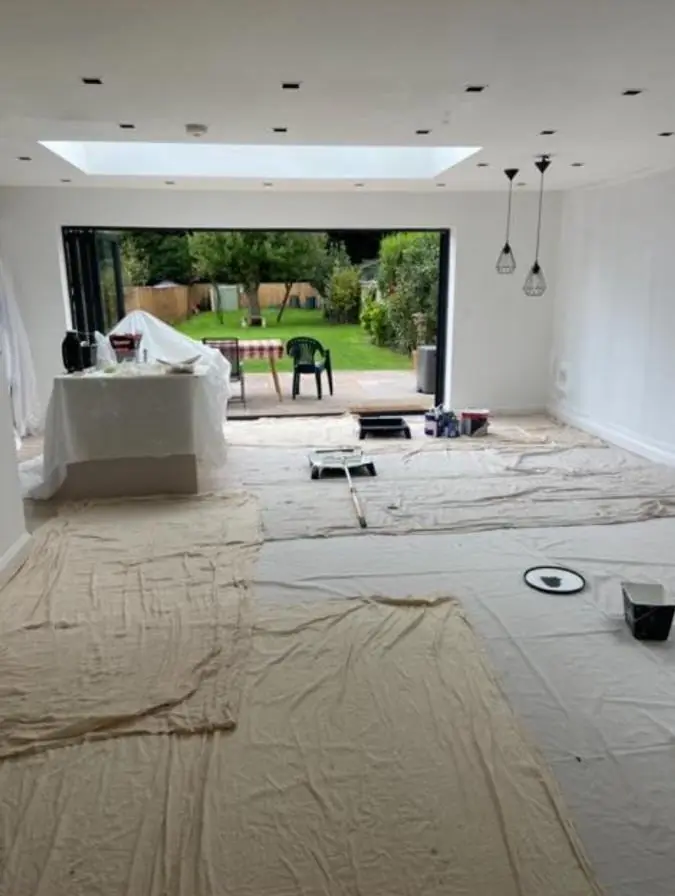
Extensions on the estates around Cavalry Fields, Holm Close and Croft Way, and at Harmans Chase, are typically kitchen-diners, garden rooms or other ground-floor additions. These are usually plasterboard and skim, with new MDF skirtings and architraves. The work after the builder leaves covers:
- A mist coat on every new wall and ceiling once the skim is dry.
- Filling and caulking cracks and trowel marks the mist coat shows up.
- Two finish coats on walls and ceilings, matched to the existing house where they meet.
- Sealing, filling and painting new MDF skirtings, architraves and door linings.
The step-by-step approach for extensions is on our main new plaster and extension painting page. Most estate homes have driveway parking, so getting a tower or podium to a vaulted ceiling is simple. For the narrow streets in the old centre we plan where to unload first. Our Weedon Bec area page covers the village in more detail.
Last updated by Dean, DH Painter & Decorator.