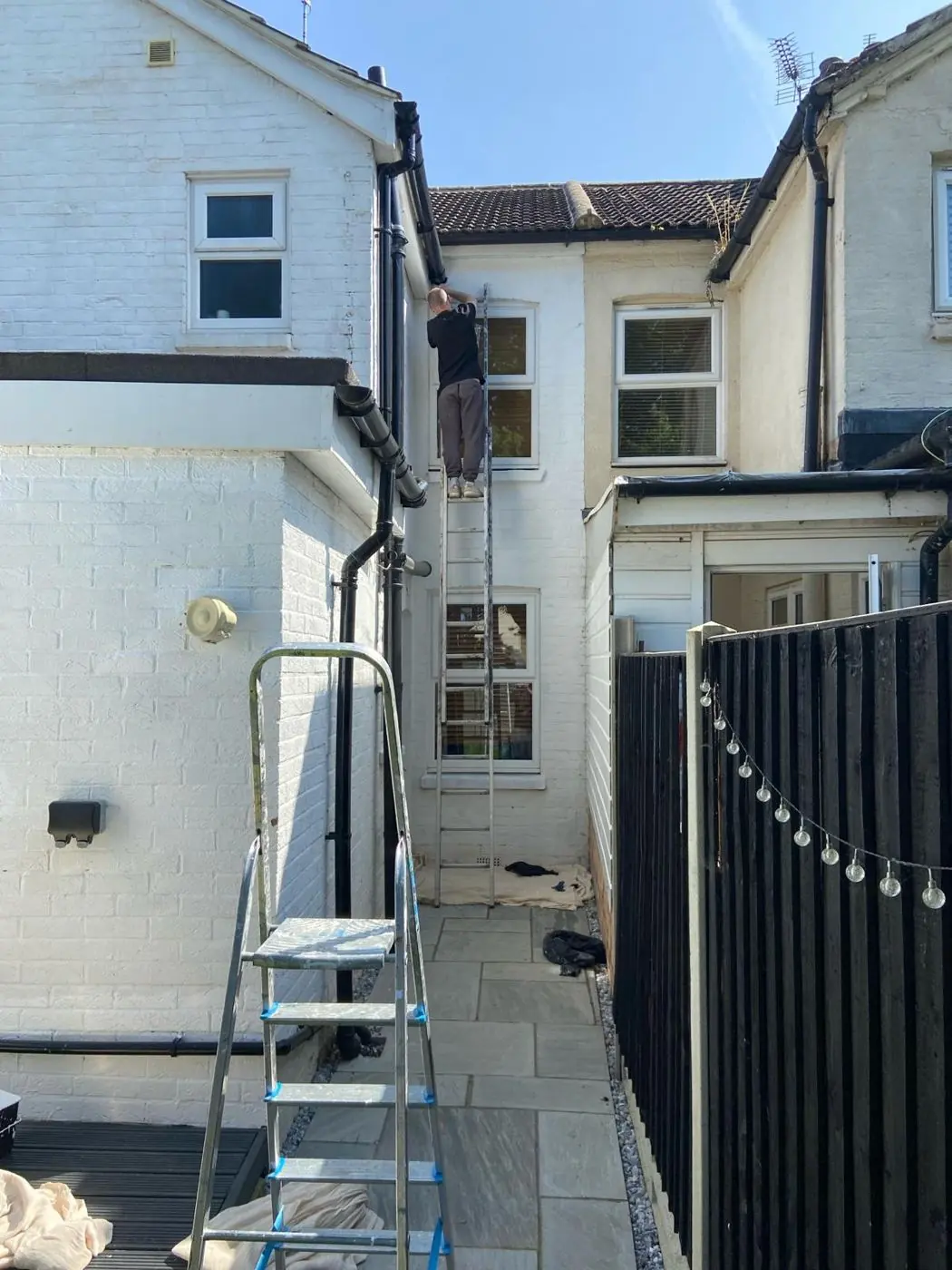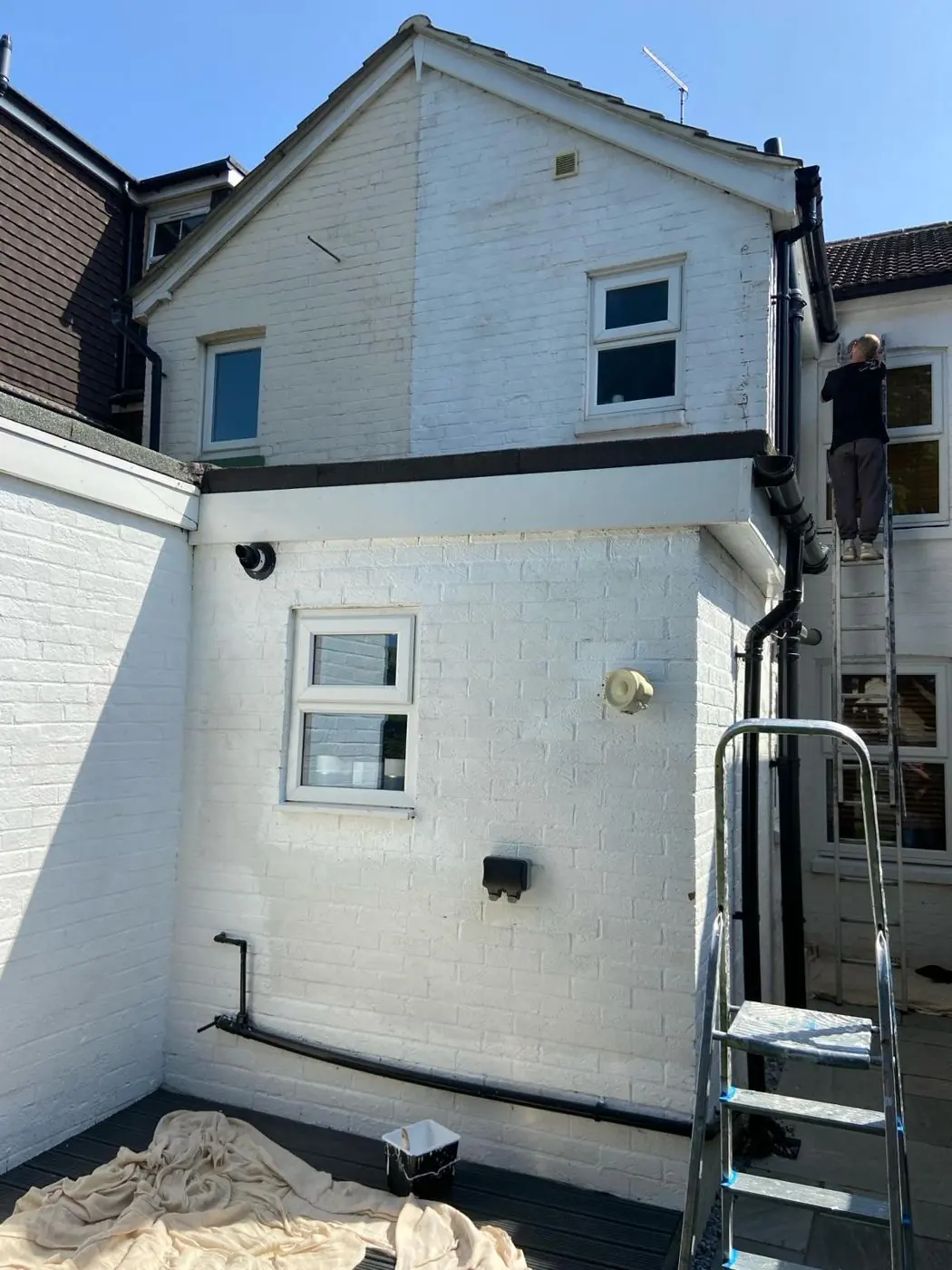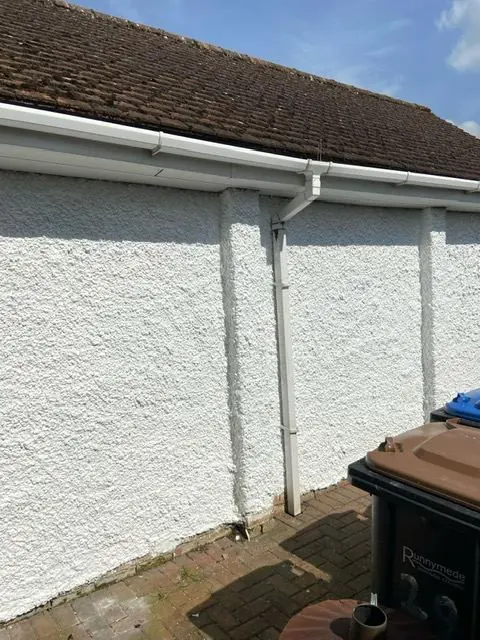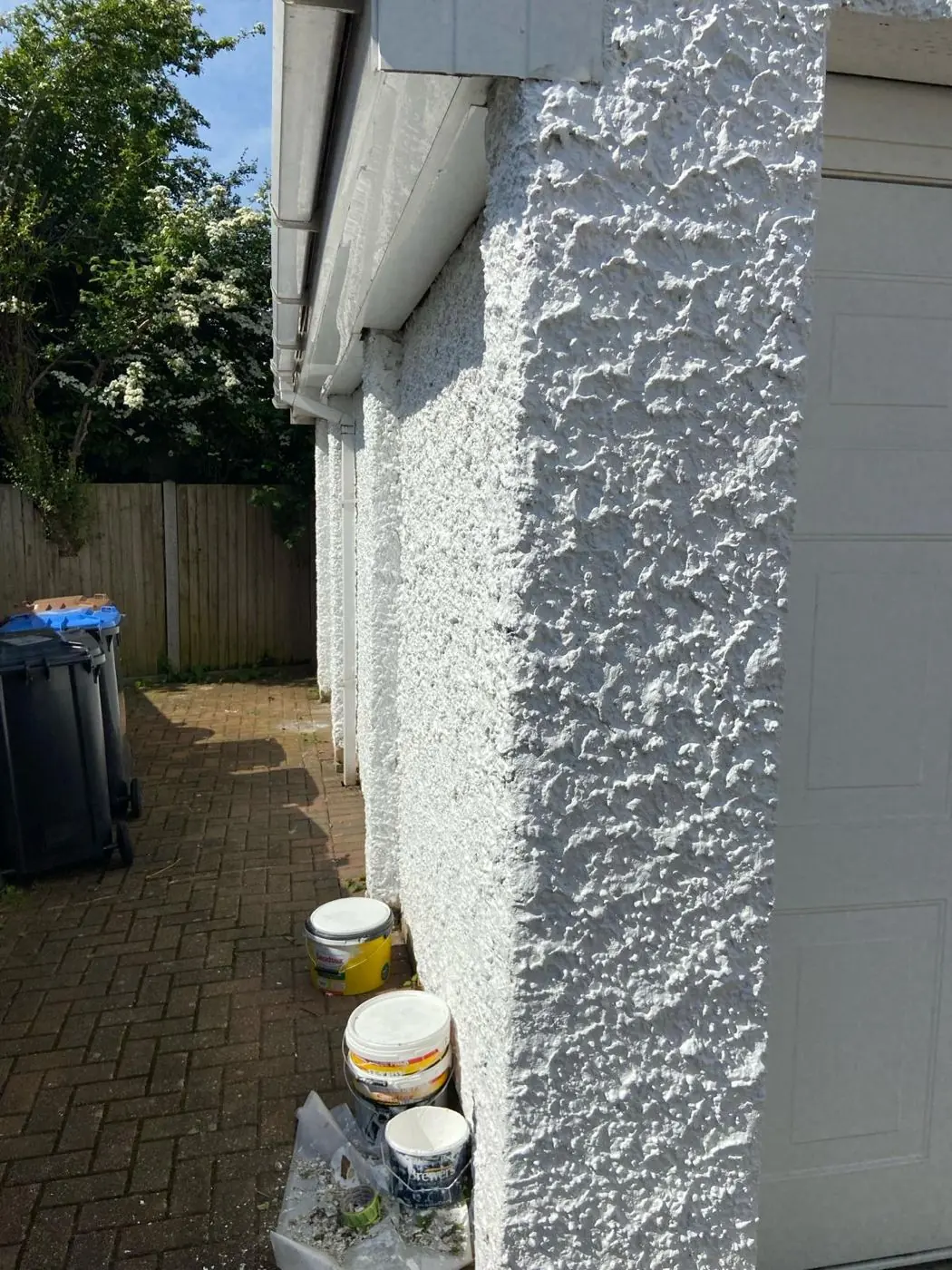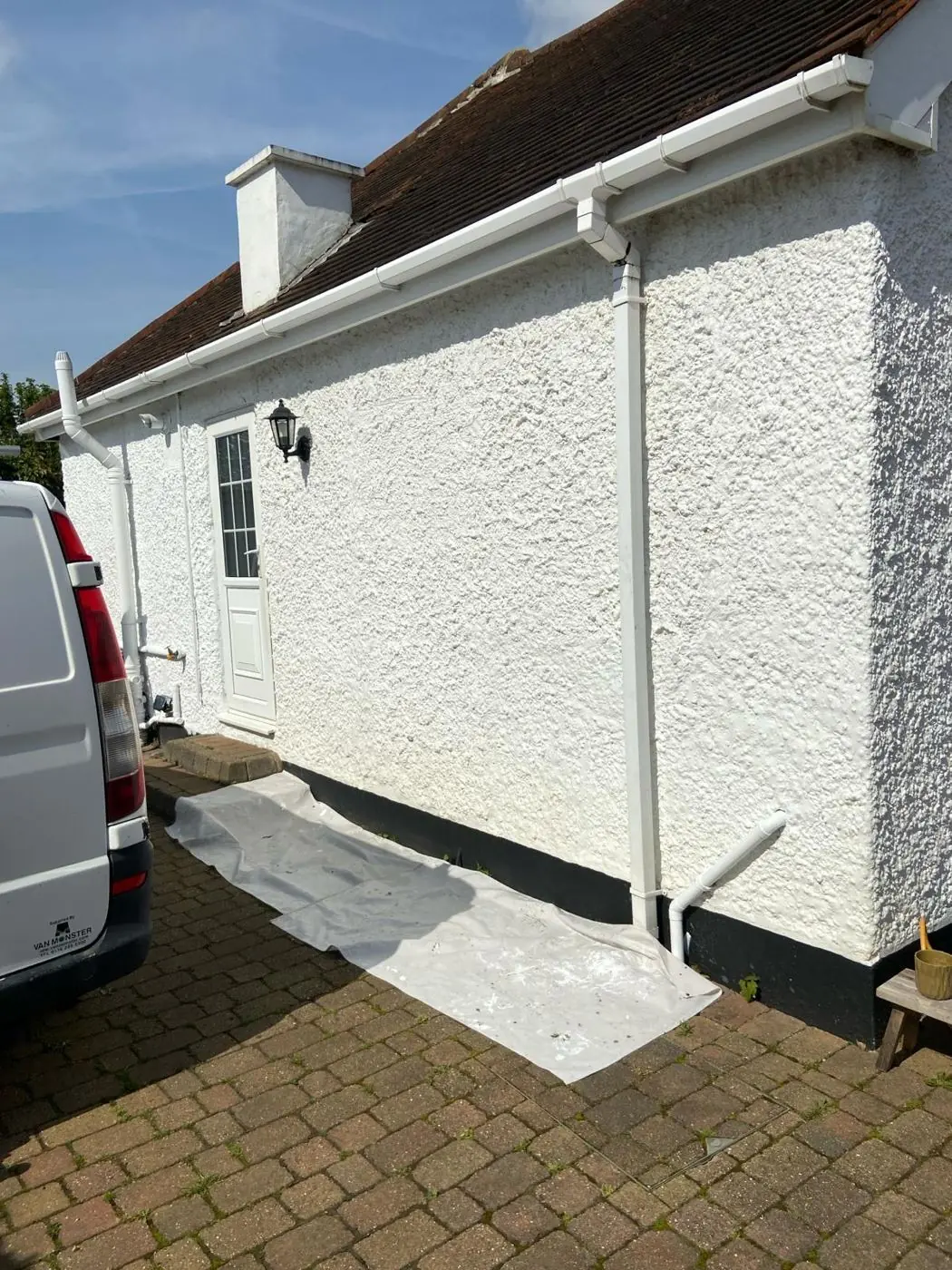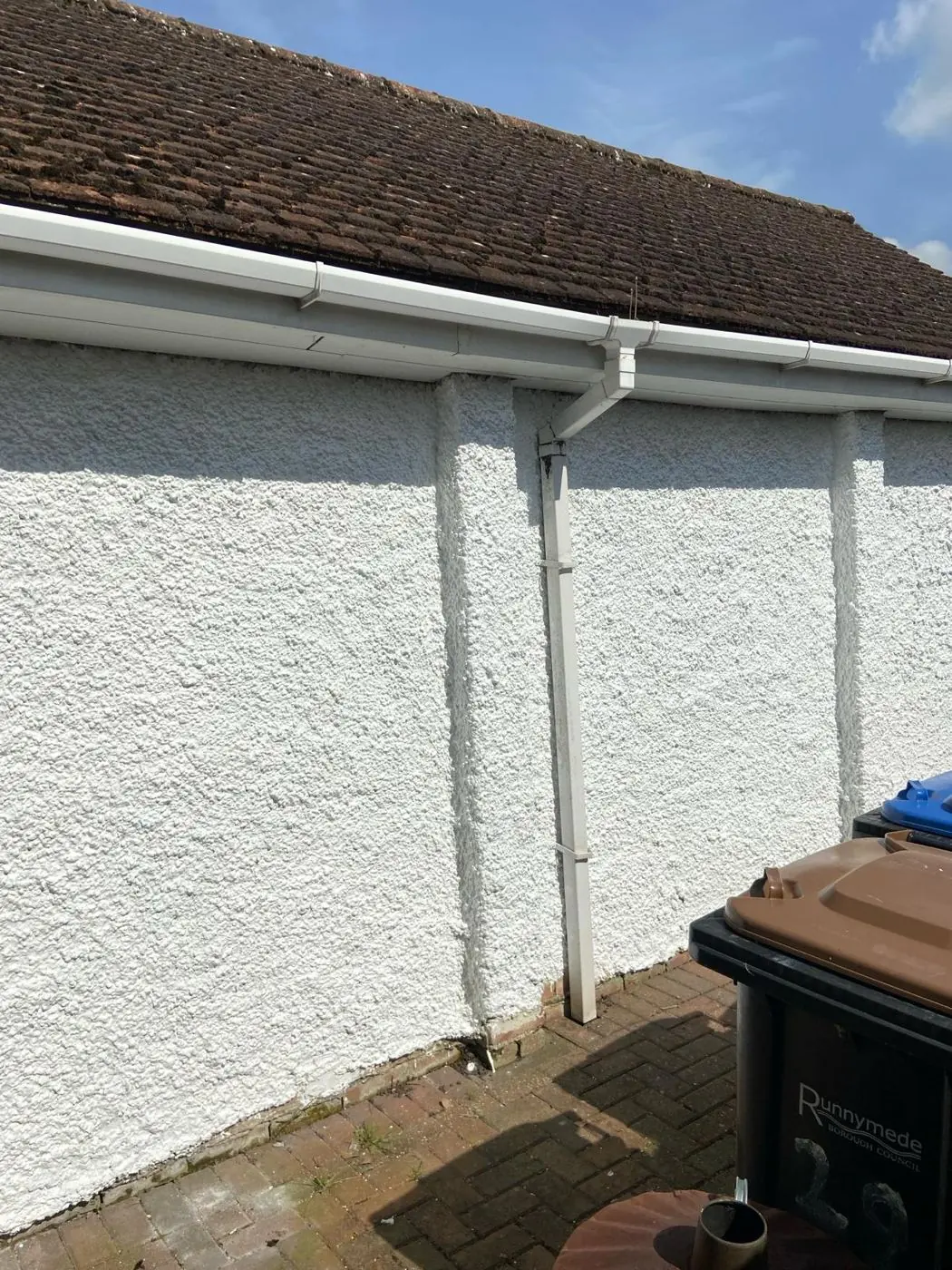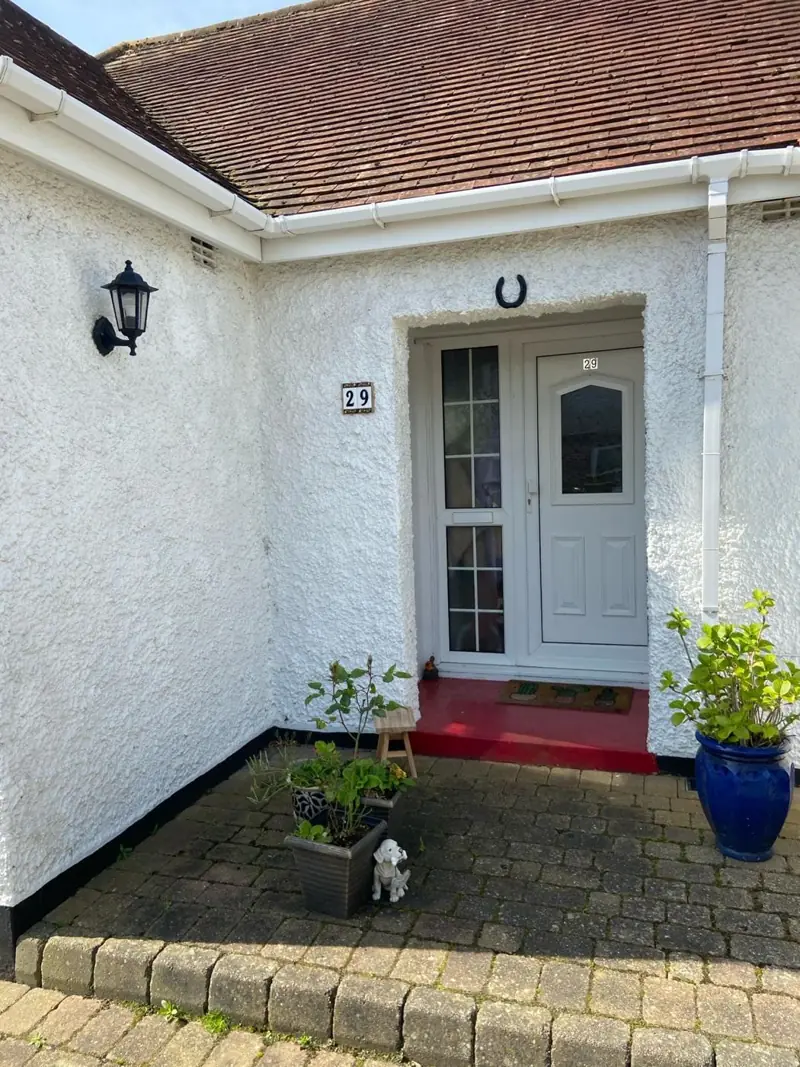
Dean repaints render and masonry in Weedon Bec, NN7, about 8 miles west of Northampton. Most older walls in the village centre need mineral or limewash-compatible paint and gentle cleaning, while render on the later estates can usually take a good breathable masonry paint.
White render is part of Weedon’s character
On the Road Weedon High Street, and through Church Street and West Street, and the painted walls are mostly white or off-white render, set among sandstone, ironstone, old red brick and timber framing. Inside the Weedon Conservation Area, designated on 10 January 1991, that pale render reads as part of the street rather than as a set of separate houses. Repainting it in a brilliant white, a cream with a yellow cast or a grey changes the look of the whole row. We match the existing shade where we can and suggest a sample patch on a less visible wall before committing. For the wider village picture, see our Weedon Bec page.
What goes on old walls, and what doesn’t
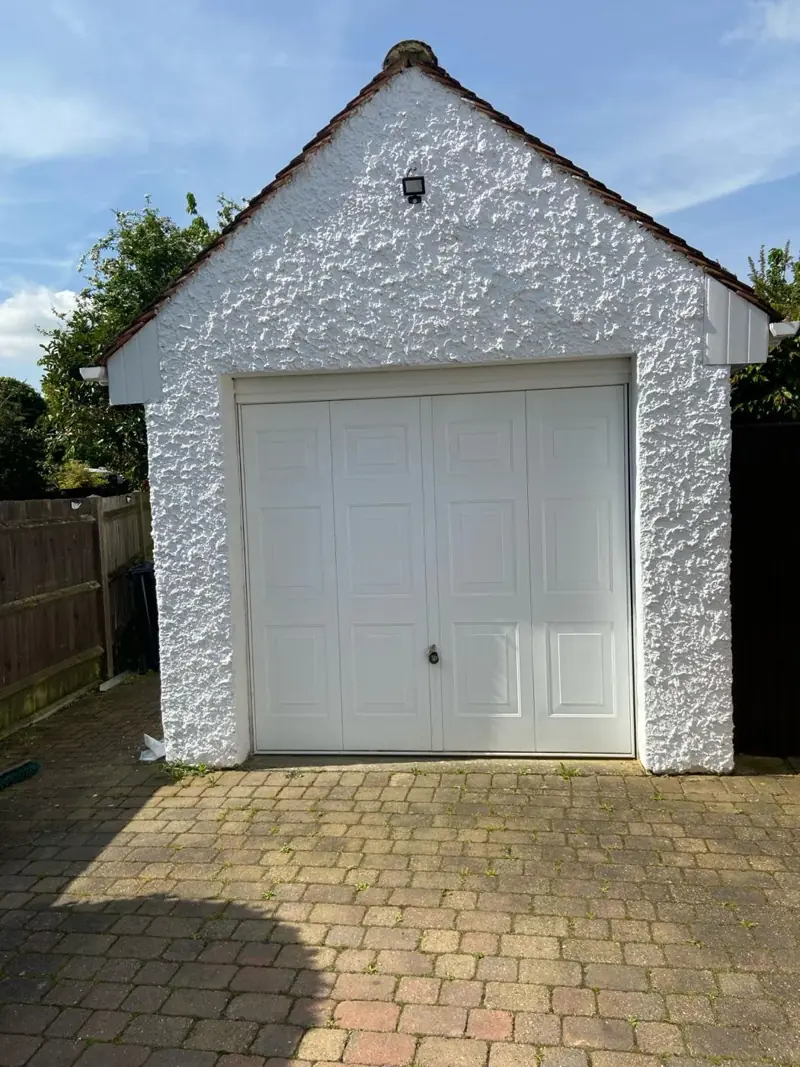
Older render here is likely to be lime-based, laid over solid stone or brick with no cavity. Those walls handle damp by letting it evaporate. A standard acrylic masonry paint forms a tighter film, and moisture that cannot get out builds up behind it until the paint bubbles and the render softens. On these properties we use:
- limewash on surfaces that have been limewashed before, such as the whitewashed addition at the Old Bakehouse on Church Street
- mineral silicate paint on sound lime render where a more durable, flatter finish is wanted
- a breathable masonry paint only where the render is modern cement and the wall can cope with it
Mixing systems is the trap. Mineral paint won’t bond over old acrylic, and limewash won’t hold over either, so we test the existing coating before deciding anything. The render and roughcast guide has more on choosing coatings.
Bare stone stays bare
The coursed ironstone and limestone of cottages such as 2 High Street and The Firs on Queen Street is not something to paint. The same goes for the banded walls and ironstone quoins at the Maltsters Arms. If a wall has stone dressings around a rendered panel, we mask the stone and keep paint off it. Ironstone dressings also decay: the listing for the Old Bakehouse notes decayed dressings, and stone in that state is soft and spalls under pressure. So there is no pressure washing on these walls. We clean with a soft brush and a biocide where there is algae, and we leave alone any stone that is already crumbling, flagging it for a mason instead.
Render on the 20th-century estates
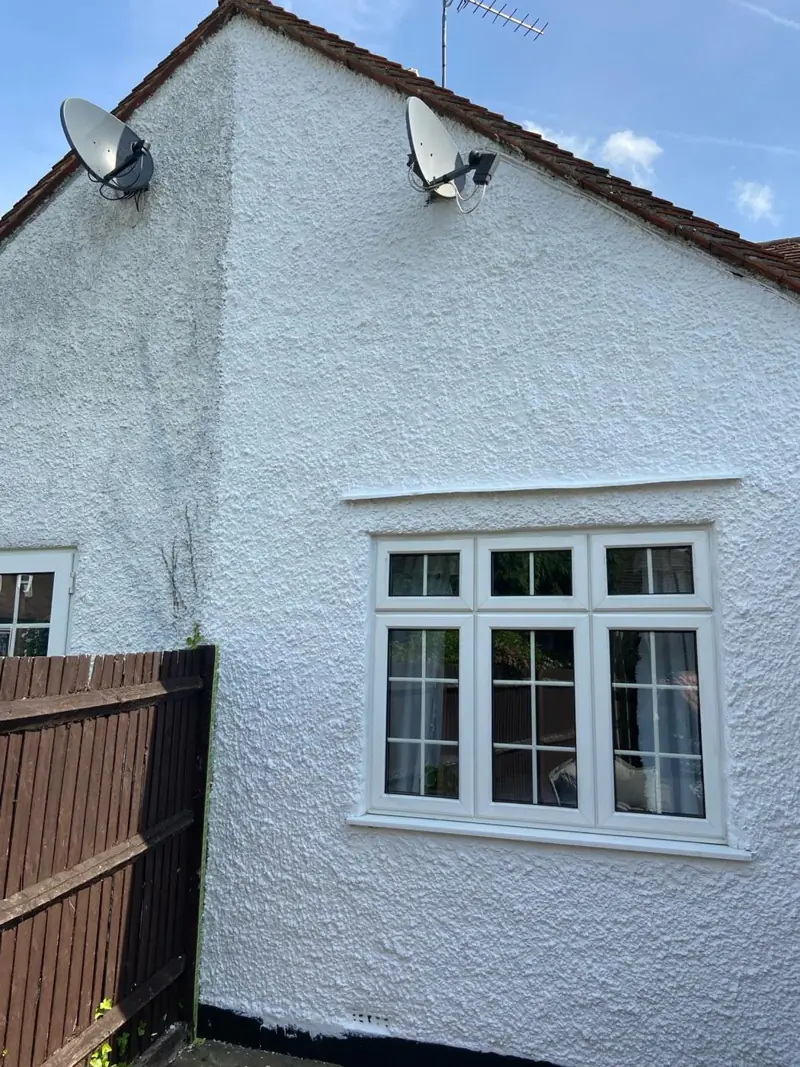
On 20th-century houses around Queens Park, Cavalry Fields or Holm Close, render is more likely to be sand and cement. That is a different job: hairline cracks raked out and filled, chalky areas treated with a stabiliser, and two coats of breathable masonry paint. These streets usually give clear access from a driveway, so a whole elevation can often be done from ladders and a small tower over a few dry days.
Walls in the flood-hit streets
Surface water reached the lower walls of houses in the village centre and on South Street in 2012, 2024 and 2025. Floodwater leaves salts and staining in the base of render, and painting too early traps both. We let the wall dry, brush off salt bloom as it appears, and choose a coating that keeps letting moisture out. The main render and masonry painting page explains our standard preparation in full.
Last updated by Dean, DH Painter & Decorator.