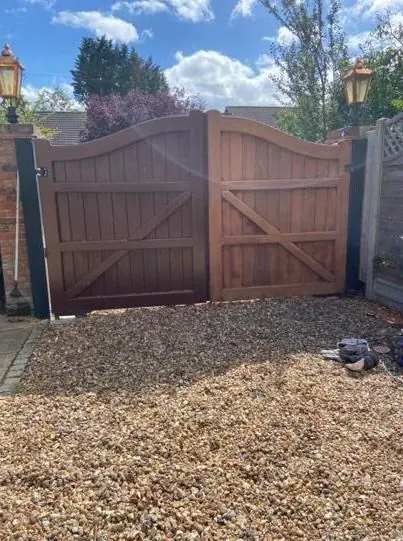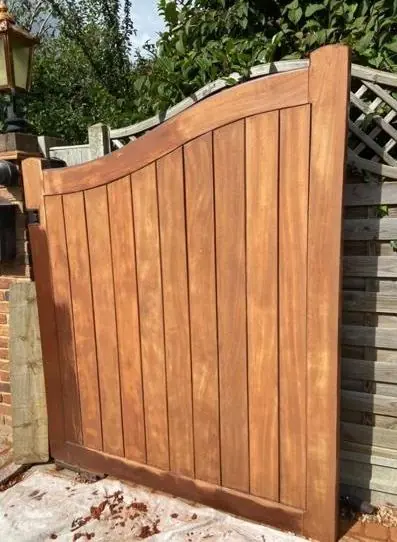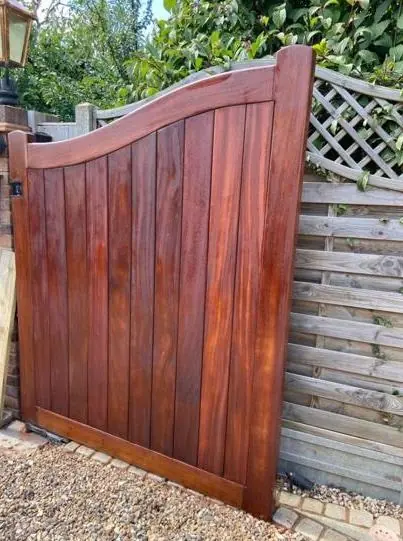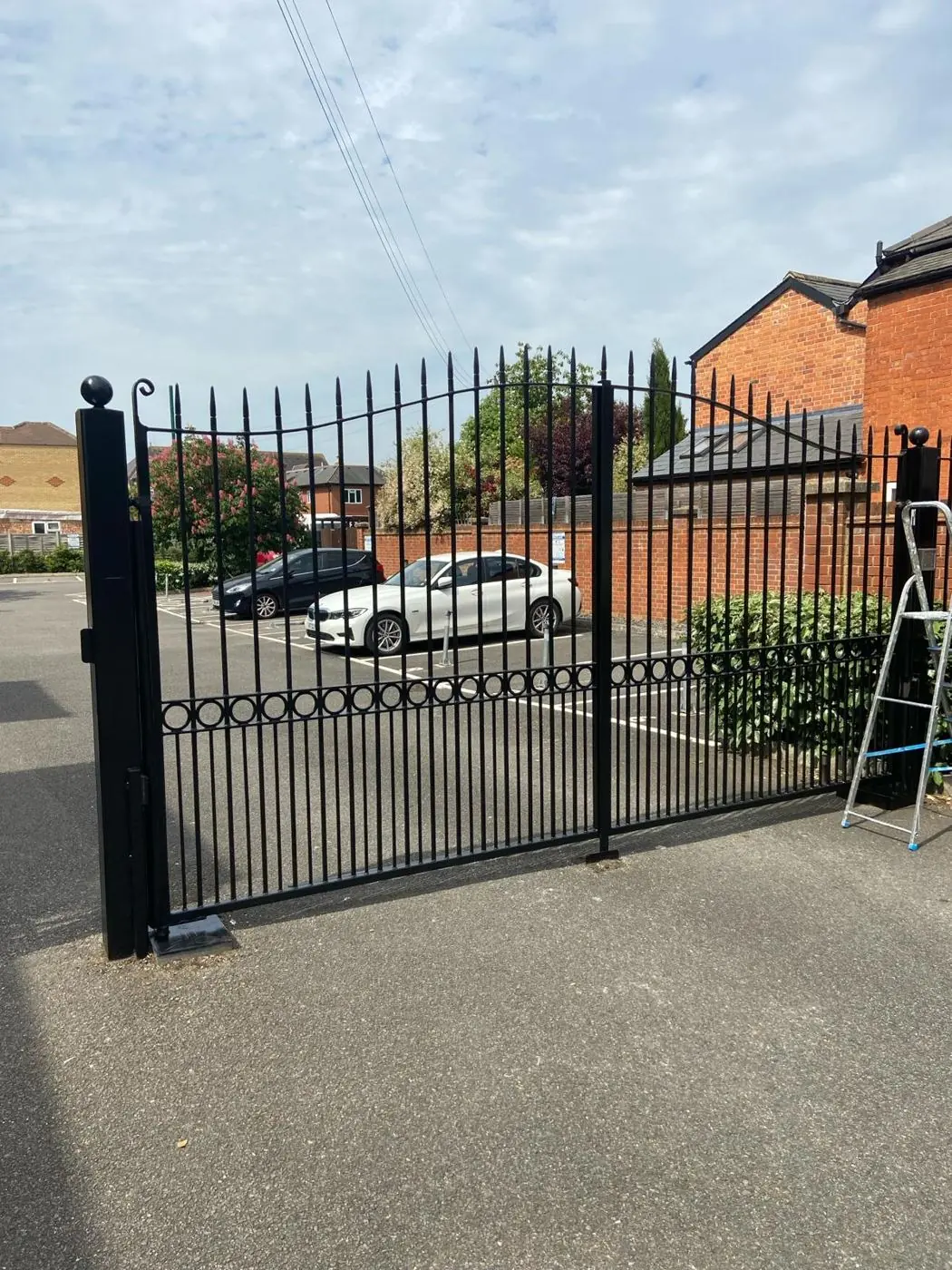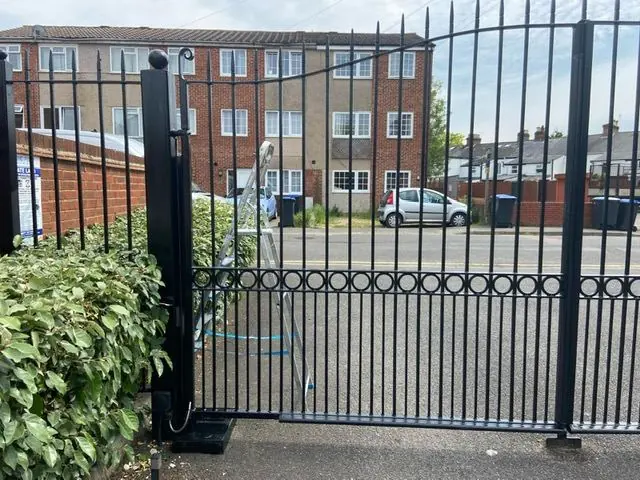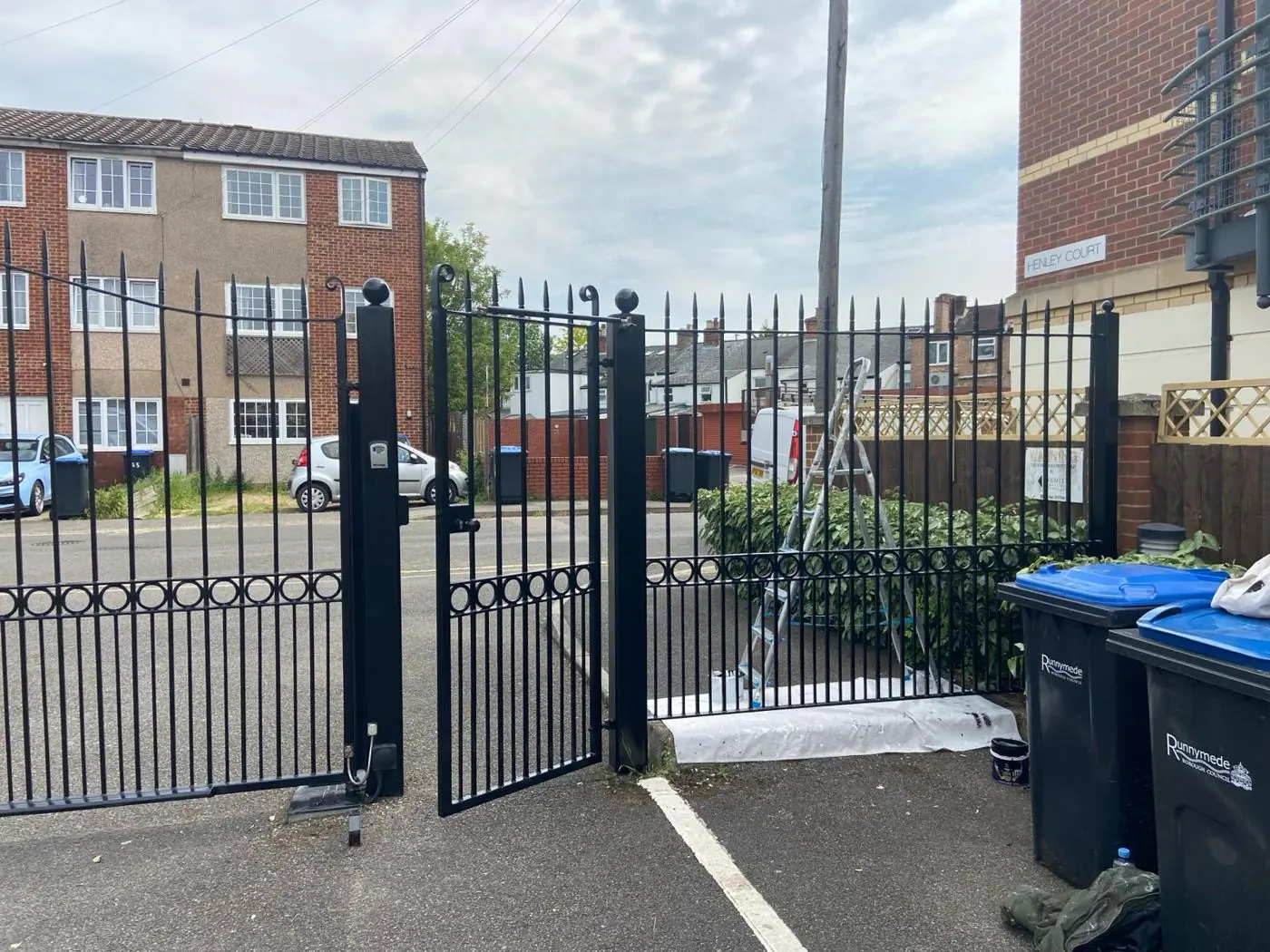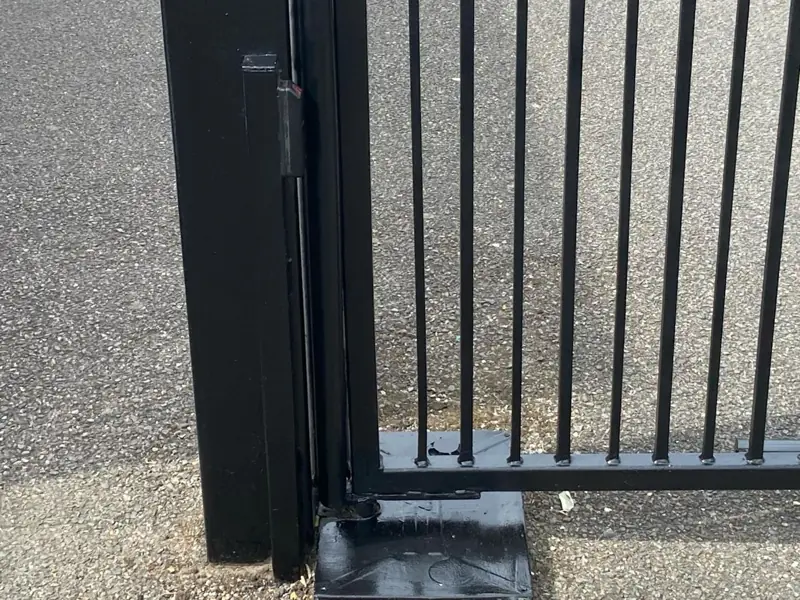
Dean repaints metal gates, railings, handrails and cast-iron rainwater fittings in Weedon Bec, NN7, about 8 miles west of Northampton town centre. Rust is taken back before any paint goes on, and on listed ironwork we check consent questions first.
Ironwork from the depot era
Much of Weedon’s historic ironwork belongs to the Royal Ordnance Depot, built largely in 1805-06. The listing descriptions for the storehouses record cast-iron hoppers and iron handrails, and The Flats on Bridge Street, originally the depot’s fireman’s quarters, are listed Grade II for a building of red brick and cast iron. Cast iron is brittle. It cracks under heavy impact, so we clean it by hand with wire brushes, scrapers and emery cloth rather than hammering off old layers, and we take rust back to firm metal before priming.
Consent comes before colour
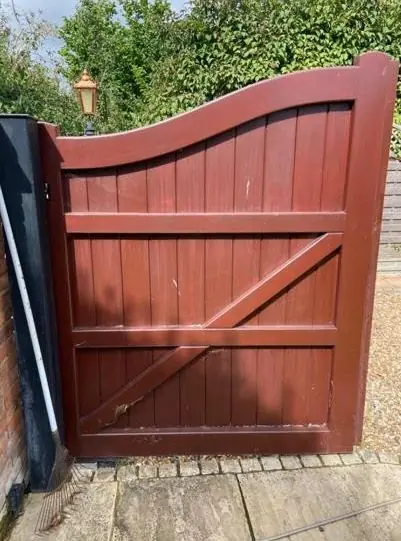
The depot buildings are Grade II* and The Flats are Grade II, and the parish has 50 listed buildings in all. Repainting existing ironwork in the same colour is normally maintenance, but a change of colour, a switch to a different paint type, or stripping historic layers can raise listed building consent questions. On listed or depot-site ironwork we ask the owner or managing agent to confirm the position with West Northamptonshire Council before we start, and we keep to like-for-like finishes. Old layers on 19th-century ironwork may contain lead, which is another reason to scrape and rub down wet rather than burn off.
Front gates and railings around the village
Most metalwork at Weedon homes is less historic: front gates, short runs of railings and handrails to steps. In the older streets you may find cast or wrought iron set into stone or brick; on the estates, mild steel or galvanised steel is more likely. Each needs a different primer:
| Metal | Where you’ll find it | Primer approach |
|---|---|---|
| Cast iron | Older railings, hoppers, rainwater goods | Hand prep, rust-inhibiting metal primer |
| Wrought iron | Older gates in the village centre | Remove loose layers, prime bare spots |
| Mild steel | Modern fabricated gates | Back to bright metal where rusted, then primer |
| Galvanised steel | Newer estate gates and rails | Primer made for galvanised surfaces |
Where railings are leaded or bedded into stone, we watch for rust swelling at the base, which can crack the stone around it. That is worth catching early. Farm gates in Upper Weedon and gates up the southern slopes towards Round Hill take more weather than those in sheltered gardens, so we add an extra coat to top rails and any horizontal bars where water sits.
Damp feet in the flood-hit streets
Metal at ground level suffers wherever water lingers. Five streets in the centre, from Bridge Street to South Street, flooded in 2012, 2024 and 2025, and gates and railings that stood in water tend to rust first at the feet and hinge pins. We pay most attention to those points, working rust treatment into pitting that can’t be fully removed and building up primer before the top coats.
Small tools, small van
Ironwork painting is hand-tool work, which suits the village: a small van gets past the viaduct pinch points, and there is no need for large equipment on narrow streets. Each gate is sheeted underneath and the surrounding stone masked. Gates come off their hinges only where they lift off easily; otherwise they are painted in place, with hinge pins worked free and greased afterwards. Our main metal gate and railing painting page describes the preparation stages in detail, and the Weedon Bec area page covers the village’s other building types.
Last updated by Dean, DH Painter & Decorator.