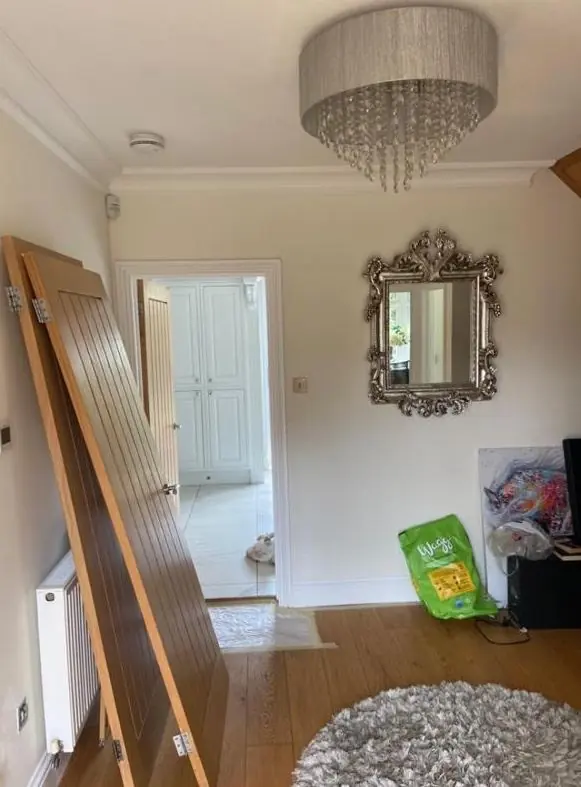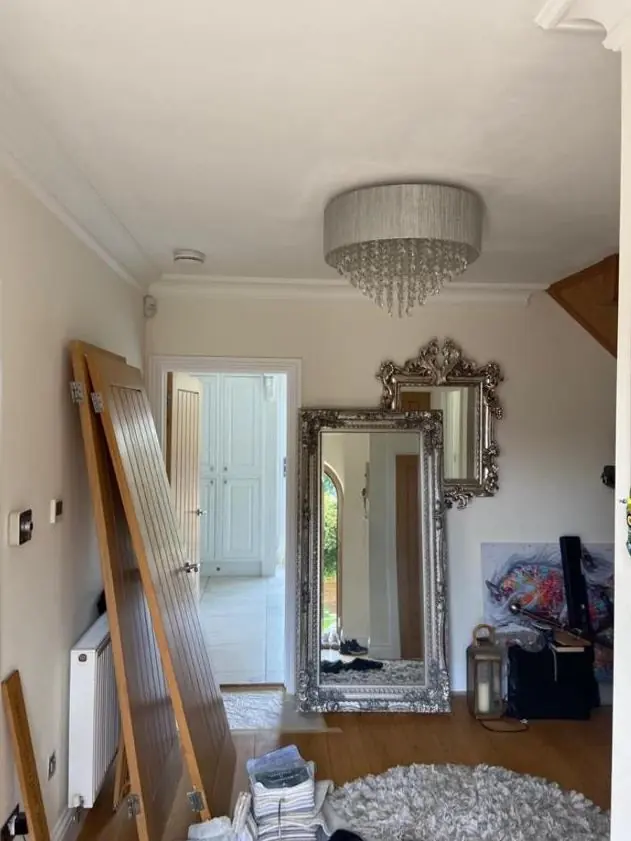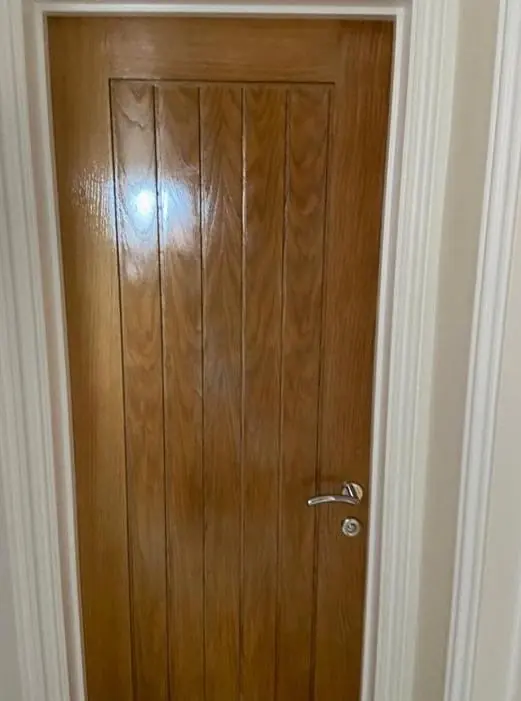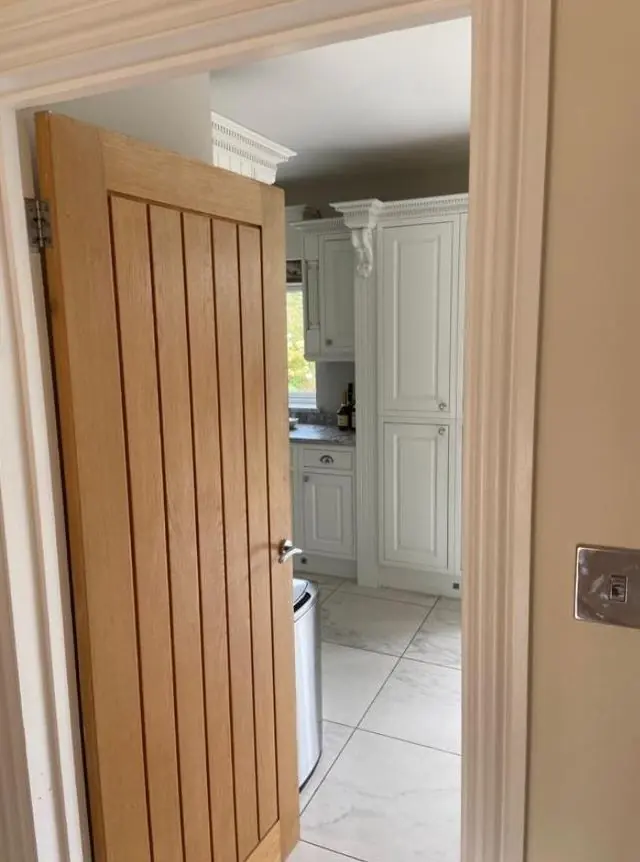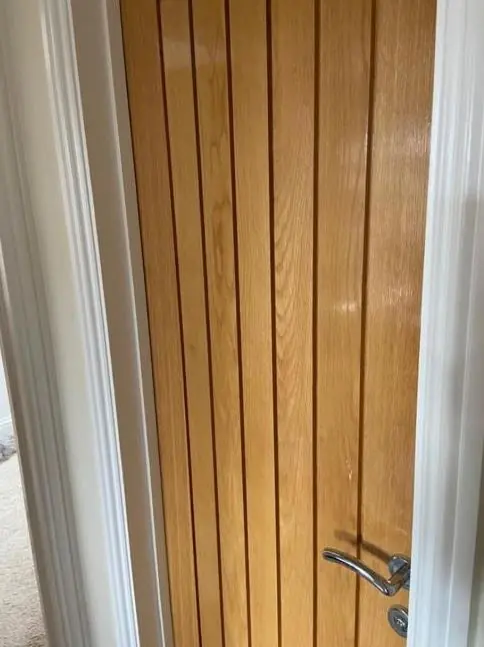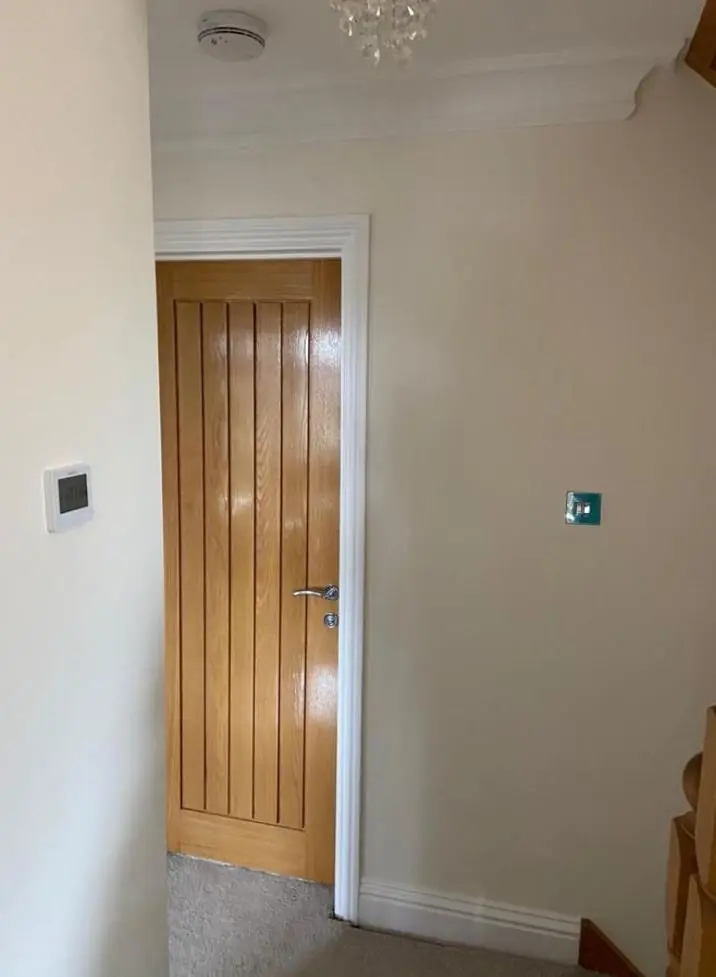
Dean paints doors, skirtings, frames, sashes and casements for homes in Nether Heyford and Upper Heyford, about 6 miles west of Northampton town centre. The work splits between traditional joinery in the conservation area cottages and the standard panelled doors and skirtings in the post-1960 estates.
Two kinds of joinery in one village
Woodwork in the Heyfords falls into two quite separate groups, and the approach for each is different. Around Church Street, Furnace Lane and The Green, the cottages and houses date from the late 17th and 18th centuries. Their joinery is timber casements under wood or stone lintels, ledged plank doors, and on the grander houses multi-pane sashes. The other group is the housing that more than doubled the village between the mid 1960s and early 1990s, on the Wilsons Estate, around Brook Farm and Watery Lane, and at Winston Close, Ridgeway Furlong and Roberts Field. There the doors are standard panelled or flush types, the skirtings are machined softwood, and the job is usually a satin or eggshell refresh over old gloss.
We cover both from our Northampton base. The general preparation method, from degreasing handle areas to sanding between coats, is set out on our door and skirting painting page, so this page sticks to what is particular to the Heyfords.
Sashes, casements and plank doors in the conservation area
Twenty of the buildings inside the village’s conservation boundary are listed, and several of them are defined as much by their windows and doors as their stone. The Manor House has 12-pane sashes in ironstone ashlar, White Hall at Stowehill has sashes in coursed limestone, and 22 Church Street is listed too. Heyford Lodge, the 1850 rectory on Church Lane, and the Bliss Charity School House on The Green have plank doors with ornamental hinges.
That kind of joinery wants oil-based or microporous timber coatings that let the wood move and breathe, rather than a thick modern gloss that cracks at the joints. Putty and joints on old sashes often need attention before any paint goes on; painting over failed putty only hides the problem for a season. On plank doors we work the paint into the board edges and keep the ornamental ironwork clean, masking or painting it separately rather than flooding it with the door colour.
If a listed building’s joinery is going to change colour or finish, that may need listed building consent from West Northamptonshire Council, so we raise it at the quote stage rather than after the first coat.
Panelled doors and skirtings on the post-1960 estates
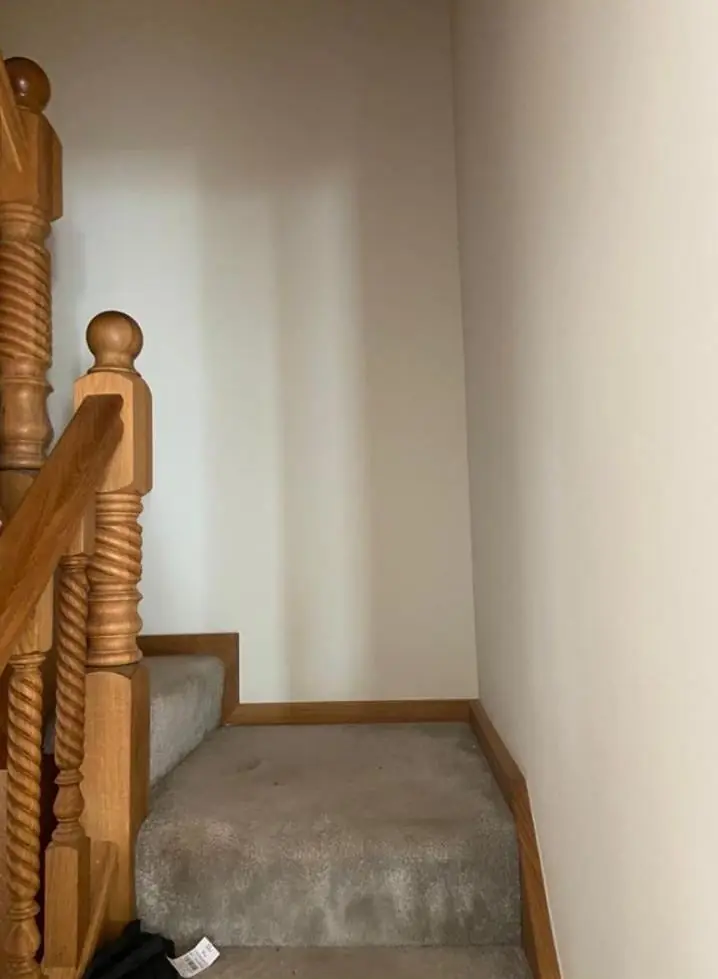
The neighbourhood plan records that most homes here are three-bedroom, and 46% were detached in 2011. In a detached three-bedroom house of that era, a full woodwork job usually means every internal door and frame, the skirtings through hall, landing and bedrooms, and often a staircase spindle run. Original doors and skirtings from the 1960s to 1990s often carry several layers of yellowed oil gloss, and changing to a water-based satin means proper keying and an adhesion primer so the new coat does not peel off the old.
Homes whose gardens back onto Heyford Brook behind Winston Close, Ridgeway Furlong and Roberts Field can have damp at floor level. Skirtings on outside walls in those houses are worth checking for soft timber or lifting paint along the bottom edge before anyone recoats them.
Thatch, tight rooms and rear doors
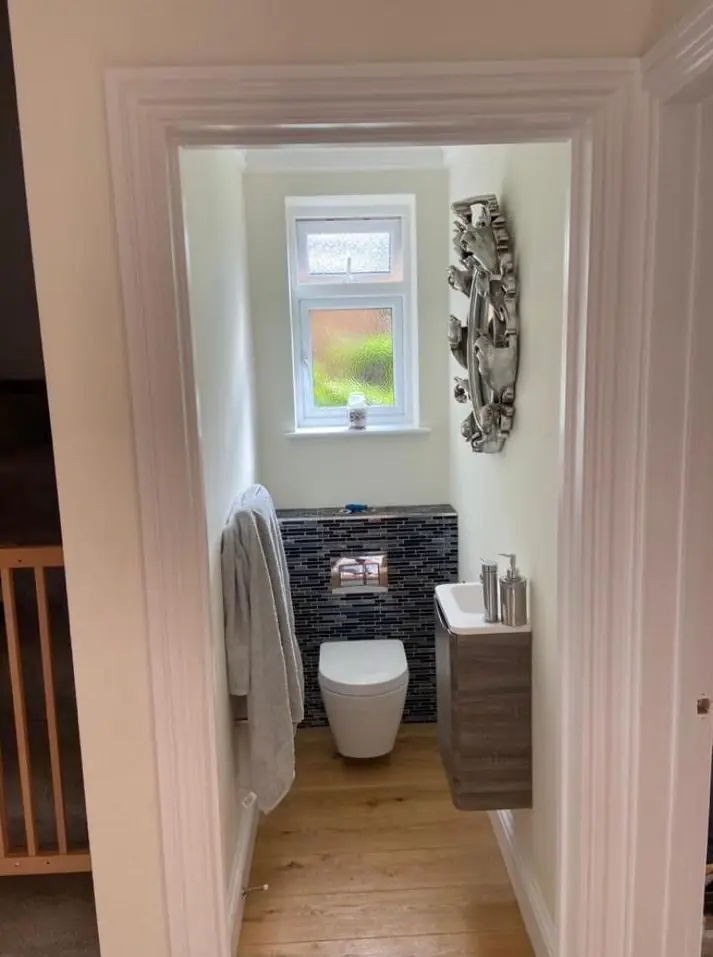
Some cottages are still thatched, 1 Furnace Lane among them. Near thatched eaves we never strip with a heat gun or flame; old paint comes off by scraping and sanding with dust control instead. Inside the two-storey-with-attic cottages the rooms are small, door heads are low and walls are uneven, so skirtings rarely run true and need careful caulking where they meet the plaster.
At 17 The Green the way in is round the back, and plenty of Heyford homes sit off a snicket or ginnel with no road to the door. We plan where to set up a cutting and sanding area before the job starts. For other work in the village see our Heyfords area page, and for budgeting read the painter and decorator cost guide.
Last updated by Dean, DH Painter & Decorator.