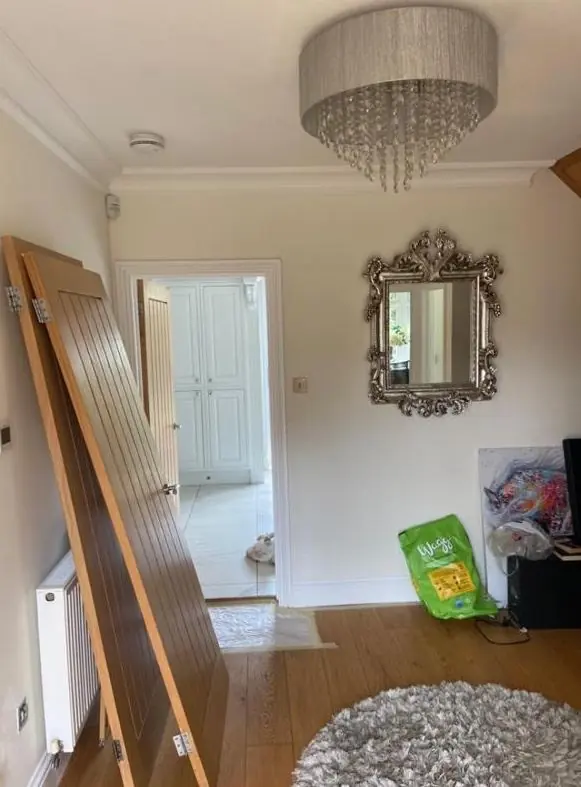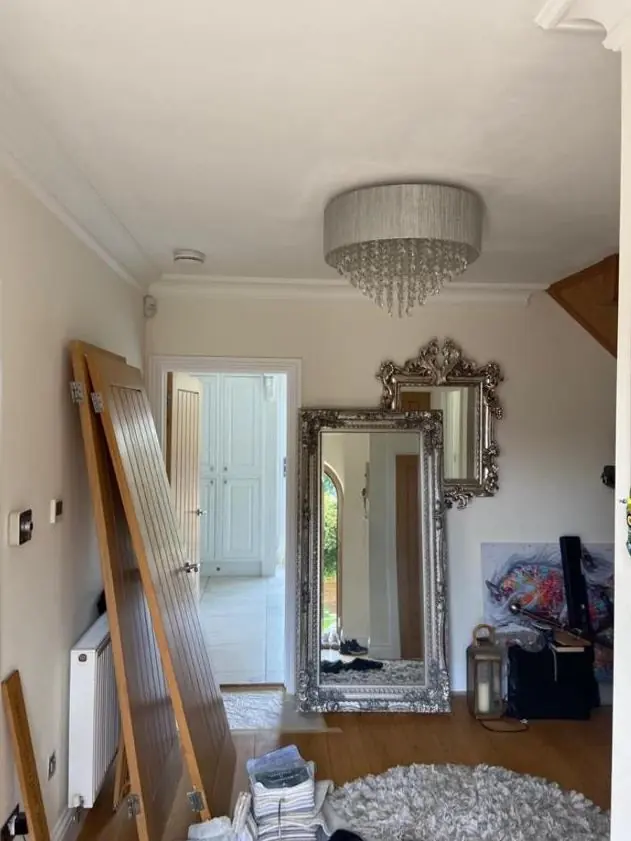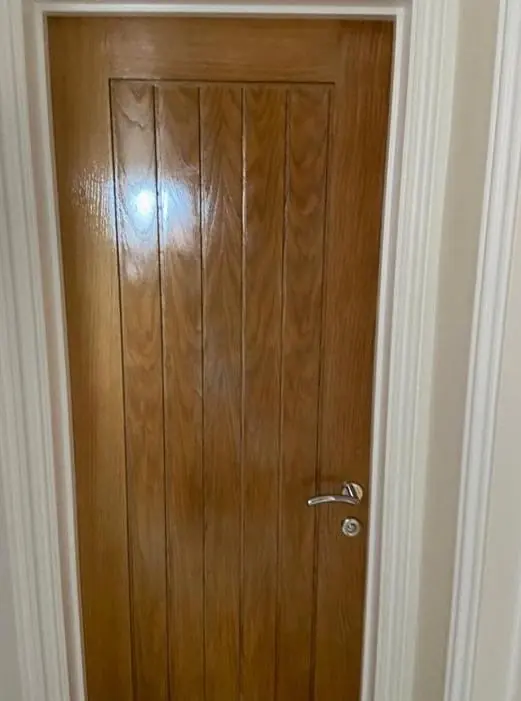
DH Painter & Decorator paints doors, skirtings, frames and architraves across Pattishall parish, including Eastcote, Astcote and Fosters Booth. We travel about 6.5 miles south-west from Northampton, and the paint system we use depends on whether the woodwork is centuries old or fitted with a post-war house.
Old joinery downhill, standard joinery uphill
Pattishall village has two halves. The older part sits down the hill; Kirkholme in Church Street, for example, is dated 1648. The 20th-century housing sits on the higher ground above it. Walk from one to the other and the woodwork changes completely. Downhill you find heavy plank doors, panelled doors that have been painted many times over, and window boards set into thick limestone walls. Uphill the skirtings, architraves and internal doors are machine-made, square and much easier to prepare.
The same split runs through the rest of the parish. Eastcote has several listed former farmhouses on Gayton Road, Astcote has Cromwell House and 51 High Street, and Fosters Booth has a 17th-century ironstone building on the A5. Before quoting, Dean asks which hamlet you live in and roughly how old the house is, because that tells him most of what the woodwork will need.
Old doors in the listed farmhouses and cottages
The parish has 22 listed entries. Listing descriptions mention part-glazed panelled doors at the 18th- and 19th-century farmhouses and inns on Gayton Road, and timber casements under wood lintels on the 17th-century houses. Doors in buildings like these have usually built up many layers of paint, often including old oil gloss that has crazed or gone brittle. Our approach is:
- Test for lead in old paint layers before sanding, and use wet abrasives or careful scraping where it is present, never dry power sanding.
- Take back only loose and flaking paint. The aim is a sound surface, not bare wood, so the door keeps its age.
- Fill splits in old boards with flexible filler that can move with the timber.
- Finish in a breathable, oil-based or linseed-type paint that suits old timber, applied by brush.
On a listed building, changing the colour or finish of the joinery can need the council’s approval under listed building rules. Repainting like for like inside is normally simple, but if you plan a strong colour change on a front door or on features named in the listing, check with the council first. None of the parish’s settlements appears on the council’s conservation area list, so unlisted homes don’t face that extra layer of control.
Beams, bressumers and timber we leave alone
Several Pattishall listings record chamfered and spine beams indoors, along with bressumers. These aren’t skirtings, but they sit in the same rooms and decide how we handle everything around them. Old beams usually should not be glossed or sealed with modern varnish. If a beam has been painted before and the owner wants it kept that way, we use a breathable finish. If it is bare, we mask it off and cut the walls and woodwork in around it. Skirtings in these rooms often run along uneven limestone walls, so expect to see gaps along the top edge that don’t follow a straight line. We fill those gaps by hand, because rigid caulk tends to crack where old walls move.
Post-war skirtings and doors on the higher ground
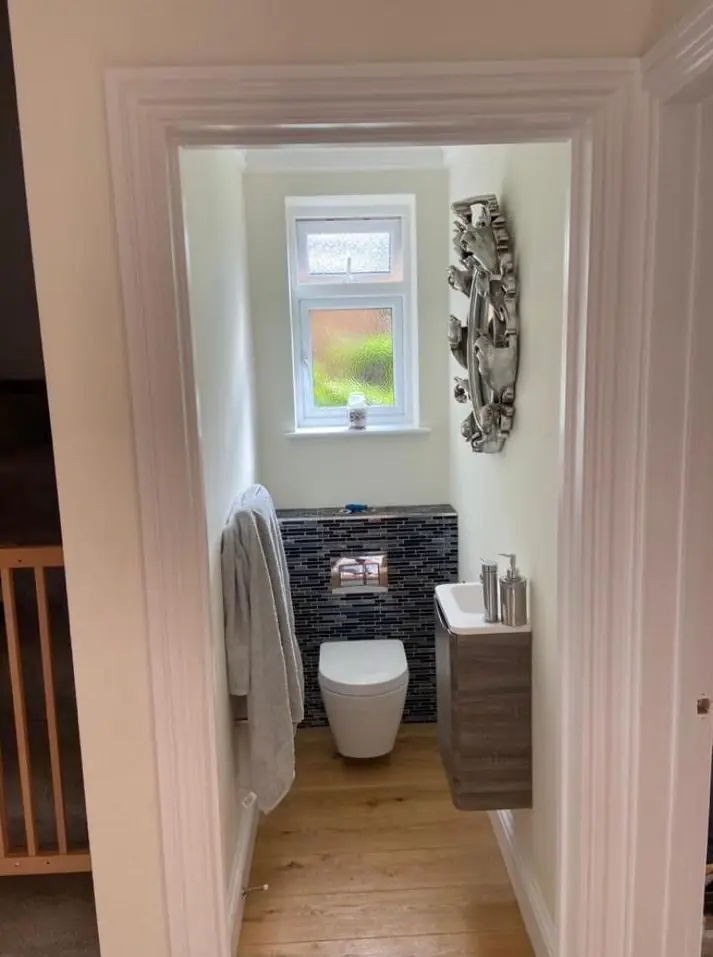
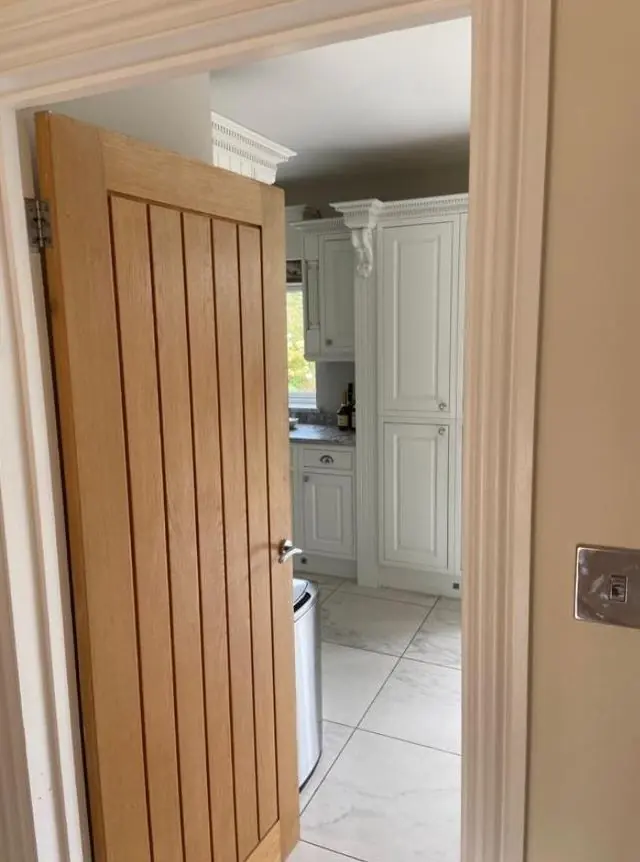
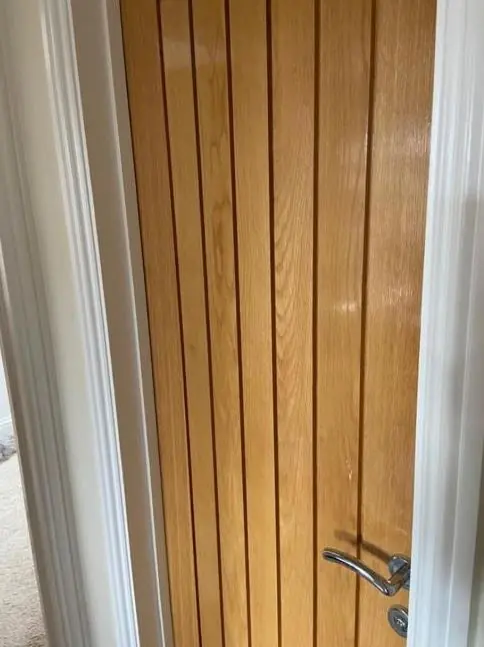
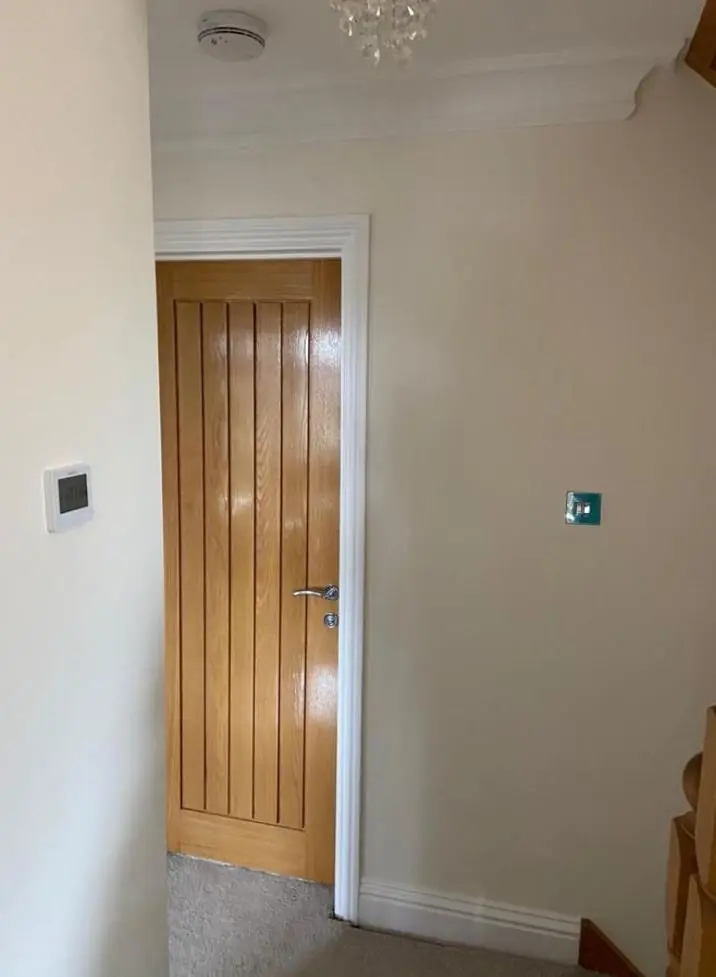
The 20th-century homes above the old village are where most routine woodwork repainting happens. Here the work is familiar: degrease handle areas, sand back yellowed gloss, fill dents, prime any bare patches, then apply two coats of water-based satin or eggshell that stays white. A hallway, a landing and a set of internal doors can often be painted in a few days, and we can do the woodwork on its own or as part of a full redecoration. Our main door and skirting painting page explains the full preparation sequence and the finishes we use.
For a rough idea of what affects cost, such as the number of doors, how many paint layers are on them and whether old gloss needs stripping, read our painter and decorator cost guide. For a written figure, ring 07539 779 036 and Dean will come out to look at the woodwork.
Last updated by Dean, DH Painter & Decorator.