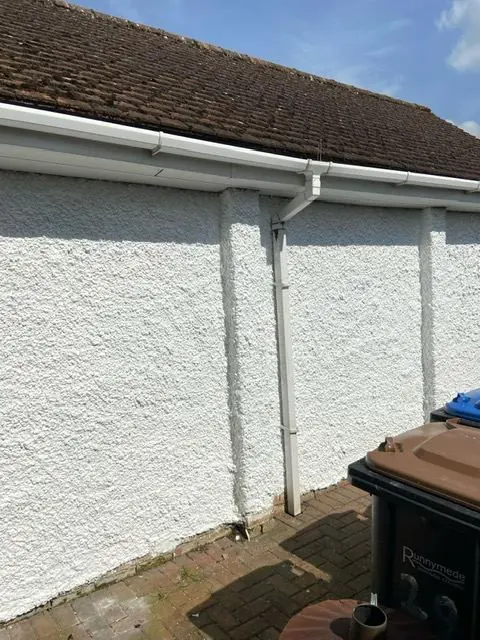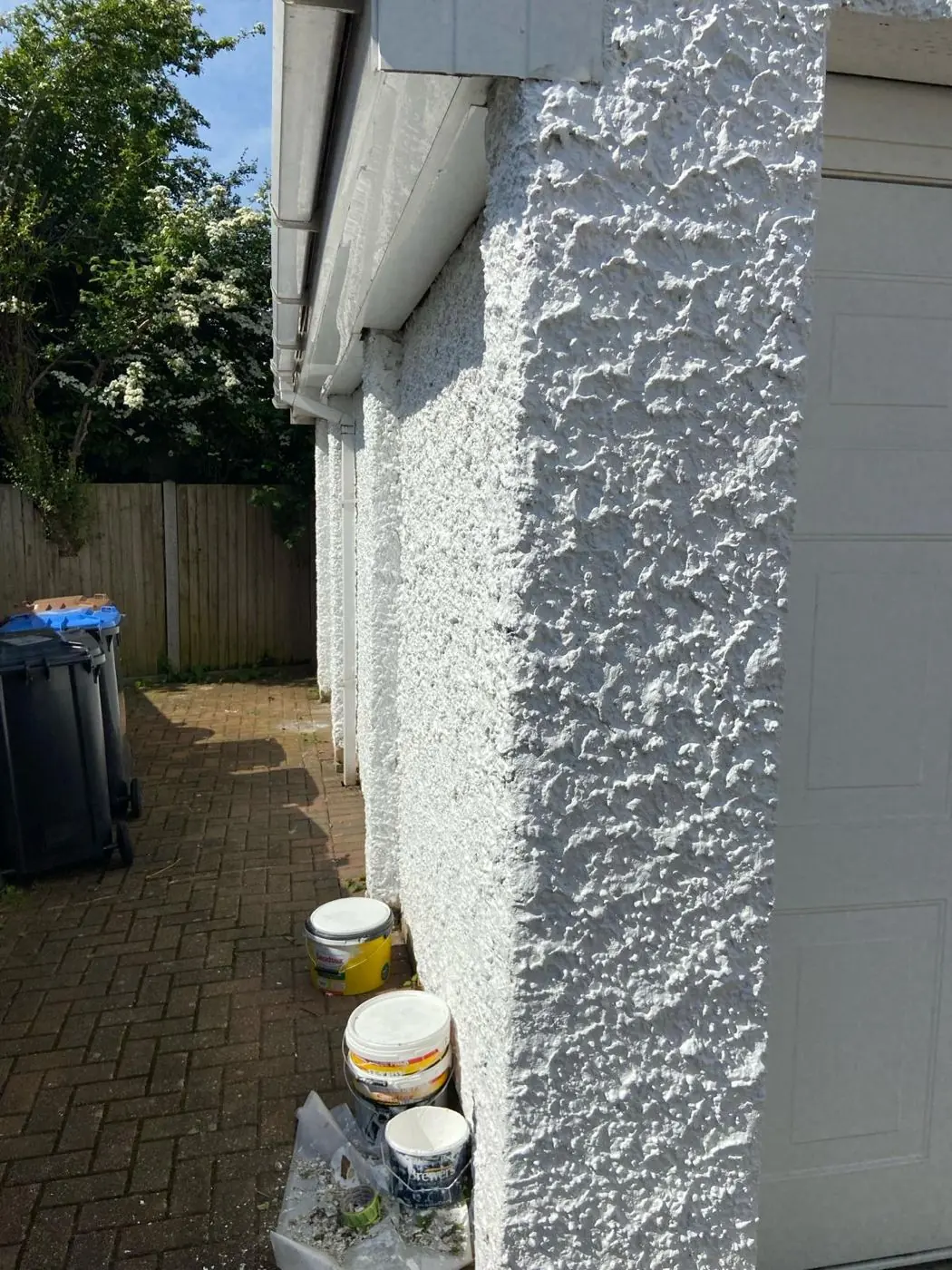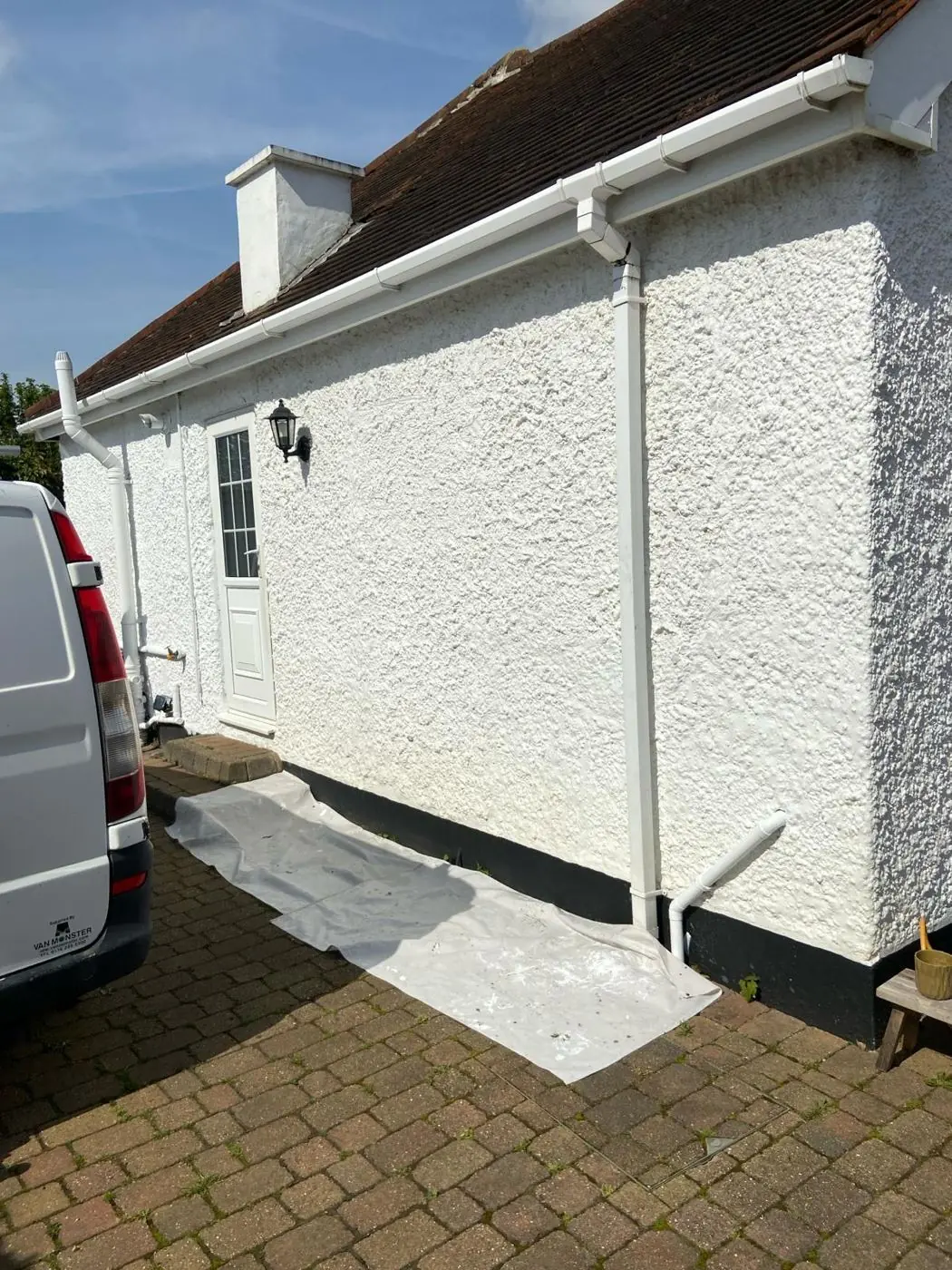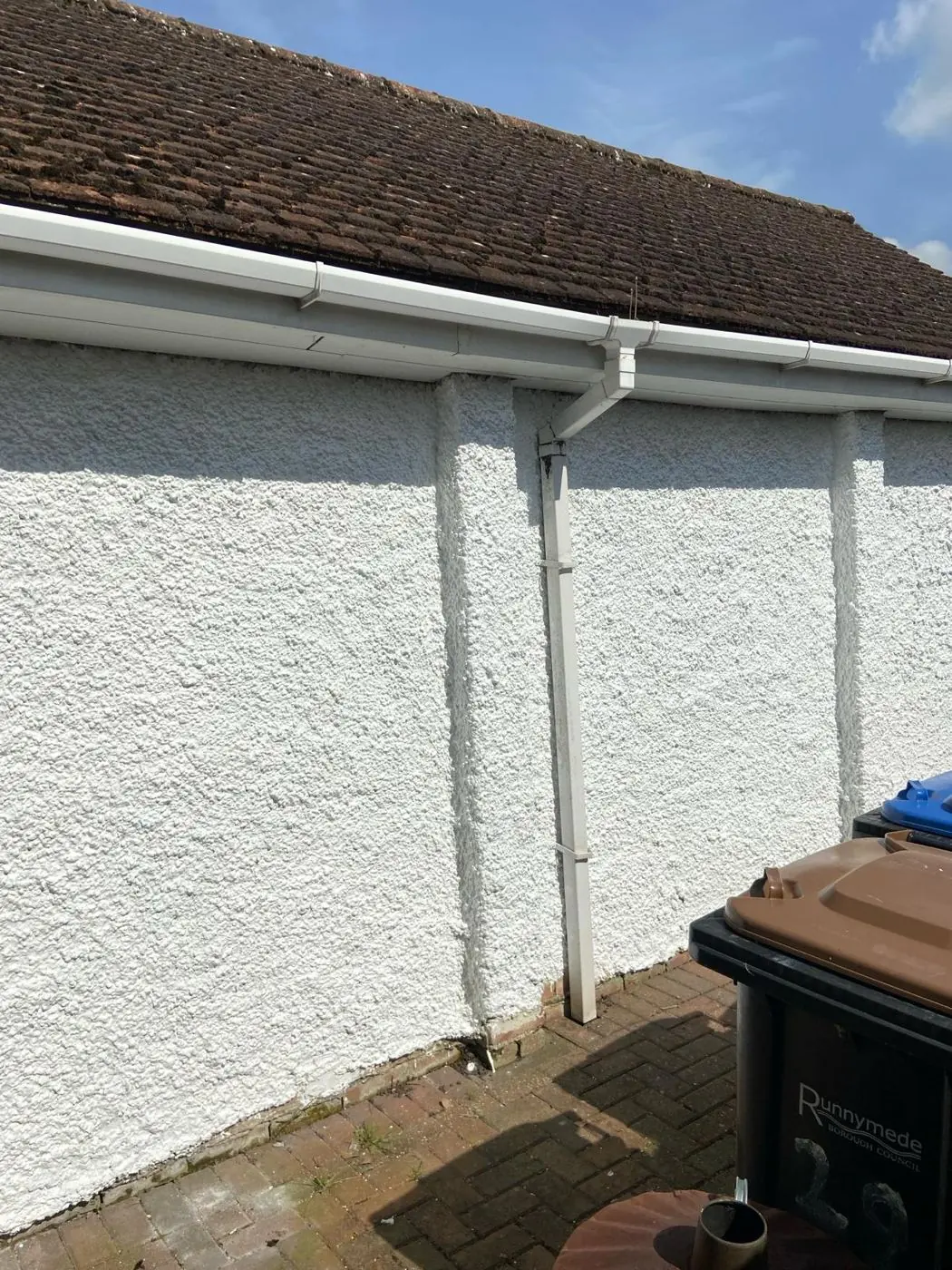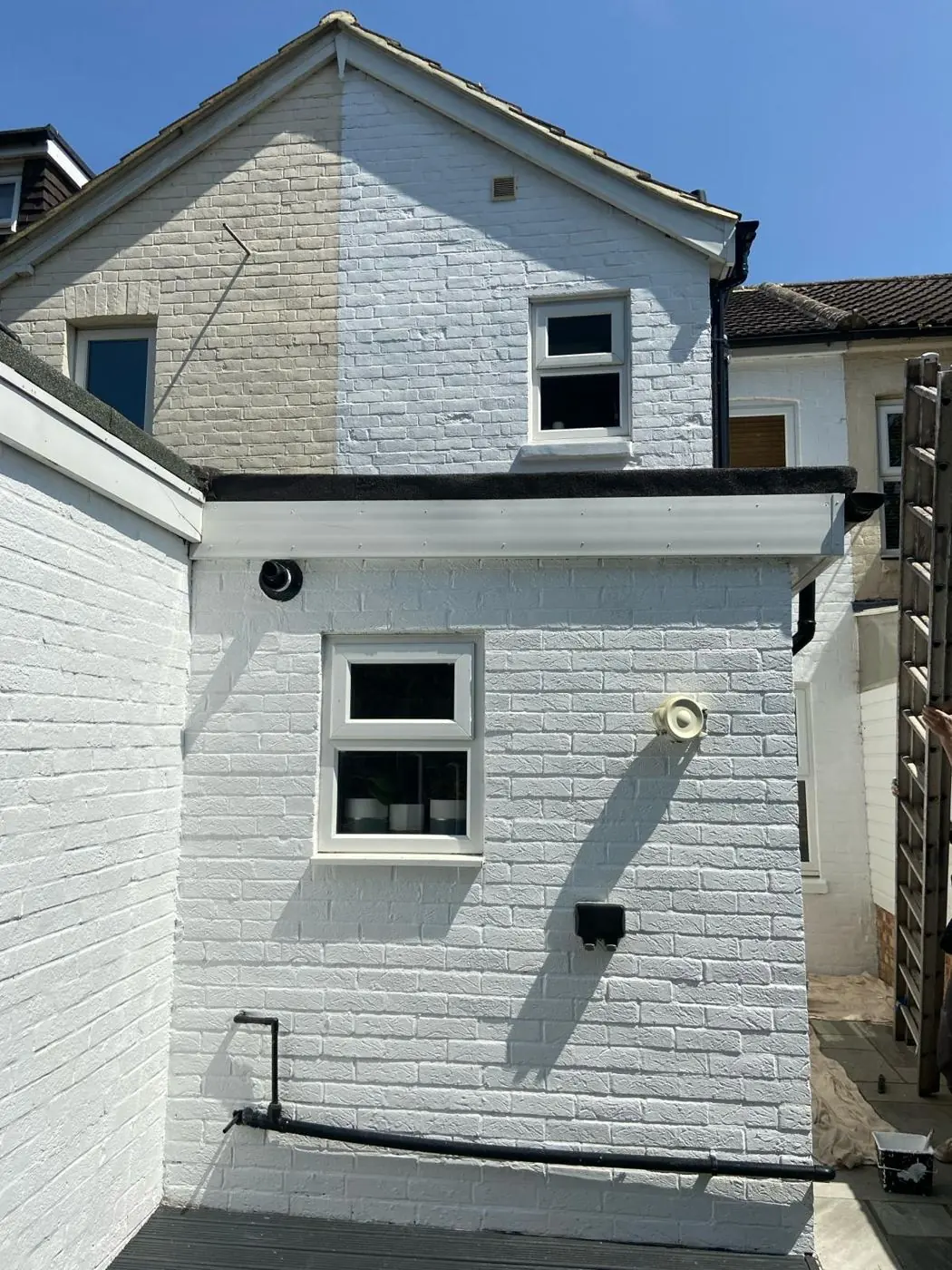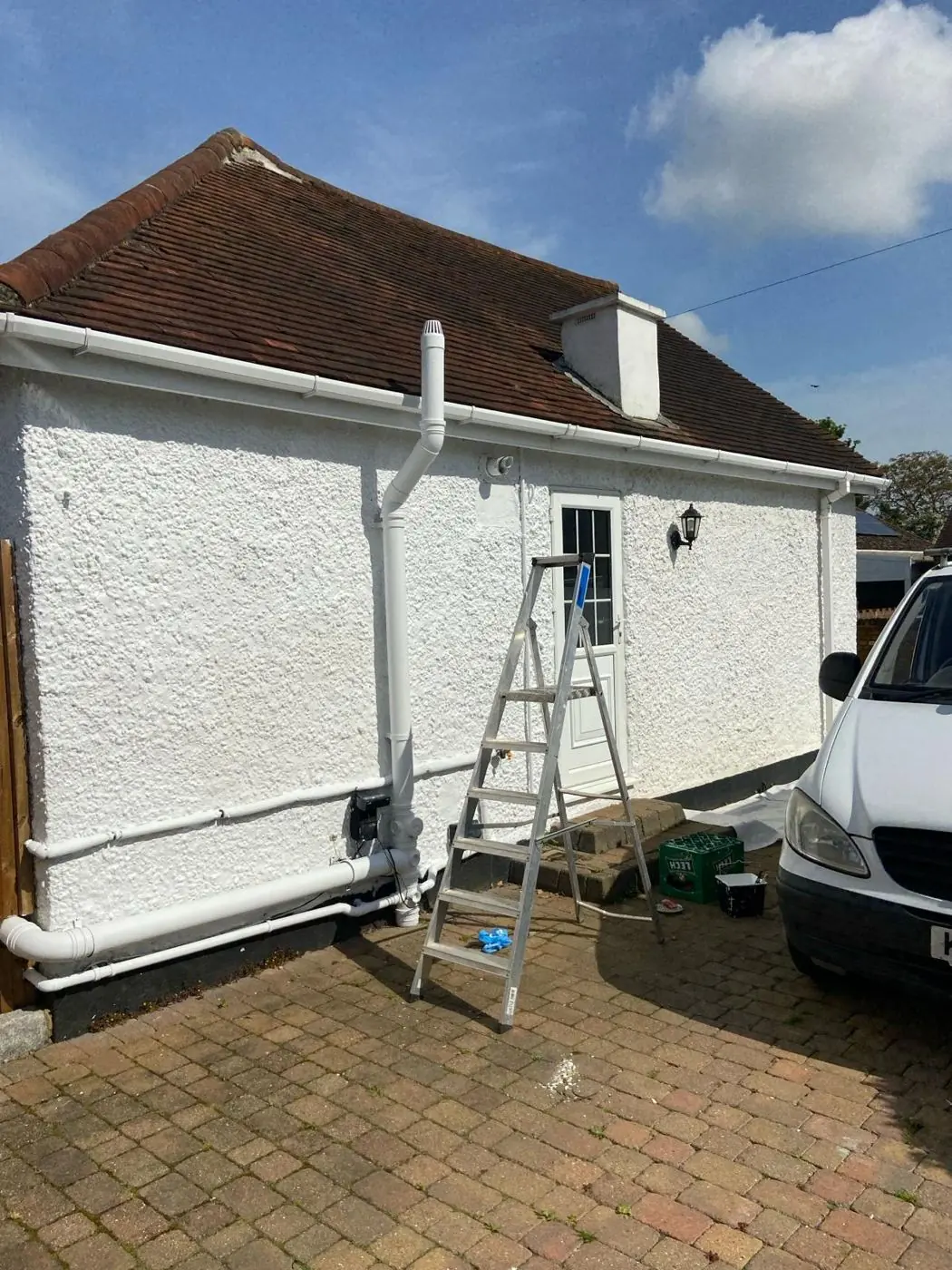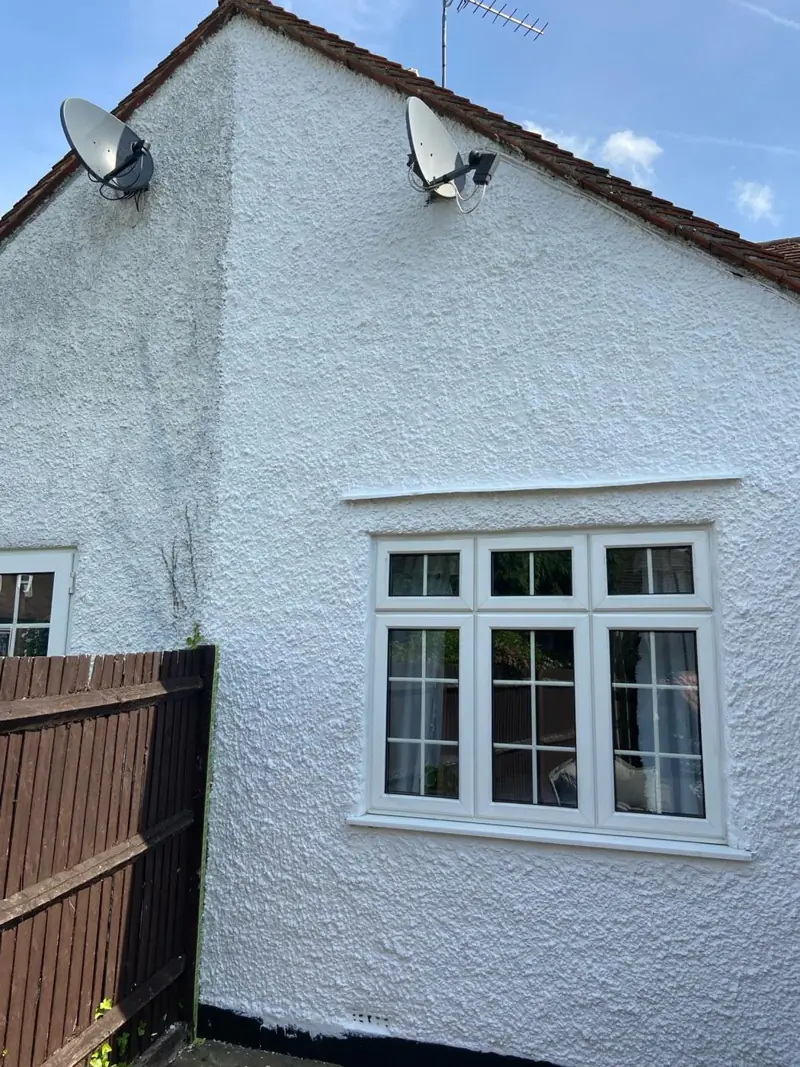
Dean paints timber fascias, soffits, bargeboards, gutters and downpipes in Weedon Bec, NN7, roughly 8 miles west of Northampton town centre. The work is mostly on the older slate and tile roofs in the village centre, plus any estate houses that still have timber boards.
Not every Weedon roof has a fascia
The 17th and 18th-century cottages in Upper and Lower Weedon carry old plain tiles or thatch, the turnpike buildings on the High Street have thatch or slate, and The Flats on Bridge Street has a slate roof. The 20th-century estates and Harmans Chase were built in the uPVC era. That gives three kinds of roofline enquiry:
| Roof | Typical eaves | What we paint |
|---|---|---|
| Slate or plain tile, older houses | Timber fascia or bargeboard | Boards, gutters, downpipes, brackets |
| Thatch | No fascia; the thatch overhangs the wall | Joinery below the eaves, not the roofline |
| Estate houses | Often uPVC boards | Timber gable boards or metal rainwater goods where present |
We look at the house first, because a quote for fascias on a thatched cottage or a fully uPVC roofline would be for work that doesn’t need doing.
Bargeboards on gabled stone cottages
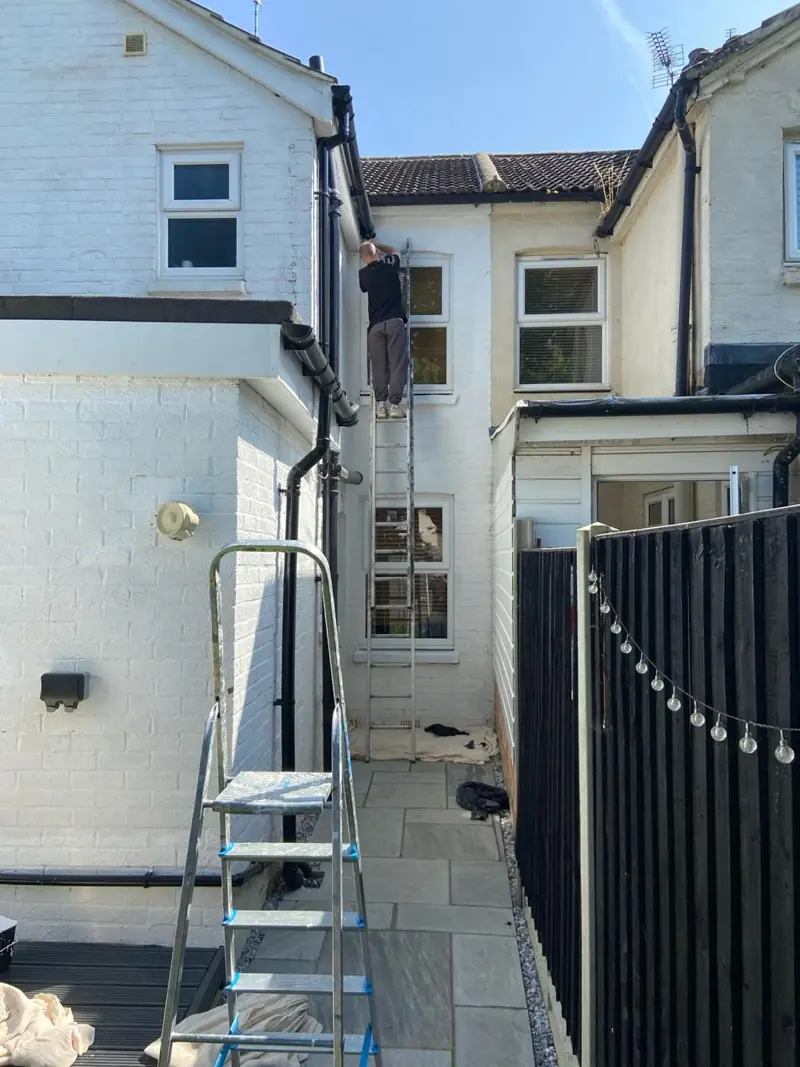
On the older slate and tile roofs, gable ends often have timber bargeboards running up the verge. They take rain off the roof edge and full sun, and the bottom ends, where water collects, are where rot starts. We probe the ends and joints with a sharp point, cut out and fill small soft patches, and recommend a joiner where a board has gone too far. Then knots are sealed, bare wood is primed, and an undercoat and exterior top coat go on. Where boards meet the walls, we cut in by hand so no paint lands on the ironstone or limestone below. The fascia and soffit painting page lists our full preparation sequence.
Thatched eaves and what sits below them
The Old Bakehouse on Church Street is one of the thatched properties in the village, and thatched cottages simply don’t have fascia boards. Ladders also have to stay off the thatch itself, as leaning one into the eaves can damage the roof covering. On these houses, a roofline enquiry usually turns into a joinery job instead: casements, doors and any timber lintels, reached from a tower that stands off the wall rather than ladders that touch the roof. Hot-air strippers and blowlamps are also ruled out anywhere near thatch, so any stripping on these houses is done by hand scraping only.
Scaffold towers where there’s no pavement
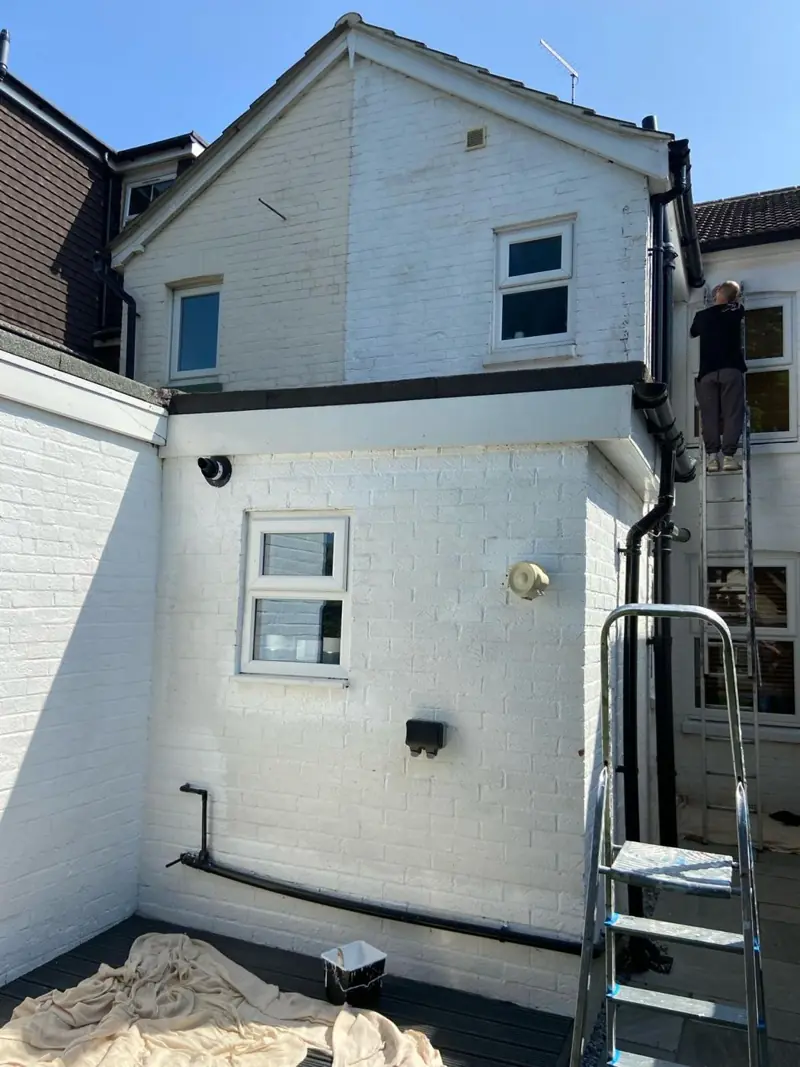
Getting to eaves height is the harder part in the old streets. Church Street, Queen Street and their neighbours have cottages built hard against the road with barely a pavement, so a tower takes careful positioning and sometimes a council permit. We plan the order of work so each elevation is finished before the tower moves, and we keep the footway passable where we can. On the cul-de-sacs of Cavalry Fields, Harmans Way and Holm Close, driveways make the same job far simpler. Because HGV traffic heading for the depot passes through residential streets, we also keep a tower base well marked and don’t leave equipment standing in the road overnight.
Gutters, downpipes and timing
On the older houses, gutters and downpipes may be cast iron or another metal, and we paint them with the boards so the roofline matches. Leaks at gutter joints are worth fixing before painting, particularly in a village where heavy rain has repeatedly overwhelmed drainage in the centre. Roofline work needs a run of dry, mild days, so we book it for the drier months and walk the full roofline with you before starting. More on the village’s buildings is on our Weedon Bec area page.
Last updated by Dean, DH Painter & Decorator.