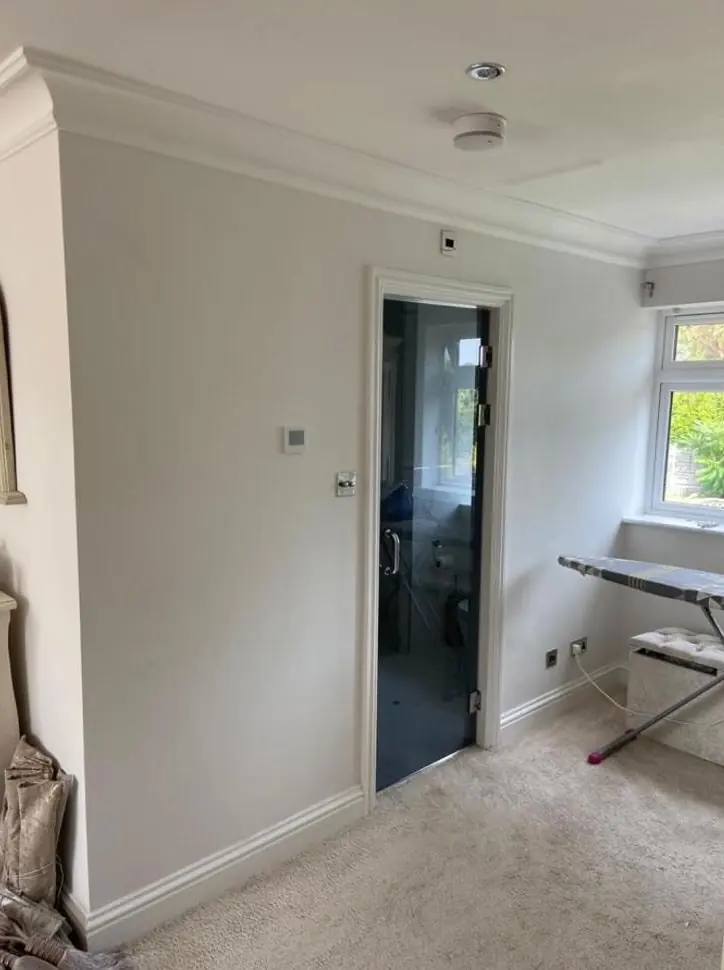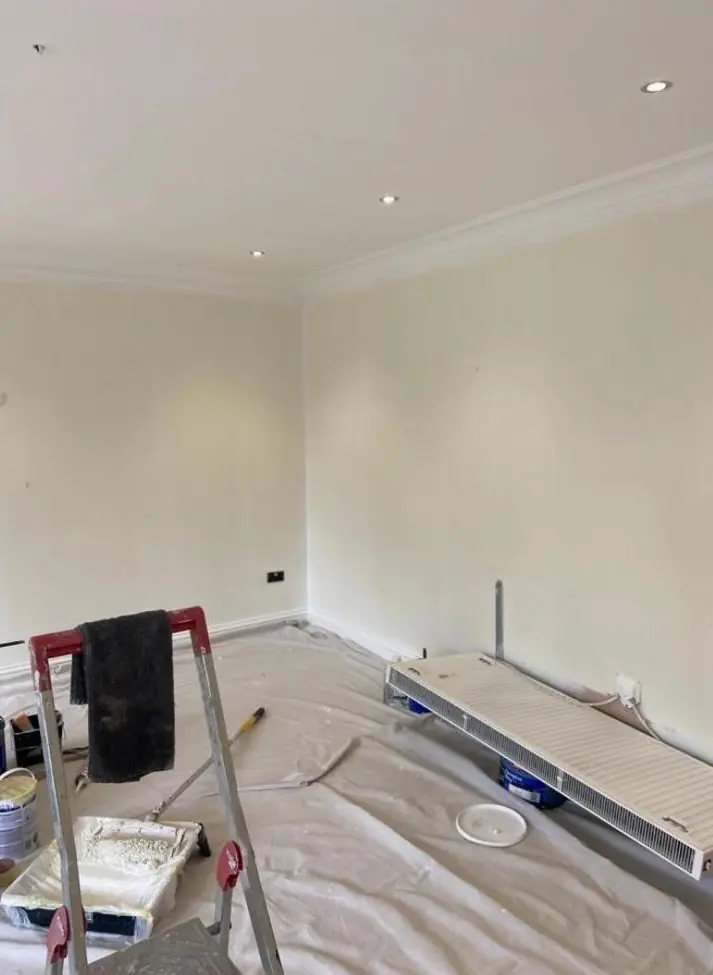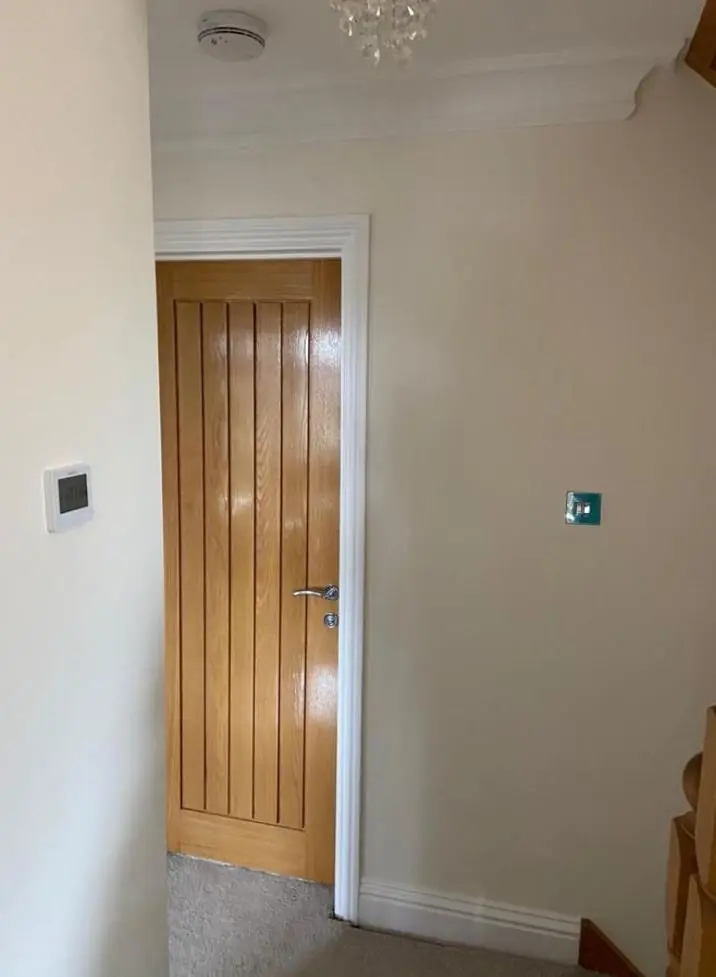
We apply decorative and traditional finishes in Weedon Bec, a village of listed stone cottages and modern estates 8 miles west of Northampton. For the listed ironstone, limestone and whitewashed cottages that mostly means limewash and other breathable finishes; in the modern homes at Harmans Chase and Cavalry Fields it means painted panelling, feature walls and picked-out detail.
Limewash on old render and whitewashed walls
Several of the oldest buildings in Weedon have rendered or whitewashed parts. The Old Bakehouse on Church Street, a listed limestone building with ironstone dressings and a thatched roof, has a rendered and whitewashed addition, and the Maltsters Arms on West Street has rendered window heads. Limewash is the traditional finish for surfaces like these, and it behaves nothing like modern masonry paint.
It goes on in several very thin coats, each brushed well into the surface. It sets by slowly reacting with the air rather than simply drying, so it needs dampening before application and protection from hot sun, frost and driving rain while it cures. The finished look is soft and chalky, varies slightly with the surface underneath and weathers gently over the years rather than peeling. Most importantly it lets old walls breathe, which matters on soft ironstone and lime render. Limewash can be tinted with earth pigments, and a light ochre tint can sit comfortably beside the warm brown of local ironstone.
When a traditional finish is the wrong choice
Limewash will not bond to a wall that already carries acrylic masonry paint. If an old cottage was painted with a modern coating at some point, there are two honest options: remove that coating carefully, which is slow on soft stone and must never involve pressure washing, or use a mineral silicate paint that is compatible with what is there. We will tell you which applies after testing the surface. On listed buildings, changing the type of finish can need listed building consent, so for the many listed properties in the parish that conversation with West Northamptonshire Council comes first.
Bare stone is a separate matter. The coursed ironstone and limestone walls of Upper and Lower Weedon should be left unpainted, and no decorative finish is a reason to change that. Our render painting guide explains the breathability issue in more depth.
Period detail inside the older houses
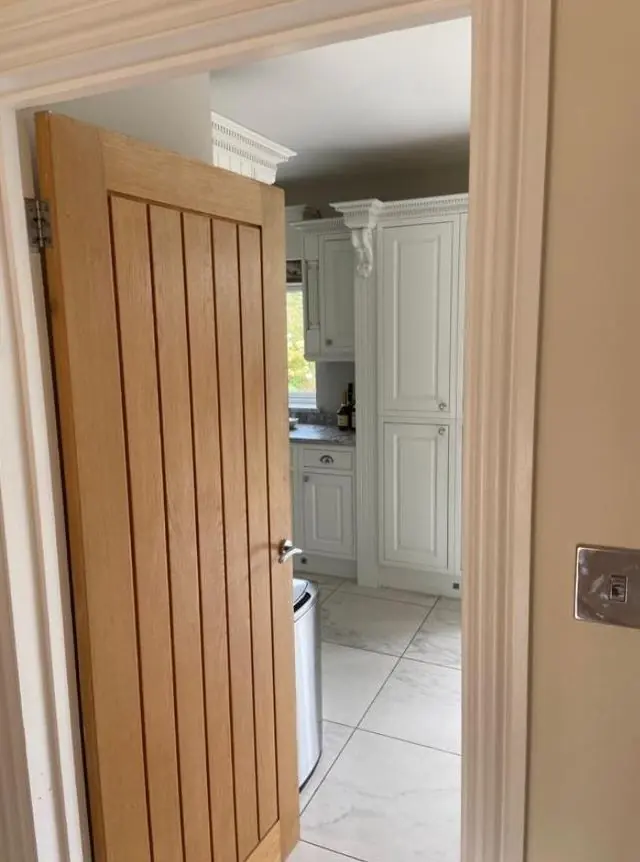
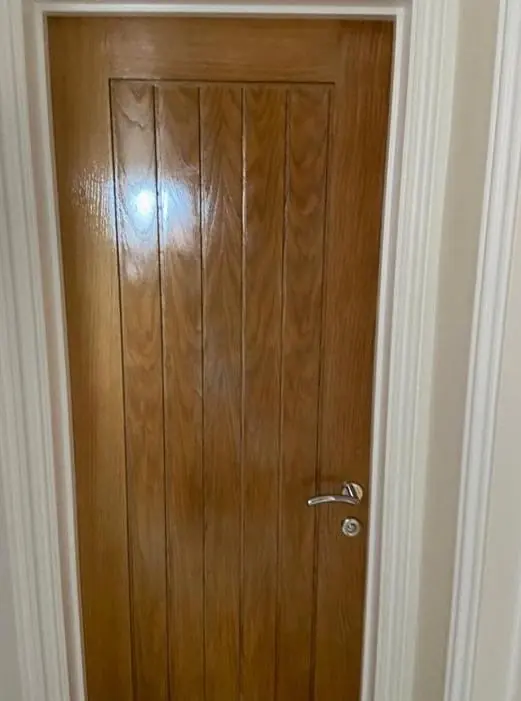
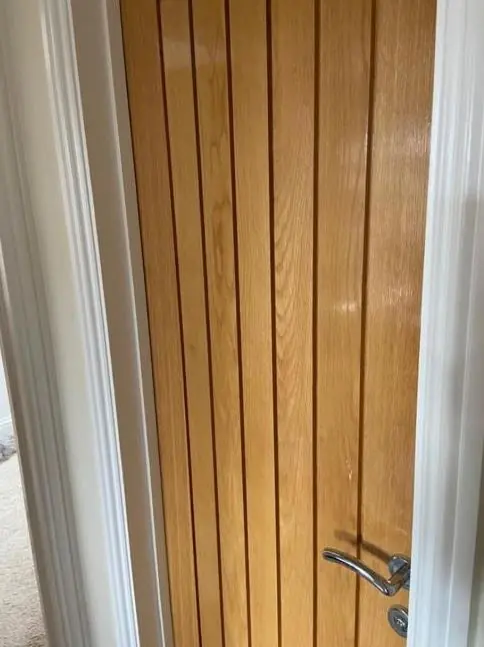
In older Weedon cottages, panelled doors, deep skirtings and window boards respond well to being picked out in a second colour or a different sheen from the walls. A slightly deeper shade on the skirting and door panels, or an eggshell on joinery against matt walls, adds definition without fuss. We use traditional or oil-based joinery paints where the existing woodwork calls for them, and fill and sand the old timber so the brushwork reads as intentional rather than patched. Where a door has been stripped back to timber in the past, a wax or oil finish may suit it better than paint.
Panelling and feature walls in the estates
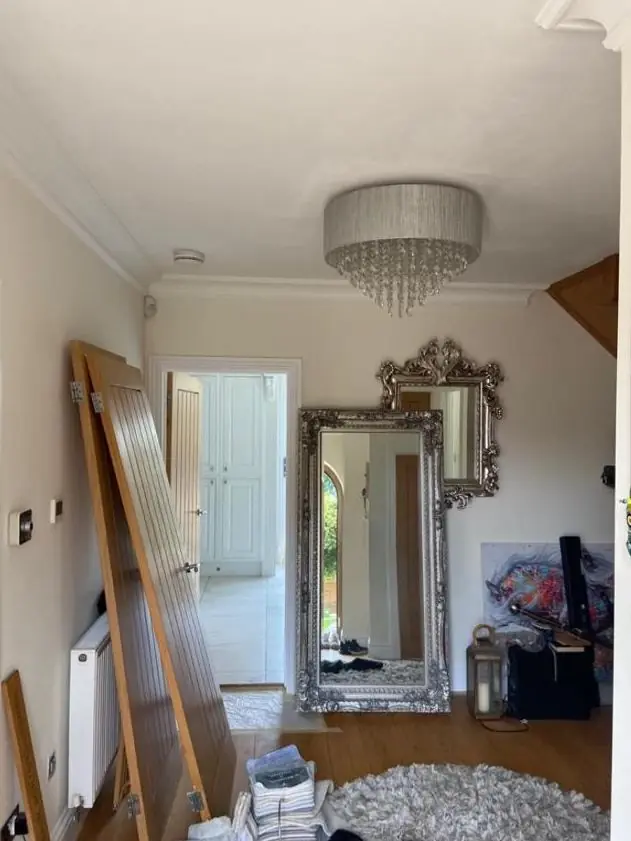
The 20th-century estates at Cavalry Fields and Holm Close, and the 2011-14 houses on Harmans Way, have plain plasterboard rooms that suit a different kind of decorative work. Common requests are:
- Painting new MDF wall panelling in a hallway or behind a bed, with every pin hole, joint and mitre filled so the panels read as one piece.
- Two-tone walls split at dado height, or a deep colour carried over walls, skirting and ceiling in a small room.
- A single feature wall in a hand-applied effect, built up in glazes.
Preparation decides how these finishes look, so the same filling and sanding goes on underneath as on any plain wall. The decorative finishes service page shows the full range of effects, and our Weedon Bec page covers the village as a whole.
Last updated by Dean, DH Painter & Decorator.