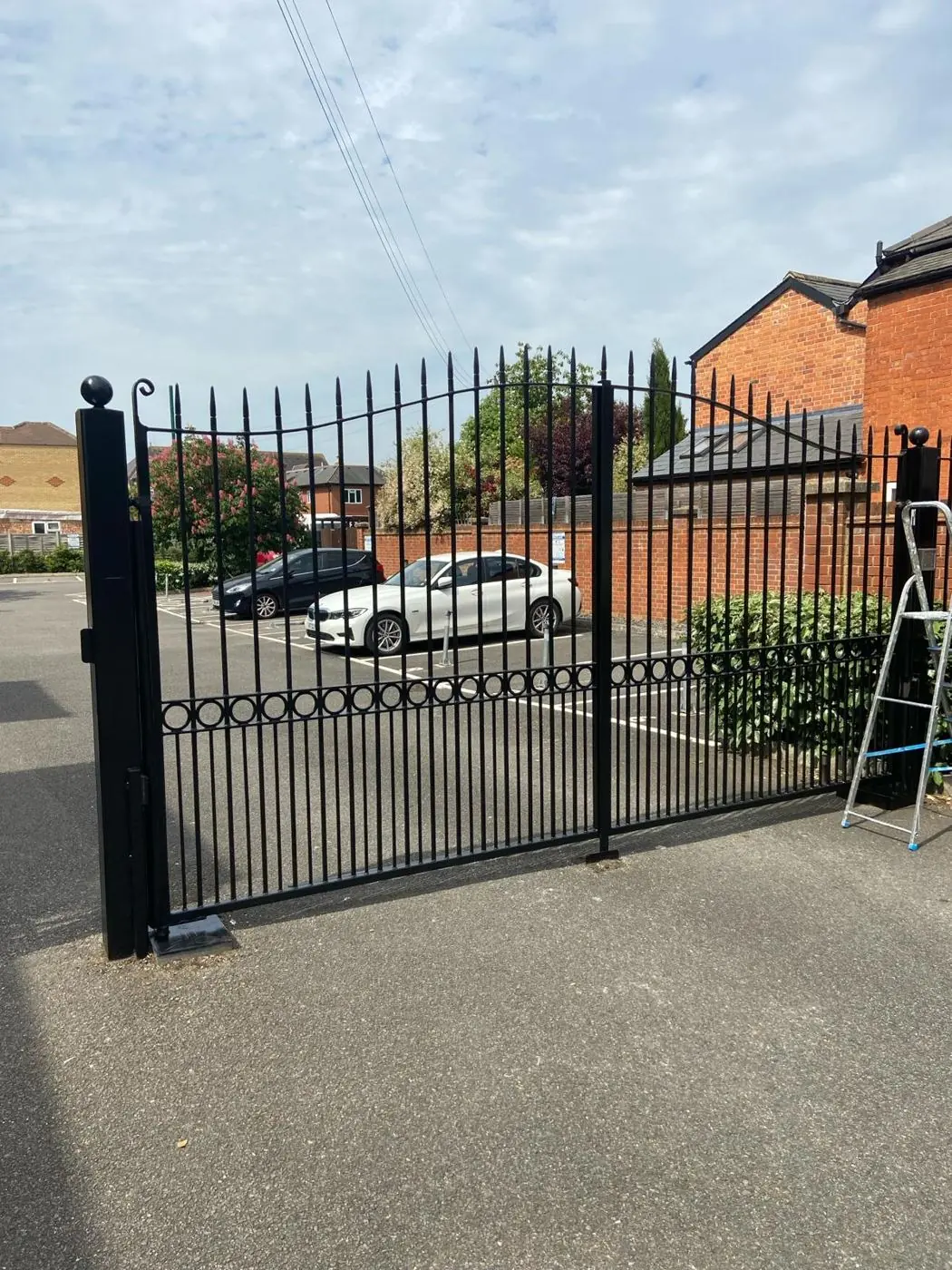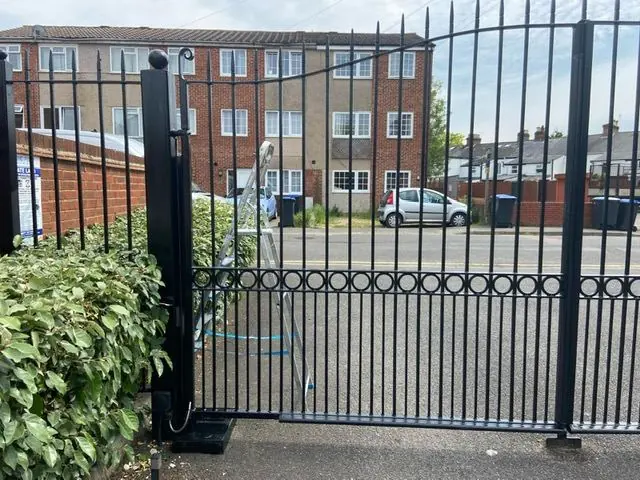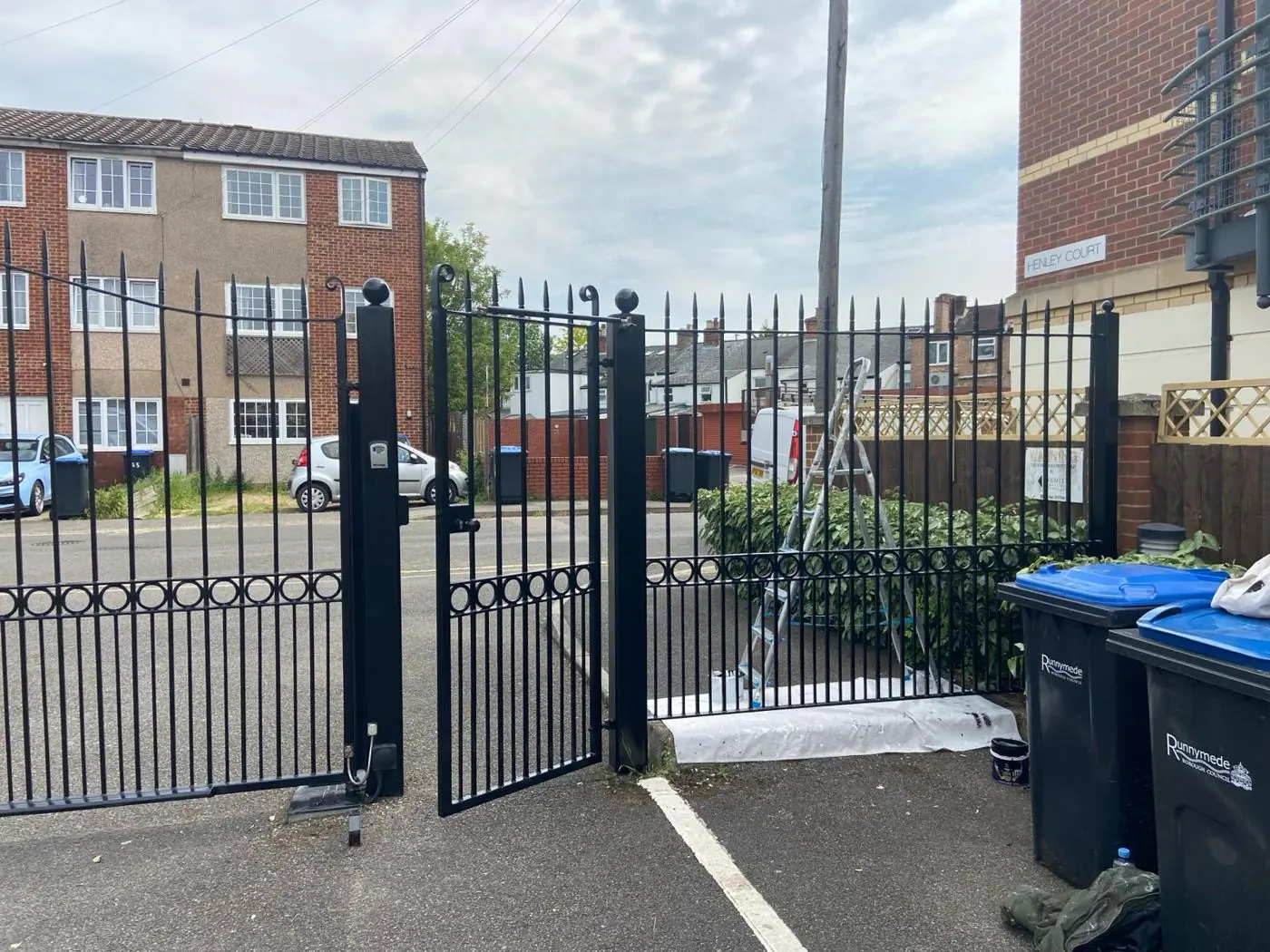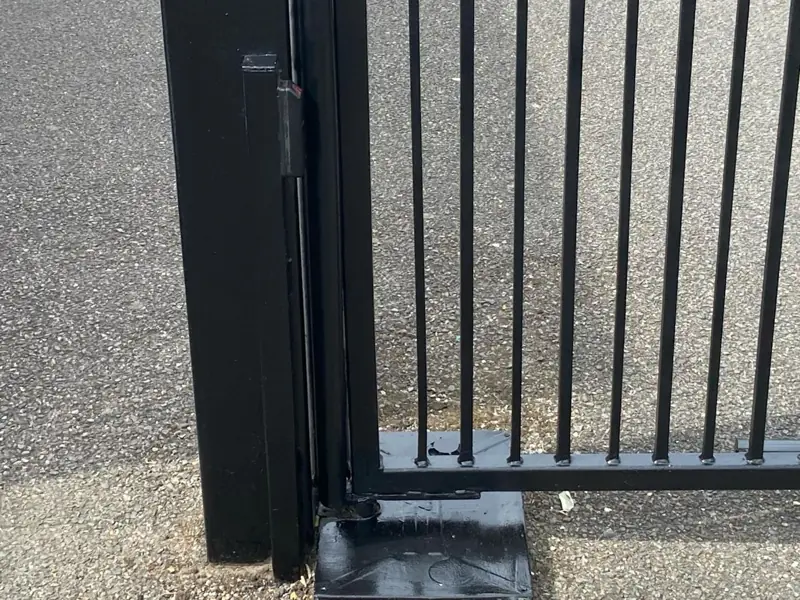
Dean repaints metal gates and railings in Pattishall, NN12, roughly 6.5 miles south-west of Northampton. Most of the ironwork here belongs to the older stone houses in the village, Eastcote and Astcote, where rust treatment and a traditional black or heritage finish suit the setting.
Ironwork in a stone village
The older stone houses sit down the hill in Pattishall, along Gayton Road in Eastcote and on the High Street in Astcote, with the Holy Cross churchyard in the village itself. Gates and railings in that setting are usually small-scale: a garden gate into a front yard, a short run of railings along a stone wall, a side gate to a former farmyard. Where bars and finials are set straight into stone copings or plinths, that affects how they are prepared and painted. Up the hill, a modern steel driveway gate or side gate at a 20th-century home is a simpler job. Before quoting, Dean checks whether the metal is wrought iron, cast iron, mild steel or galvanised, because each takes a different primer and some old cast finials are brittle enough to need gentle handling.
Rust where iron meets stone
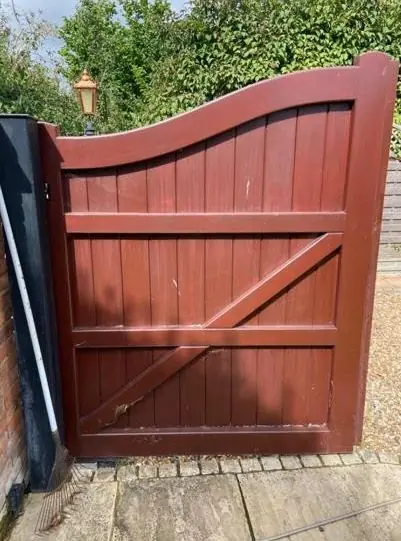
Rust on old railings usually starts in the same places: the foot of each bar where it enters the stone, the underside of rails, and around hinges and latches. Water collects there, and as rust swells it can crack the stone coping it is set into. So the preparation is focused:
- loose rust and flaking paint are removed by wire brush and scraper, working into the joints
- bare metal is spot-primed with a rust-inhibiting primer the same day, before it can flash-rust
- the limestone or ironstone around each fixing is protected so rust-stained water and paint do not mark it
- anything that has rusted through or split is pointed out for a blacksmith rather than painted over
Detailed guidance on primers and direct-to-metal paints is on our metal gate and railing painting page.
Black, or a heritage colour
Black remains the usual choice beside the parish’s pale limestone and brown ironstone, and it reads well against the churchyard and farmland setting. Some owners of older houses prefer a very dark green or a deep heritage tone instead, which can soften the contrast with the stone. Whether to choose gloss or satin is partly practical: gloss sheds water better on exposed ironwork, while satin hides surface pitting on old metal.
If the railings are attached to one of the parish’s 22 listed buildings, changing their colour may need listed building consent from West Northamptonshire Council, so like-for-like repainting is the simple option there. The Holy Cross churchyard itself contains listed chest tombs and headstones, which is a reminder of how much protected fabric sits close together in the old village. Because the council lists no conservation area here, ironwork at unlisted homes can be any colour you choose.
Fosters Booth and the A5
Metalwork facing Watling Street at Fosters Booth is exposed to traffic spray, grime and, in winter, salt thrown up from the road. All of that speeds up corrosion, so a gate or railing on that frontage needs washing down before preparation and checking more often afterwards. Working beside a busy trunk road also takes care over where tools and dust sheets go, so we agree ladder and van positions with you before the start date and keep the pavement clear while the work is under way.
Tell us which part of the parish you are in when you ask for a quote; the Pattishall area page covers its settlements and property types.
Last updated by Dean, DH Painter & Decorator.