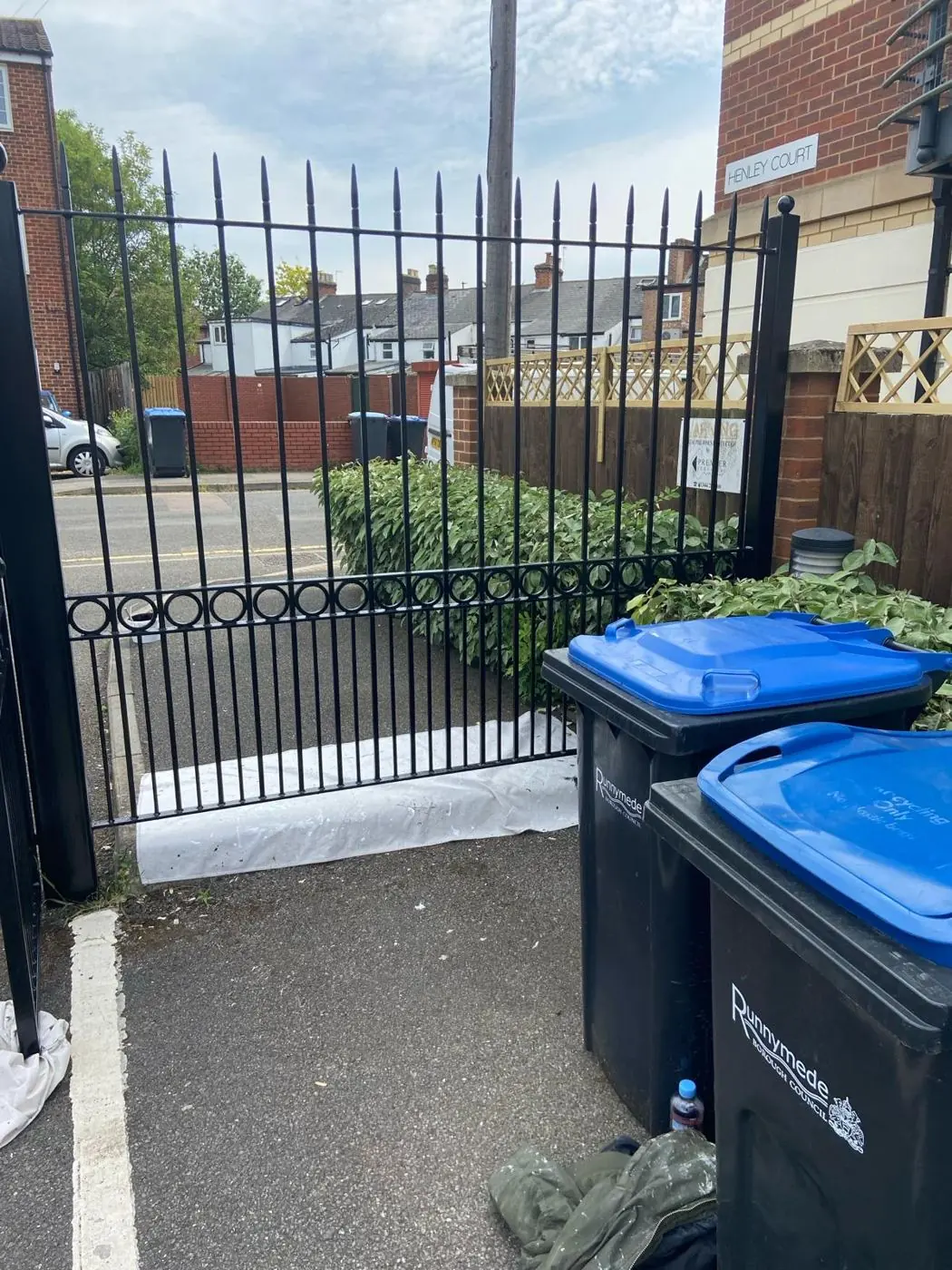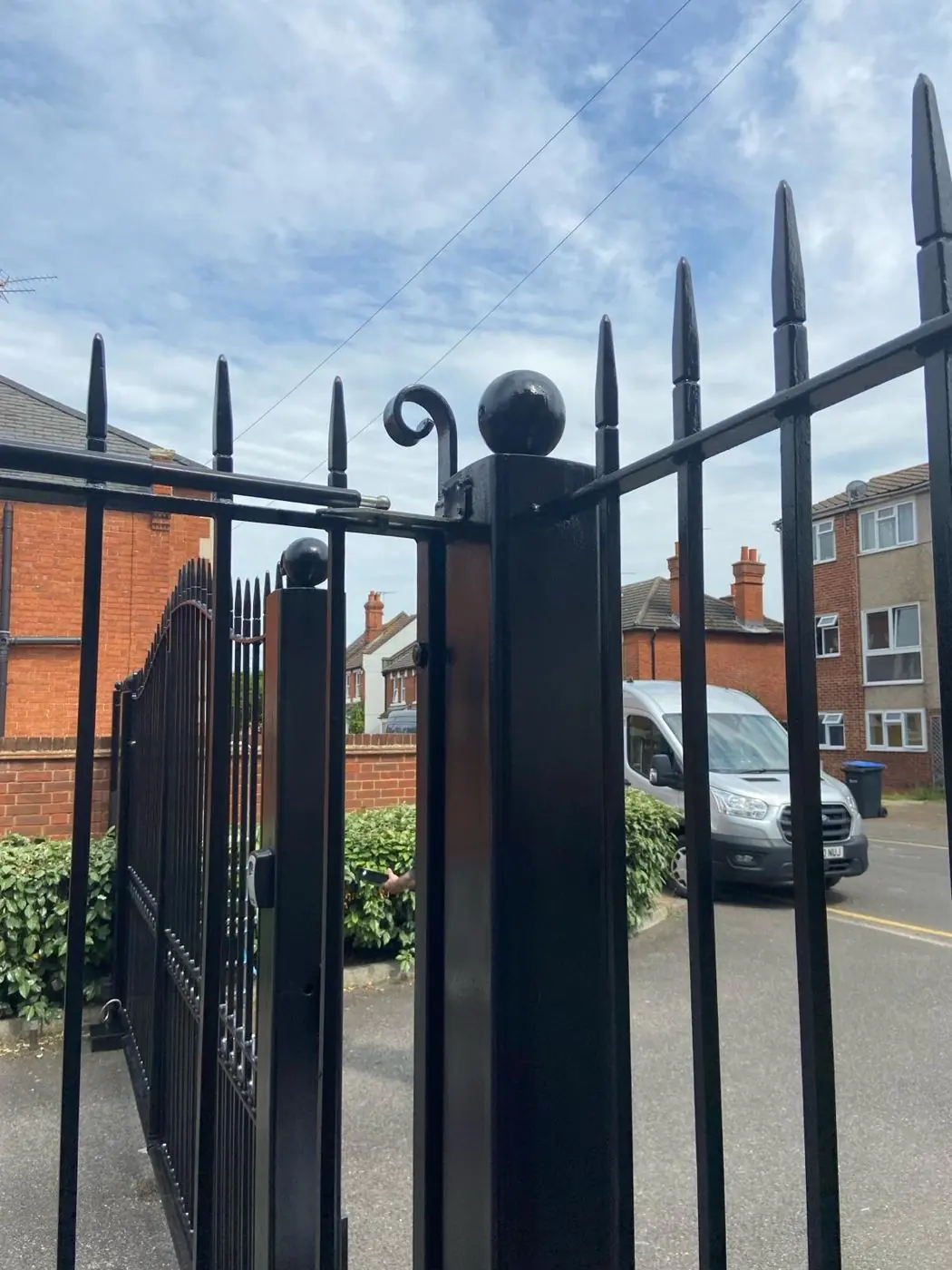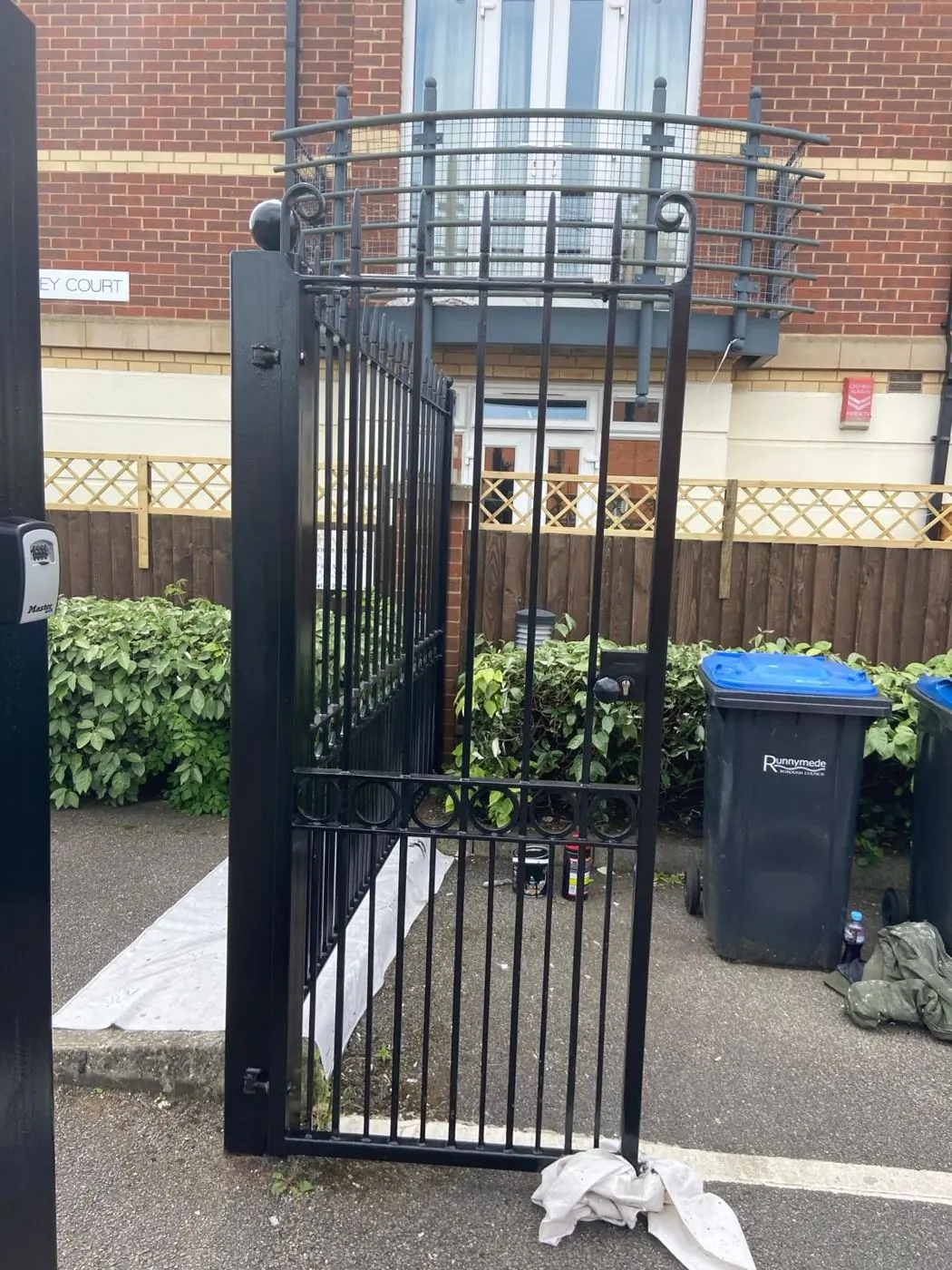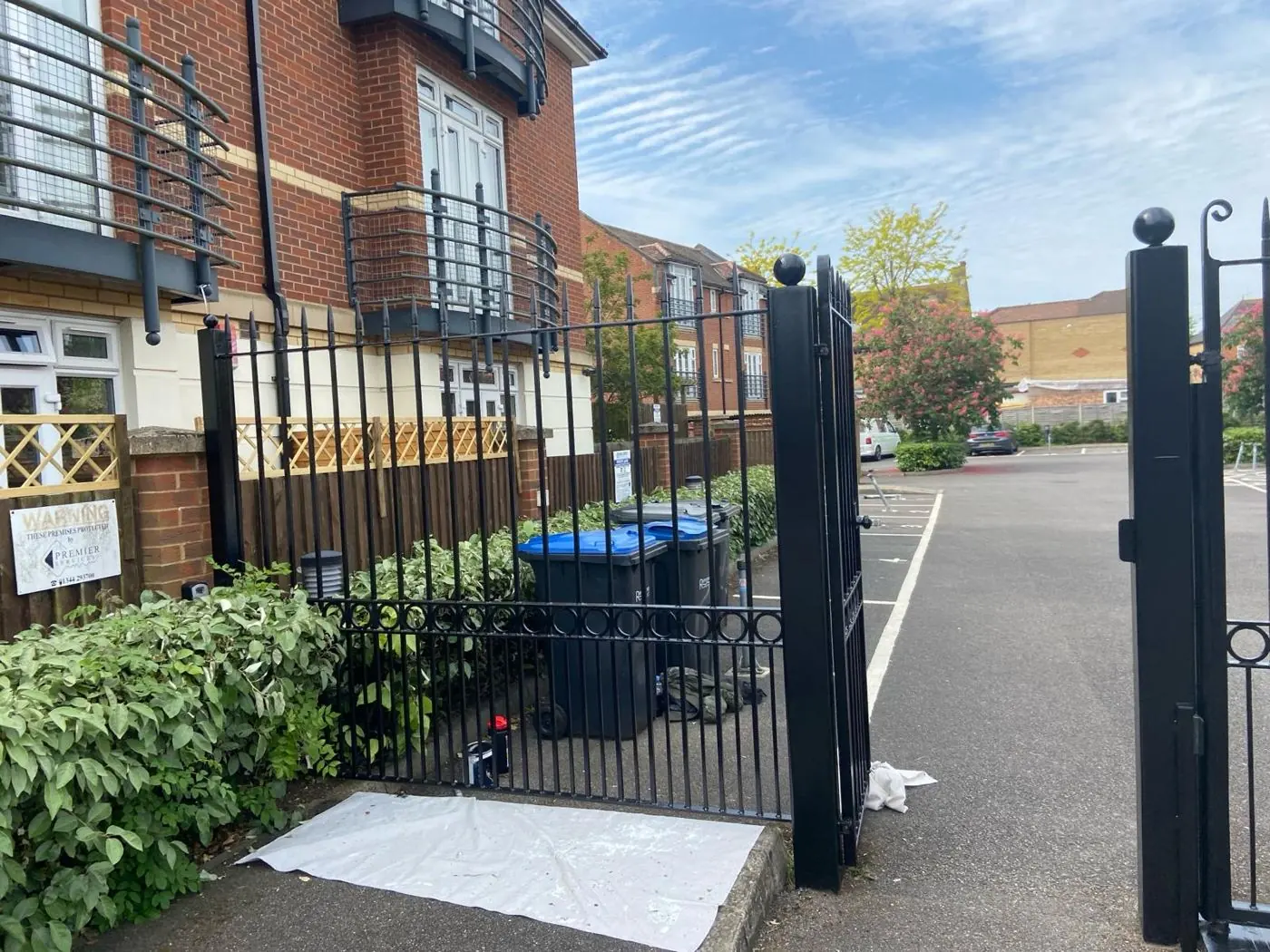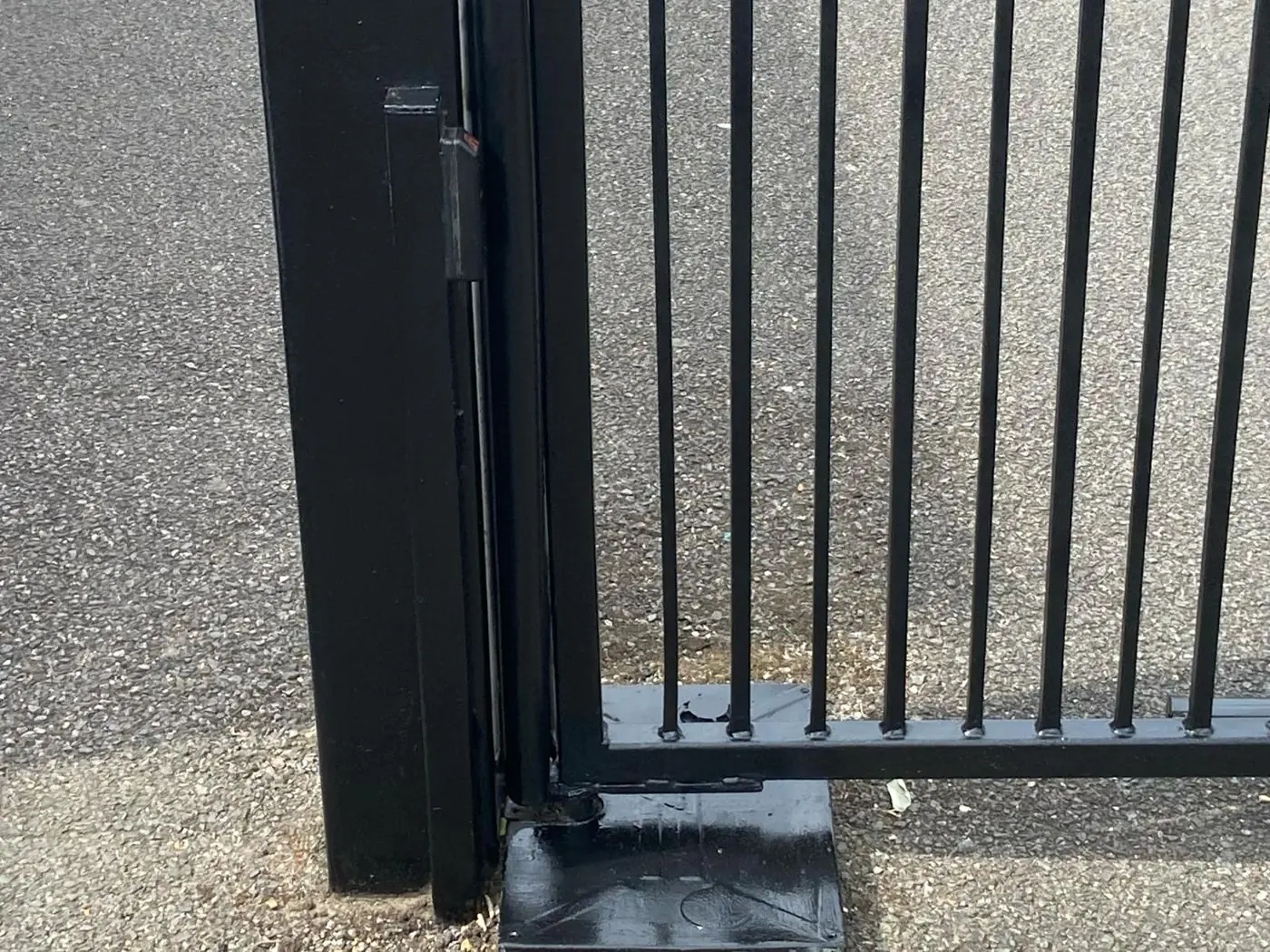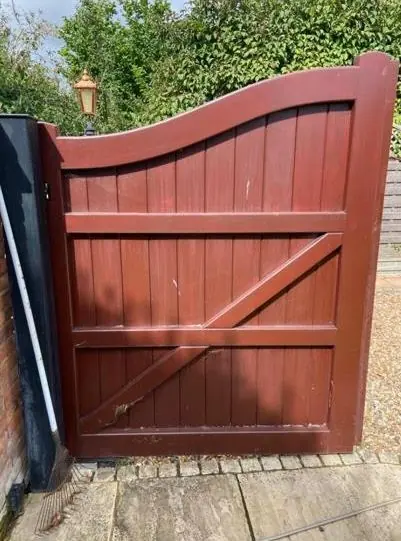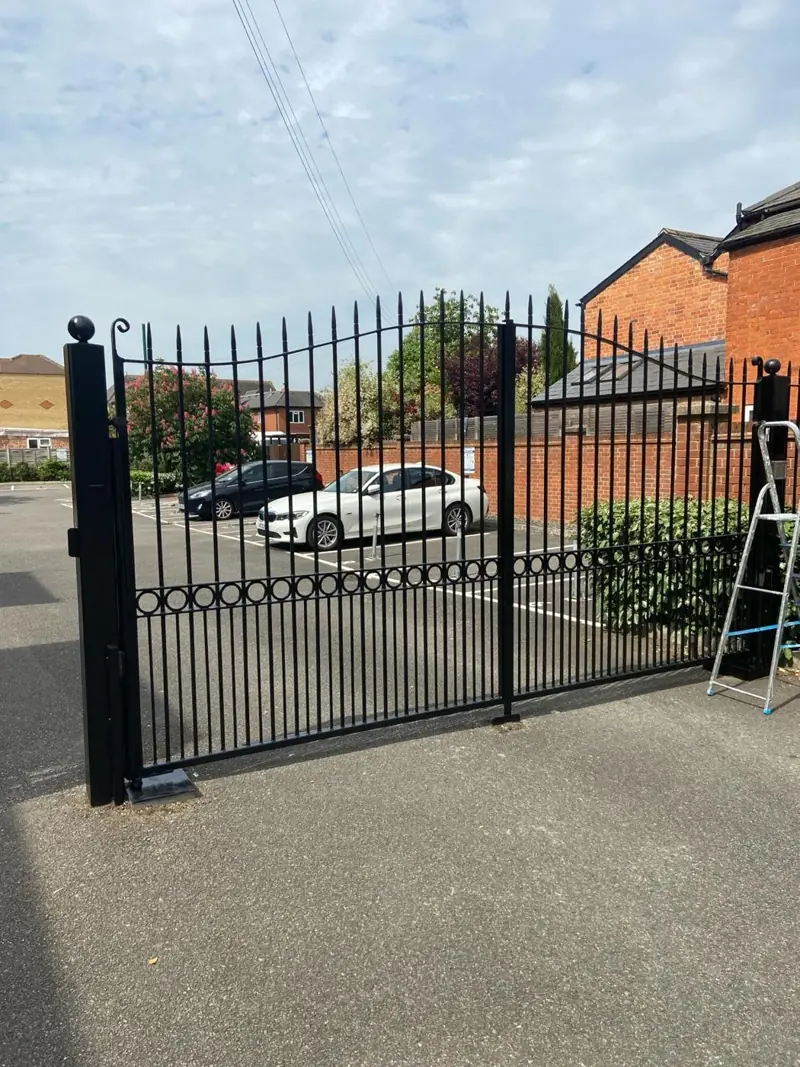
Dean prepares and paints iron gates and railings in Bugbrooke, NN7, a village 5.1 miles west of Northampton town centre. Most of the work is rust treatment and traditional paint on ironwork in front of houses, often set into the conservation area's stone walls and copings.
Iron set into ironstone
In the Bugbrooke Conservation Area, stone boundary walls line High Street, West End and the old lanes, and iron gates and railings stand in front of village houses. Wherever a bar or post is fixed into a stone coping or pier, rust is the real risk. As iron corrodes it swells, and a rusting bar fixed into a stone coping can crack the stone around it. So we start at the base of each bar and post, not at the top rail.
Our preparation on older ironwork here usually involves:
- Wire brushing and scraping by hand, taking rust back to sound metal.
- Gentle work on cast iron finials and panels, which are brittle and can snap under heavy impact.
- Testing old paint for lead before any abrasion, as railings in a village this old may carry many historic layers.
- A rust-inhibiting primer worked into joints and fixings, then traditional metal top coats.
- Keeping primer and paint off the stone coping and piers.
The full process, including how we deal with galvanised and modern steel gates, is on our metal gate and railing painting page.
Roadside ironwork on the mill lorry route
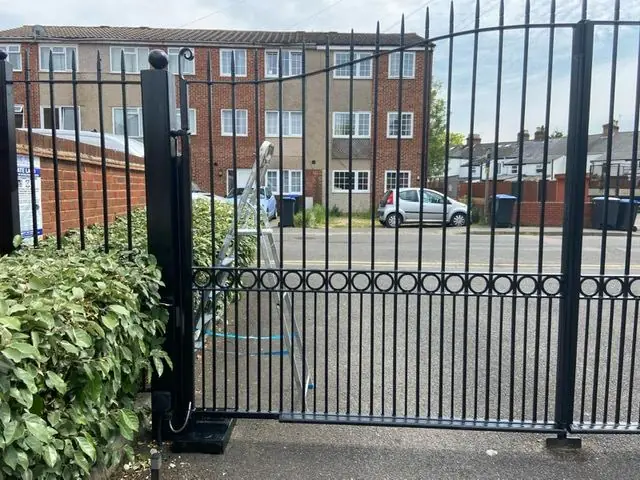
Heygate’s flour mill sits beside the Nene, and its lorries use the main road. Railings and gates facing that road pick up a film of road dust and grime that clings to the rough surface of old paint. Painting straight over it gives a poor bond and a gritty finish. We wash roadside ironwork down and let it dry fully before any wire brushing, so the dirt is removed rather than spread around.
The valley air plays a part too. Ironwork near the Hoarestone Brook, the Nene floodplain or the canal side of the parish stays damp after rain and in early morning, and rust spreads fastest where water sits on horizontal rails and in hinge pins. We pay extra attention to those spots and avoid painting metal that is cold and wet with dew.
Hinges and latches deserve their own mention. On a gate that is opened every day, paint wears first at the latch and the hanging stile, and a seized hinge pin will crack fresh paint the first time the gate swings. We free and lubricate moving parts before painting, keep paint out of the pin, and check that the gate still closes cleanly against its post or stone pier once the top coat is hard.
Colour choices inside the conservation area
Black is the traditional colour for village railings and works with both the brown-orange ironstone and the paler limestone found in Bugbrooke. Deep greens and dark greys are also common choices. On any of the 32 listed buildings in the conservation area, a change of colour or finish may need listed building consent, so we start from the colour already there. It is worth noting that some entrances, such as the 17th century Manor House Gateway, are stone arches rather than metal, and those are left unpainted.
Iron balusters indoors
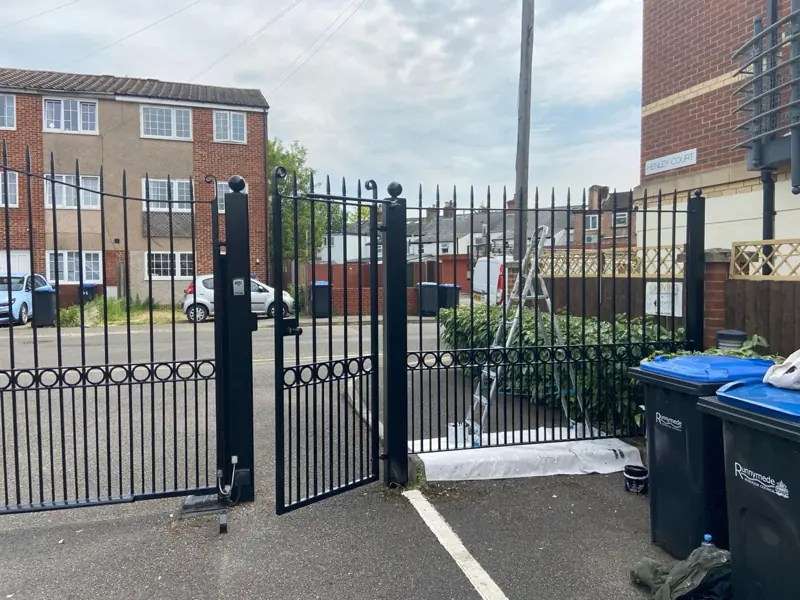
Ironwork is not only outside. New Creation Hall, the Grade II former rectory of 1815, has a stone stair with iron balusters, a type of feature found in some larger period houses. Painting balusters indoors means protecting the stone treads and walls, preparing each baluster by hand, and using a metal paint suited to interior use. We bring the same rust and lead checks to that work as to garden railings.
For a broader view of the village’s buildings, see our Bugbrooke area page, or our cost guide for what shapes a quote.
Last updated by Dean, DH Painter & Decorator.