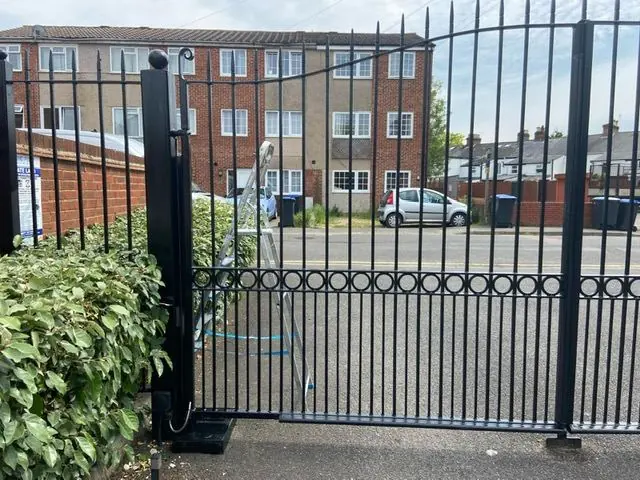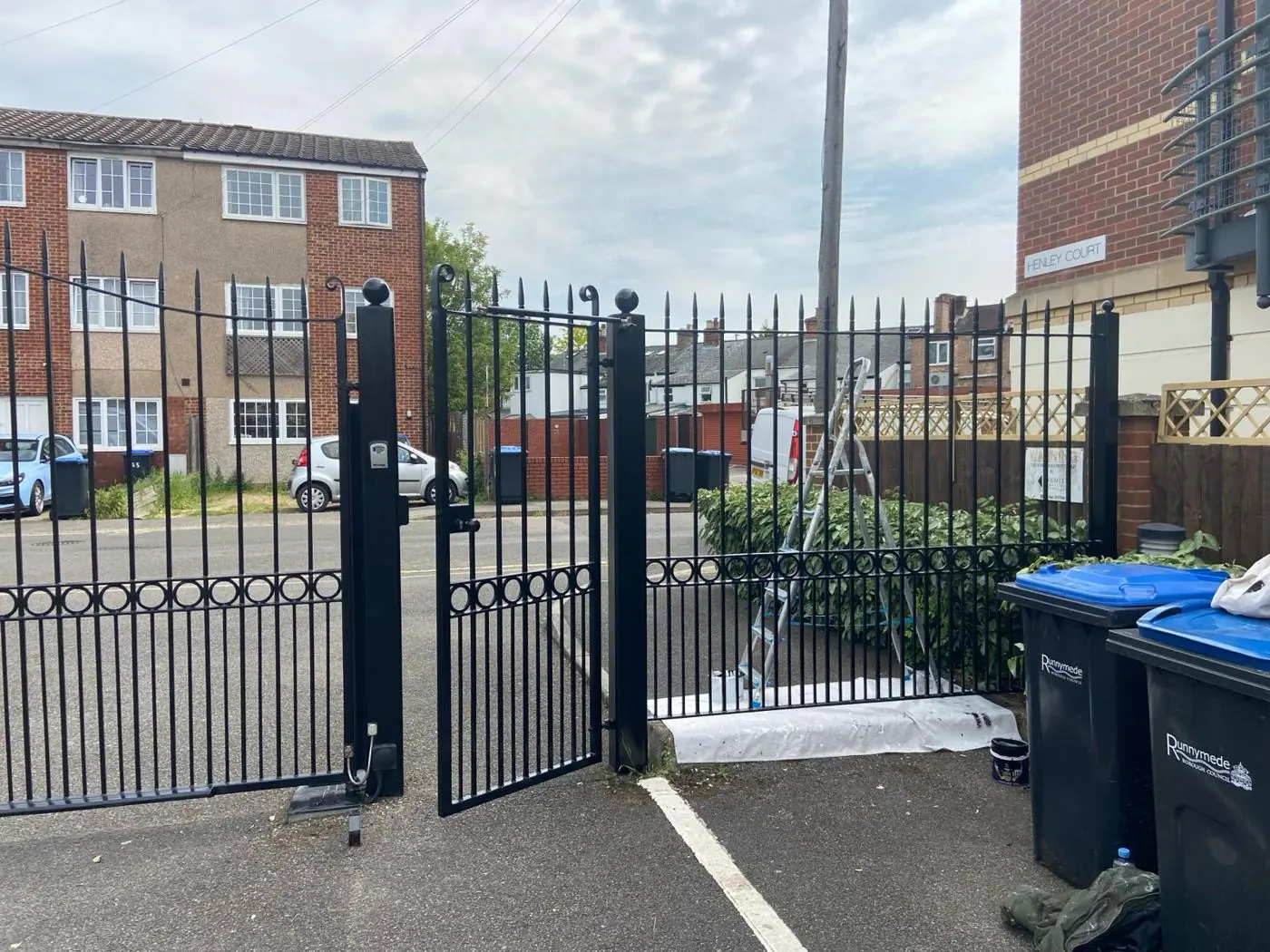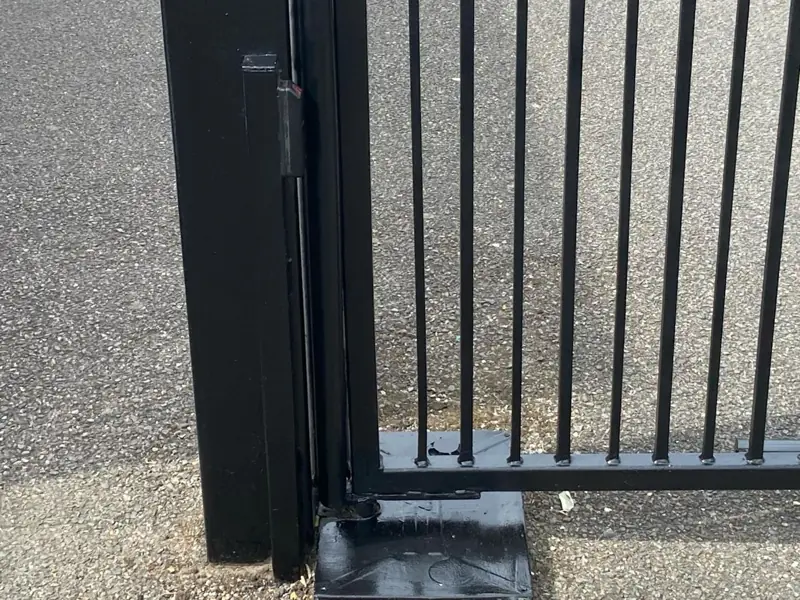
Dean paints metal gates, railings and balustrades in Nether Heyford and Upper Heyford, about 6 miles west of Northampton. Older ironwork in the village is often wrought iron, and the canal and brooks keep it damp, so the work is mostly about removing rust properly before any paint goes on.
An iron village in its day
For a stretch of the 19th century, Nether Heyford made iron. Heyford Ironworks opened in 1857 and Stowe Ironworks in 1866, and with a brickworks alongside they turned the Furnace Lane area between the railway and the canal into an industrial district for coal, bricks and iron. The furnaces are long gone and factory units have stood on the brickworks site since 1965, but the village still has some fine old ironwork. The Manor House, built around 1740, has nine stone steps with a wrought-iron balustrade, and Bridge No 33 on the canal, listed Grade II, is an early 19th-century crossing with cast-iron beams and wrought-iron tie rods.
Ironwork of that age is valuable and slow to replace. Painting it is about keeping the metal sound, not just changing its colour.
Wrought iron on the older houses
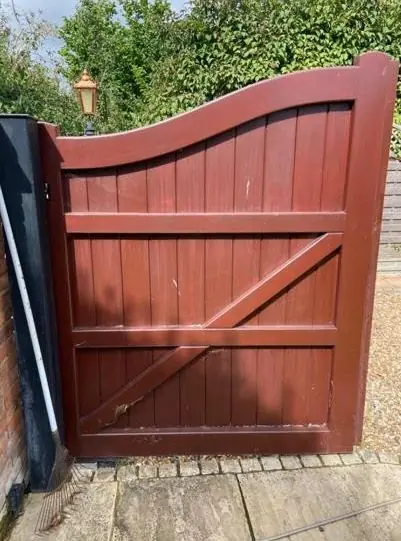
Railings and gates on the period houses around The Green, Church Street and Furnace Lane tend to be wrought iron, which is fibrous and forgiving but usually carries many layers of old paint. Where those layers have cracked, water gets in and rust lifts them in sheets. Our approach:
- wire-brush and scrape back to firm paint or bright metal, paying attention to joints, collars and the undersides of rails;
- treat old layers as possibly lead-based, so we work wet and collect debris rather than dry-sanding into the air;
- spot-prime bare metal with a rust-inhibiting metal primer the same day, before it can flash-rust;
- apply an undercoat and a hard-wearing enamel top coat, brushing into every scroll and finial.
A quick coat of black gloss over rust looks tidy for a season, then the rust pushes through, so we would rather do the preparation once. The main metal gate and railing painting page explains how we identify wrought, cast and mild steel.
Damp from the canal, the river and the springs
The Grand Union Canal runs right through Nether Heyford, the Nene floodplain floods once or twice a year, and the village sits on ground with numerous springs. Ironwork near any of these stays wet for longer after rain and in autumn mist, and that speeds up corrosion, especially at the base of uprights and where gates touch the ground. We pay most attention to those points, and we only paint metal once the early dew has gone and it is dry to the touch.
Railings set into stone walls
Where railings are leaded or bedded into an ironstone or limestone plinth, rust at the foot of each bar expands and can crack the stone around it. We clean out around each foot, treat the metal as far down as we can reach, and keep paint off the stone itself. In the Nether Heyford Conservation Area, black or a traditional dark colour usually looks right against the stone. On listed properties, a change of colour may need consent from West Northamptonshire Council, so we check first.
Modern gates on the estates
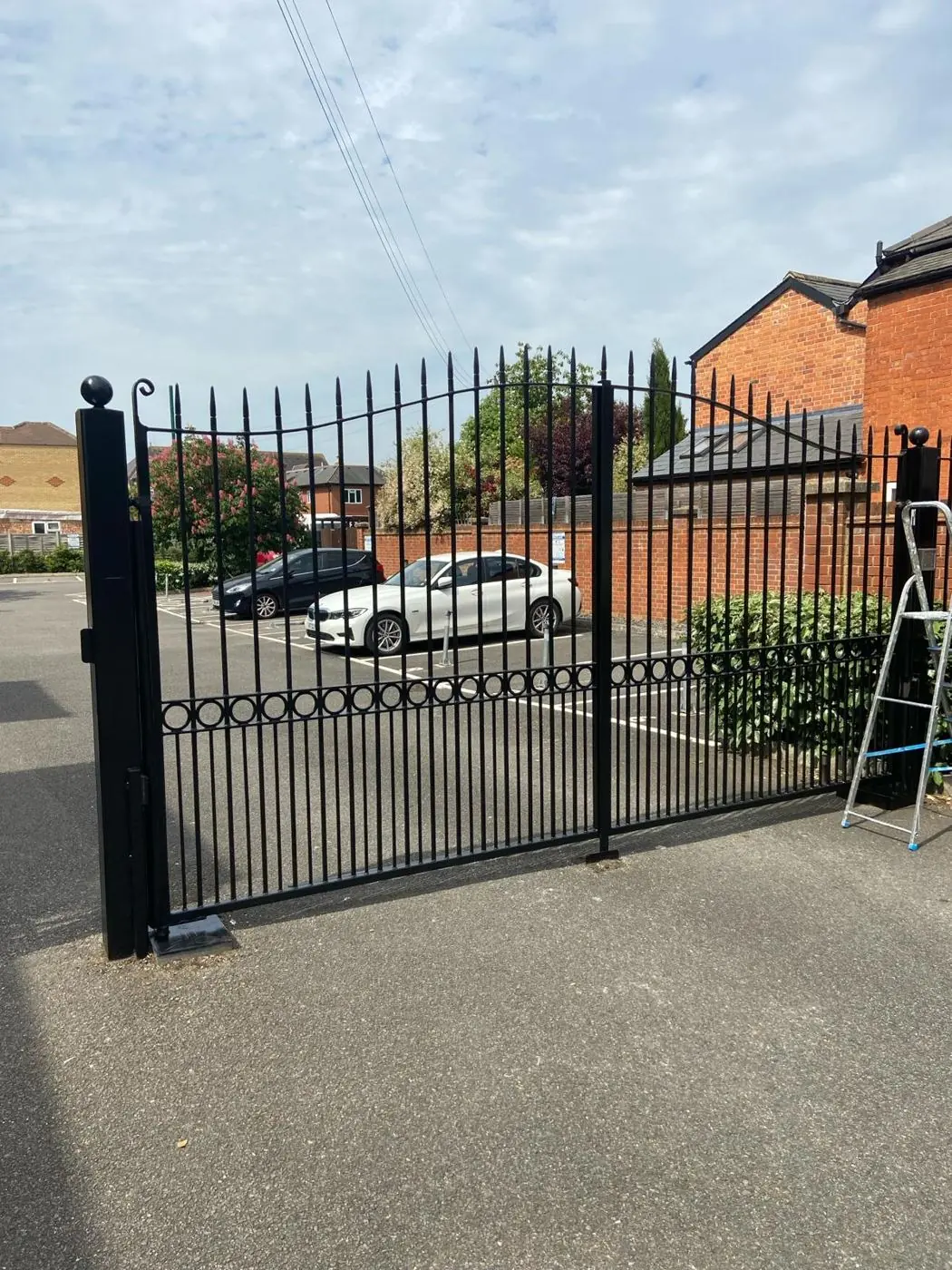
Where a house on the Wilsons Estate or around Watery Lane has a mild steel or galvanised side or driveway gate, the approach changes. New galvanised steel needs an etching primer or it sheds paint, while older mild steel gates usually need rust spots ground out and primed. These are quick jobs that pair well with a fence or front door. Parking near The Green is tight at school times, so we arrive outside the Bliss School drop-off and pick-up. More on the villages is on our Heyfords area page.
Last updated by Dean, DH Painter & Decorator.