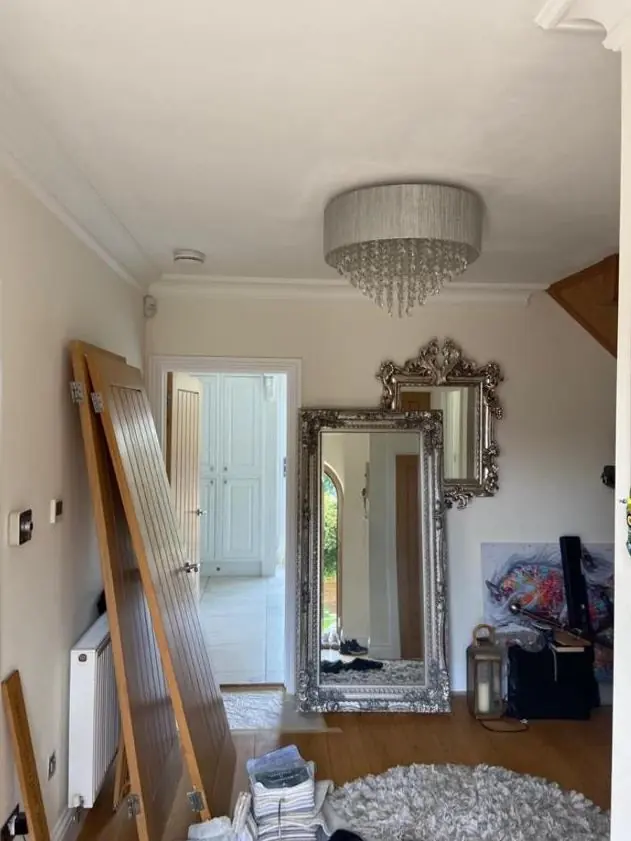
Dean decorates hallways, stairwells and landings across Wellingborough, about 9.7 miles north-east of Northampton. The tall two- and three-storey terraces near the town centre need proper staging over the stairs, while estate and new-build homes have lower halls that are quicker to set up.
Tall stairwells in the boot-and-shoe terraces
The two- and three-storey terraces and town houses along Midland Road, Park Road, Havelock Street and the Victorian streets to the east of the centre were built tall on narrow plots. On a three-storey house the wall above the stairs can rise through two floors with a landing turn in the middle, and that is where a stepladder stops being any use. We set up a stair platform or staging boards across the flight, so every part of the wall and ceiling can be reached from a level working surface. A clear route stays open so you can still get up and down.
Halls in houses of this age often have old plaster with fine cracking, heavy paint on spindles and newel posts, and long raking skirtings that follow the stairs. On uneven stairwell walls, lining paper is sometimes the right base before the emulsion goes on. The general method for stairs, landings and their woodwork is on our main hallway, stairs and landing decorating page.
Getting staging in when you park on the street
In the town centre conservation area, owners are discouraged from taking down front boundary walls to make parking spaces, so most older houses rely on street parking. Boards, stair ladders and sheets therefore come in through the front door, often straight off the pavement where the house sits on the back edge of the footway. We plan the first morning around that. We unload once, build the stair platform inside and leave it up until the high work is finished, instead of carrying it in and out each day. In the narrow lanes behind the main roads, such as Salem Lane, Pebble Lane and Buckwell End, tall walls and tight turns make it worth agreeing a stopping place before the start date.
Lower halls on Hemmingwell, Queensway and Kingsway
The London overspill estates built in the 1960s and 70s have a different layout from the Victorian streets. Their halls and landings are lower and simpler, so most of the work can be done from a stair ladder without full staging, and setting up takes far less time. The wear is just the same: scuffs at shoulder height, chipped skirtings, and handrails and spindles that have been gripped for years. A wipeable durable matt on the walls and eggshell or satin on the woodwork cope better here than a flat matt, which marks the first time a bike or buggy brushes past.
New-build staircases at Stanton Cross and Glenvale Park
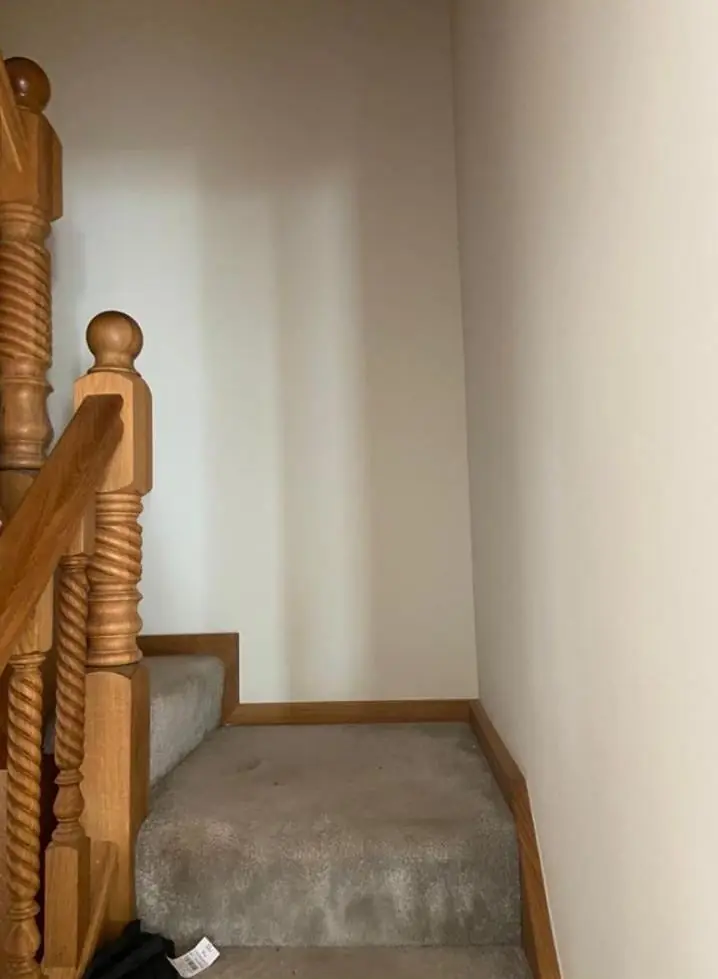
In the new homes at Stanton Cross, Glenvale Park and Park Farm, the stairwell is usually where settlement cracks appear first. Look where the stair string meets the wall, along the landing ceiling and above the door frames at the top of the flight. Our advice is to wait until the house has been through its first heating season, then fill and caulk the cracks once and decorate the whole stairwell in one go, so you don’t end up patching it twice. Our guide to painting new plaster explains why fresh walls need the right first coat.
Where a hall has damp near the floor, which can happen on the low ground by the Nene, the Ise and Swanspool Brook, we check readings before painting the lower walls and skirtings. Wider notes on the town are on the Wellingborough decorating page.
Last updated by Dean, DH Painter & Decorator.