Dean hand-paints feature walls, faux effects, panelling and period detailing in Wellingborough, about 9.7 miles north-east of Northampton town centre. The Georgian town houses and Victorian villas around Broad Green, London Road and Oxford Street give this kind of work the most to play with, but new builds benefit too.
Rooms with the proportions to carry it
Decorative work depends on the room as much as the paint. Wellingborough’s Georgian ironstone town houses on Broad Green and London Road, and the Victorian villas along Oxford Street, tend to have the height and wall area that let a strong finish breathe. A deep colour taken up to a picture rail, a dado with a contrasting lower wall, or a ceiling rose picked out in a second shade can look settled in a room like that, where the same idea might crowd a smaller one.
Where original plasterwork or joinery survives in these houses, the decorative job is often about respecting it rather than adding to it. That means cleaning clogged mouldings so their detail reads again, then choosing a sheen and colour that shows the profile. We don’t strip or alter period features without discussing it with you first, and some of these houses sit in the town centre conservation area, where original fabric is valued.
Picking out detail without overdoing it
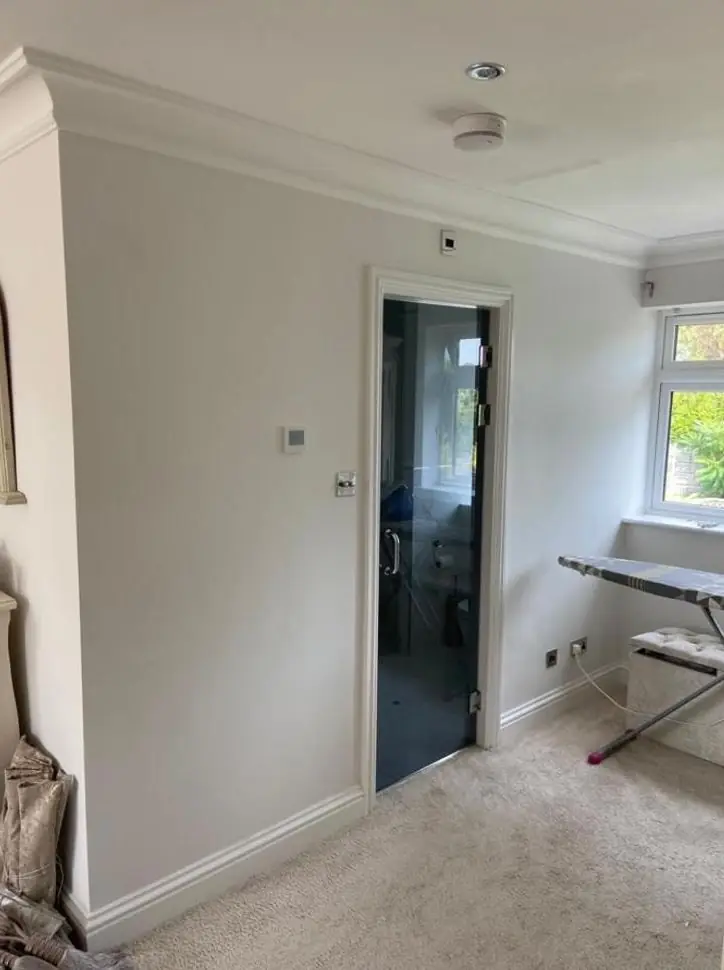
In the Broad Green and London Road houses and the Oxford Street villas, the decorative job that suits the rooms most often is picking out: painting cornices, ceiling roses, panel mouldings, fireplace surrounds or skirting in a colour or finish that sets them apart from the wall. It looks simple, but a wobbly line on a cornice is obvious from the doorway. We use a fine sash brush and work by hand, then lay down the second colour only once the first is hard.
- Tone on tone: the same colour as the wall in a different sheen, which suits a calm sitting room.
- Two shades of one colour: a slightly darker band on a dado or panel moulding, enough to notice but not to shout.
- Full contrast: white mouldings on a deep wall, or the reverse, for a hall or dining room.
Our main decorative finishes page explains faux effects, glazes and the preparation underneath in more depth.
Panelling and feature walls in the newer estates
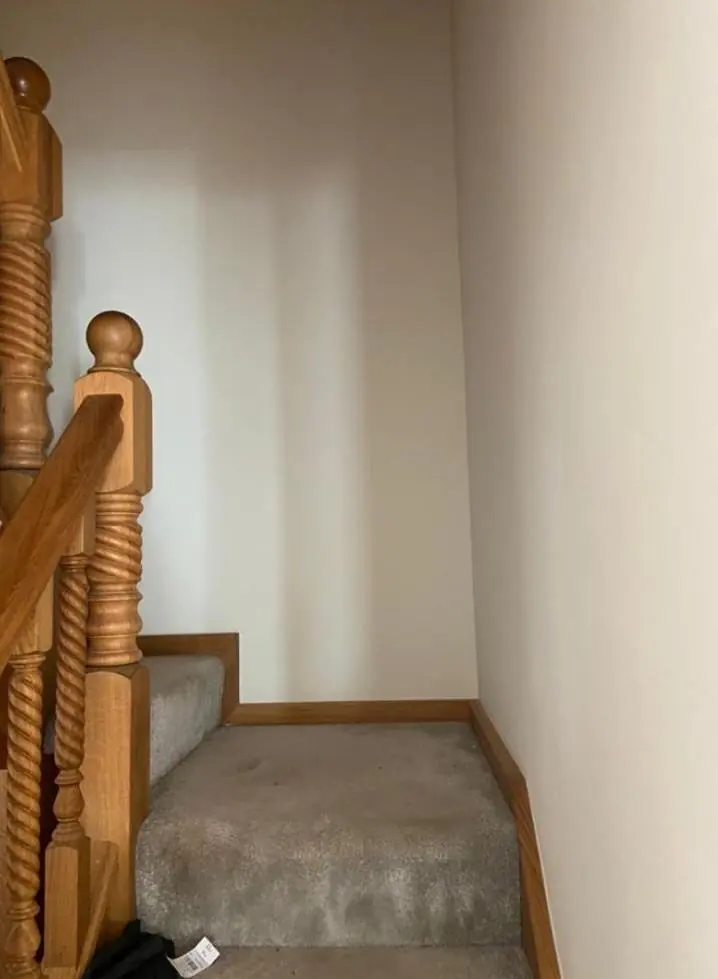
The new homes at Stanton Cross, Glenvale Park and Park Farm come with flat walls and no period detail, which is exactly why adding character tends to come up there. Wall panelling fitted on a staircase wall or behind a bed gives a new room some depth. The painting is where it succeeds or fails: every pin hole filled, joints caulked and sanded, and the paint laid off so brush marks run with the grain of each piece.
Fresh plaster needs to be fully dry and mist-coated before any effect goes over it, otherwise glazes and dark colours show patchy suction. Settlement cracks also tend to open in the first year or so in a new house, so a complex finish is better left until they have shown and been filled. The 1960s and 70s homes on Queensway, Hemmingwell and Kingsway don’t carry the settling risk, and a single feature wall or a two-tone split is often all a more compact room needs.
Effects that suit the building, not just the room
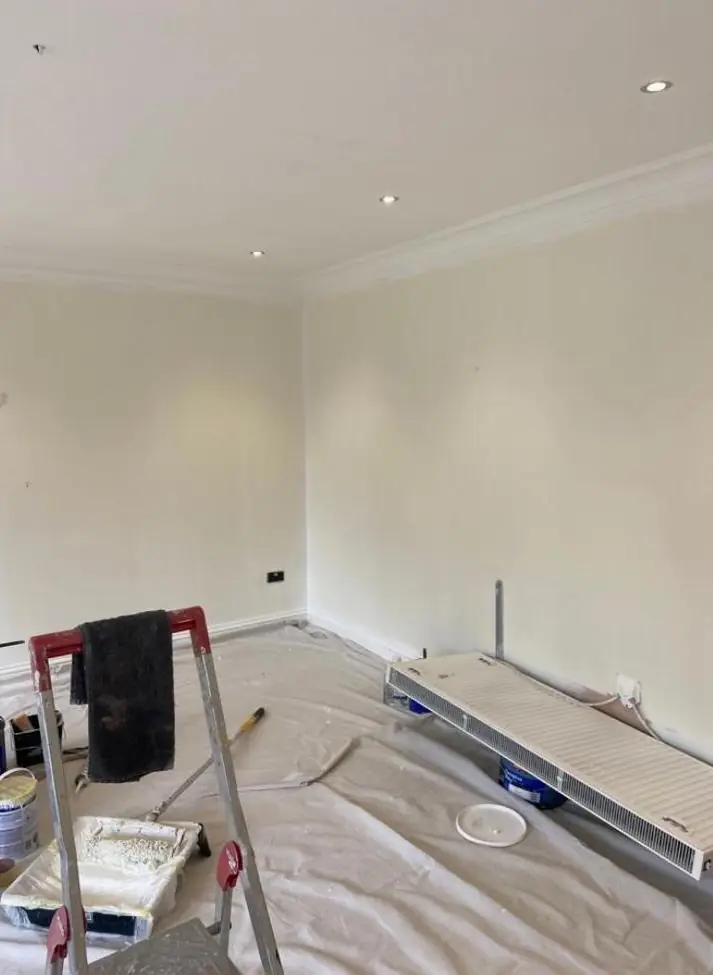
A paint effect earns its place when it has a reason to be there. In a Victorian terrace built for the shoe trade, a colour-washed or softly distressed finish on a kitchen wall can sit comfortably with the age of the house. In a crisp new-build, a sharp colour block or geometric feature may suit better. We’ll make up a sample board so you can see the effect in your own light before it goes on the wall.
Decorative work is usually quoted alongside general decorating in the rest of the room. For prices, see our painter and decorator cost guide, and for an overview of the town’s housing, our Wellingborough page.
Last updated by Dean, DH Painter & Decorator.