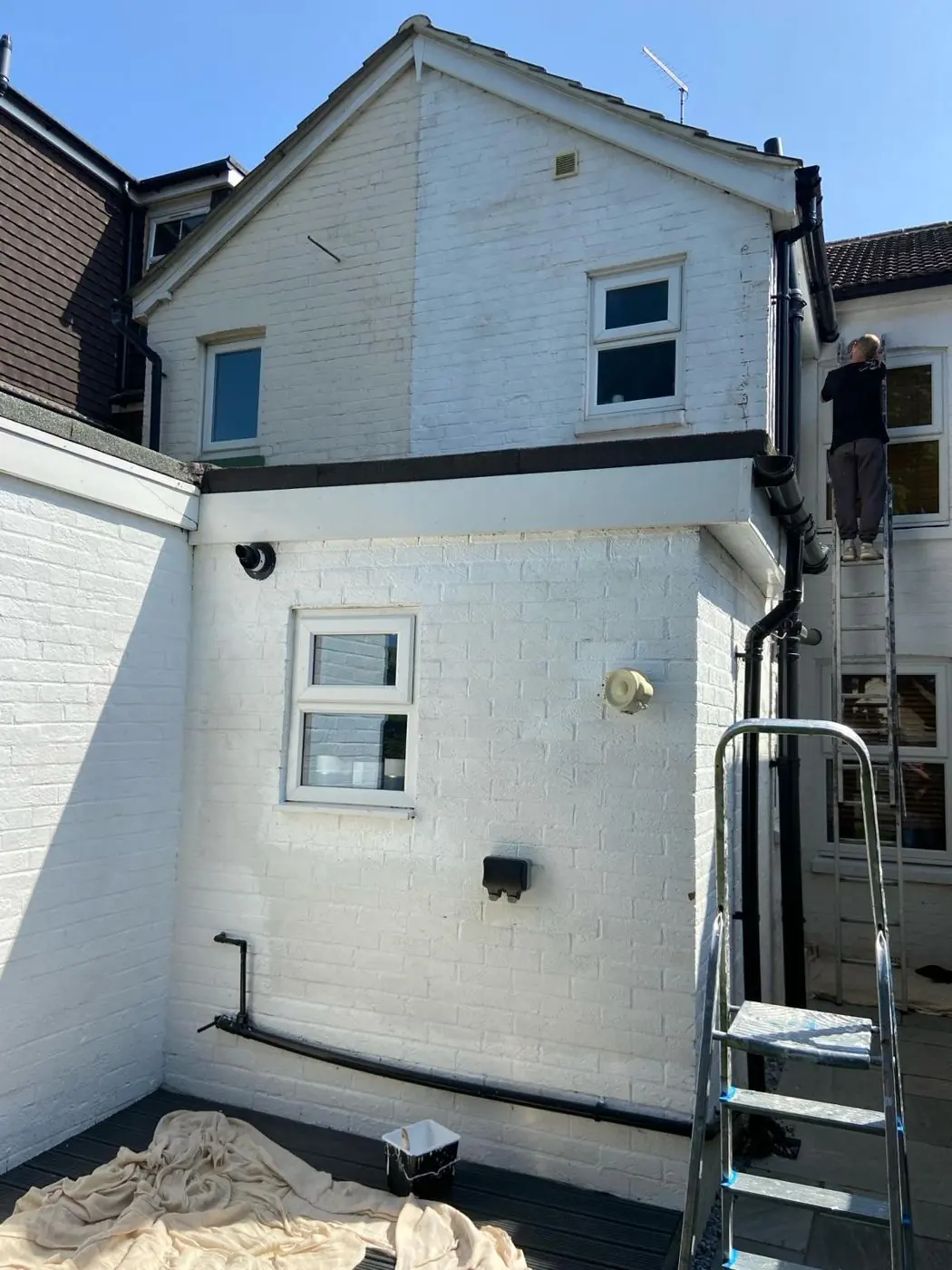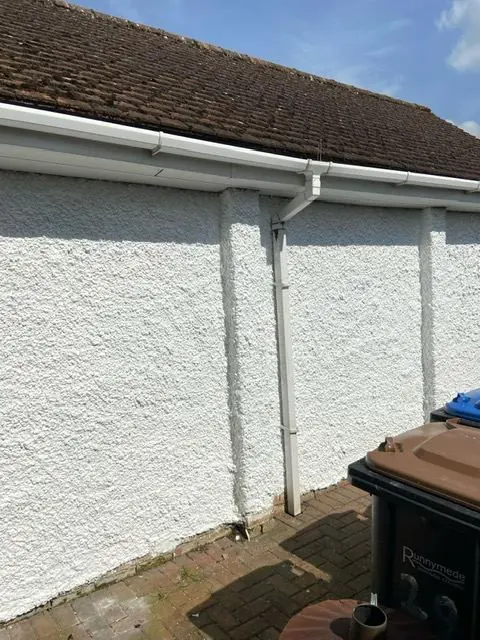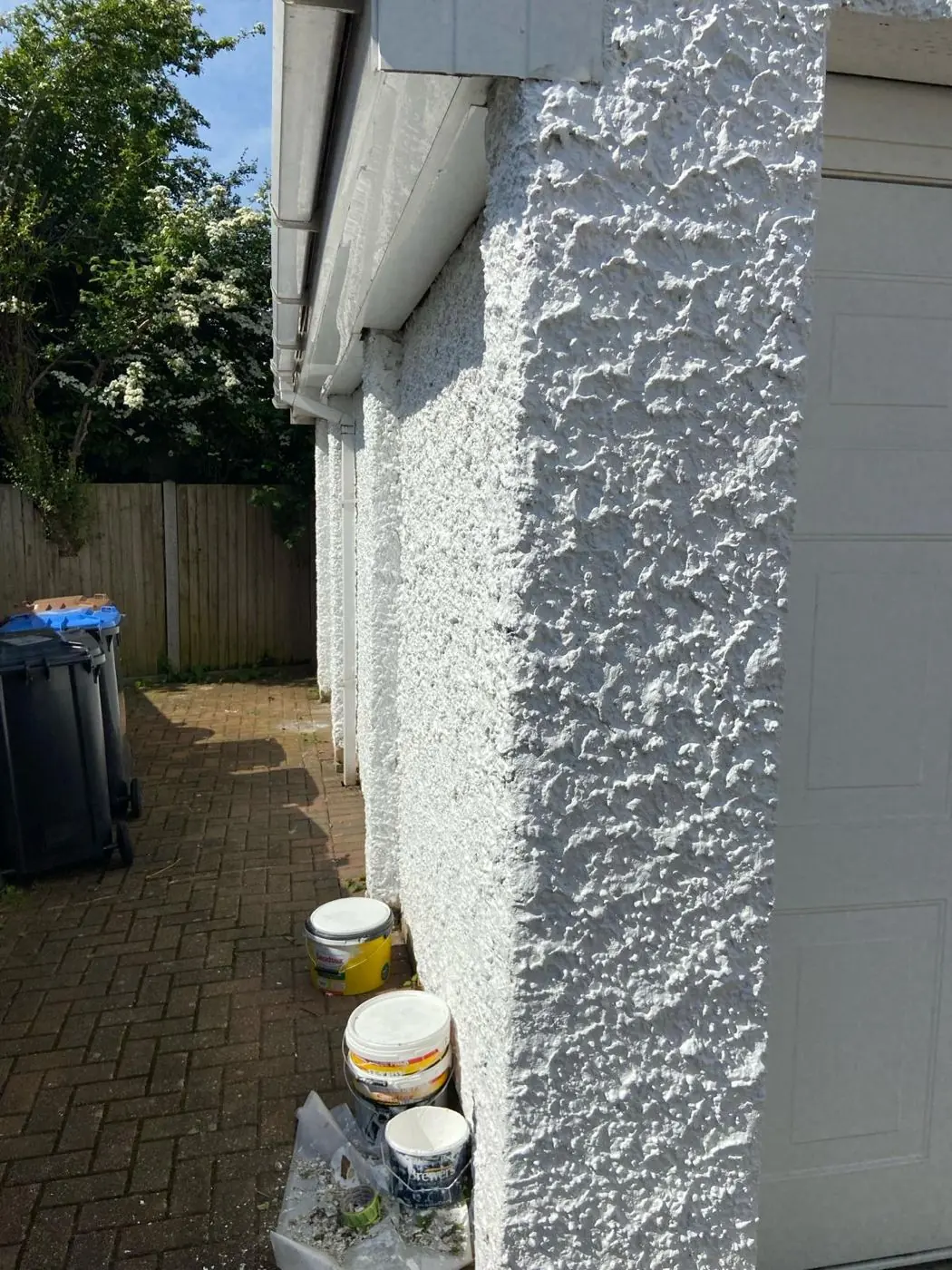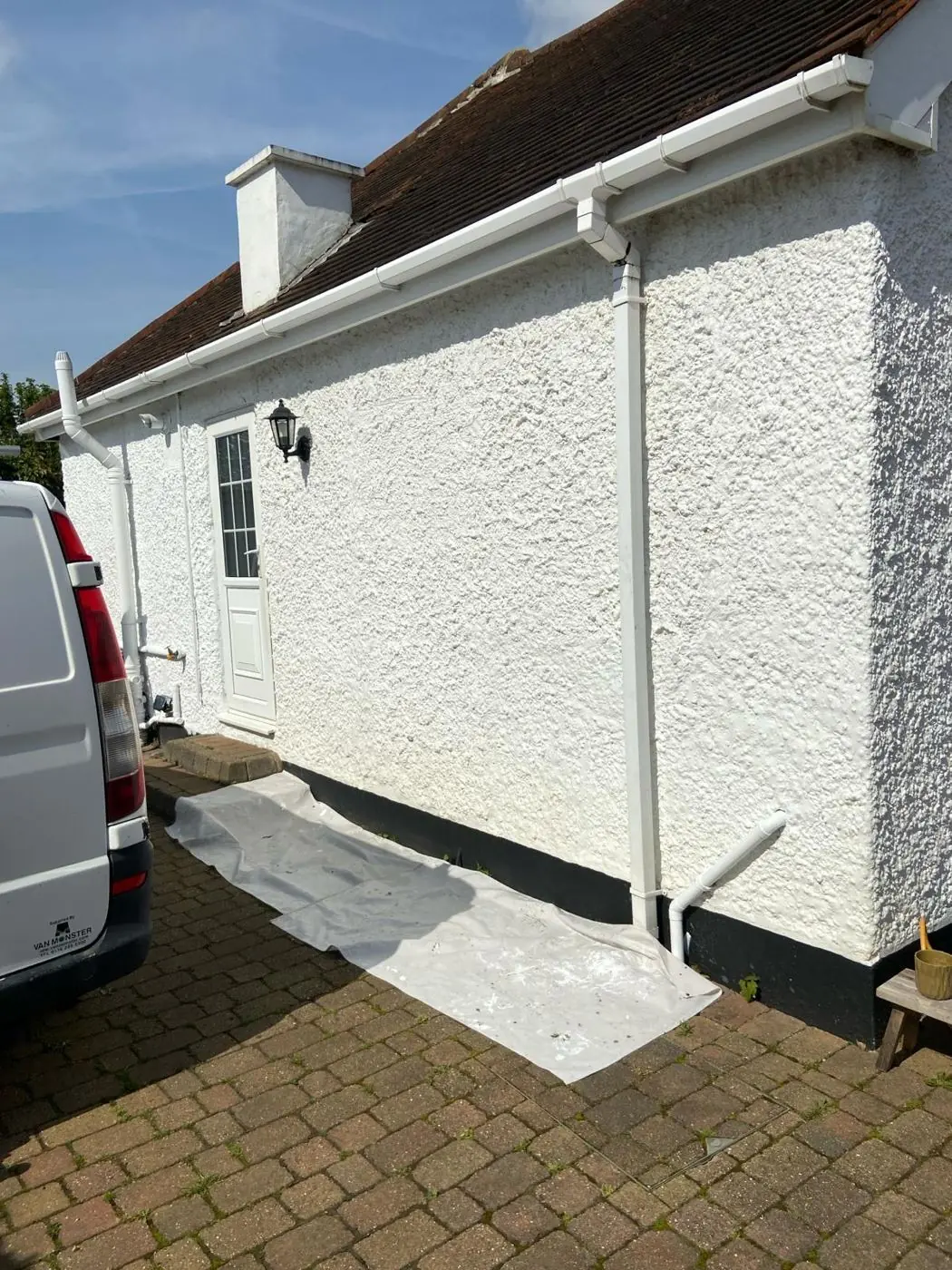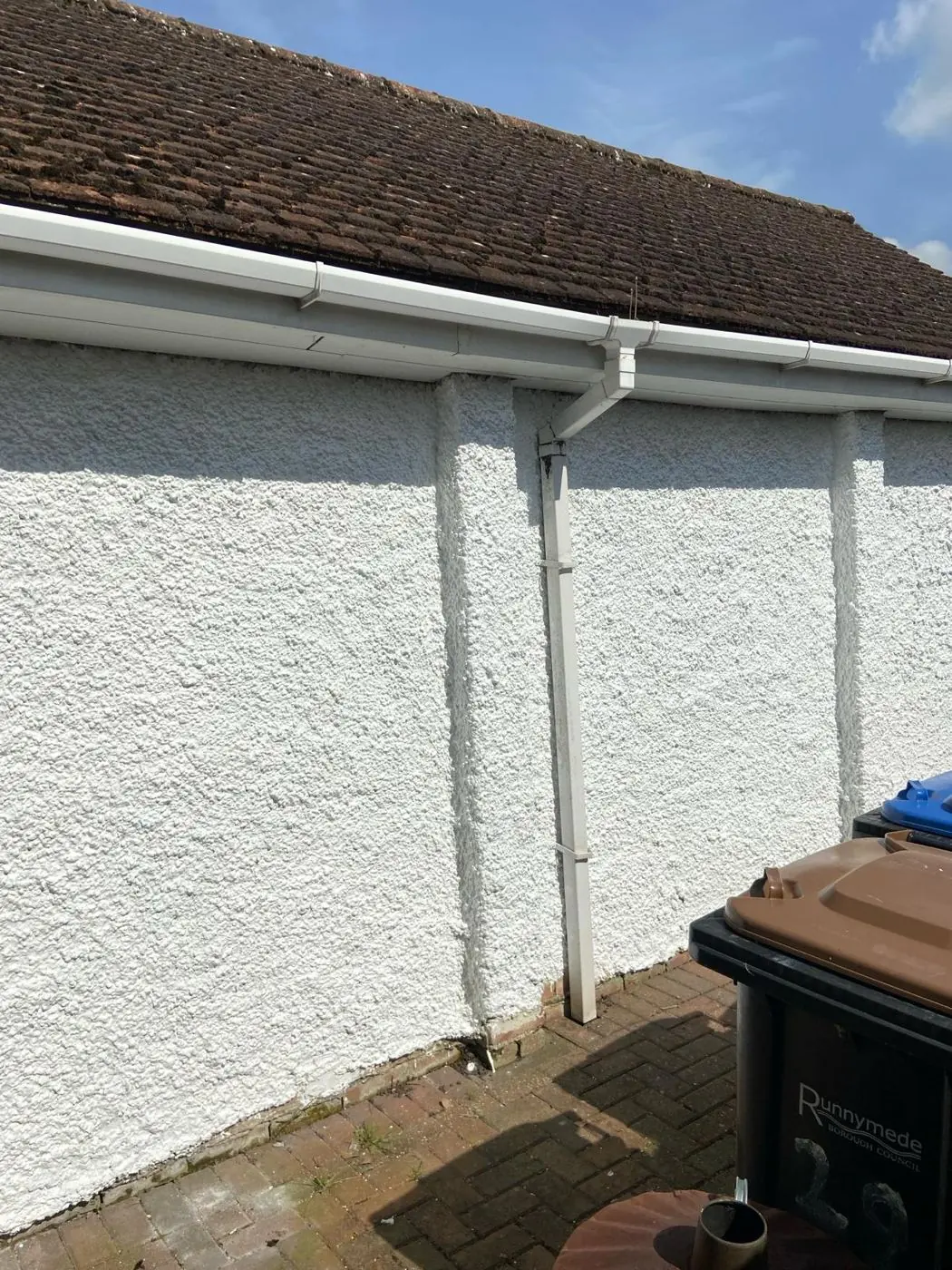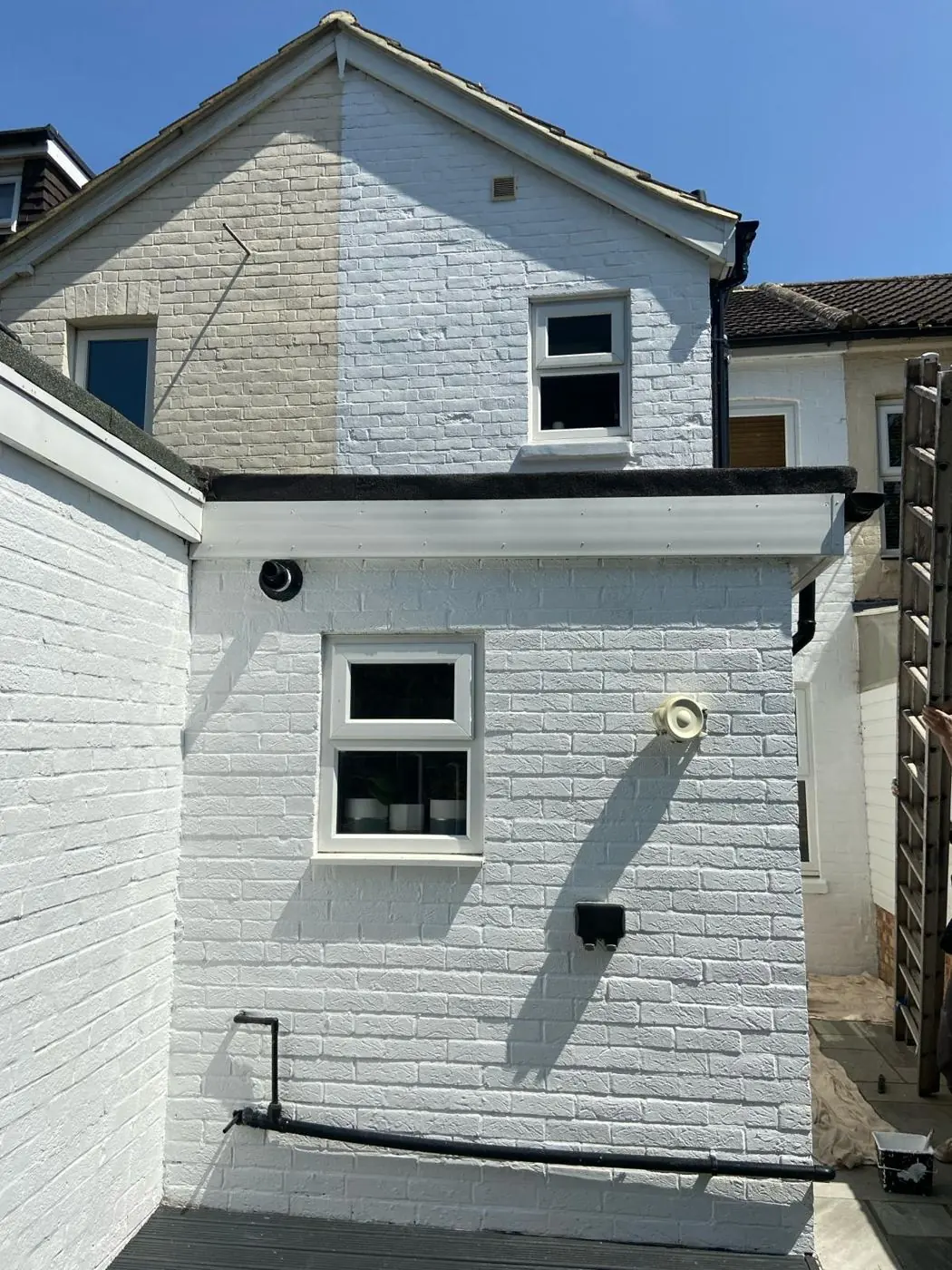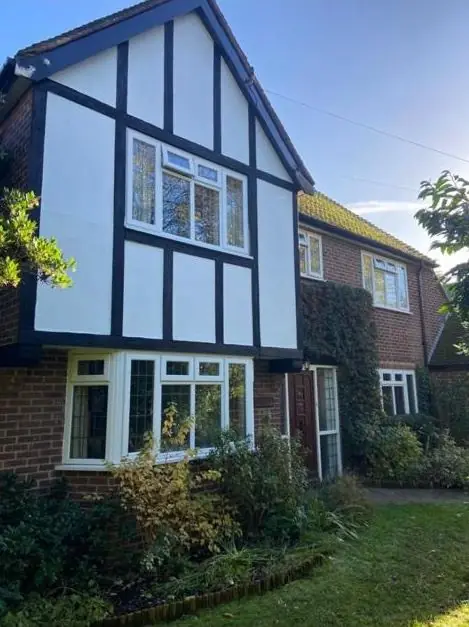
We paint timber fascias, soffits, bargeboards, gutters and downpipes on Wellingborough homes, from Victorian terraces in the town centre to the 1960s estates. Wellingborough is about 9.7 miles north-east of our Northampton base, and every roofline job starts with a check for soft timber and leaking gutter joints.
Why the roofline gets singled out here
When the Borough of Wellingborough appraised the Wellingborough Town Centre Conservation Area in 2009, it listed deteriorating and unmaintained paintwork and blocked gutters among the things that spoil the area. That is a roofline problem. Water from a blocked gutter spills over the fascia, soaks the end grain of the boards and runs down the wall below. Within a few winters the paint lifts, the timber softens and the brickwork under the eaves starts to stain.
The appraisal also notes town-centre buildings where landlords may be absent and upkeep is poor, particularly on upper floors above shops. Those are often the rooflines that have gone longest without attention.
Decorated bargeboards and brick eaves
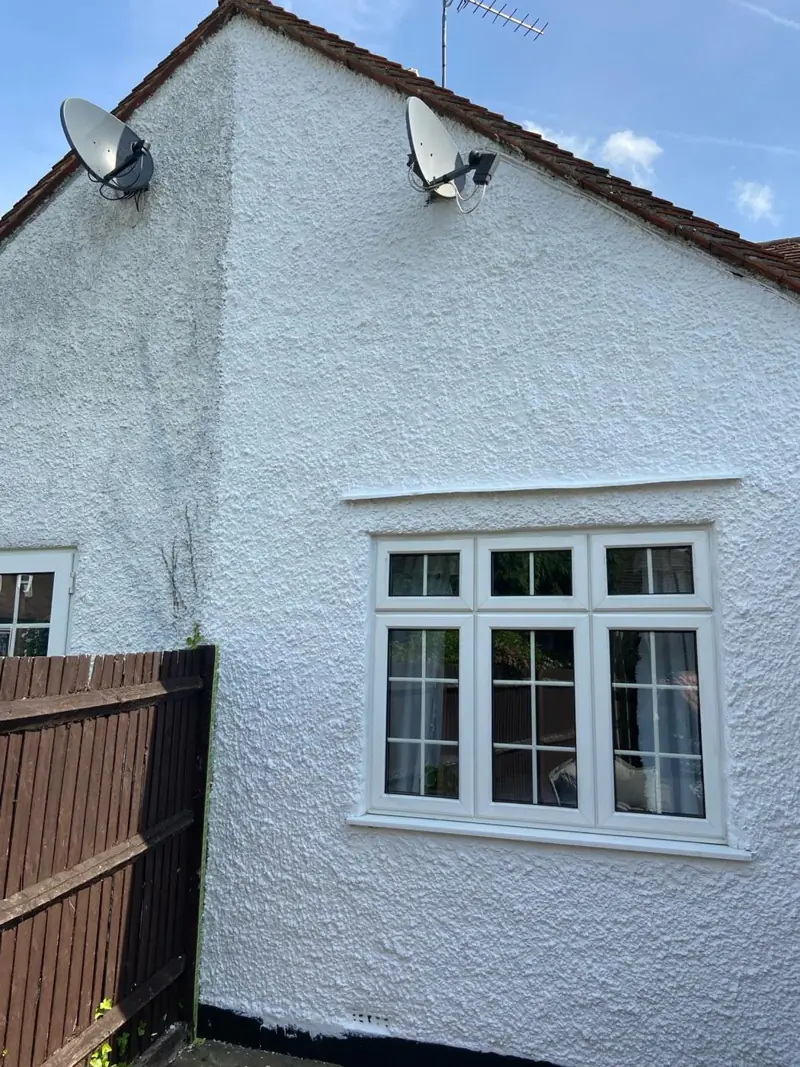
Wellingborough’s Victorian and Edwardian housing, built for the boot and shoe trade on streets such as Midland Road, Havelock Street and Great Park Street, has a wide range of roof edges. Some houses have plain timber fascias. Others have decorated bargeboards on the gables, or brick-eaved roofs where the gutter sits on brackets fixed straight into the brickwork. Many were originally Welsh slate and have since been re-roofed in concrete tile, which can leave the timber at the eaves patched or packed out.
Each type needs a slightly different approach:
- Decorated bargeboards have cut profiles and holes where water sits, so Dean works filler and primer into every edge and brushes the paint rather than rolling it.
- Brick eaves mean the gutter brackets are the weak point. Rusting brackets are wire-brushed and primed before the gutter is painted.
- Patched fascias from re-roofing are checked board by board, because a newer section of softwood next to old timber will move differently.
On houses named in the town centre Article 4 direction, the colour of the roofline counts as part of the exterior, so a change from white to black, for example, should be confirmed with the council first.
Estate rooflines at Hemmingwell, Queensway and Kingsway
The large 1960s and 1970s estates are a different job. There is no heritage detail to work around, so the work is fascias, soffits and rainwater goods. Where boards are still timber, end grain at the joints and the timber behind each downpipe are where rot usually starts. Where bins, sheds or side gates sit against the wall, we move what we can and protect the rest before painting the lower sections of pipe. Where a neighbour has already replaced their boards with uPVC, we paint up to the junction neatly and leave theirs alone.
Newer homes at Stanton Cross, Glenvale Park and Park Farm are mostly too recent to need roofline repainting yet, but any painted timber there is worth checking after its first few years.
Reaching the eaves on a tight street
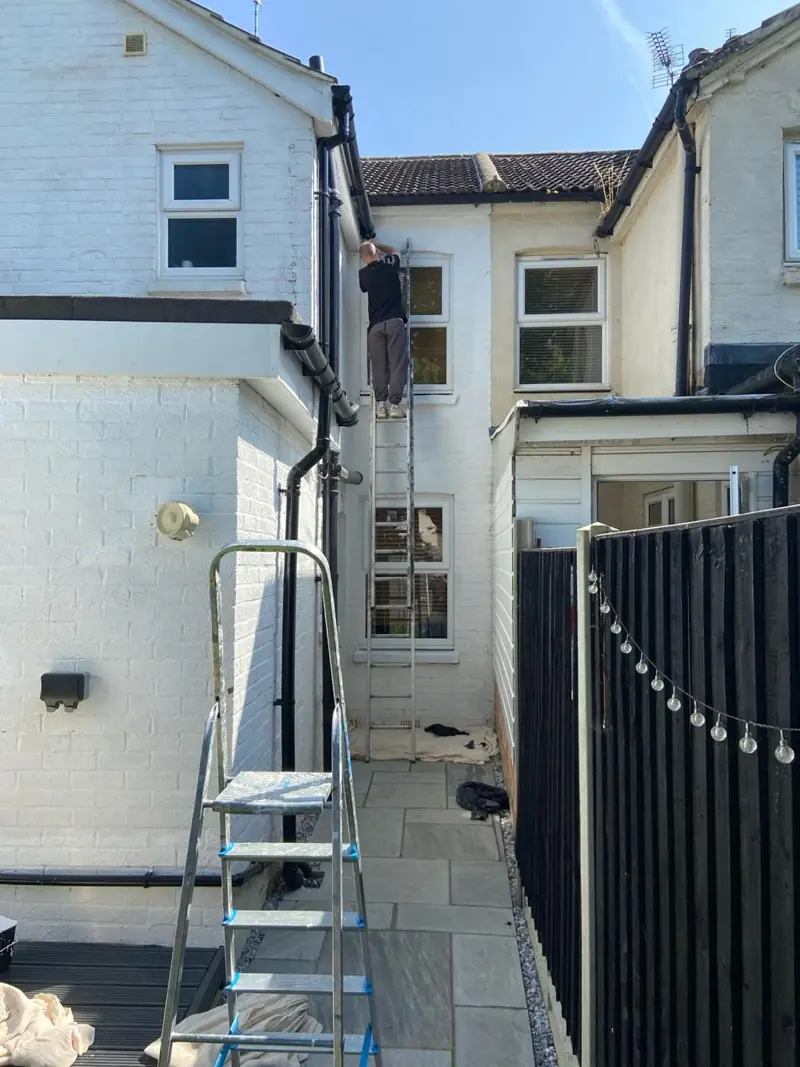
Much of the old centre is built hard up to the footway, and the conservation appraisal notes that access to roofs and upper floors can be restricted. Three-storey Victorian fronts need taller ladders or a tower, and on busy routes such as Midland Road and London Road we plan the work to keep the footway passable. Our fascia and soffit painting page explains the prep in detail. For a sense of what affects the price, see the painter and decorator cost guide, and for other work in the town, our Wellingborough page.
Last updated by Dean, DH Painter & Decorator.