Dean gives colour and finish advice to Wellingborough homeowners, landlords and shopkeepers as part of a decorating job, about 9.7 miles north-east of Northampton. In this town it matters more than usual, because an Article 4 direction makes exterior colour changes on many town-centre houses a planning matter.
A colour change can need planning permission here
Most people can repaint the outside of their house any colour they like. In parts of Wellingborough, that is not the case. The town centre conservation area has an Article 4 direction, made in October 2011, covering named houses picked out for their contribution to the townscape. The council’s examples run from the shoe-trade terraces of Rock Street, Havelock Street and Great Park Street to larger houses on Broad Green, Harrowden Road and Swanspool Parade.
For those houses, the direction removes the normal right to paint or render the outside. That covers painting a surface that has never been painted, and it covers any change of colour. Repainting a front door or render in the same colour is a different matter from switching it to something new. If the building is a flat or a business, any external change in the conservation area is a planning matter whether or not Article 4 applies.
We are not planners, and we won’t tell you a change is fine when it might not be. What we can do is help you settle on a colour, then suggest you check with North Northamptonshire Council before any paint is bought. The Roundhouse area also has an Article 4 direction, but its details are only available from the council on request.
Shades that sit with ironstone and Wellingborough brick
Outside the regulated houses, the buildings around you still steer the choice. The old core is warm brown ironstone banded with pale limestone, as on All Hallows Church and the Tithe Barn. The Victorian streets use a mottled red and pink local brick, with some polychrome brick and yellow Peterborough brick. Some early 19th-century houses on Sheep Street and Silver Street have painted stucco fronts.
| Next to | Colours that tend to work | Colours to test carefully |
|---|---|---|
| Ironstone and limestone | Warm off-whites and creams on joinery, deep greens or dark blue on doors | Brilliant white, which can look stark against the brown stone |
| Red and pink Wellingborough brick | Stone, soft white or deep heritage shades on sashes and bays | Cool grey, which can make warm brick look muddy |
| Painted stucco | Pale, chalky tones in the run of the street | Strong colours that break up a terrace |
Ironstone and limestone walls themselves should stay unpainted, which is covered on our Wellingborough area page. The colour decision on those houses is about the windows, doors and railings.
Shopfronts follow their own guide
Business frontages in the centre have their own rulebook: the council’s design guide for shop fronts and advertising, written at the same time as the 2009 appraisal. For a business on Market Street, Sheep Street, High Street or Cambridge Street, we help you settle a scheme, and the council confirms it before any brush touches the front. Where a High Street building still has its cast-iron columns, picking them out in a dark colour that matches the fascia is a traditional approach worth discussing. The practical side of the repaint is on our shopfront painting page.
Inside: tree light on the west side, bright rooms in the centre
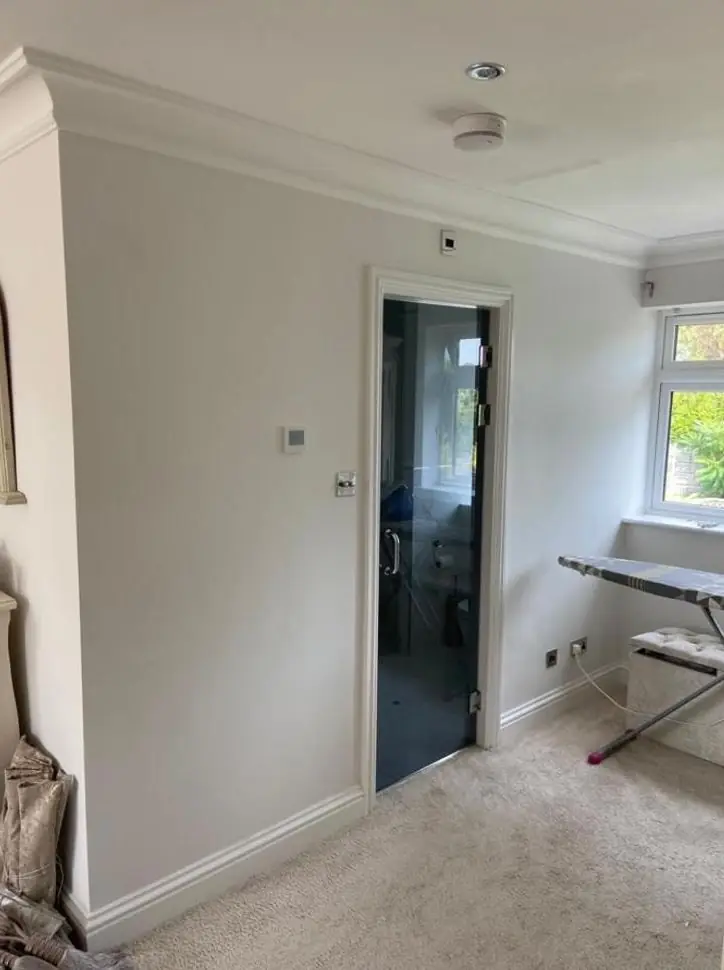
Indoors, the town’s layout affects how a colour reads. The western and southern edges, around Oxford Street, Westfield Road and Harrowden Road, have mature trees, and in summer front rooms there can pick up a green cast that turns some greys cold. The High Street area is almost treeless, so rooms there get plainer light. We paint large sample patches and look at them at the times you use the room. How we judge undertone and sheen in general is on our main colour and finish advice page.
Last updated by Dean, DH Painter & Decorator.