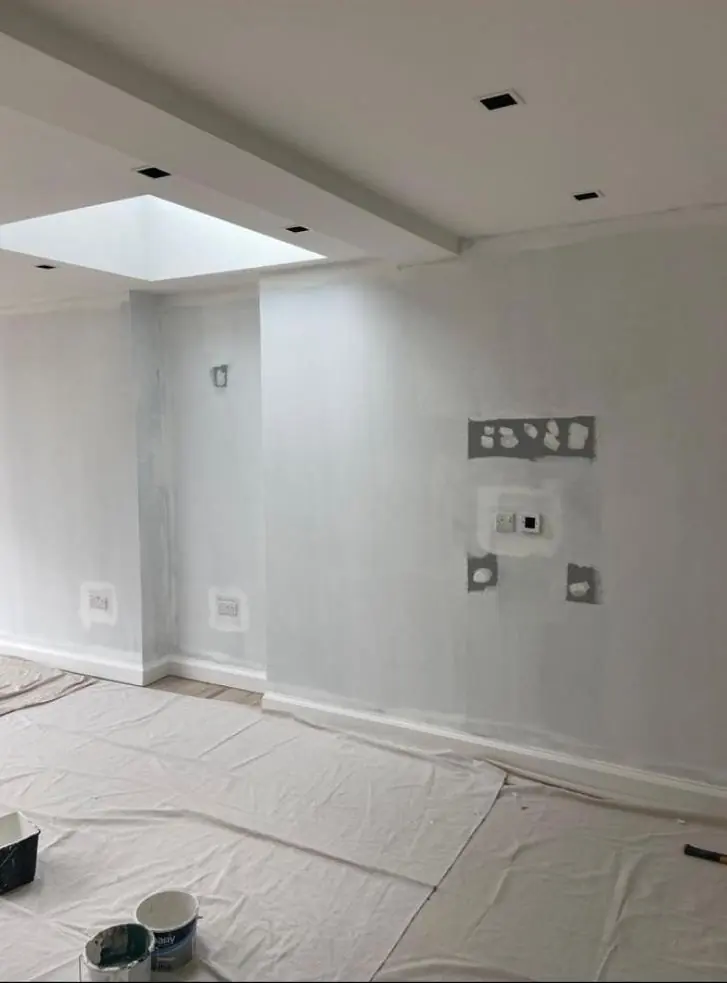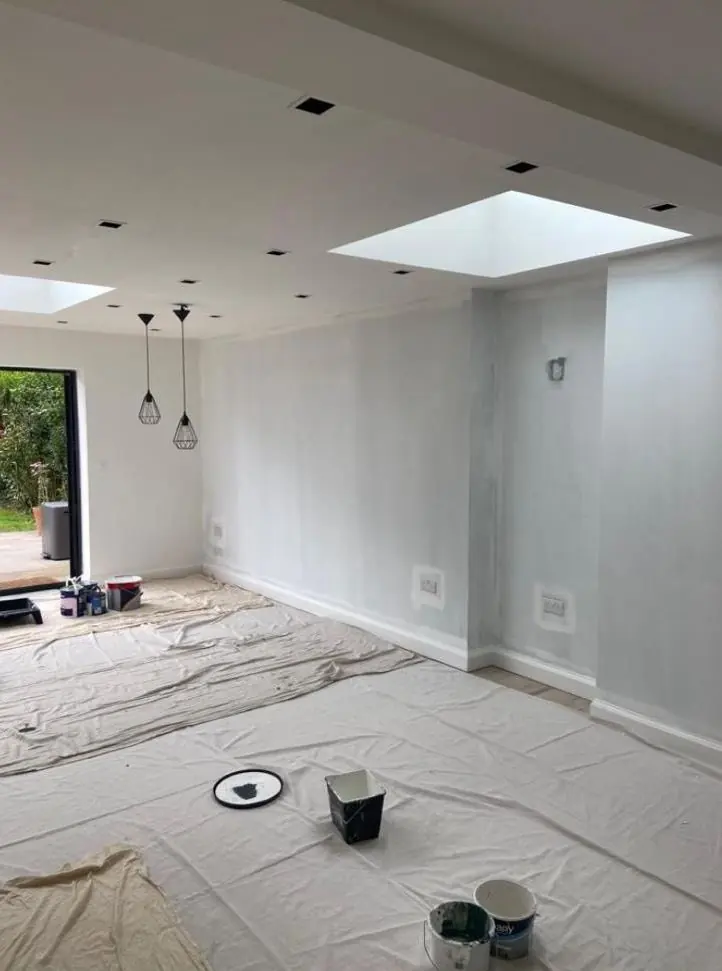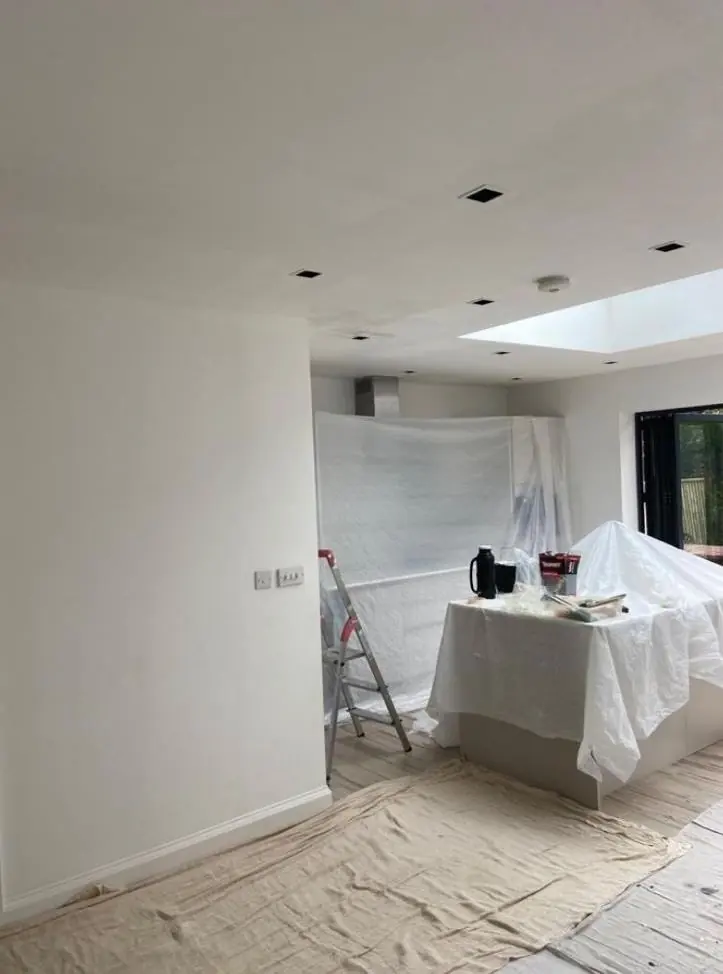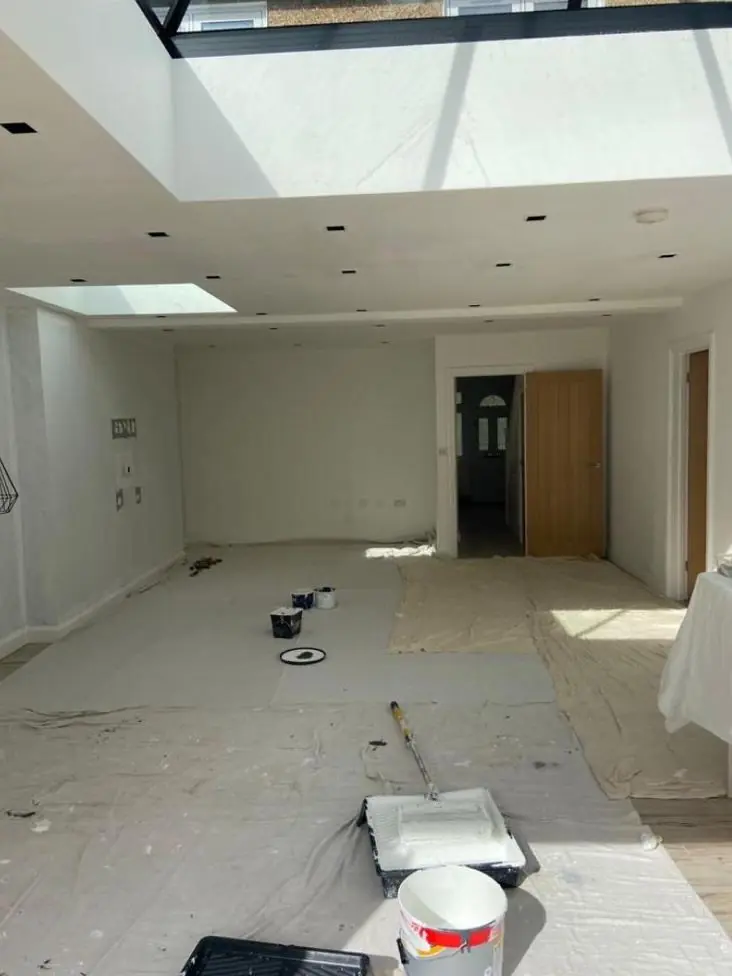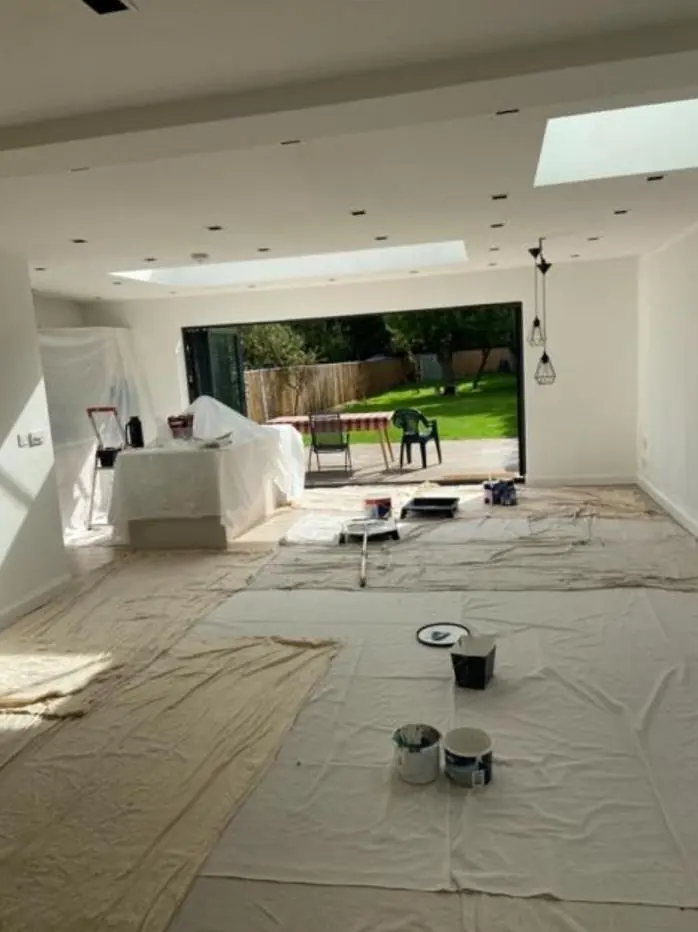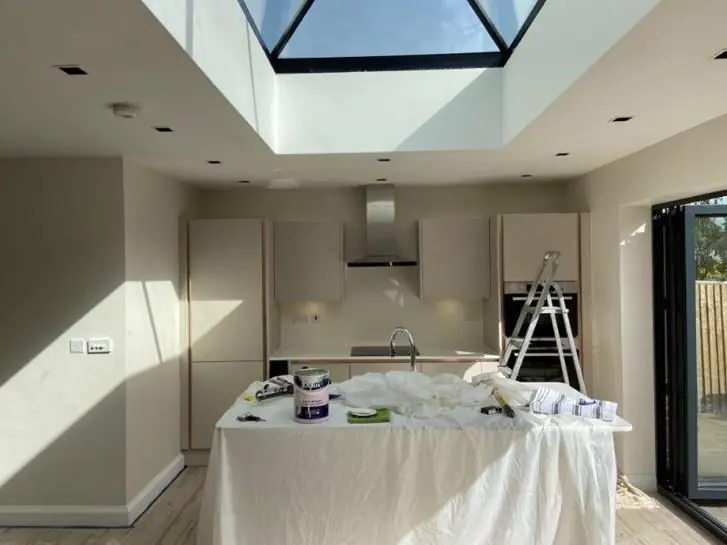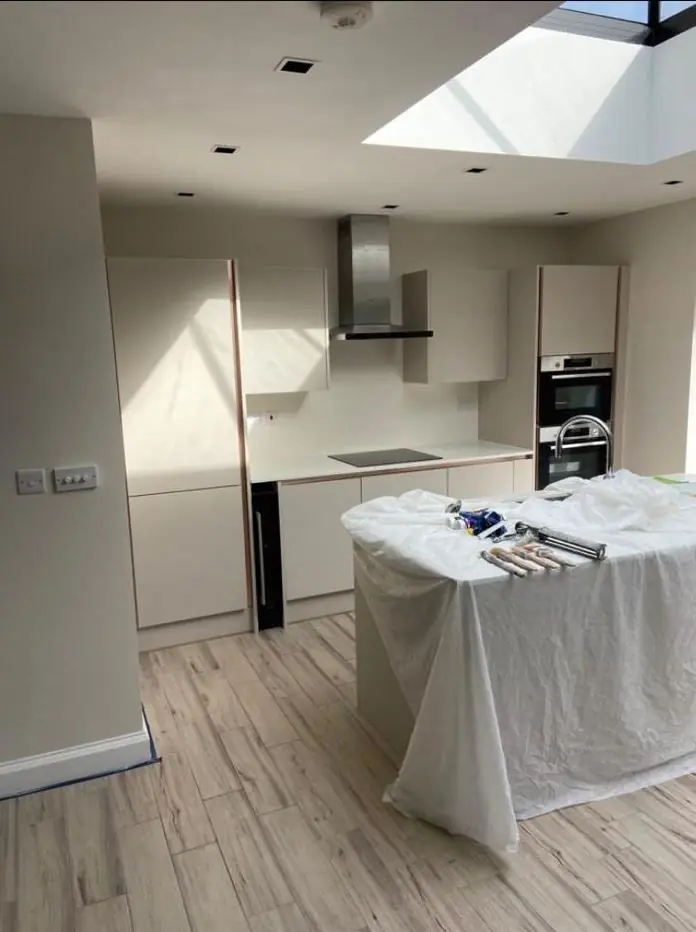
DH Painter & Decorator decorates new plaster in Wellingborough, about 9.7 miles north-east of Northampton town centre. That means mist coats and finish coats in the new homes at Stanton Cross, Glenvale Park and Park Farm, and decorating extensions and re-skimmed rooms on the town's older houses.
Stanton Cross, Glenvale Park and Park Farm
Most of Wellingborough’s new plaster is in its three growth areas. Stanton Cross is a planned extension east of the railway station of about 3,200 homes. Glenvale Park is the other main urban extension, and Park Farm has 600 homes, 180 of them affordable. Between them they produce a steady supply of rooms with fresh walls and ceilings and new joinery.
Two situations come up. Some owners get a house with bare or barely sealed plaster in certain rooms, perhaps after choosing their own finishes or having a room re-skimmed after a change. Those walls need a proper breathable mist coat before any colour, or the finish will peel and flash. More often the house has been handed over in a builder’s contract coat, and the owner wants their own colours once it has settled. Either way the plaster underneath is still new and still giving up moisture, so it pays to check readings before painting rather than going by the calendar.
Why the cracks arrive in the first year
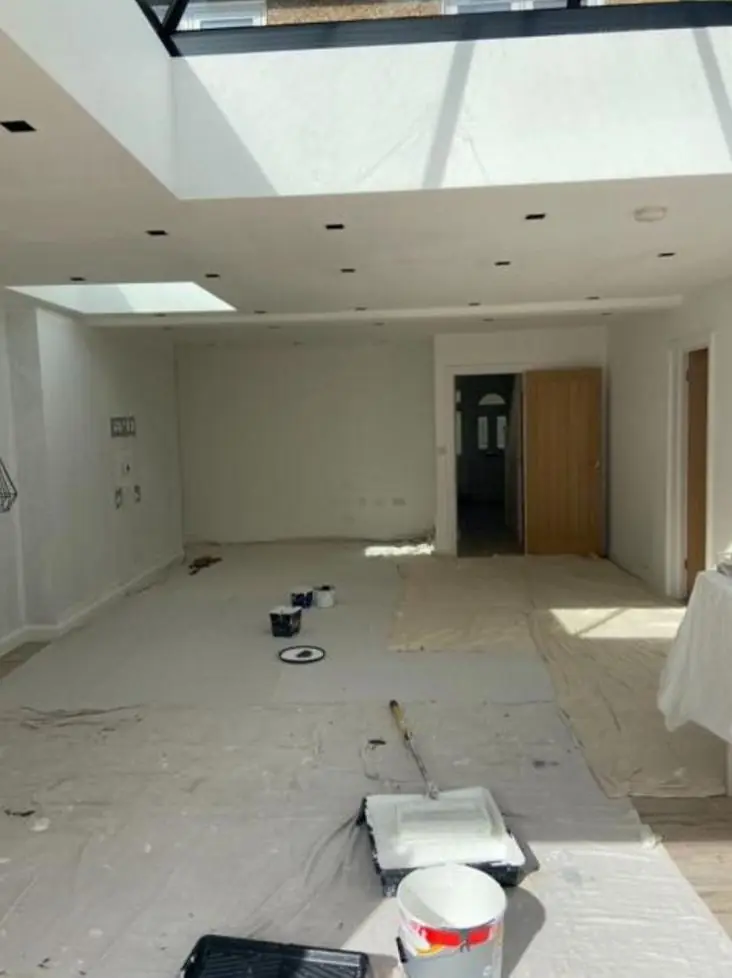
While the structure gives up its construction moisture and the timbers and plasterboard settle, fine cracks open at the ceiling line, along board joints and around door frames and stair strings. That is normal, and it is the reason we suggest holding off a full redecoration in a new Stanton Cross or Glenvale Park home until after the first heating season. Then the cracks can be raked out, filled and caulked once, the repairs spot-primed, and two finish coats applied over the lot. Decorating fully in the first month often means doing the filling twice.
Extensions joined to Victorian and Georgian houses
The other source of new plaster is the extensions and re-skims on the town’s older houses, from the red-brick terraces off Midland Road and Oxford Street to the larger houses near Broad Green and London Road. In those houses the original walls are often lime plaster, which behaves differently from the modern gypsum in an extension. Where new meets old, the two take paint at different rates and a crack line along the junction is common. We fill and line that join before painting, and on the lime side keep to a breathable paint rather than a heavy vinyl that would trap moisture.
Access matters here too. Getting round the back of many town-centre buildings is difficult, as the 2009 appraisal records, so on terraced houses with no back entrance, materials and sheets come through the house. We protect the hall and route before anything is carried through.
If the extension adds new MDF skirtings, architraves or a new door to a period house, we can match the sheen and colour of the existing joinery so the new room doesn’t stand out from the hall it opens onto.
Drying checks on the low ground
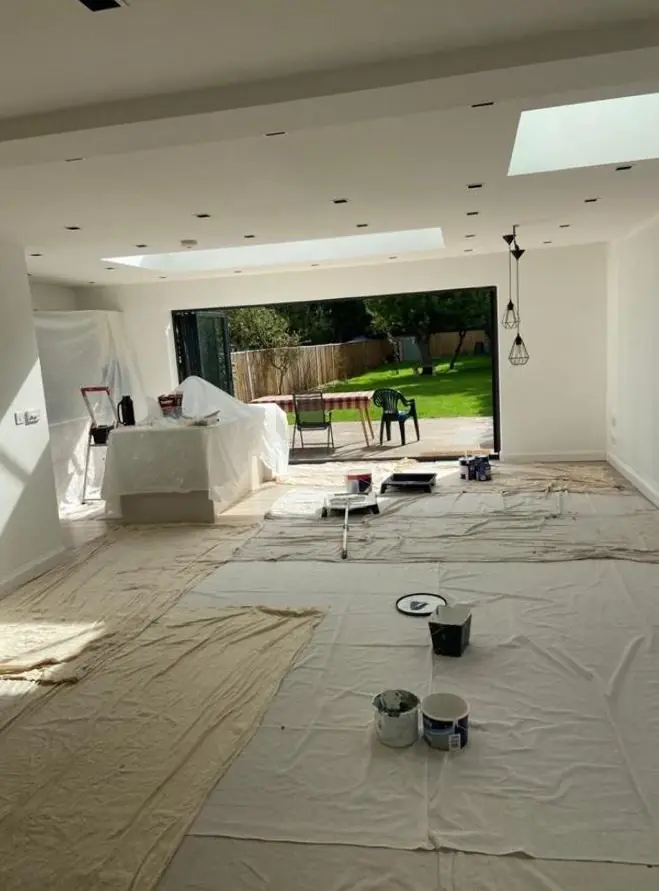
New plaster can take weeks to dry out, and longer in winter or in a room with little ventilation. Where a house sits low beside the Nene, the Ise or Swanspool Brook, its walls may also hold background damp, and that can be mistaken for plaster that hasn’t dried. We take moisture readings across the walls, including corners and reveals, before the mist coat goes on, and tell you if anything needs to dry out or be looked at first.
What a new-plaster job includes, from mist coat to new MDF skirtings, is listed on our main new plaster and extension painting page. The mist coat guide explains the first coat in more detail. Our Wellingborough hub lists the other services we offer in the town.
Last updated by Dean, DH Painter & Decorator.