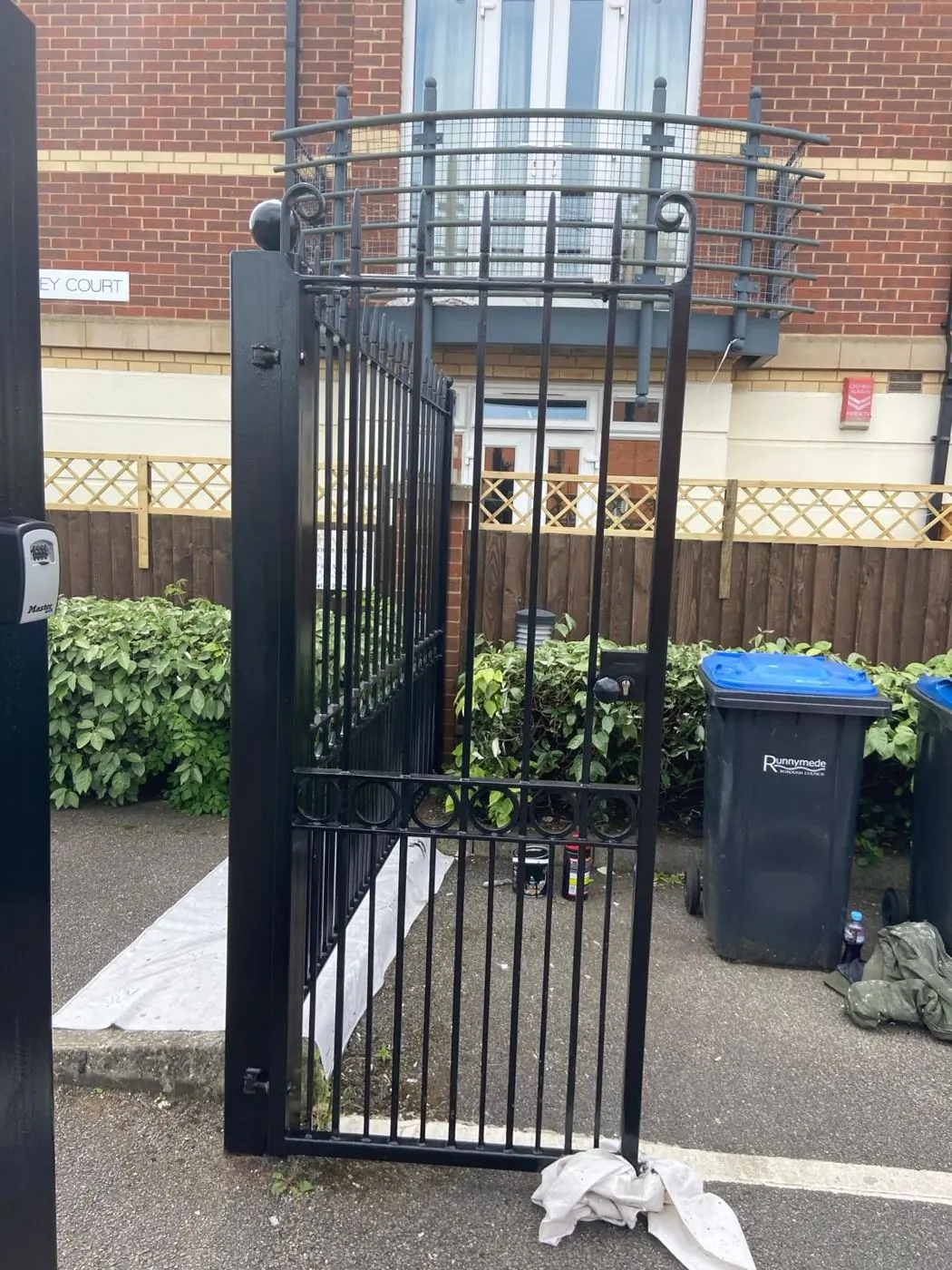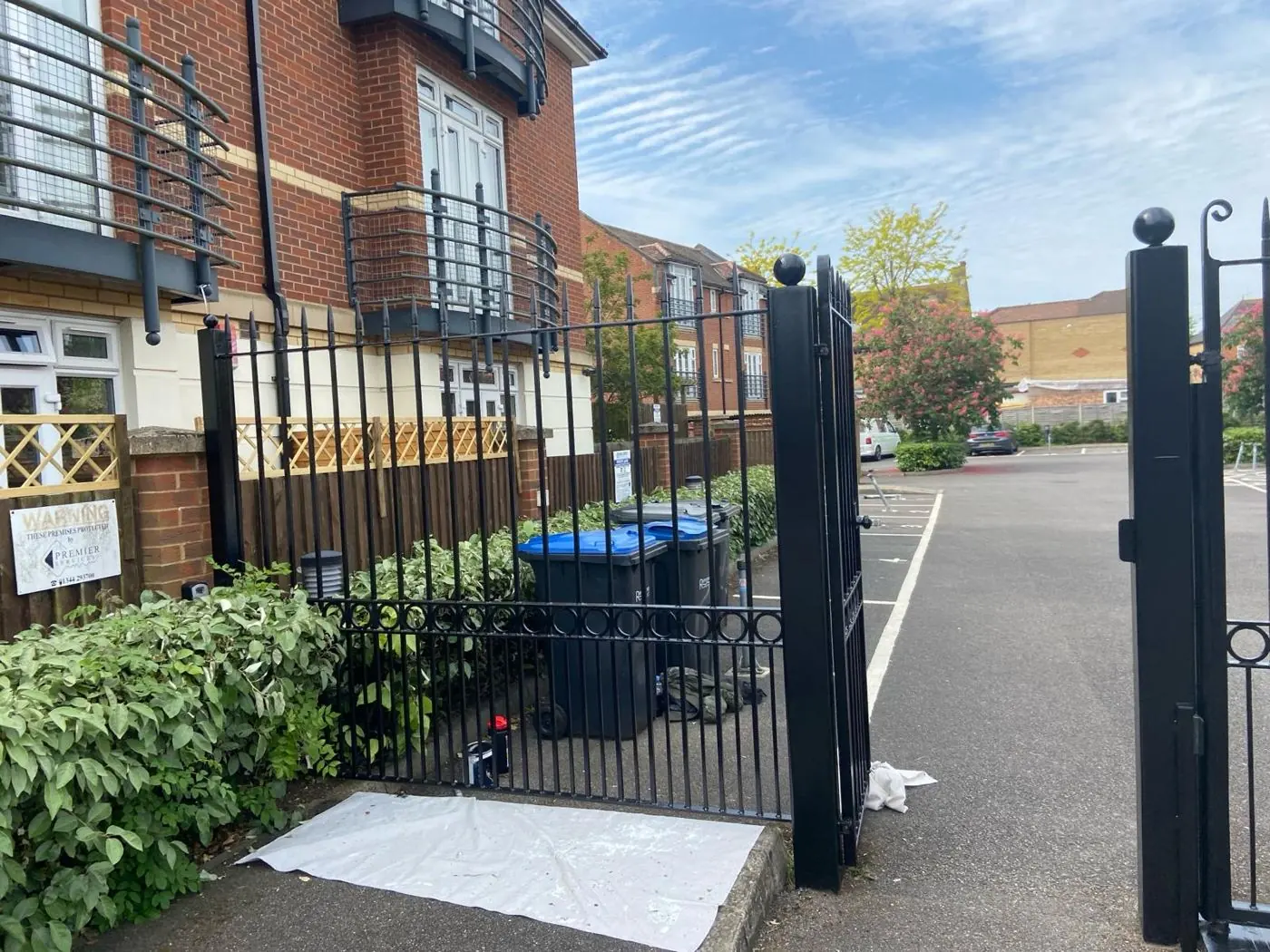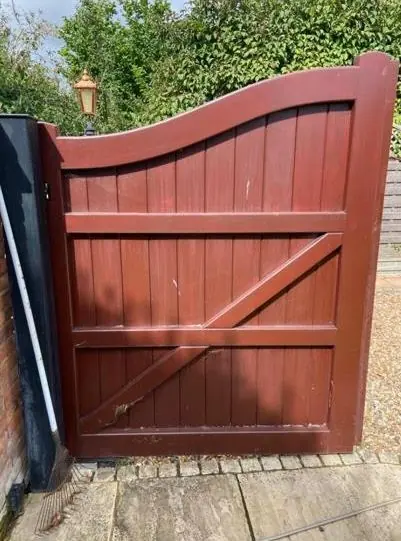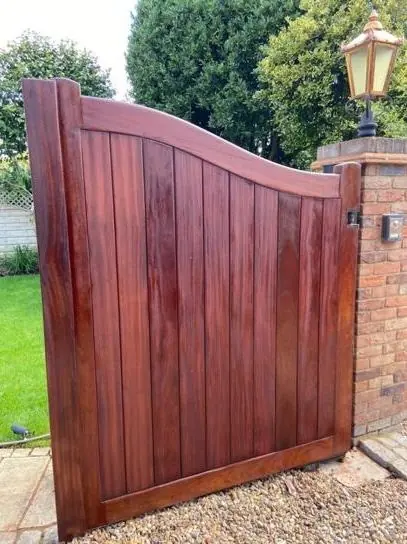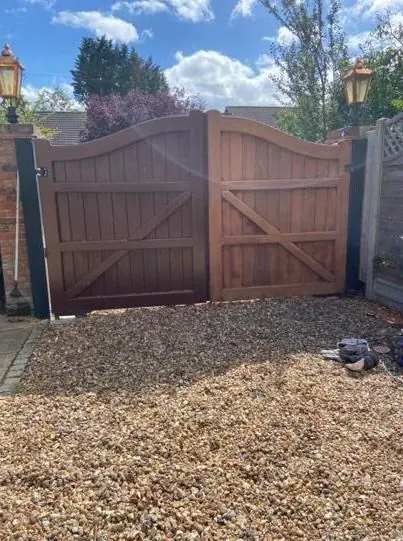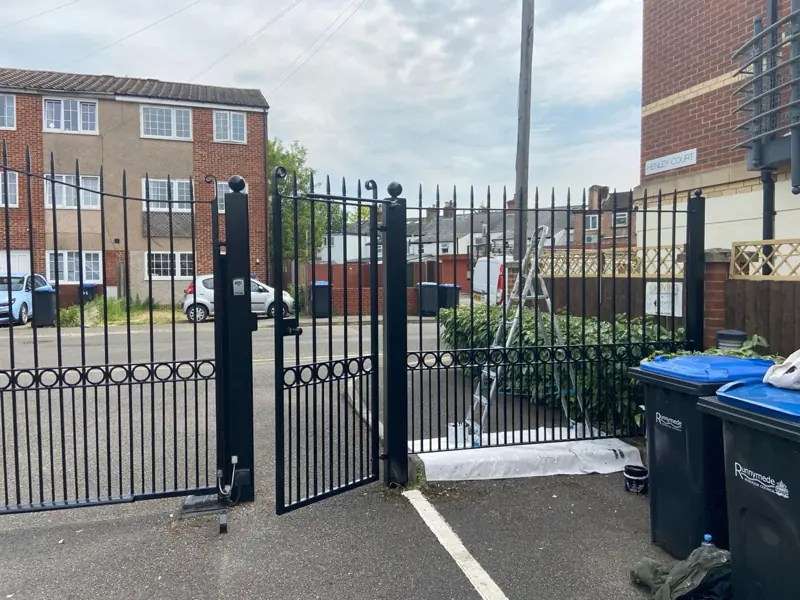
We stain and paint garden fences, posts and wooden gates across Wellingborough, which lies about 9.7 miles north-east of Northampton. Most timber boundaries here are on the leafy western and southern edges, the 1960s and 1970s estates and the new developments, as the old town relies more on stone and brick walls.
Where the timber boundaries are
Wellingborough’s oldest streets are not fence country. Around All Hallows Church, Church Street and the narrow lanes such as Salem Lane and Pebble Lane, gardens are enclosed by tall ironstone and brick walls, and the conservation area discourages removing them. Timber fencing becomes common as you move out: the gardens off Oxford Street, London Road, Westfield Road, Harrowden Road and Broad Green on the western and southern side; the garden fencing on the Hemmingwell, Queensway and Kingsway estates; and the brand-new boundaries at Stanton Cross, Glenvale Park and Park Farm.
Those three groups age in different ways, so the advice we give depends on where your fence stands. The general method, from cleaning to final coat, is on our fence staining and gate painting page.
Shade, leaf fall and green growth on the leafy edges
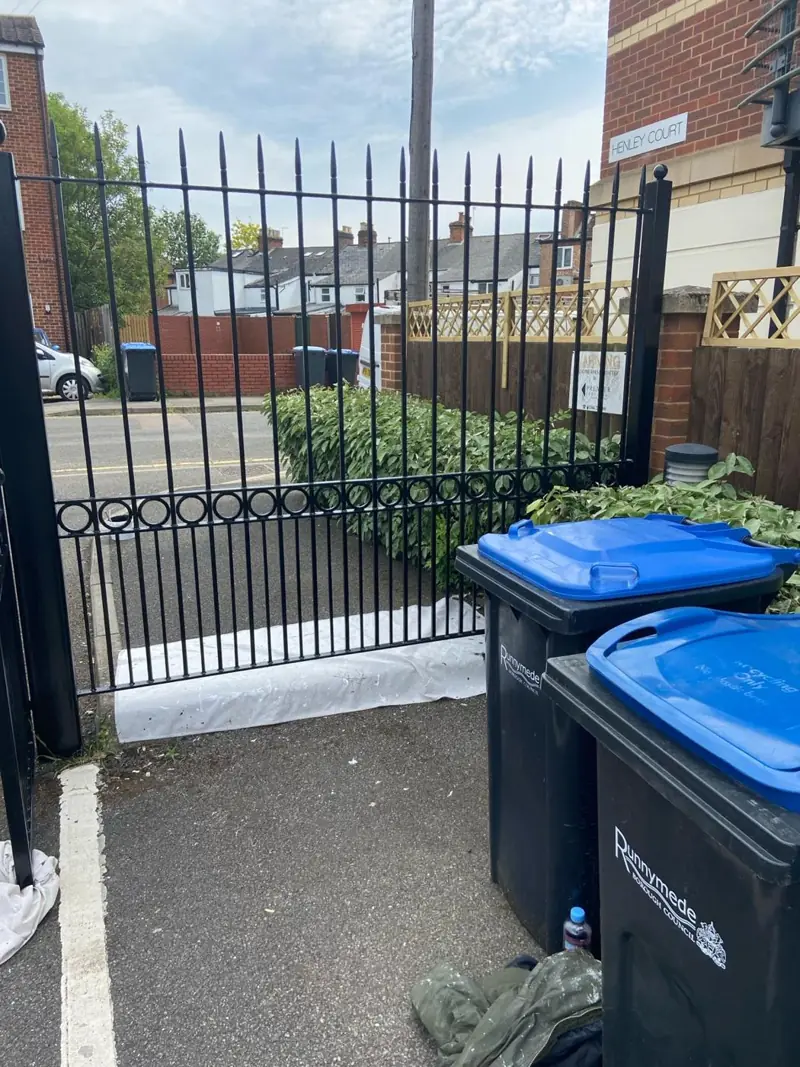
The western and southern edges of the town have mature trees, unlike the almost treeless High Street. Under a canopy, fences stay damp for longer after rain, collect leaf litter along the gravel boards and grow green algae on the shaded side. Stain applied over that growth sits on top and peels.
On these gardens Dean starts with a fungicidal wash and a stiff brush, lets the boards dry properly, and pays most attention to the bottom 30 centimetres where leaves pile up. A spirit-based or oil-based stain that soaks into the grain usually lasts better in shade than a thick water-based fence paint, which can hold moisture under its film. Plants along the fence line are sheeted, and we ask you to agree a working side if the fence is shared with a neighbour.
New fences at Stanton Cross, Glenvale Park and Park Farm
Stanton Cross is a planned extension of about 3,200 homes east of the station, and Glenvale Park and Park Farm are adding more. Most of the fencing there is new pressure-treated softwood, which holds a lot of moisture. Staining it in the first few weeks often gives a patchy result, because the wet timber will not take the finish evenly.
So for a new build we usually suggest:
- Letting new treated timber dry out first, following the stain manufacturer’s guidance, rather than staining straight away.
- Checking the timber is dry right through before coating, especially on posts and gravel boards.
- Choosing a colour you are happy to keep, as darker stains are hard to go lighter from later.
- Checking whether your development has rules about boundary colours facing the street before choosing a bold shade.
Wooden gates on conservation area houses
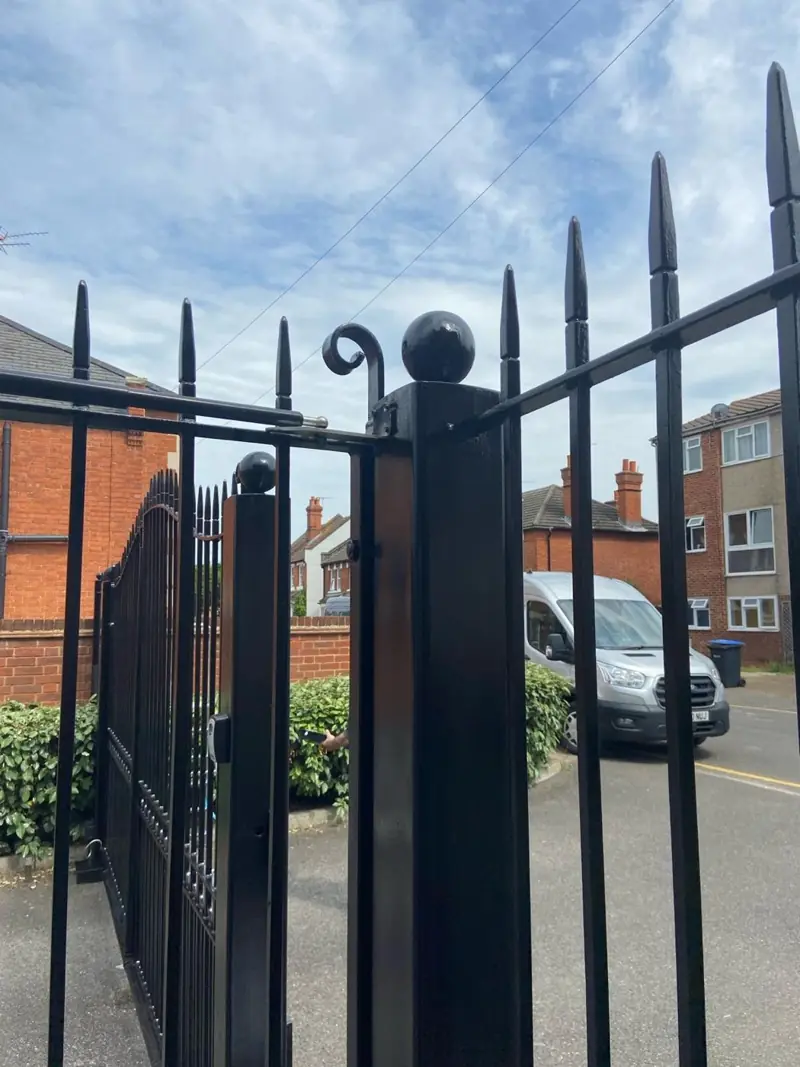
On houses named in the town centre Article 4 direction, which covers streets such as Rock Street, Park Road, Herriots Lane and Swanspool Parade, permitted development rights for gates, fences and walls have been removed, as has the right to change the exterior colour. Re-staining or repainting an existing wooden gate in its current colour is normal maintenance. Replacing it, or switching from a natural stain to a painted colour, should be checked with North Northamptonshire Council first.
Gates also take more wear than the fence beside them. We look at the hinge side for rot, seal the end grain on the top and bottom rails, and ease off any binding before the finish goes on. Dry spells suit this work, and our guide on when to paint outside in the UK covers the conditions. For other services in the town, see our Wellingborough area page.
Last updated by Dean, DH Painter & Decorator.