
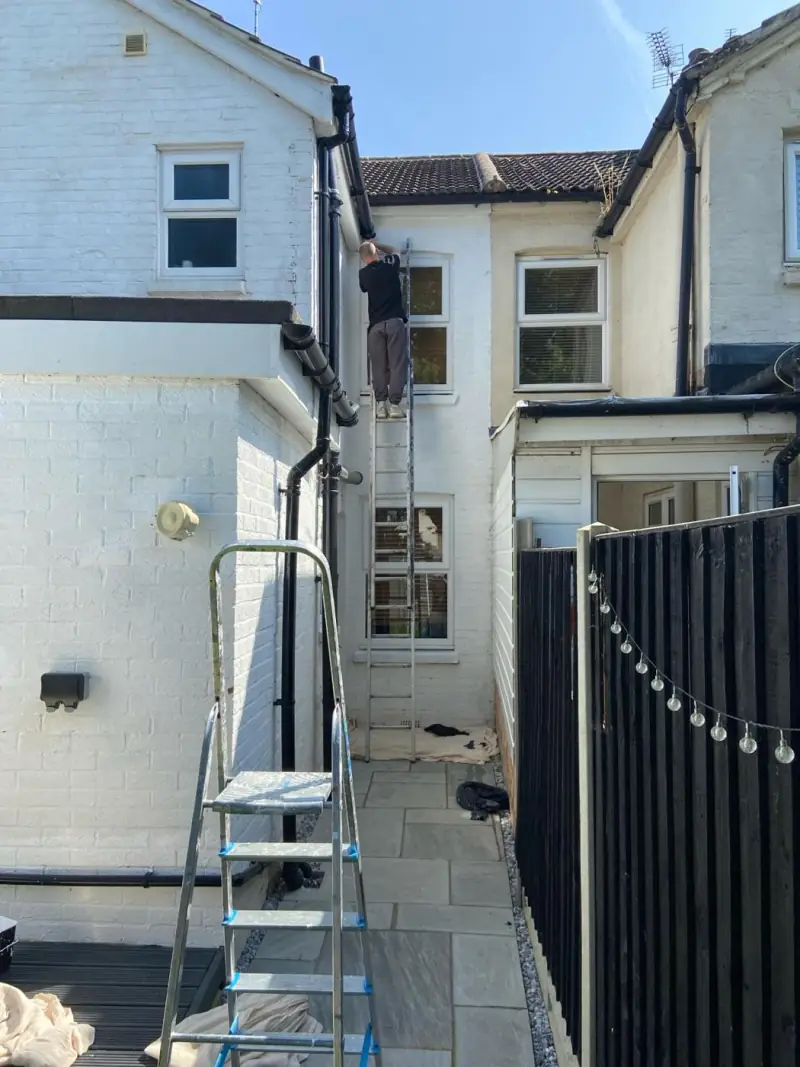
We paint the outside of houses across Wellingborough from our Northampton base, about 9.7 miles away in a straight line. On named houses in the town centre conservation area, the October 2011 Article 4 direction means a new colour or painting bare brick needs planning permission, while a same-colour repaint does not; on the estates and newer streets the work is mostly woodwork, render and rooflines.
Does repainting your house need planning permission?
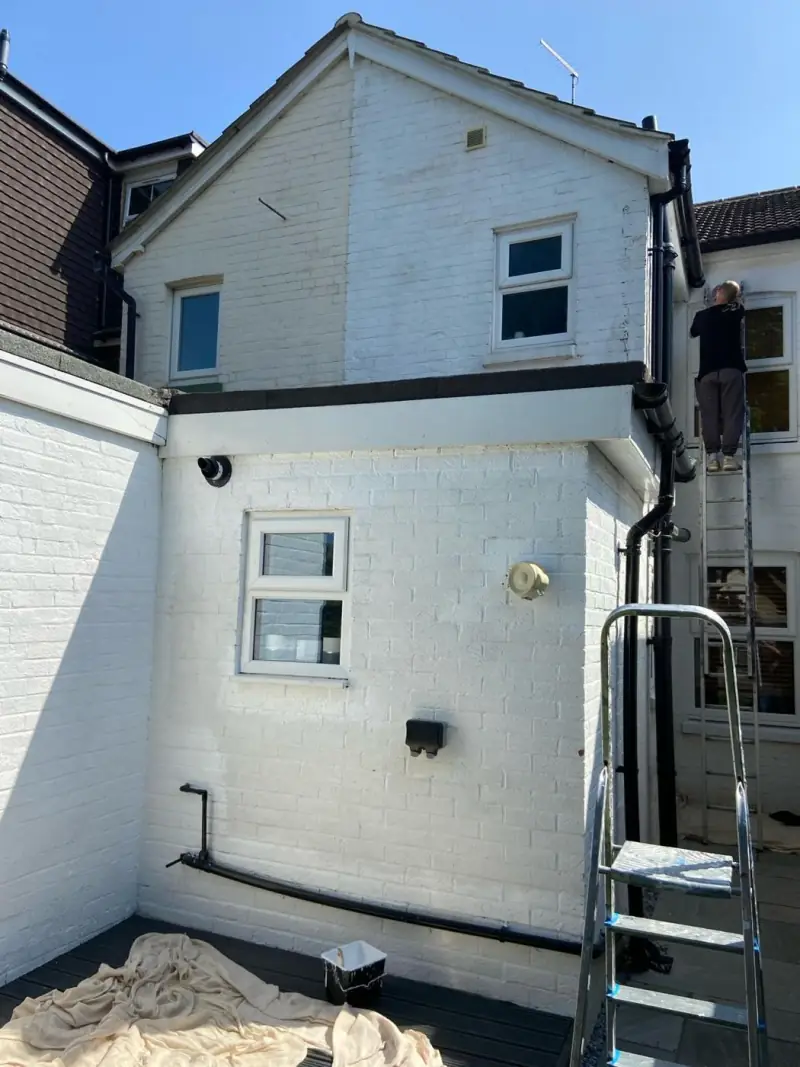
In most of Wellingborough, no. In part of the town centre, possibly. On 18 October 2011 the council made an Article 4 direction covering named houses of townscape merit in the Wellingborough Town Centre Conservation Area. It removes the Part 2 Class C permitted development right to paint the outside of those houses in two cases only: painting a surface that has never been painted, and changing the colour. Named houses stand on streets including Rock Street, Park Road, Havelock Street, Moffat Terrace, Swanspool Parade, Oxford Street, Broad Green and Westfield Road.
| Your situation | Planning permission? |
|---|---|
| Named Article 4 house, repainting in the same colour | No, it is maintenance |
| Named Article 4 house, new colour on walls or joinery | Yes |
| Named Article 4 house, painting brick or stone that has never been painted | Yes |
| Flat or business premises in the conservation area | External changes need permission anyway |
| House on Queensway, Hemmingwell, Redwell or another estate outside the conservation area | Not covered by the town-centre direction |
The council also lists an Article 4 direction for the Roundhouse, but that document is only available on request, so if you live there, ask before choosing colours. Listed buildings are a separate question again. We check which of these applies when we quote, because a front painted the wrong colour may have to be put back.
Stucco, ironstone and local brick: what gets painted
The 2009 conservation area appraisal says painted render “is used throughout the town centre” and usually has a smooth painted finish. Fronts like those on Silver Street and Sheep Street were painted long ago, so they are repaints, done like for like in a breathable paint that suits the lime-based stucco underneath. That is the main masonry painting job in the old town, and our render and masonry page for Wellingborough covers it in detail.
The ironstone is different. West End House on Oxford Street, the 18th-century houses on Cambridge Street and the stone fronts round Broad Green are meant to be seen as stone, and paint would trap moisture in them as well as spoil them. On those houses the outside job is the sash windows, doors, railings and eaves. The same goes for the local red brick of the Victorian streets: it was never meant to be painted, so the paintwork is the joinery set into it.
Working on the pavement edge in the old town
Many town-centre buildings stand right on the back of the pavement, and the appraisal notes that getting to roofs, upper floors and the rears of these buildings can be awkward. Narrow lanes such as Salem Lane, Pebble Lane and Buckwell End run between tall walls, and front walls are kept rather than knocked down for parking, so most older houses here rely on the street.
Before quoting, Dean looks at where a ladder or tower can stand while leaving room for pushchairs and wheelchairs, whether the rear can be reached without going through the house, and where the van can sit. If scaffolding has to go on the public highway, a licence from the council is normally needed, and that adds lead time. The pavement below the work is sheeted, and one elevation is finished before the next is started.
| Fact | Detail | Source |
|---|---|---|
| Town centre Article 4 direction | Made 18 October 2011; covers colour changes and painting untreated surfaces on named houses | North Northamptonshire Council |
| Town Centre Conservation Area | About 58.2 ha, with 93 listed buildings | Heritage Check |
| Homes built 1965 to 1982 | 26.1% of the town, against 18.0% in England (VOA) | GOV.UK |
| Painted render in the centre | “Used throughout the town centre”, usually with a smooth painted finish | North Northamptonshire Council |
Queensway, Hemmingwell and Redwell: woodwork and rooflines
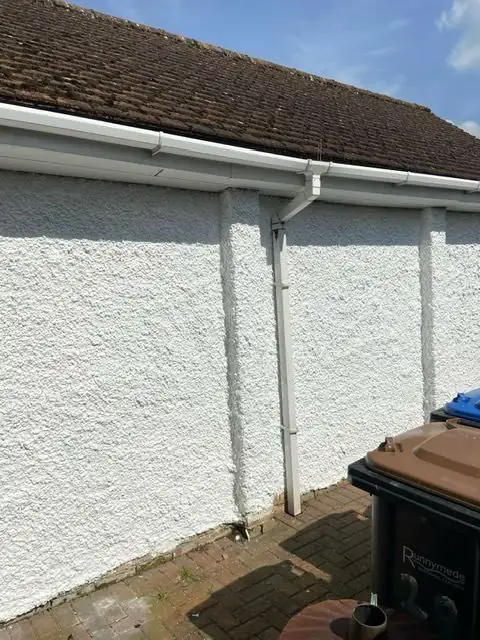
About a quarter of the town’s homes (26.1%) were built between 1965 and 1982, against 18.0% across England, on the estates built for London overspill and the private estates that followed at Redwell. Outside the conservation area these houses need maintenance painting: fascias and soffits, front doors, garage doors, window frames and garden timber. If your roofline is the worst part, our fascia and soffit painting page deals with that work.
Timing matters more than people expect. Paint needs dry walls and a dry forecast, and elevations that stay shaded, or sit on the low ground near the Nene and the Ise, take longer to dry out after rain. Our guide on when to paint outside in the UK explains why. The general method is on our exterior painting service page, and the Wellingborough page lists everything else we do in the town.
Sources
- Wellingborough Town Centre Article 4 Direction (October 2011), North Northamptonshire Council
- Wellingborough Town Centre Conservation Area, Heritage Check
- Wellingborough Town Centre Conservation Area Appraisal (2009), North Northamptonshire Council
- Council Tax: stock of properties, 2026 (table CTSOP4.1, build period), Valuation Office Agency
- Wellingborough, Wikipedia
Last updated .


