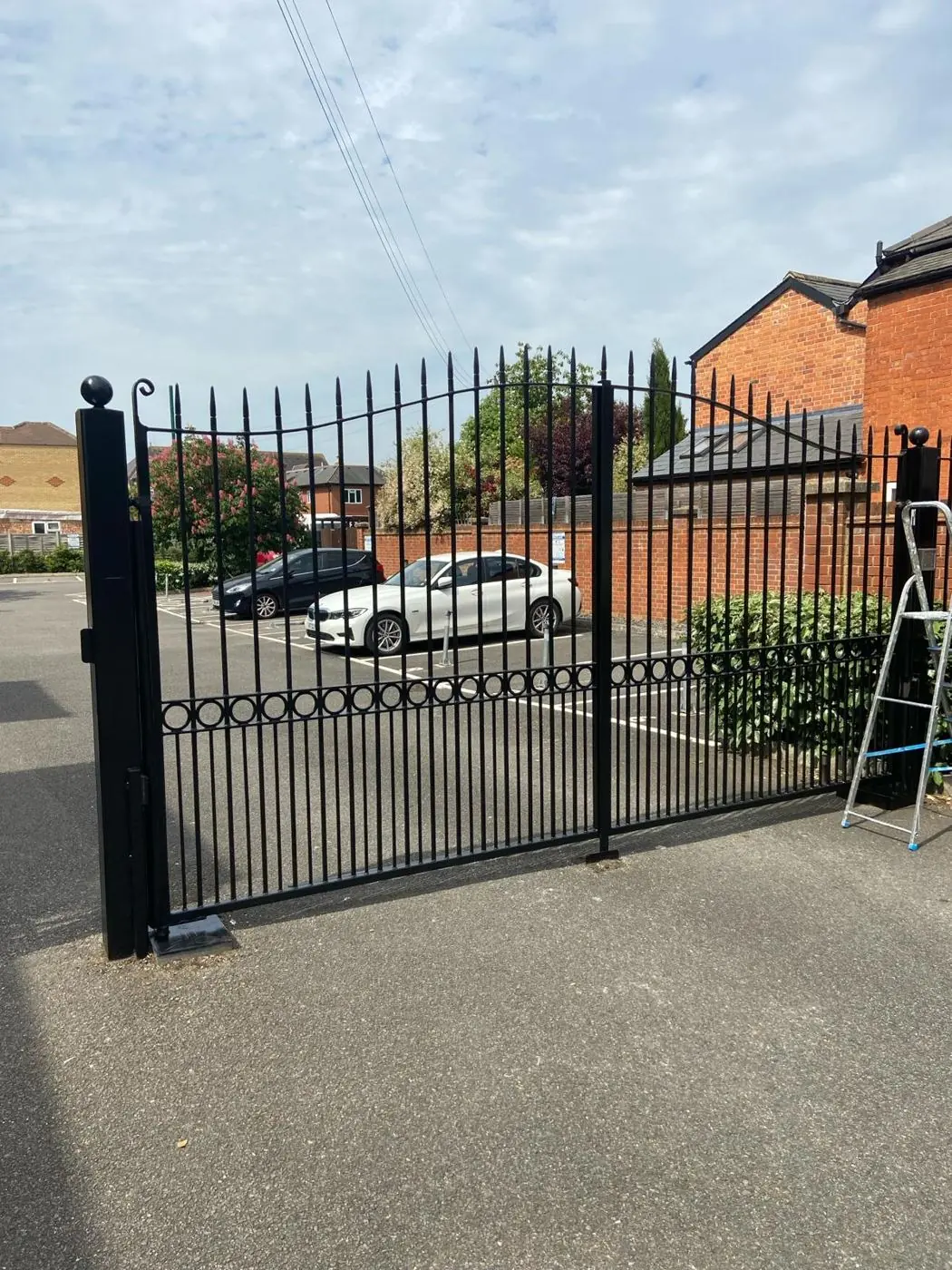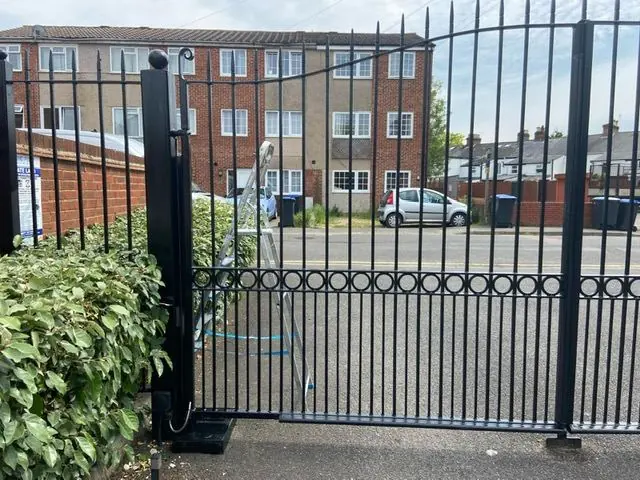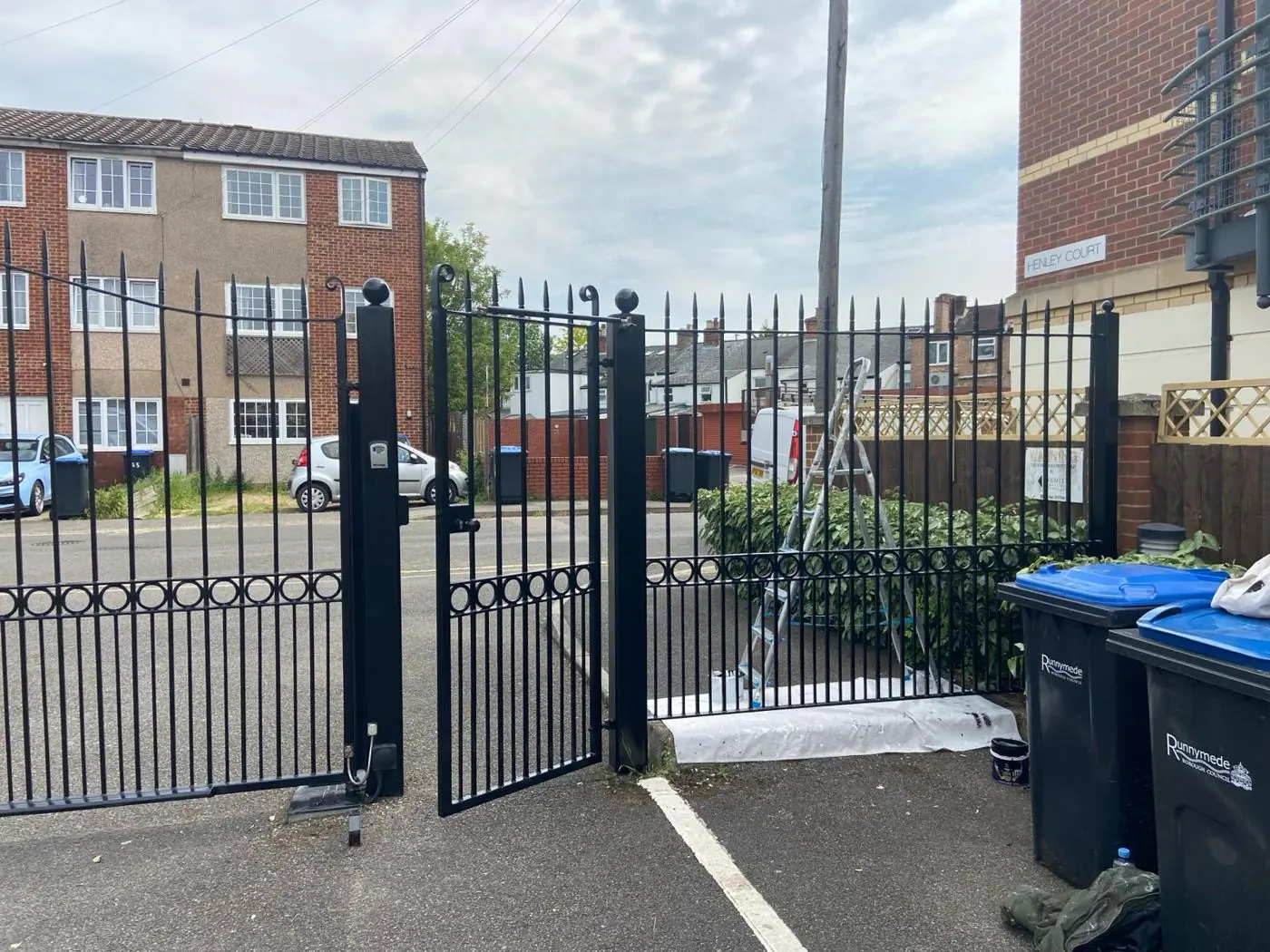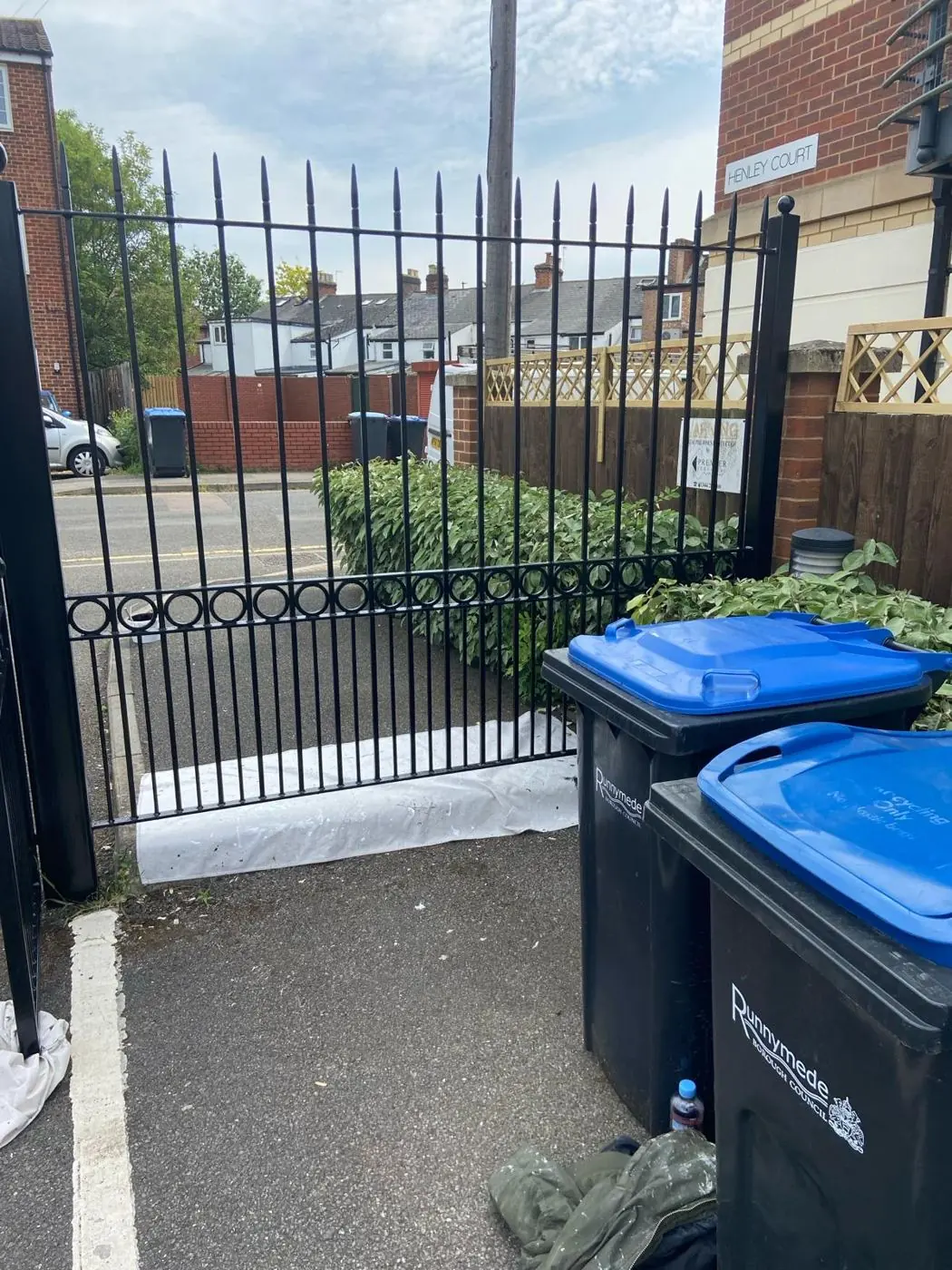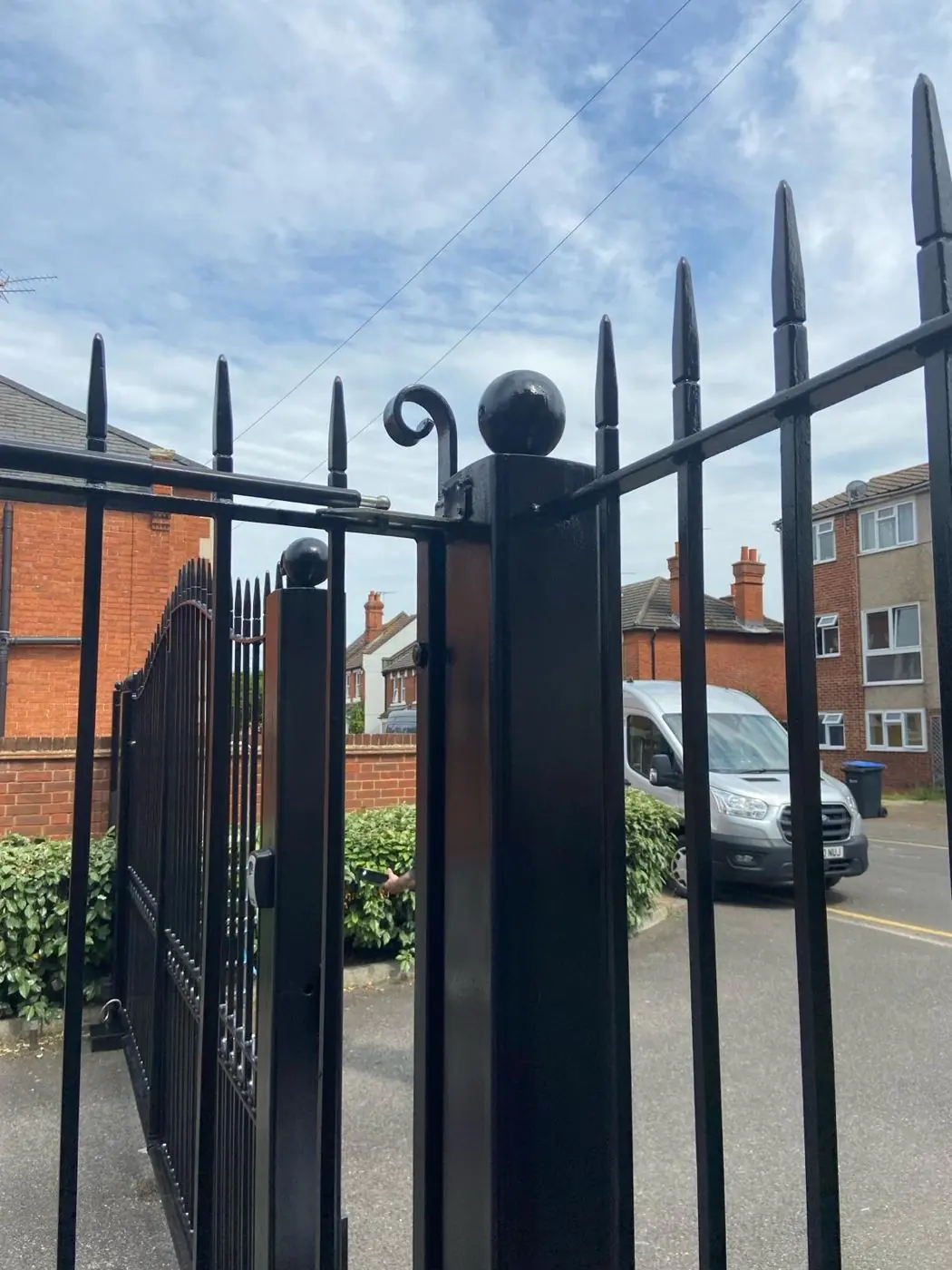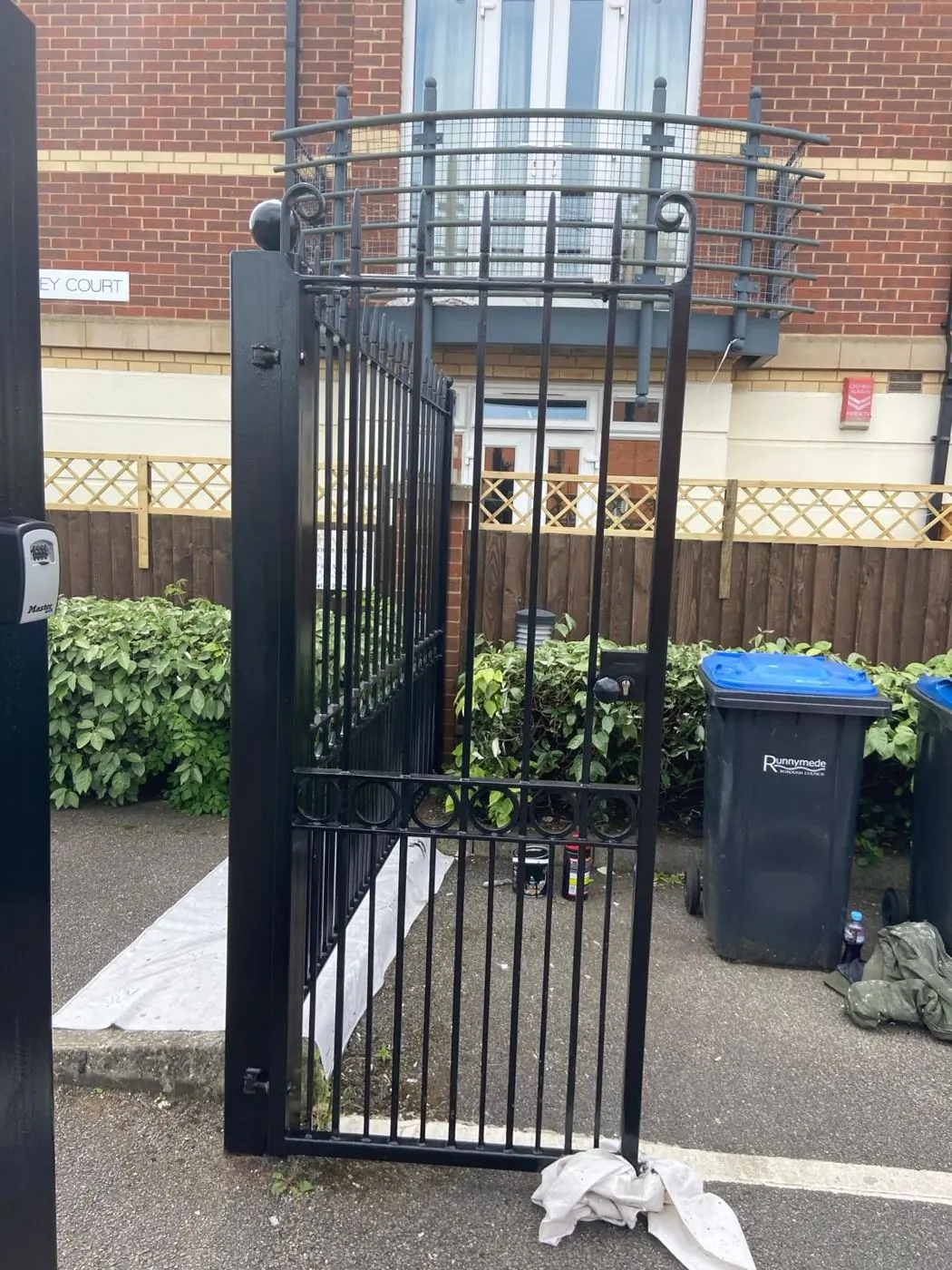
Dean paints metal gates, railings, handrails and cast-iron windows in Wellingborough, about 9.7 miles north-east of Northampton town centre. Rust is taken back to sound metal and primed the same day, with the primer matched to the metal, whether that is old cast iron, mild steel or galvanised steel.
A town that paints its ironwork
Look around Wellingborough’s public spaces and you see how long painted metal has been part of the place. Bassett’s Close has its bandstand, iron park gates and painted railings. Swanspool Gardens has plain metal railings along Doddington Road. Several buildings on the High Street still keep cast-iron columns from their period shopfronts. These are public works, not ours, but they show a local habit of keeping ironwork painted, and the standard a private gate or railing sits beside: sound paint and no rust streaks running onto the stone below.
Our general approach to rust, primers and top coats is on the metal gate and railing painting page. Here we cover the metalwork that is particular to Wellingborough.
Cast-iron windows in the old shoe factories
Wellingborough was nationally important for boots and shoes, and some of the old factories survive. The 2009 conservation area appraisal points to former factories in Rock Street, Great Park Street and Alma Street, and says their painted cast-iron windows are essential to their character. The appraisal also notes that former shoe factories have been converted to flats.
Cast-iron windows need careful handling:
- Cast iron is brittle, so we clean with wire brushes and scrapers rather than heavy hammering that could crack a glazing bar.
- Rust in the corners of each pane is worked out by hand, then treated and primed the same day so it cannot flash rust overnight.
- A rust-inhibiting primer goes under a metal-suitable gloss, brushed so the putty lines stay crisp.
- Older layers may contain lead, so we avoid dry sanding and burning off and use wet methods instead.
For a converted building, this is usually arranged through the managing agent or freeholder, and in the conservation area the existing colour should be kept unless planning permission says otherwise.
Front railings, gates and handrails on period streets
Where a Victorian or Georgian house has metal railings or a gate, the most common failure point is where the bars meet stone. Water sits in the socket, the iron swells as it rusts and the stone can crack. Dean clears out the base of each bar, treats the rust, and makes sure the paint runs down into the joint rather than stopping short. Handrails on steps and sloping paths get the same treatment plus a harder-wearing top coat.
Many town-centre properties stand right on the pavement, so we sheet the footway, keep tins and brushes tight to the wall, and put up wet paint notices where passers-by could touch the work.
Steel shutters and galvanised gates
The appraisal notes steel security shutters on Midland Road shopfronts, and modern fabricated gates on the estates and new builds are usually mild or galvanised steel. These need a different primer from old cast iron. Galvanised steel in particular will shed ordinary paint unless it is degreased and given a primer made for zinc surfaces. A shutter is also painted in its open and closed positions in stages so the slats do not stick together.
Parts of Wellingborough sit low beside the Nene and the Ise, and damp mornings can leave condensation on metal well into the day, so we wait for the surface to be dry and above the dew point before priming. That often means a later start on autumn days and finishing before the evening damp settles. For what affects the price of a gate or a run of railings, see our painter and decorator cost guide. Our Wellingborough area page lists the other work we cover in the town.
Last updated by Dean, DH Painter & Decorator.